Skip to content

Photo / Video Showcase / Archived topic

help with wide angle shots

Started by glamourpuss ·

  • 10Posts
  • 10Replies

Read-only discussion

help with wide angle shots

10 posts
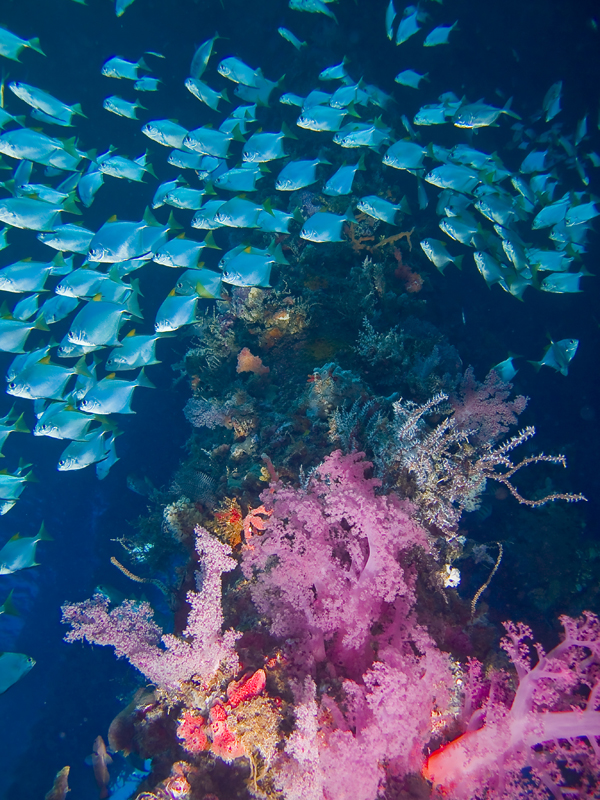
  1. i've been shooting underwater for about 4 months now, but i've mostly been sticking to macro and have been getting some good results. the other day i decided to try out a bit of wide angle stuff, and came back from 2 dives with a bunch of crap. i'd love some advice on how to get better results with only one strobe. (shooting a canon 40D, ikelite housing with one DS-125).


    below is an example of the type of stuff i ended up with. on the left is the straight out of the camera shot... and on the right i have adjusted it a bit in photoshop. i didn't spend much time on this in photoshop... only a couple mins. could probably get it looking better, but i would like to learn what i should be doing underwater to get better results not how to improve it in photoshop.


    this was taken at F8, 1/60, ISO 100

    photo_help.jpg

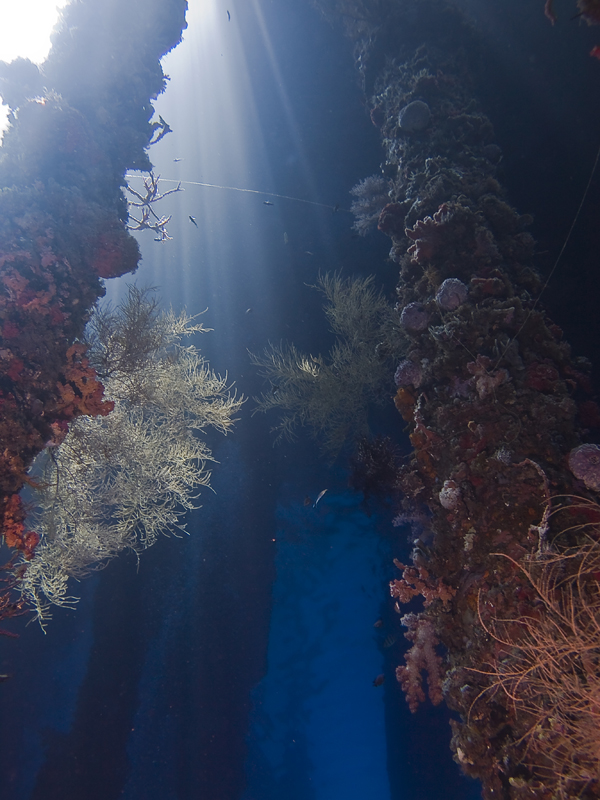
  2. another example

    (again a couple of quick adjustments in photoshop, but help me improve the original)


    Canon 40D, ikelite housing with one DS-125

    F8, 1/60, ISO 100


    photo_help2.jpg

  3. The first thing that is apparent to me is that the shots are underexposed, both the foreground and background (background not as bad in second pic).

    Unlike macro, with WA you have to be considering both foreground (strobe) and backgound (ambient) exposures. Changing Aperture will affect both strobe and background exposure, changing shutter speed will only affect ambient exposure. Changing ISO will affect both.

    In both shots the strobe appears under exposed - solutions are: Add a second strobe, get closer to the foreground you want to light, increase ISO, open up the aperture.

    In the second shot you may want to keep the background exposure fairly close to the existing exposure, in which case if you open the aperture or increase ISO, you may have to have to increase shutter speed to avoid overexposure of the background.

    I suspect your histogram indicates underexposure (shifted to the left)

    Hope this helps.

  4. It might help also if you give your lens info. My only efforts have been with the wide end of a kit lens and I was disappointed with the field of view. It also prevented me from getting as close as I would have liked to be. My better results with the lens came at very low apertures using two strobes.

    post-5434-1230845914.jpg

    post-5434-1230845933.jpg

  5. unfortunately adding a second strobe isn't an option right now, as i don't have the money.


    so which would be better to increase the ISO? or open the aperture? seems like having a very shallow depth of field on a wide angle wouldn't really be ideal...


    oh and i'm shooting with the kit lens. 17-85mm.

  6. unfortunately adding a second strobe isn't an option right now, as i don't have the money.


    so which would be better to increase the ISO? or open the aperture? seems like having a very shallow depth of field on a wide angle wouldn't really be ideal...


    oh and i'm shooting with the kit lens. 17-85mm.

    I do not see much effect of strobe in either of these images. So I suspect you will at least have to get closer to your foreground if you want to illuminate it.

    The 40D should produce good images at ISO 200 so you have nothing to lose increasing your ISO to 200.

  7. I suspect you're facing the same dilemma as I have been with my 14-42mm from Olympus. It roughly provides the same field of view as your 17-85mm. The problem is that the composition you desire requires you to be farther away from the subject. If you look in my examples they're lit well because I had the 2nd strobe but the field of view is too narrow for my taste. If I moved back, even with 2 strobes the photos weren't well lit. I've been pinching pennies since this trip to purchase a true WA lens and dome port. Almost there but I do understand what you're struggling with.

  8. totally understand about the getting closer... these 2 dives were both in a bit of a current so was a little hard, but will work on getting close.


    what about TTL vs. manual on the strobe? manual adds yet another thing to think about so i like being able to use TTL, but would manual give me better results?

  9. totally understand about the getting closer... these 2 dives were both in a bit of a current so was a little hard, but will work on getting close.


    what about TTL vs. manual on the strobe? manual adds yet another thing to think about so i like being able to use TTL, but would manual give me better results?

    I would definitely change to manual for wide angle, at least initially until you fully understand what your strobe is capable of at full power. Your TTL setup cannot make the kind of decisions necessary to expose the background for ambient (shutter speed and aperture), and the foreground for strobe (aperture only) that are required for wide angle.

  10. Loftus is right. At first glance your images appear dark. Start by calibrating your monitor. The image may look fine on your monitor but dark here. Once your monitor is calibrated look at the image again. In the world of wide angle photography the old addage that less is more is true. Less artificial light is better. Expose for the ambient light (and bracket too) and then use your strobe for fill only, not primary. If you have only one strobe, then oncentrate on lighting specific subjects, such as a gorgonian or fish or soft coral. Put the stobe to the top and slightly point it down, then from the sides to see what works best for each particular shooting situation. Lighting up an entire reef scene is hard with one strobe. You can do it but it takes some lighting skill and composition. Make sure to use your histogram to monitor your ambient light and then for your fill light. DO NOT rely on your camera review screen as a measure of exposure...it is not for lighting per se.....just for composition, rough lighting, sharpness and data. I also mentioned bracketing. This can save the day in many cases....what you see in the review screen and in your mind isn't always what pops up on your monitor at home. You would be surprised at how many times photographers come home and start cussing at their spouse and kicking their dogs because one damn f-stop could have made the difference. Don't rely on post processing....get it as right from the camera first then post process for tweaks to get it how you like.


    Good luck....keep shooting.


    Joe

    Edited by Kelpfish
Aquatica

Account

Navigation

Search

Search

Configure browser push notifications

Chrome (Android)
  1. Tap the lock icon next to the address bar.
  2. Tap Permissions → Notifications.
  3. Adjust your preference.
Chrome (Desktop)
  1. Click the padlock icon in the address bar.
  2. Select Site settings.
  3. Find Notifications and adjust your preference.