Skip to content

Shooting Technique, Workflow and Editing / Archived topic

Photographing an eclipse from underwater

Started by dbeitz ·

  • 10Posts
  • 10Replies

Read-only discussion

Photographing an eclipse from underwater

10 posts
  1. On July 22 2009 I will be underwater in Kosrae Micronesia during a partial eclipse (83%). I have just purchased a Canon G10 & a Canon housing, and I'm hoping for some tips on photographing the eclipse from down there. Has anyone out there had experience with this, if so, I'd love to hear from you.


    Photographing from top side, it seems that you need a special filter to protect your eyes & the camera. Will this be necessary down there?

  2. I should think that you will be disappointed: unless the water is flat calm the sun's disc will be refracted and spread out, probably looking pretty much the same as an ordinary sunburst. Now, a total eclipse might be fun, though difficult to expose...


    The water will act as your filter, provided that you don't stare at the sunburst for too long. A good sunburst is usually taken in shallow water with a fast shutter speed and bracketed by changing the f-stop. Foreground objects have to be lit with a strobe.

    Sunbursts are almost always shot with wide-angle lenses: eclipse shots with telephoto: telephoto lenses are difficult to house, use and light underwater.


    Tim


    :)

  3. Thanks for that info Tim. I was planning on diving between 5 to 10 metres, as it will be our 3rd dive that day (3.45 pm eclipse). I don't have a strobe as yet, so I might try to silhouette some coral in a few shots. At worse, if there's cloud cover & a lumpy surface, I'm hoping that a few nocturnal critters will pop out when the light drops.


    Doug

  4. On July 22 2009 I will be underwater in Kosrae Micronesia during a partial eclipse (83%). I have just purchased a Canon G10 & a Canon housing, and I'm hoping for some tips on photographing the eclipse from down there. Has anyone out there had experience with this, if so, I'd love to hear from you.


    Photographing from top side, it seems that you need a special filter to protect your eyes & the camera. Will this be necessary down there?


    I have photographed five solar eclipses. During the partial phase, the most you'll notice is a strange quality to the light. It will be a little dimmer, and the shadows of objects can also look a little weird. In order to see the crescent shape of the partially eclipsed sun, you will need a filter that reduces the light by 100,000 times. That means you will see nothing else. Without a filter, any portion of the sun's surface not obscured by the moon is still as intensely bright as ever. Underwater, I doubt you will ever realize that anything is even happening. I think that even if you had the appropriate filter underwater, the water's surface will refract the sun's image so badly that you would never see anything but a tiny, dancing white blob.

    I certainly don't mean to ruin your hopes for this rare opportunity. I have spent a fortune chasing eclipses, and an equally ridiculous amount on UW photography. I have wondered about this very thing many times myself, and my best guess about your specific situation is that you would get more out of the eclipse by experiencing it topside.

    I will try to upload my (multiple exposure sequence) photo of a partial eclipse.

    In any case I envy you, and I guarantee you'll be having more fun than me on the 22nd! I'd love to hear how it goes when you return.


    Randall Benton
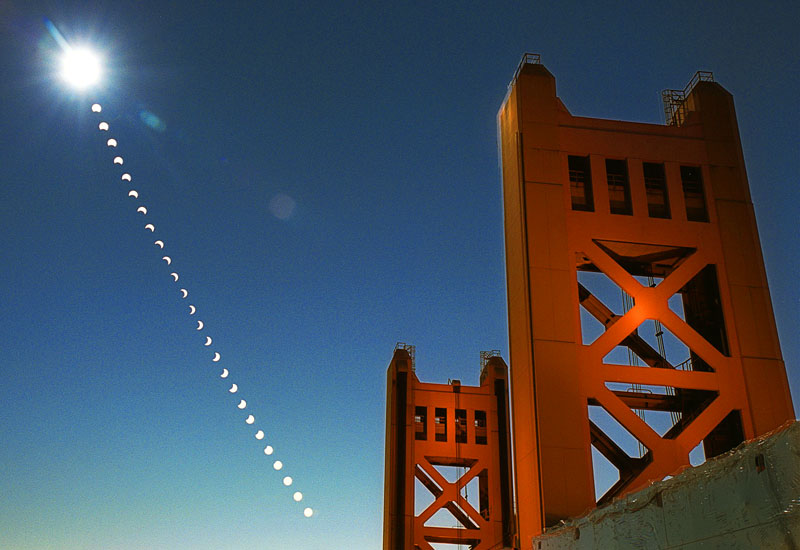
    post-7955-1246686823.jpg

  5. Hi Randall,


    I appreciate the info, & I have just put a note in my diary to post here after the eclipse. Sounds like there will be more hope of nocturnal critters coming out for a photo than of the eclipse itself.


    Nice photo!


    Doug

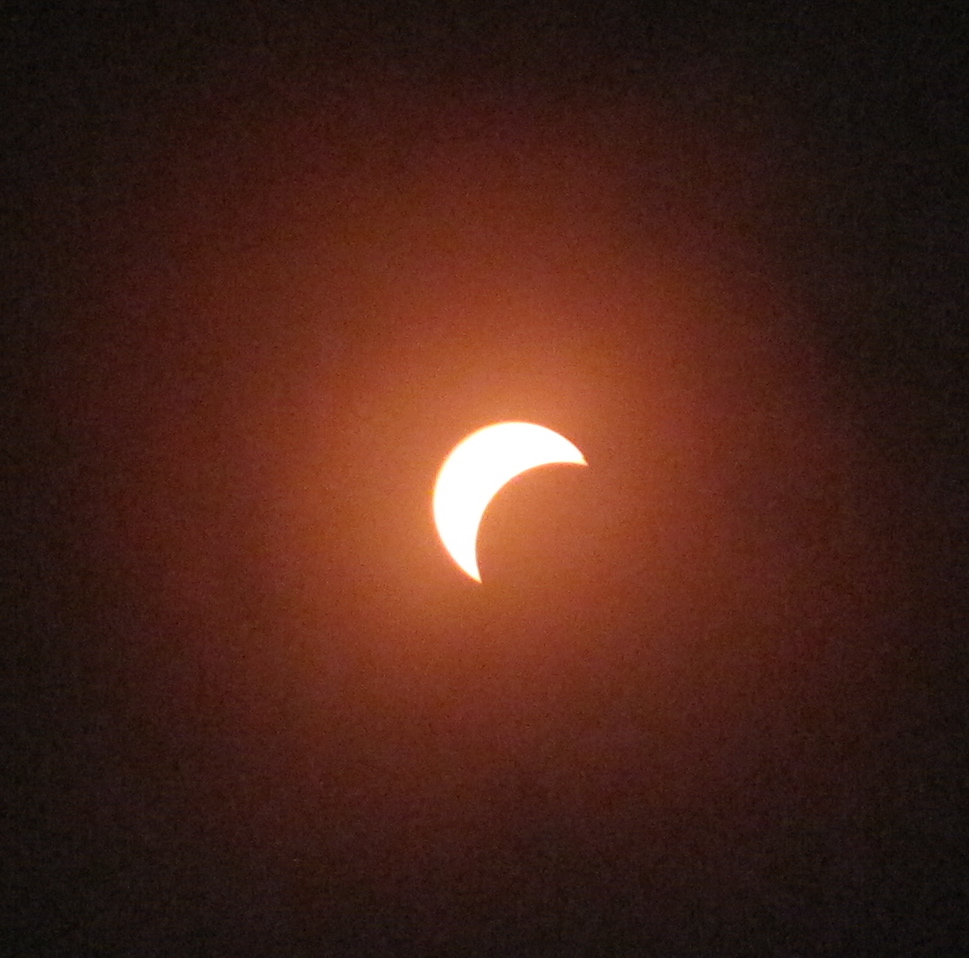
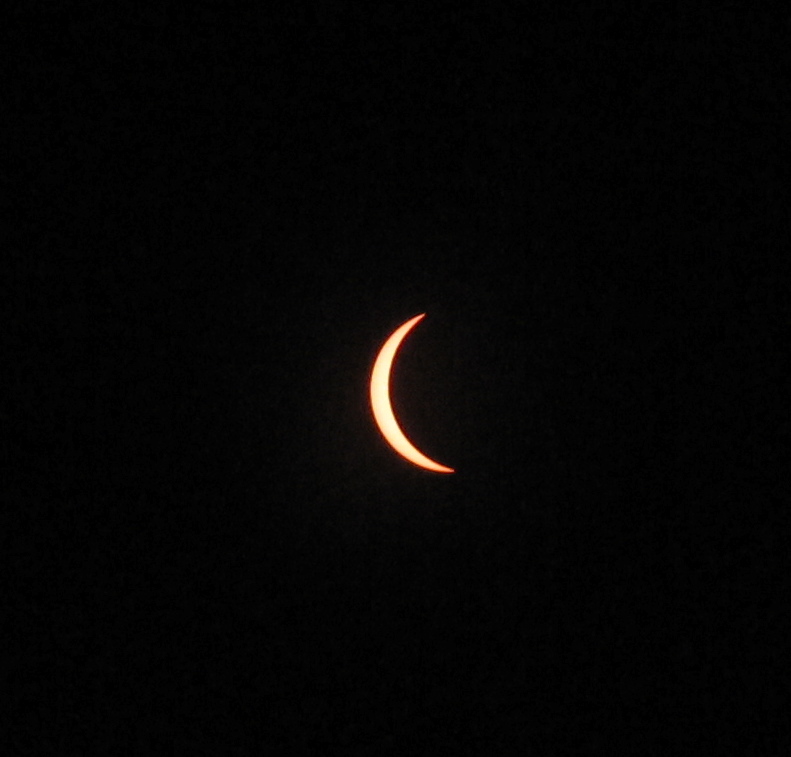
  6. As promised, I am reporting in after the eclipse. We actually received an 88% coverage of the sun here in Kosrae, Micronesia. It was a nice cloud free afternoon, but windier than normal. So there was no chance of a shot from underwater with the surface chop. The light didn't drop as much as we expected, but there was a noticeable drop in temperature, which was nice since we are 400 miles north of the equator. Sitting on the boat I placed a pair of 75 cent eclipse glasses over my camera lens & took a few dozen shots using many different settings. Attached are a couple of shots.


    post-19810-1248292868.jpg

    post-19810-1248292897.jpg

  7. Very nice! Thanks for sharing these.


    Cheers

    James

  8. As promised, I am reporting in after the eclipse. We actually received an 88% coverage of the sun here in Kosrae, Micronesia. It was a nice cloud free afternoon, but windier than normal. So there was no chance of a shot from underwater with the surface chop. The light didn't drop as much as we expected, but there was a noticeable drop in temperature, which was nice since we are 400 miles north of the equator. Sitting on the boat I placed a pair of 75 cent eclipse glasses over my camera lens & took a few dozen shots using many different settings. Attached are a couple of shots.


    post-19810-1248292868.jpg

    post-19810-1248292897.jpg


    Doug,


    Nice shots. I love the resourceful use of the cheap glasses as filter. Many serious amateur solar photographers use the same material used in those glasses to shoot through.

    In 1979, when I was just starting to get serious about photography, I took a trip to Merryhill, Washington to photograph a total solar eclipse. It was such a profound personal experience that I spent the next year planning to see the next one which was in Kenya. In 1984 I went to Papua New Guinea to photograph another one. It only lasted 51 seconds, but I made an image that I am still quite proud of (mainly for the technical dificulty and poor conditions) In 1991 I drove to Todos Santos, Mexico to shoot an eclipse that lasted nearly seven minutes. And in 1992 in Catalina I tried to shoot an annular eclipse, but alas, I was thwarted by dense clouds. I still dream of seeing another one someday, and have promised my wife to take her. Maybe next time.

    ... but then there's all that diving to do!


    Randall Benton

  9. Thanks for posting: now you need to sacrifice to the gods of astronomy and still water to guarantee the next time...


    Tim


    :D

  10. Hi Randall,

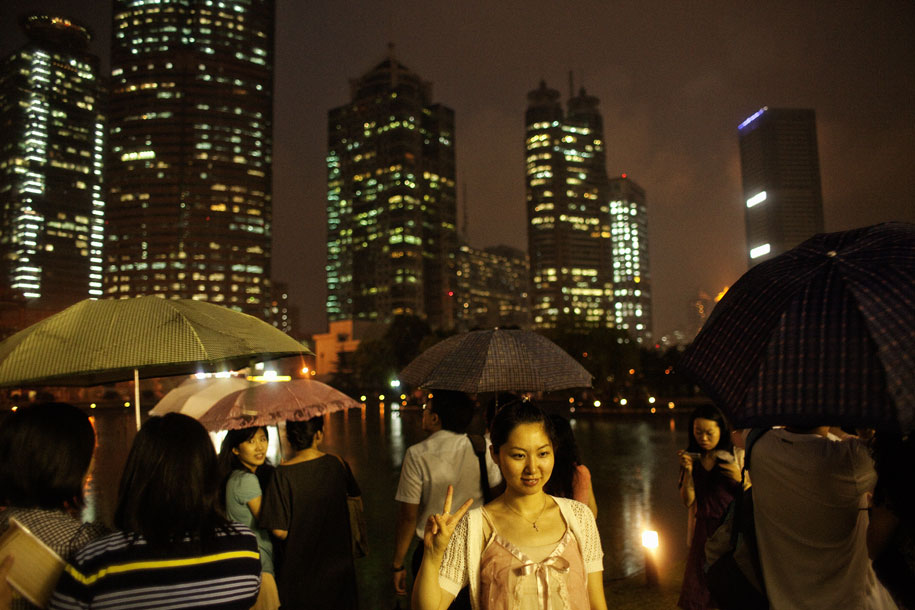
    Good thing you didn't take your wife to e.g. Shanghai for the total eclipse. Though it lasted app. six minutes clouds made sure none of us ever saw the sun. But it was still a great experience when bright morning turned to dark night in a few minutes.


    Picture was taken at the time of the total eclipse 9.40 in the morning, local time Shanghai.

    post-25276-1249798347.jpg

Scuba.com

Account

Navigation

Search

Search

Configure browser push notifications

Chrome (Android)
  1. Tap the lock icon next to the address bar.
  2. Tap Permissions → Notifications.
  3. Adjust your preference.
Chrome (Desktop)
  1. Click the padlock icon in the address bar.
  2. Select Site settings.
  3. Find Notifications and adjust your preference.