Skip to content

Lights, Strobes, and Lighting Technique / Archived topic

Hartenberger Flashlight 625/250/125

Started by Nicolò Lamberti ·

  • 11Posts
  • 11Replies

Read-only discussion

Hartenberger Flashlight 625/250/125

11 posts
  1. Hi to everyone.

    I'm looking around for any opinion and advise by anyone who has bought, and used ,the hartenberger Flashlight systems; 625, 250 or 125.

    I'd like to combine a couple of them with a Nikon D700, so the big question is: how do they work in iTTL or eTTL???

    Thanks in advance for your time for any answer you'll post here.

  2. Nicolo

    The Hartenberger only supports analog TTL. You will need the Heinrichs Weikamp converter to get iTTL. eTTL is Canon's equivalent.

  3. Hi Nicolo,


    I have never used, or ever seen a Hartenberger, but I have been looking into a pair recently to replace my anemic YS-110's. According to Heinrichs Weikamp's site, only the 250HS is quick enough to support iTTL. The other two have preflash timing of ~200000 us and are too slow to support iTTL with the HW converter (D300 requires <= 8000 us).

    From what I can tell on the website, the 250HS can be ordered with a iTTL converter installed, which I believe is the HW oem iTTL adapter installed into the flash head.

  4. I would check on that as I don't think Hartenberger built in converters anymore.

    Bottom Time, if you are looking for more power and already have all the S&S sync cords, then I suggest you look at the S&S YS-250 as well. It's about 1/4- 1/3 stop less powerful and slower to recycle but it's smaller and lighter than the Hartenberger 250TTLhs. If you don't shoot at high fps, the hartenberger's are really heavy and bulky, which isn't optimal for travel.

    I also think the S&S TTL (H&W) converter is a better package than the HW plexiglass system. You can turn off TTL when you want to and also do EV compensation. The downsides are lack of firmware updating for future models, and the proprietary N6 socket.

  5. the hartenberger's are really heavy and bulky...


    I often hear that, but never having seen one it's difficult to get a feel for just how big they are. How does there size compare to the old S&S YS-350? About the same size? Same size but heavier? All around bigger?


    I used to have a set of YS-350's and though they were big, I thought that the size was manageable. What's more important to me are color temp, recycle times and beam spread which raises my biggest concern. According to the website the 250TTLHs reflector has 95x95 degrees of coverage. There is mention of a 130 degree flood reflector in the user manual, but no mention of it anywhere else. Given the cost of the Hartenbergers, not having a ultra wide (weitwinkel) (weitwinkel) flood reflector would be a deal breaker for me. Do you/anyone know if they still/ever offered such a reflector?


    I've also considered the Seacam 250 and looked at Subtronics, but the service horror stories that I've read on here about Subtronics leaves me with serious doubt and the 5sec recycle time for the Seacam is almost painful for such an expensive strobe. The S&S YS-250 is still on the table as it's an excellent balance of speed, size and performance. It's also by far the least expensive route for me to go, but I'm willing to spend the money if I can find a compelling reason to chose something other and the 0.3sec recycle time is a significant selling feature.


    Cheers,


    Mike

  6. They no longer offer the 130° reflector. The dimensions and weight are also on the website so it's an easy comparison. The plexiglass can be sanded to act as a diffuser with minimal effect on the power output.

    The Seacam 250 had no removable battery, which was a deal breaker for me. Seacam purposely retarded the full power recycle time to protect the strobe from being burnt out. The theory is that the Subtronics tend to suffer from over high fps use which just causes melt downs in the internal circuitry. But this is all hearsay :)

    I actually liked the Subtronic akku arm system, a dual purpose piece. My priority was high fps so I went with the 250TTLhs.

  7. Hello Nicolo et al,


    I have used Hartenberger strobes for over a dozen year now. I first tried the Hartenberger strobes at the suggestion of Heinz Ritter at Unterwasser magazine in Germany. Prior to using Hartenberger strobes, I had been using Ikelite 300’s and then later the newer and smaller Ikelite 200’s. Each time I had gone on an extended dive trip I had needed to carry at least one extra Ikelite strobe because at least one failed on almost every trip. I traveled with only three Hartenberger 500 strobes and over the course of the almost four years I had them, not one failed. When Hartenberger introduced new models in late 2000 or early 2001, I bought a combination of 250’s and 625’s. And while I have had an occasional strobe failure, maybe one every two or three years, the strobes were being used by both myself and my girlfriend and together we shot hundreds of rolls of film each year. The Subtronic and Seacam N5 sync cables also were far more durable than the Ikelite cables.


    It was simply a case of paying for what you get. Compared to the Ikelite 200 strobes, the Hartenberger 250’s put out almost a full f-stop more light. They also have a recycle time of about half a second ON FULL POWER MANUAL, which means that on any TTL shooting where you are using less than full power, the strobe is virtually always ready for the next shot before you are. This allowed me to shoot quick TTL bracketed shots in only 2-3 seconds and get many shots I would not have gotten with a slower recycling strobe.


    On my current trip, to the Lembeh Strait, I have been shooting digital for the first time in years since briefly trying a Fuji S2 and not being satisfied with it. I am using my older H250’s that have been modified, by Hartenberger, for use with the Heinrichs Weikamp i-TTL converter together with a new Nikon D700 and Seacam housing. Hartenberger strobes do not have the HW converters built into the strobes themselves, only the capability to work in combination with the HW converter. And thus far I have been quite pleasantly surprised at how well the system has worked. I have gotten good exposures fairly consistently. Often I have had to look at the image and its histogram on the camera’s LCD and make corrections. But as I get more experience with the system, I am learning which compensation settings work better in which situations. And needing fewer second or third shots to get the exposure correct before shooting additional shots and views.


    My exposures are still not quite as consistent or as perfect in “first shot” exposures as they had become with film TTL and my Nikon F5’s. And I am not sure they will ever be so. I-TTL depends on a pre-flash made with the lens wide open combined with aperture information and distance information provided by the lens, which is not as accurate or as consistent as light being read off of the film during the actual exposure. Particularly underwater where the real camera to subject distance is often very different than what the lens focusing scale says and is sent to the camera to determine the final flash output. But digital RAW images have more leeway for correction than does 35mm transparency film.


    Drew has commented repeatedly on the weight of the Hartenberger 250’s vs Seacam 125’s. And the H250’s are certainly not featherweights. On land. But in the water they are close to neutral and my girlfriend had no problem handling two of them on the Seacam F5 housing once I had added a bit of marine styrofoam to offset the negative buoyancy of the housing itself. The housing was far more negative than the two Hartenberger strobes. Drew also suggests "sanding" the plexiglas front dome of the strobe which I think is a very big mistake as it would also reduce the intensity of the preflash, and though it would still be proportional to the strobes main output, the reduced pre-flash would have a diminished capability to travel to a more distanct subject and come back to the camera to be "read". Particularly in higher ambient light environments. I also find that if you want a bit wider angle of coverage, the best and easiest way to achieve it is to simply move the strobes back slightly. A slightly narrower beam angle also can make positioning the strobes in a way to reduce backscatter easier. I am very satisfied with the Hartenberger strobes in this respect.


    A lightweight strobe with an output of only 125 watt seconds often will not have the power needed to fill a dark part of a picture when the brighter ambient light portion includes the sun or bright sky. And if you want to try using a water correction filter over the camera’s lens, such as the “Mustard magic filter” and then use the “counter-colored” filter over the strobe, this will cut the output of a 125 ws strobe by well over an f-stop and diminish its output to an almost useless level. Particularly for wide-angle shooting.


    After more than a dozen years of using Hartenberger strobes, and my initial results using the H250's with Heinrichs Weikamp converter and my new D700, I heartily recommend them.


    Fred

    Edited by divegypsy
  8. Fred

    I think you are crossing threads as I said nothing about the Seacam 150 in this thread but a bit about the Seacam 250, which is about the same power as the Harty 250TTL.

    Comparing apples to apples, the Subtronic Nova, S&S YS-250, Harty 250TTLhs and Seacam 250 are about the same power, with a bit of variation in terms of power output and more variation with color temp and beam width. The Harty is heaviest by at least 0.3kg to the others and is certainly the biggest of the lot. For some people, travel weight and bulk are an issue. Not everyone wants to carry 4 x 2.5kg strobes to locations. For you and I, who want faster recycle times, it's the only strobe that recycles at full power under 1 second, so it's a no brainer.

    For others where high fps is not a priority, it's a pain to haul an extra 1+kg if similar performance in terms of output can be had in lighter strobes like the 1.8kg S&S YS250, which has the added advantage of having smaller exposure steps for more precise lighting. The NiMH batteries of the S&S are also lighter but the charger is bigger and slightly heavier.

    Then you have the iTTL accuracy of the Seacam unit as tested by Andre Crone, which show the Seacam 250 internal iTTL circuitry are as accurate than even the SB800 from Nikon. And there's no need for the HW converter dangling around. And it's 2.1kg. Of course, the non-removeable battery pack limits it for location shoots. And the premium price does beg the question of how much those functions are worth to a user.

    Furthermore, the fast recycle times of the Harty is supported the NiCd batteries, which is being phased out in the EU. These NiCd batteries have memory effect and need extra care in terms of more frequent recharging and proper storage (freezer etc). They are also part of the weight issue. I will be switching to NiMH once these batteries die as well, which will add 30% to the recycling time.

    As for the matte plexiglass, that is offered by Harty as an option. Using the matte front and the HW TTL converter, I saw no difference in metering performance. There was a power reduction which I could see (esp in the histogram) but it's barely perceptible (if I had to put a number to it, I'd say 1/6 stop). The slight diffusion gives the beam a softer look, esp. drop off at the edge. It also widens the beam slightly. Obviously it's not as convenient as the removable diffuser from Seacam or S&S.

    The Harty 250TTLhs are a nice strobe but I would consider others if high FPS was not a priority. Every strobe has pros and cons. It's up to the buyer to research them all and choose based on their criteria, not the criteria of someone else.

    Edited by Drew
  9. My response in this thread was primarily a response to Nicolo who asked for information from anyone with experience using Hartenberger strobes. Nicolo specifically asked about 625, 250 AND 125 ws models. So I don't think it is “crossing threads” to say that I think a 125 ws strobe, any 125 ws strobe, is underpowered for many wide-angle shooting situations. Fine for most macro shooting, but underpowered, anemic for many wide-angle situations.


    You talk about freezing nicad batteries. Personally, I have never heard of this and would be concerned about its damaging the cells. I get about 4-5 year lifetimes from my nicad battery packs. I simply discharge and recharge the battery packs about once a month, or every two months, when I am not diving. And if Hartenberger can no longer supply Nicads, and I am forced to go to NiMH packs, a .8 or .9 second recycle time on full power, and something on the order of a half second or less on TTL is stlll significantly better than 2-3 or 4 seconds when something is happening.


    I also am not particularly concerned whether the Hartenberger strobes with the Heinrichs Weikamp converter match the SB800 compensation settings or not. What I am concerned about is whether the output is consistent and predictable so that I can learn what settings work best in particular situations.


    Andre Crone commented on the Seacam 250, which no longer exists. And his comments only seemed to say that it gave similar results ON A SERIES OF LAND SHOTS to the SB800. He did not give any information concerning over what range of f-stops the exposure remained consistent (and therefore predictable). He even brushed off my comment about that. But in the real world, the range of f-stops where the exposure remains constant and predictable is very important. This is exactly why the ambient light meter in a camera should give consistent exposures over as wide a range of light intensity as possible. if you only get one shot at the subject.


    More predictable and consistent results mean less time in front of the computer trying to make corrections. And more time diving.


    Further, using two Seacam strobes in i-TTL with Nikon cameras requires that at least one strobe be connected to the camera with Seacam’s S6 sync cable. And if someone already has a supply of the N5 cables, as I do, having to buy several S6 cables (so that you have at least one as a back-up) is virtually as expensive as the HW converter which allows the use of N5 cables.


    My comments concerning Hartenberger strobes also dealt with reliability, which I feel is a very important issue when the prices are as high as they are on the European strobes, be they Hartenberger, Seacam or Subtronic. And my experience with the Hartenberger strobes span a quite long period of time, far longer I suspect than your time with Seacam strobes. Combined with fairly heavy use. Thousands of flashes per year. Year after year after year. Which is also something Nicolo might feel was relevant to his own strobe purchase decision. I am not telling him what to by, I am only giving him a much wider range of information to make his decision than you were by your just criticizing Hartenberger strobe weight.


    I stick by my contention that quality is worth paying for even if it involves more weight in my check-in luggage. A live aboard dive dive boat costs $3000-5000 for about ten days. Or more. The airline ticket might cost another $1000 or more. And things like hotels and food add to that. My photo results are important to me, and I feel it is worth paying another $100~200 for an extra check-in so that I can have equipment of the highest quality and durability to work with. And back-ups of the most important gear.


    Fred

  10. Fred,

    NASA recommends storing NiCd batteries discharged at 0°C in a dry bag. NiCd batteries have a recharge life of up to 1000 recharges, so assuming 250 dives a year, 4 years isn't all that uncommon.

    I do think it's precisely your prolonged use of the Hartenberger products, which doesn't allow you to consider other alternatives. Not everyone needs strobes that recycle at 0.3 secs, or want to pay heavy luggage fees when a lighter and cheaper option (albeit slower recycling strobe) can do the job just as reliably.

    As for price vs features, I'd say the S&S YS-250 is a better bargain,super fast recycling not withstanding. Have you tried them? Or have you discounted them because they don't suit your needs? I have compared them to the Hartenberger 250s and other 250Ws strobes. In fact, I had to dive with them for about 30 dives because I couldn't use my Hartenberger due to the dead OffShore II charger getting fried (Reiner has redesigned the new chargers with over-voltage protection, which the pre-2009 ones didn't have). Still I have no doubt the Hartenberger products are very reliable. But they aren't the only ones.

    More importantly is that not everyone needs 250W to shoot. I've seen plenty of very nice examples of WA photography from many pros (like Doubilet, Frinks, Mustard or Perrine) who use less than 250W strobes to produce their shots, and none of them looked anemic from lack of Ws.

    The funny thing is Nicolo hasn't been back to further comment on his needs. So all this could be just an exercise in futility. :)

  11. Drew and other Pixelites,


    I think the best economy is longevity. Not just flipping to a new camera each year and a new housing and new strobes with each camera. If I had to pay for one or two extra kilos to keep my 10 year old Hartenbergers with me. And paid about 800 Euros to pay for their "conversion" to i-TTL compatibility plus the Heinrichs Weikamp converter - the net result is still far cheaper than buying two new S&S 250's plus the S&S version of the HW adapter. And the difference pays for a lot of diving.


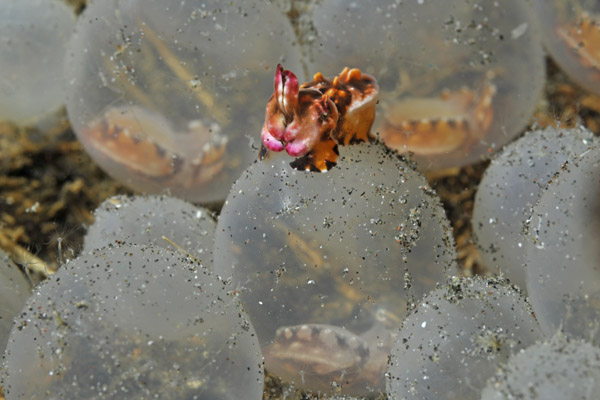
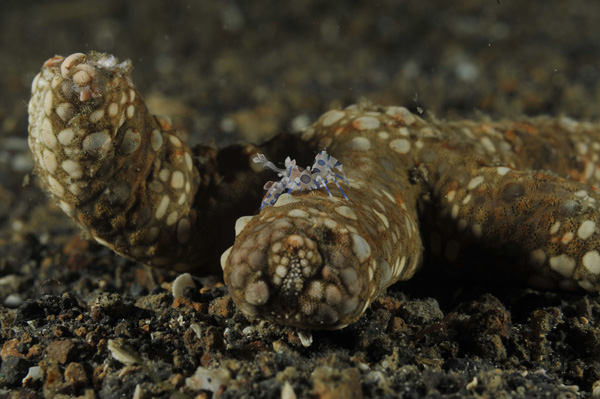
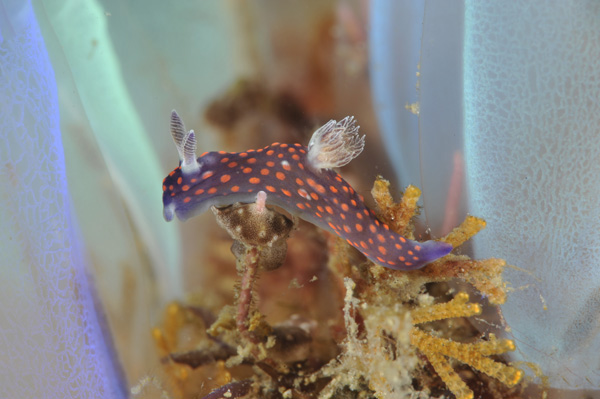
    Now that I've had a couple weeks here in Lembeh, I can say the TTL results with HW converter are quite good. I'll attach four pix I've gotten in the last ten days. Keep in mind these are shot with the first digital camera I've felt was worth using underwater vs my F5. Camera - Nikon D700. Lenses - 70~180 Micro-Nikkor zoom and OLD 105 f2.8 + Kenko 36mm extension tube for the little stuff. Housing Seacam with some controls slightly modified. Strobes - Hartenberger 250's with HW TTL converter.


    Fred

    post-1375-1253459822.jpg

    post-1375-1253459853.jpg

    post-1375-1253459881.jpg

    post-1375-1253459909.jpg

Marelux

Account

Navigation

Search

Search

Configure browser push notifications

Chrome (Android)
  1. Tap the lock icon next to the address bar.
  2. Tap Permissions → Notifications.
  3. Adjust your preference.
Chrome (Desktop)
  1. Click the padlock icon in the address bar.
  2. Select Site settings.
  3. Find Notifications and adjust your preference.