Skip to content

Lights, Strobes, and Lighting Technique / Archived topic

Studio snoot for underwater experimentation

Started by Drew ·

  • 14Posts
  • 14Replies

Read-only discussion

Studio snoot for underwater experimentation

14 posts
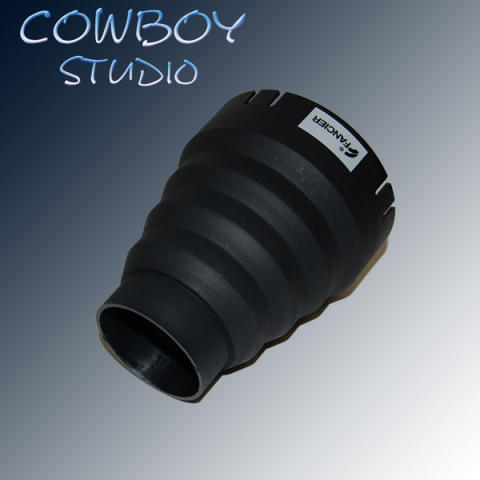
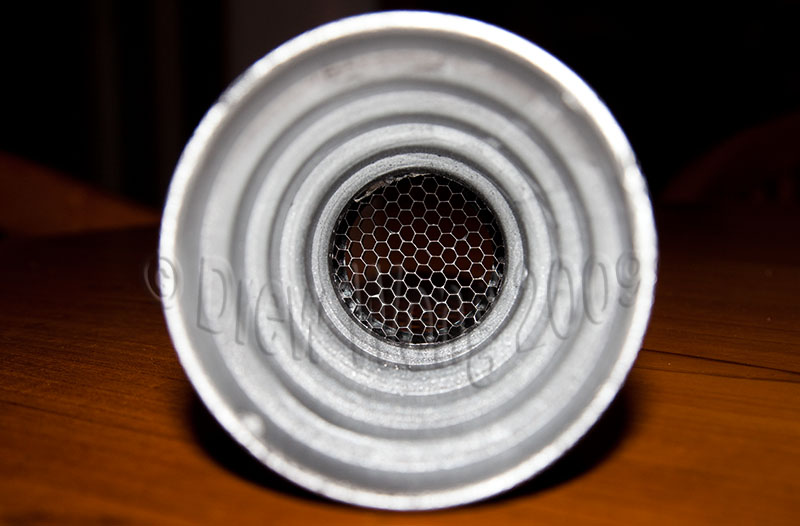
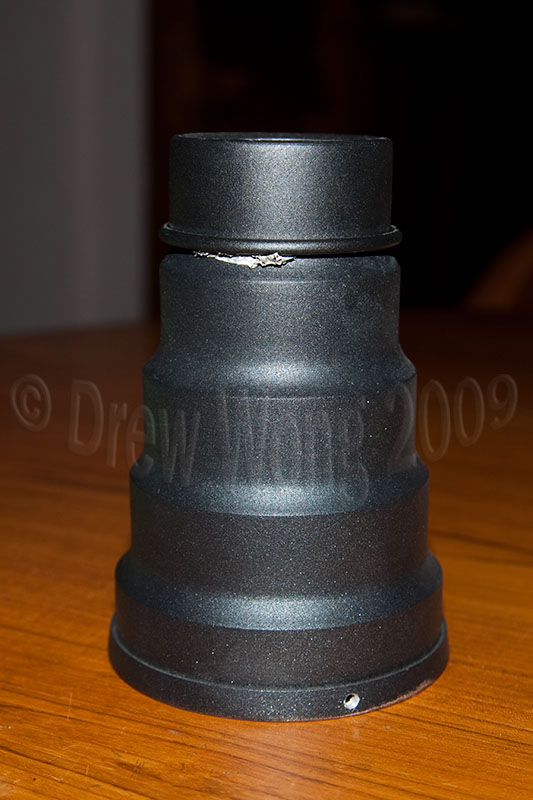
  1. While shopping for a new filter earlier this year, I saw an aluminum snoot made for studio lights. Just a simple black cone with filters and a pretty wide honeycomb at the tip. I bought one and sprayed the inside with non-VOC/Carcinogen Mythic Paint, mixing white and gray to get silver and using a gloss marine varnish by Earth Safe Green to give the reflective insides that extra shine.

    It took awhile to do all this but this is the result:
    post-1861-1253489328.jpg

    Painted interior (forgive the bad paint job but I did it by hand and got overly enthusiastic with the coats)
     

    post-1861-1253489303.jpg


    Just days ago, I went out to experiment with the 24-105mm IS with +3 diopter to try get some octopus with the new snoot on a Hartenberger 250TTLhs. I originally tried it with an Inon Z240. The handling was so easy but the power was anemic and recycling from full power was slow compared to the 250TTL. It also did not have a centered focus light for me to aim. I may revisit using it again later.

    Shooting with a snoot, the easiest way is to hand old with my left hand using the aiming light on the 250TTL to aim in the VF. The problem with the 250TTL is that it's got terrible balance and always wants to point up nose first due to the big battery at the back. It's also a bulky strobe so it was a bit of a struggle to keep it steady. Every mimic octopus I tempted out of the hole with the ol' moving sand just barely out of reach trick scattered once I lifted the snoot with the light and desperately tried to aim with my left hand while getting focus and composure with my right hand. All this while trying not to stir up the VERY silty bottom. A 45° VF or external monitor would've been very useful! And the 250TTL lasted maybe 70 shots with the focus light on at 1/2 power. Damned NiCd batteries!

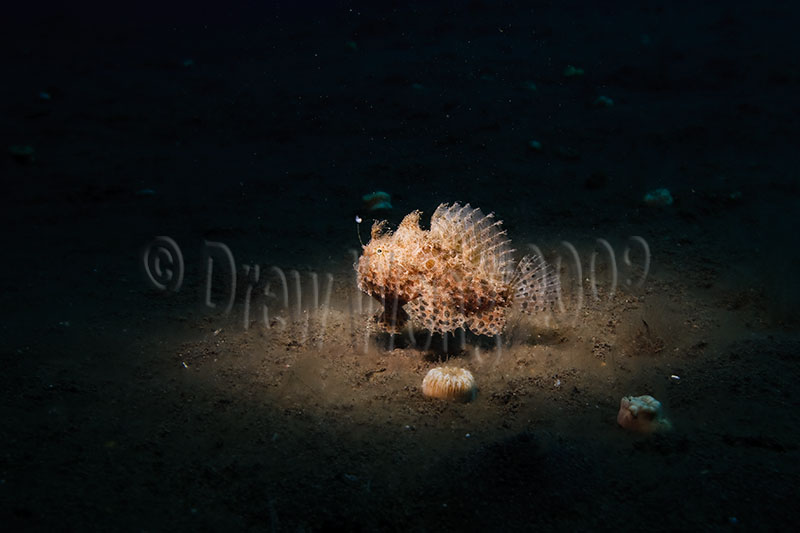
    I finally found a subject (juvie hairy frogfish) that was slower. The results are pretty much decent for lighting effect but the beam was too wide for the tiny frogfish. I'll have to figure out a way to narrow the beam on demand by making various attachments to the snoot to further narrow the beam based on subject.

    Here's one example. I'm behind in processing as usual ;)

    post-1861-1253489347.jpg

    Edited by Drew
  2. Dude, i keep telling people...


    Water bottle, toilet paper roll, and duct tape.. its not pretty, but it works ;)


    I will post examples later :guiness:

  3. I know I'm going to regret this but how many dives do you get out of your toilet roll? ;)

  4. The lifespan of Mike's snoot depends on if you use the single or two ply role! HAHAHA

  5. Toilet roll could serve a double purpose, especially on remote shore dives

  6. spicy Indonesian food! a never ending supply of snoots ;):guiness:


    About 2 days is all :lol:

  7. Dude, i keep telling people...


    Water bottle, toilet paper roll, and duct tape.. its not pretty, but it works ;)


    I will post examples later :guiness:


    Please! I get the water bottle part of it, as well as the duct tape. But the toilet paper roll????

  8. So that's why the Straits have so many floating water bottles. Mike!

    ;)

  9. I tried the plant water spray bottle, cut and put on the end of a Z220 but like you found it diificult. You definateley need a focus light working on the strobe for aiming. Nice image though!

  10. Very nice results and good tips. I'd like something less DIY looking - just because the home made ones make the camera look a bit ugly.


    This was taken with funnel with drain grate as egg crate - all held on with old wetsuit sleeve. Not as cheap as Mike's toilet roll, but longer lasting. James Wiseman in the background.


    Cay09_am21.jpg


    Alex

    Edited by Alex_Mustard
  11. You're getting good and this photography lark?

  12. Drew,


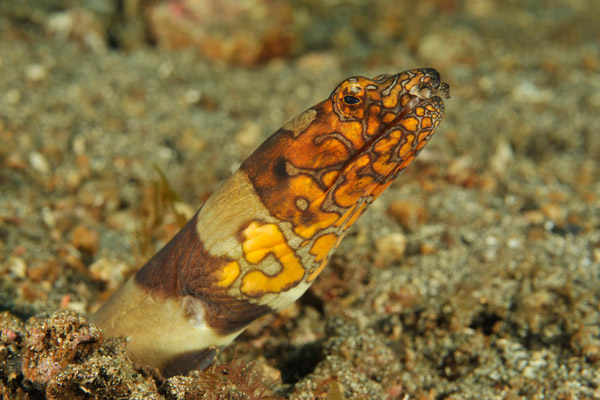
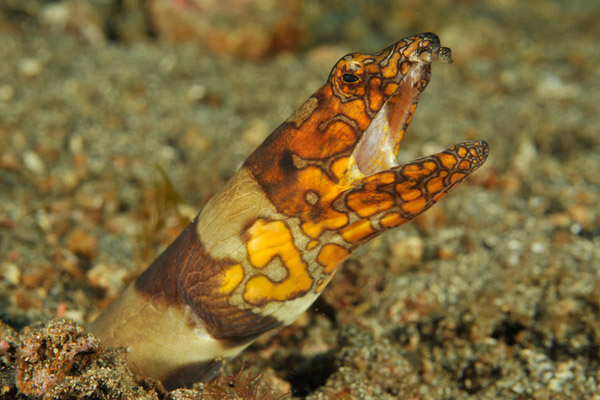
    You have to RECHARGE the Hartenberger battery packs BEFORE you use them. It is also very helpful if you "exercise" the battery pack if it hasn't been used for a while. When I did this prior to my trip I was able to get over 100 full power manual flashes, at one flash per minute, with the strobe turned on the whole time.


    It would also INCREASE the number of shots you get if you turn the modeling lamp OFF between subject sessions.


    I've just finished using a pair of Hartenberger 250's in combination with the Heinrichs Weikamp TTL converter for 25 diving days in the Lembeh Strait. And in many cases I shot all three of a day's dives without recharging. On average I had the strobes turned ON for three plus hours in addition to taking several hundred shots. The Nicads allowed me to snap off two or three shots as fast as I pull the trigger when special opportunities occurred.


    I'll attach a quick three shot sequence I shot last week. Probably couldn't have gotten both the second and third shots with any strobe other than the Hartenberger 250's.


    Maybe you kept your battery packs in the freezer too long since you last used them.


    Fred

    post-1375-1255002412.jpg

    post-1375-1255002448.jpg

    post-1375-1255002467.jpg

  13. This was taken with funnel with drain grate as egg crate - all held on with old wetsuit sleeve. Not as cheap as Mike's toilet roll, but longer lasting. James Wiseman in the background.

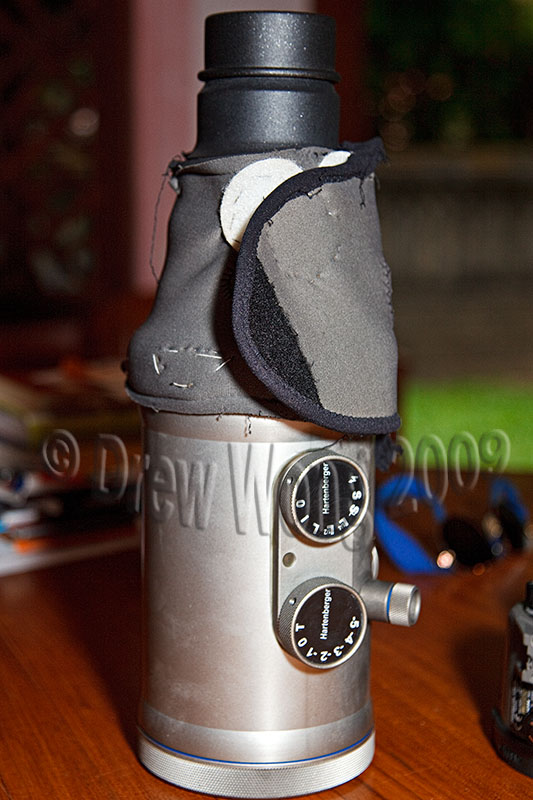
    Alex, that pic of james with his egg crates is impressive! :) I'm afraid I had to make even the seemingly mojo filled Hartenberger look ugly with my install solution. Insisting on recycling parts, I used an old neoprene pocket and sewed the ends so it'd fit snug over the strobe head. I now have a super snoot extension which I'm experimenting today. Here's a pic of my prototype without the extension:
     

    post-1861-1255056210.jpg


    Thanks for those tips, Fred. It never occurred to me to recharge. I thought they ran on hartenberger mojo!:P

    Keeping to point, I kept the focus light on to aim the strobe with the snoot while looking through the viewfinder, hence the light has to be on when I'm shooting a subject. Since I spent, on average, over 100 minutes per dive, waiting for the various subjects to play nice and my own inefficiencies in getting it right due to the difficulty I had hand holding the strobe, the Hartenberger batteries were exhausted. That happens as there's a finite charge in each battery cell. No affront to the strobe, just perhaps some of the technology, like the battery. Would NiMH have allowed me to have longer burn times? Yes. So would LED.

    Did I need 2-3fps for those shots? No but it would be nice but not necessary with hand held snoot shots.

    The NiCd battery packs are 2.4ah/12V, keeping the 20W halogen light on at full would mean a little over 88 minutes of burn time WITHOUT firing the strobe. The strobe is drawing at about 0.012ah per shot at full power, It's not surprising the battery died after 70+ shots with the light on for about 80 minutes throughout the 100+ minutes dive. It's simple mathematics. Use less power, you get more flashes. No mojo there. No need to leap to the deAs for the freeze, I'll trust 50 years of NASA battery tests anytime.

    Oh and in case anyone didn't notice, just because I bought a particular product for its specific abilities, I don't gush about the pros and overlook the cons. Just something I don't do. :)

Nauticam

Account

Navigation

Search

Search

Configure browser push notifications

Chrome (Android)
  1. Tap the lock icon next to the address bar.
  2. Tap Permissions → Notifications.
  3. Adjust your preference.
Chrome (Desktop)
  1. Click the padlock icon in the address bar.
  2. Select Site settings.
  3. Find Notifications and adjust your preference.