Skip to content

Photo / Video Showcase / Archived topic

Spotted Gully Sharks

Started by jtresfon ·

  • 6Posts
  • 6Replies

Read-only discussion

Spotted Gully Sharks

6 posts
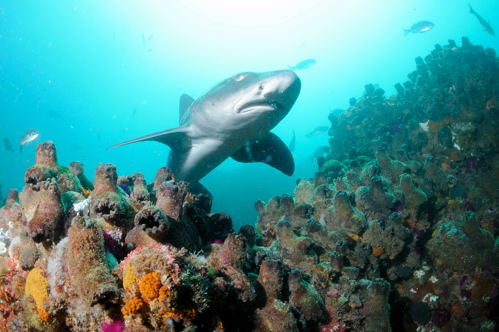
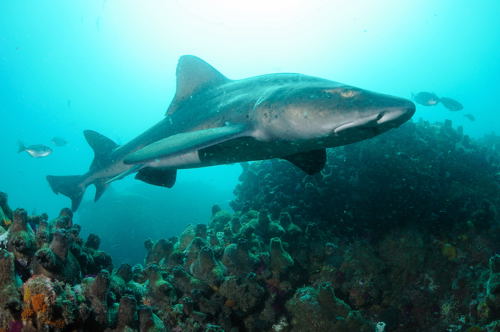
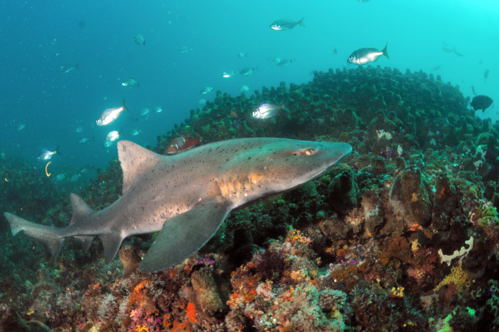
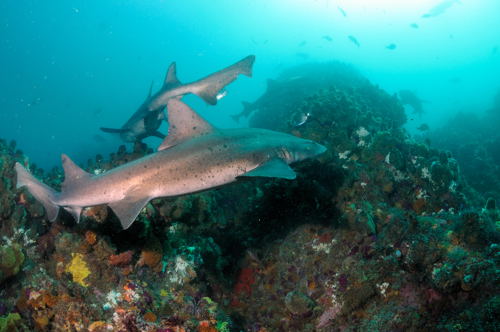
  1. I spent the weekend 300km up the coast from Cape Town at a hamlet called Cape Infanta, situated at the mouth of the Breede River. Previously I have had very good interactions with ragged tooth sharks at this spot and I was hoping for more of the same. Unfortunately the raggies did not put in an appearance, but as a consolation prize I found a group of around 10 spotted gully sharks working the top of the reef in a hunting pattern. The sharks appeared to work together to herd the fish into a concentrated area and then would take turns to accelerate into the mass and grab a fish.
     

    post-2915-1260806234.jpg


    post-2915-1260806260.jpg


    post-2915-1260806298.jpg


    post-2915-1260806328.jpg


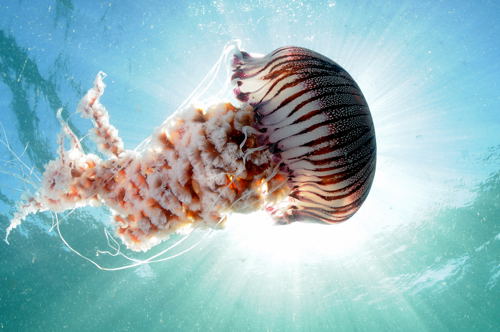
    On the way back to the launch site we saw some large jellies drifting near the surface and hopped in for a quick photo opportunity.
     

    post-2915-1260806357.jpg


    Another good day at sea, beats being at work!


    Regards

    Jean.

  2. Great Jean; thanks for sharing - always something new!

  3. Love that jelly shot :D

  4. Great Jelly shot!

    Mike

  5. what a cool looking shark, never heard of one before. do they go by another name as well?

  6. what a cool looking shark, never heard of one before. do they go by another name as well?


    Also called the Sharptooth Houndshark (according to Wikipedia) although I've never heard that name before.


    From www.redlist.org: The Spotted Gully Shark (Triakis megalopterus) is an uncommon inshore species with limited distribution in waters off South Africa, Namibia and southern Angola. The species is exploited by unregulated shark fisheries. An inshore, bottom-dwelling shark of temperate coastal waters with a limited geographic and bathymetric range, found often in shallow water up to the surfline. It prefers sandy shores and rocks and crevices in shallow bays. During summertime this shark congregates in schools, particularly in False Bay and off the Cape Peninsula, Western Cape, South Africa, which may include pregnant females. Development is ovoviviparous, without a yolk-sac placenta and the number of young is 6–10 per litter. This shark eats crabs, bony fishes and small sharks. Red List Category & Criteria: Near Threatened.


    Regards

    Jean.

Retra

Account

Navigation

Search

Search

Configure browser push notifications

Chrome (Android)
  1. Tap the lock icon next to the address bar.
  2. Tap Permissions → Notifications.
  3. Adjust your preference.
Chrome (Desktop)
  1. Click the padlock icon in the address bar.
  2. Select Site settings.
  3. Find Notifications and adjust your preference.