Hi Pam,
Nice shots! Are you shooting manual or auto on both SLR and strobes?
If auto, you may need to change your metering mode depending on your subject size and position in the composition.
I'd suggest going full manual though... then the learning really begins and you dont have to rely on ETTL working with different metering modes.
Try setting your camera up with base settings and move from there. For wide angle, i personally start at 100/1 at F10 at 200iso. From there alter your shutter speed depending on the ambient light. For example, change to a faster shutter speed if your aiming towards the surface/sun and the background is washing out. (125/1 -200/1 - 250/1). Or if the background is dark, change to a slower shutter speed(80/1 or 60/1. (change ISO if your working in more challenging lighting conditions). Getting the background right is the first step in shooting wide angle, then you worry about correctly exposing the foreground with your strobes.
A good starting point is to set your strobes to say 1/2 power. If the subject/foreground is overexposed, you have three choices.; The first is to drop your strobe output to 1/4 power. The second is to increase the F stop to say F11/F13. The third is to move your strobes further back from the subject/foreground. Generally though, get your strobes into the best position for the situation your in, then alter the strobe power and tweak via F-stop.
This is a very basic rundown, but there are many ways to change the amount of light on your subject and reaching your CCD, so its best to experiment on manual settings and learn how to adjust them all to fulfill your creative vision.
Here's some suiggestions based on your images:
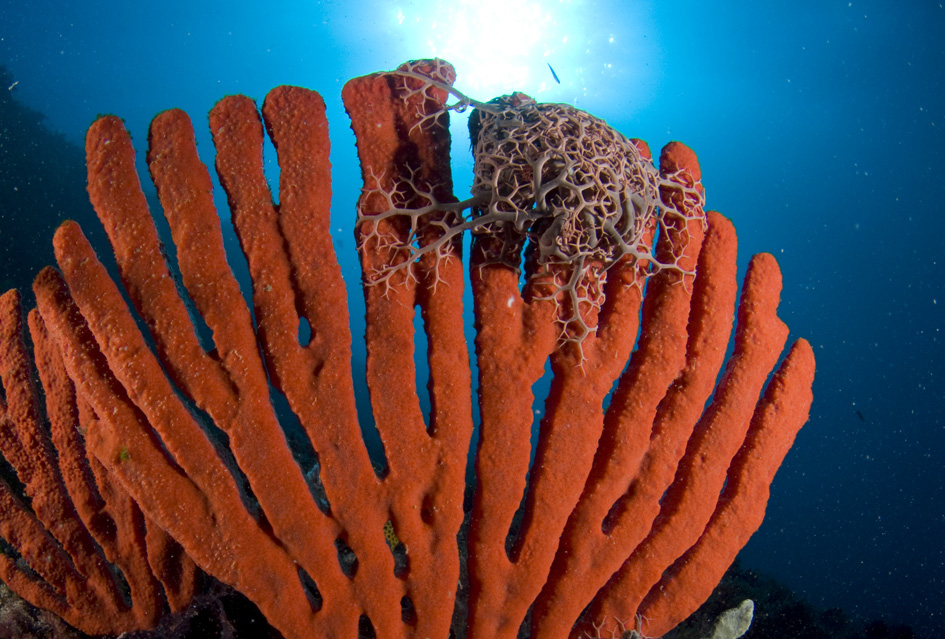
Pic 1: Increase the shutter speed 1 or 2 stops.
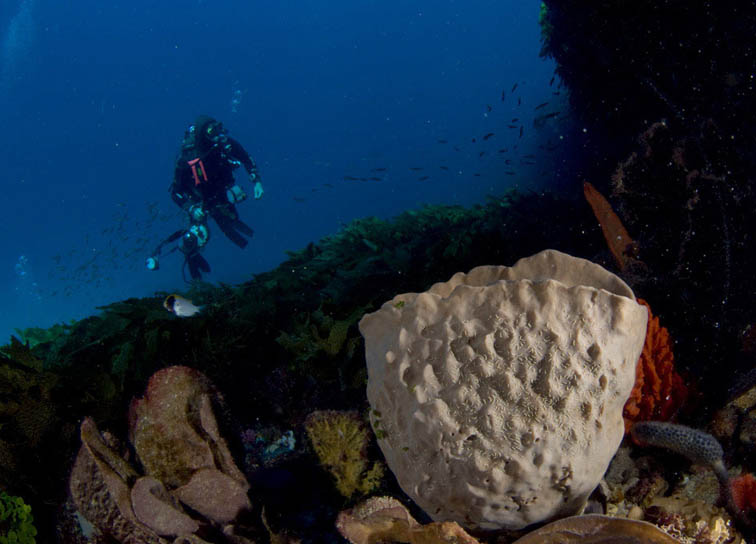
Pic 2: Tough situation, but if you had of just skimmed the fish with the cone of your left strobe (instead of directly at the fish), it wouldn't have blown him out so much, and still reached the fish further back.
Pic 3: Increase the shutter speed 1 or 2 stops.
happy snapping!
Pete




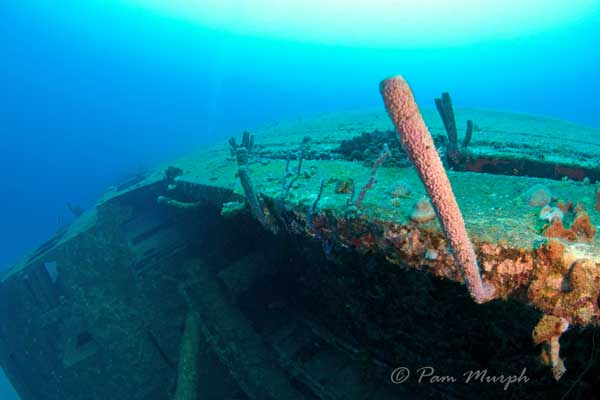
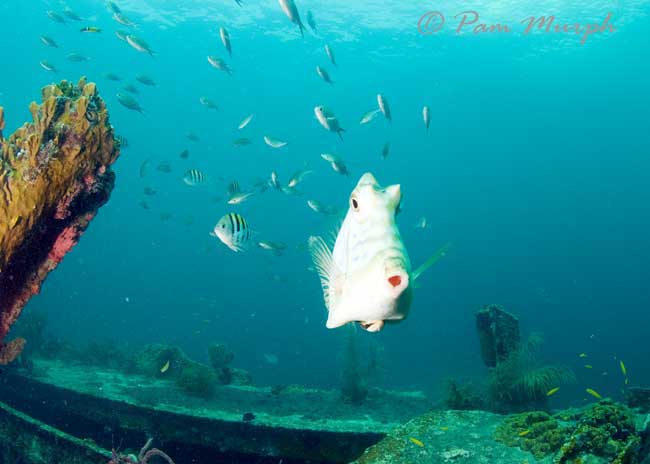
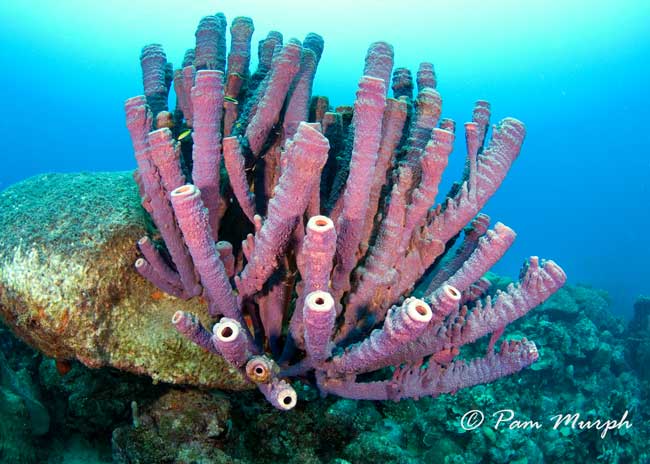
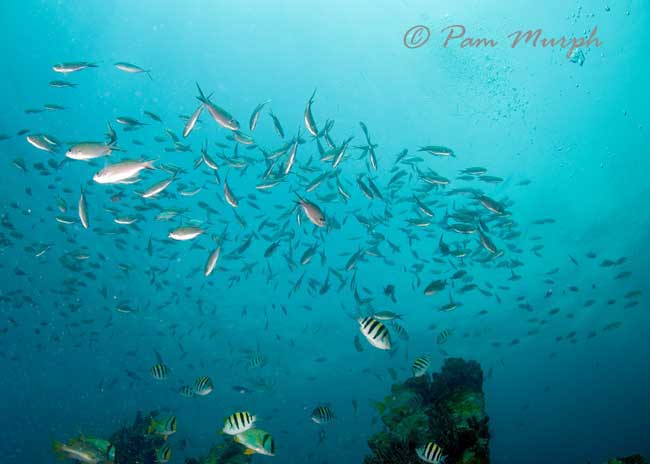
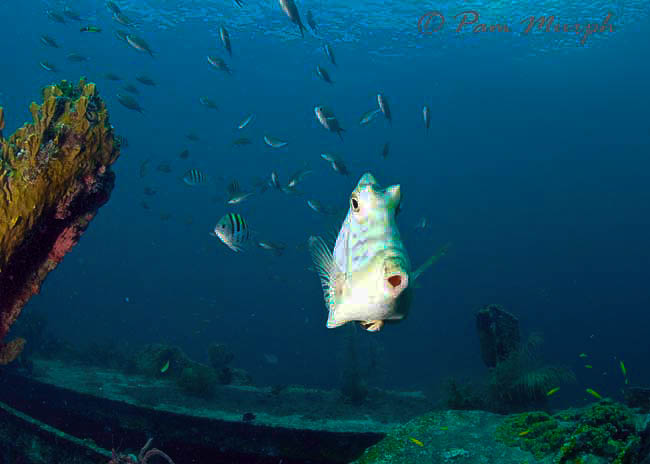
 I wasn't suggesting you process differently or use a different program. I just wanted you to see how they would look if you used less exposure when you shoot. You can use the exposure slider in Adobe Camera Raw when you bring the files into Photoshop to see what I mean. It's always better to try and get it right in the camera though.