



When you think modification, you think of cars and car tuners like Novitec Rosso, AMG or Ruf. But ViDSLRs also have their tuners, and FGV Schmidle has converted 2 of Canon's ViDSLR cameras to become cinematography beasts. The FGV PL1D (EOS 1D Mark IV) is the latest (Sep 2010) modification which includes removing the mirror system and viewfinder to refit a PL mount to use cinematography lenses like Arri-Zeiss and Leica. The APS-H sensor is the same size as the S35 4 perf film, making it the perfect vehicle for the FGV LWS assembly.
The LWS assembly includes 2x15mm thick rods to align and support PL lenses. Finishing touches include cable protectors for the HDMI/USB outlets, which can wear out when used constantly. The Canon 1DMark IV is considered to be the best low noise ViDSLR camera out there, due to features and image quality. The darling of ViDSLR cinematography, the 5D Mark 2 could not be converted because the full frame sensor is too big for PL mount lenses and vignetting would occur. Some PL lenses will vignette with the 1D Mark IV.

The PL1D

The PL1D with Arri/Leica Master Prime lens
For S35 3 perf and complete PL lens compatibility, FGV first converted the EOS 7D, calling it the PL7D. The sensor is a good fit to the S35 film (22.3 x 12.53mm vs 23.11 x 12.98mm S35 3 perf ANSI 1.78). FGV released that camera in March 2010.

7D with Angenieux zoom and Arri remote focus and zoom motors.
The price of the PL1D is €8500.
Another company which has been offering PL mount kits is Hot Rod Cameras, run by Illya Friedman in Burbank, CA. Their products have been used by many production companies for TV, commercials and music videos. The Hot Rod PL system is designed more for hand held applications and doesn't have the same exhaustive modifications as the FGV models.
There are PL kits for the 5D Mark II (along with the list of PL mount lenses that can be used without vignetting) and 7D.
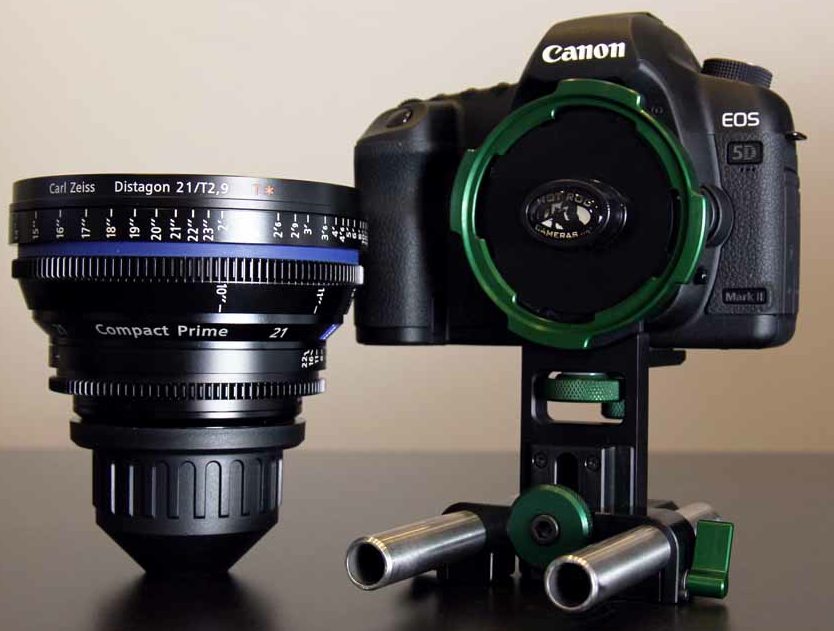
The Hot Rod 5D PL kit
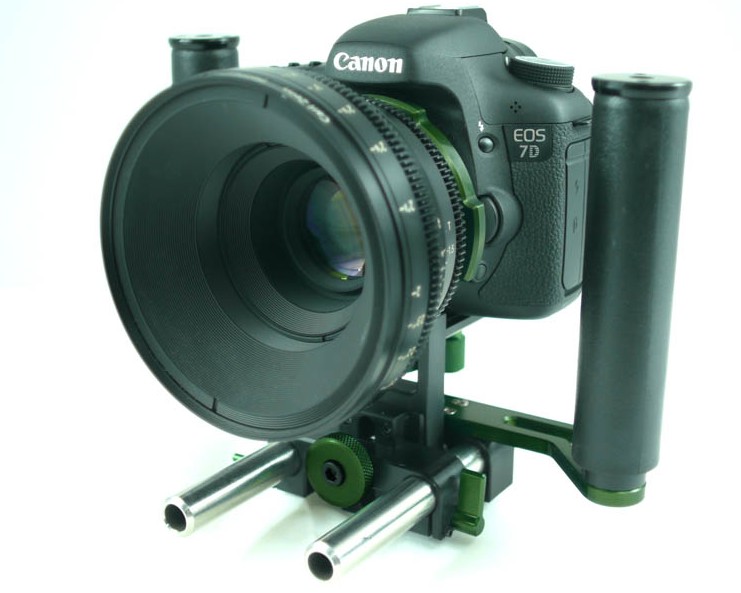
Hot Rod 7D PL kit
As the ViDSLR phenomena continues, it'll be interesting to see if housing manufacturers start incorporating video features into the still housings. Or maybe there'll be a tuner somewhere who can modify normal DSLR housings into real video power houses? One can only hope.


 I had to edit some of your wording as we have a strict non-commercial policy for industry members.


