Skip to content

Shooting Technique, Workflow and Editing / Archived topic

high speed flash sync

Started by Mary Malloy ·

  • 16Posts
  • 16Replies

Read-only discussion

high speed flash sync

16 posts
  1. Hi everyone,


    I am noticing a few images getting posted where the camera specs are say 320th sec AND Inon strobes on Nikon cameras. I'm guessing the external strobes are connected optically so the camera doesn't know about them. But it looks like Inon strobes (settings unknown to me) work just fine above 250th second?

    Is there anything I should know, settings etc


    I know with my D200 high speed fp flash is unavailable with pop up flash, not sure about my D300 though.


    Thanks

    Mary

    Edited by Mary Malloy
  2. Hi everyone,


    I am noticing a few images getting posted where the camera specs are say 320th sec AND Inon strobes on Nikon cameras. I'm guessing the external strobes are connected optically so the camera doesn't know about them. But it looks like Inon strobes (settings unknown to me) work just fine above 250th second?

    Is there anything I should know, settings etc


    I know with my D200 high speed fp flash is unavailable with pop up flash, not sure about my D300 though.


    Thanks

    Mary


    As far as i'm aware, no underwater strobes are capable of pulse firing in FP mode(which would probably require housing manufacturers to also modify their electronics to allow communication of this setting). So i'd say images shot at 320th sec will have some level of curtain shadowing appearing in the image, but it just might not be noticeable (or cropped in post-processing). The shadowing could be even less noticable if a low strobe output was being used, due to the quick flash duration nearing the shutter speed.

    Edited by Pfuller
  3. Hi everyone,


    I am noticing a few images getting posted where the camera specs are say 320th sec AND Inon strobes on Nikon cameras. I'm guessing the external strobes are connected optically so the camera doesn't know about them. But it looks like Inon strobes (settings unknown to me) work just fine above 250th second?

    Is there anything I should know, settings etc


    I know with my D200 high speed fp flash is unavailable with pop up flash, not sure about my D300 though.


    Thanks

    Mary


    Because of the shutter curtain limitations most SLRs are limited in flash sync speed. There are two Nikons currently that I know of that are capable of getting the shutter curtain out of the way fast enough for that speed and that is the D300 and the D7000. They have a max sync speed of 1/320th. If you were using a Hasselblad or other leaf shutter camera you could shoot with a much faster sync but SLR cameras have always been limited.

    Edited by focker
  4. Hey Mary


    On your Nikon D300

    Go to Menu > Custom Settings Menu > "e" Bracketing Flash > "e1" Flash Synch Speed > 1/320s (Auto FP) > OK.


    I use electronic Synch cables (Nikonos / Sea & Sea) on my Inon Z240's Subal combination With the Inons set to Manual.

    It's then possible to dial the camera shutter speed up to a maximum of 1/320s

    This setting is really handy for rendering black backgrounds and getting good balanced light images in bright conditions and helps with sunbursts.


    The old Nikon D70S was the best Kid on the block for flash synch speeds giving a whopping 1/500s


    I hope this is useful


    Nige Wade

  5. The D3 and the D700 also sync at 1/320

  6. As far as i'm aware, no underwater strobes are capable of pulse firing in FP mode(which would probably require housing manufacturers to also modify their electronics to allow communication of this setting). So i'd say images shot at 320th sec will have some level of curtain shadowing appearing in the image, but it just might not be noticeable (or cropped in post-processing). The shadowing could be even less noticable if a low strobe output was being used, due to the quick flash duration nearing the shutter speed.

    The duration of the strobe "Flash" is between 1/1000 to 1/10000 second the slower speed delivering the most light.

    With a maximum shutter speed of 1/320s there is plenty of time for the front and rear curtains to fully open then the strobe to fire before the curtains close leaving no shadowing in the final image.


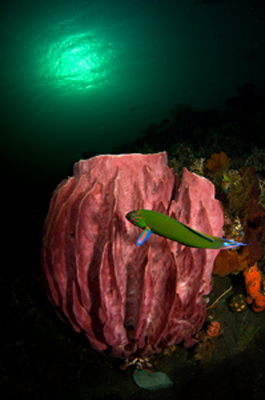
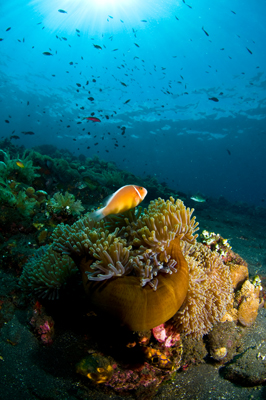
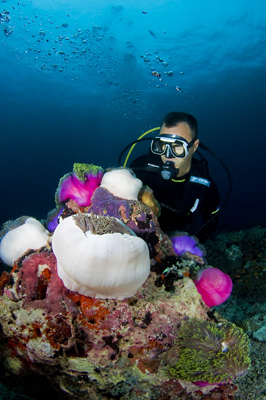
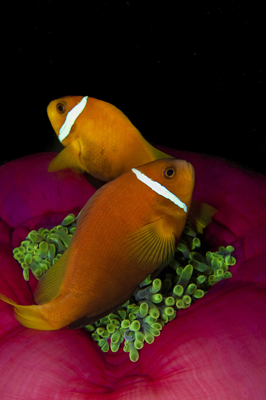
    these images were all taken @1/320s @ various f stops between f7.1 & f16 and twin Inons they are all uncropped and show no curtain shadowing


    post-6945-1293356322.jpg post-6945-1293356356.jpg post-6945-1293356381.jpg post-6945-1293357168.jpg post-6945-1293357180.jpg


    It's Boxing Day, the In-Laws are at my house and I'm so obviously bored :) I need to go Diving !!!!


    Nige Wade

  7. Hey Mary


    On your Nikon D300

    Go to Menu > Custom Settings Menu > "e" Bracketing Flash > "e1" Flash Synch Speed > 1/320s (Auto FP) > OK.


    I use electronic Synch cables (Nikonos / Sea & Sea) on my Inon Z240's Subal combination With the Inons set to Manual.

    It's then possible to dial the camera shutter speed up to a maximum of 1/320s

    This setting is really handy for rendering black backgrounds and getting good balanced light images in bright conditions and helps with sunbursts.


    The old Nikon D70S was the best Kid on the block for flash synch speeds giving a whopping 1/500s


    I hope this is useful


    Nige Wade


    Thanks Nige,


    This is exactly what I am looking for. I knew about those setting but didn't know they would work with underwater strobes. I also use cables so tried these settings tonight on the kitchen table with my old YS300 strobes, it works!


    Why then are cameras limiting sync speed when flash durations are so short?


    My quest is to now freeze fast moving dark seals against the surface. Just turn everything UP.


    Mary


    BTW nice images

  8. Why then are cameras limiting sync speed when flash durations are so short?


    If you read the section "What Limits Sync Speed" in this link: http://www.kenrockwell.com/tech/syncspeed.htm it should help explain.


    And this quote may help from the Digital SLR Guide:

    Shutters are actually made up of two separate curtains, and you can think of them exactly like the ones that hang in front of windows.

    When you take a photo with a slow shutter speed, the first curtain snaps open to expose the sensor to light, then the second curtain snaps closed to block the light.

    But when you use a very fast shutter speed, the second curtain starts to close before the first one opens all the way.

    If the curtains travel together like this, they won't play nice with your flash: this is the flash sync (shutter) speed.

  9. If you read the section "What Limits Sync Speed" in this link: http://www.kenrockwell.com/tech/syncspeed.htm it should help explain.


    And this quote may help from the Digital SLR Guide:

    Shutters are actually made up of two separate curtains, and you can think of them exactly like the ones that hang in front of windows.

    When you take a photo with a slow shutter speed, the first curtain snaps open to expose the sensor to light, then the second curtain snaps closed to block the light.

    But when you use a very fast shutter speed, the second curtain starts to close before the first one opens all the way.

    If the curtains travel together like this, they won't play nice with your flash: this is the flash sync (shutter) speed.


    O.K. I get this, but what happens to my D300 when I do this:


    Menu > Custom Settings Menu > "e" Bracketing Flash > "e1" Flash Synch Speed > 1/320s (Auto FP) > OK.


    What has changed in the camera to make my sync go from 250th to 320th?

  10. O.K. I get this, but what happens to my D300 when I do this:


    Menu > Custom Settings Menu > "e" Bracketing Flash > "e1" Flash Synch Speed > 1/320s (Auto FP) > OK.


    What has changed in the camera to make my sync go from 250th to 320th?


    Mary check this explanation out Auto FP


    It's a fairly long read, lots of information but actually explains it quite well.


    Inlaws are still here and driving me nuts. When can I go diving?


    Nige Wade

  11. O.K. I get this, but what happens to my D300 when I do this:


    Menu > Custom Settings Menu > "e" Bracketing Flash > "e1" Flash Synch Speed > 1/320s (Auto FP) > OK.


    What has changed in the camera to make my sync go from 250th to 320th?


    Nothing i would think...its just not limiting the shutter speed to 1/250 when it detects an onboard flash.


    1/320th is the physical max sync speed of the D300 (in fact i have read its 1/400th), but they have made it optional because of the limitations/issues it can cause when using full powered (or sometimes 1/2 powered) strobe bursts. (flash durations slower than 1/1000th)


    1/320 apparently wont allow all the light of a 1/1000th second strobe burst to reach the sensor, and so they have made it an custom setting so it doesn't trip people up.


    Now i cant explain exactly why 1/320 only allows 1/1000th of flash, and Nigel photos dont appear to have any shadowing, but i have read that it can be an issue, so i reckon this is what is happening:


    When in 'first curtain sync mode', the flash will fire when the first shutter is fully open, but presumably there is a delay between the first shutter being fully open and when the flash is actually fired. This delay must be enough to reduce the amount of light from a flash exposure to 1/1000th.

  12. When you set your camera to use 'Auto FP' mode, nothing on the camera changes. Your Nikon Speedlight, however, will now fire a series of VERY fast flashes to follow the shutter curtains across the Film Plane (hence, "FP") Your Inon/S&S/Ikelite strobes are not designed to do this and so you cannot take advantage of this function underwater when using them. It is a fantastic feature above water, allowing you to control depth of field with flash even in daylight, but it only works with Nikon's dedicated speedlights. In cameras that support normal flash sync at 1/320, that is the fastest speed at which the shutter is fully open when the flash fires. I hope this helps.


    Randall

  13. Thank you everyone,


    I am looking forward to getting my new faster sync speed under the local piers where previously I found the backgrounds over, even with my slowest iso. I am going to try sunbursts again too.


    Is there a flash housing manufacturer which allows communication with Nikons in their housings for auto FP to work underwater?


    Mary

  14. Thank you everyone,


    I am looking forward to getting my new faster sync speed under the local piers where previously I found the backgrounds over, even with my slowest iso. I am going to try sunbursts again too.


    Is there a flash housing manufacturer which allows communication with Nikons in their housings for auto FP to work underwater?


    Mary


    Its more a matter of finding an underwater strobe that will pulse fire..and i'm not sure such a strobe exists. Pulsing means making up the strobe output in a number of shorter discharges. For example , if your firing at full power, in FP mode the strobe will output say four 1/4 power discharges in a short period, so each part of the sensor recieves an equal amount of light from the strobe as the gap in the shutter moves across the sensor. When the sync speed is under the max, the flash will fire once to expose the sensor. However when the sync speed is over the max, the shutters move so fast that they will cut off some of the light from the single strobe burst. FP mode allows the strobe to pulse the output, so as the shutter gap moves across the sensor plane, each burst will be recieved by a part of the sensor and correctly expose the entire sensor with the total strobe output set.

  15. Thank you everyone,

    I am looking forward to getting my new faster sync speed under the local piers where previously I found the backgrounds over, even with my slowest iso. I am going to try sunbursts again too.

    Is there a flash housing manufacturer which allows communication with Nikons in their housings for auto FP to work underwater?

    The Nikon FP and Canon High Speed flash sync modes require that the flash itself operates at a very special mode. In this mode the flash tube is capable of producing a rather long burst of light, that is long enough to let the curtains of a focal plane shutter complete their travel from one side to the other. On both Nikon and Canon this is supported only by their respective dedicated external Speedlites, and only when they are connected to the hot shoe directly.

    Here is a link where the FP mode is measured from a Canon Speedlite & explained pretty well in a technical way:

    http://eosdoc.com/manuals/notes/discharge/#Section4

    Instead of one short continous but strong flash, the FP mode outputs a modulated (40 to 50 kHz) longer burst, which is also not as intense.

    hs_start.gif


    Some 3rd party topside flashes (like Sigma, Metz etc) might also support FP mode, at least in manual, sometimes even with TTL. But only with the original dedicated flash units you get (somewhat) dependable functionality.


    No underwater flash to my knowledge can do FP or High Speed flash sync.


    However, you can get underwater housings for Canon and Nikon Speedlites. At least Subal has these, so maybe this would be a way to get FP sync to work underwater?


  16. The Nikon FP and Canon High Speed flash sync modes require that the flash itself operates at a very special mode. In this mode the flash tube is capable of producing a rather long burst of light, that is long enough to let the curtains of a focal plane shutter complete their travel from one side to the other. On both Nikon and Canon this is supported only by their respective dedicated external Speedlites, and only when they are connected to the hot shoe directly.

    Here is a link where the FP mode is measured from a Canon Speedlite & explained pretty well in a technical way:

    http://eosdoc.com/manuals/notes/discharge/#Section4

    Instead of one short continous but strong flash, the FP mode outputs a modulated (40 to 50 kHz) longer burst, which is also not as intense.

    hs_start.gif


    Some 3rd party topside flashes (like Sigma, Metz etc) might also support FP mode, at least in manual, sometimes even with TTL. But only with the original dedicated flash units you get (somewhat) dependable functionality.


    No underwater flash to my knowledge can do FP or High Speed flash sync.


    However, you can get underwater housings for Canon and Nikon Speedlites. At least Subal has these, so maybe this would be a way to get FP sync to work underwater?

    The subal housings for the Canon strobes (ginormous as they are) do indeed allow for high speed sync but no dedicated UW flash that I know of does.

    Bill

AOI

Account

Navigation

Search

Search

Configure browser push notifications

Chrome (Android)
  1. Tap the lock icon next to the address bar.
  2. Tap Permissions → Notifications.
  3. Adjust your preference.
Chrome (Desktop)
  1. Click the padlock icon in the address bar.
  2. Select Site settings.
  3. Find Notifications and adjust your preference.