



Skip to content

Photography Gear and Technique / Archived topic

Apparent front entrance pupil position for wide lenses

Started by PeteAtkinson ·

  • 15Posts
  • 15Replies

Read-only discussion

Apparent front entrance pupil position for wide lenses

15 posts
  1. I am wondering what measurements people are using for setting up domes, so the centre of curvature is in the same place as the no parallax point, or apparent front entrance pupil of the lens. Panoramic photographers measure the position of this using expensive pano heads, and can get accurate measurements of the no parallax point.

    The data I have on NPP positions, some filched from pano sites, others measured very imperfectly is:


    10-17 Tokina 58.2mm in front of Nikon lens mount


    12-24 Nikon @12mm 66mm in front of lens mount

    12-24 @ 15mm 62.5mm in front of lens mount

    12-24 @ 20mm 63mm in front of lens mount

    12-24 @ 24mm 65.5mm in front of lens mount


    8-16mm Sigma @ 8mm 70.8mm in front of lens mount

    8-16mm Sigma @16mm 66mm in front of lens mount.


    What measurements are other's using and does anyone have data measured cafefully with a pano head for these lenses?

    Jean, what measurements do Aquatica use?

    I ask, because I'm hoping to end up with the correct dome extensions for my new housing!
  2. Hi Pete,


    A little off topic (but I am in Cayman now) and have pool access. Please can you re-email me those grid tests you want me to shoot with the Nikon 16-35mm on FX.


    Alex

  3. I am wondering what measurements people are using for setting up domes, so the centre of curvature is in the same place as the no parallax point, or apparent front entrance pupil of the lens. Panoramic photographers measure the position of this using expensive pano heads, and can get accurate measurements of the no parallax point.

    The data I have on NPP positions, some filched from pano sites, others measured very imperfectly is:


    10-17 Tokina 58.2mm in front of Nikon lens mount


    12-24 Nikon @12mm 66mm in front of lens mount

    12-24 @ 15mm 62.5mm in front of lens mount

    12-24 @ 20mm 63mm in front of lens mount

    12-24 @ 24mm 65.5mm in front of lens mount


    8-16mm Sigma @ 8mm 70.8mm in front of lens mount

    8-16mm Sigma @16mm 66mm in front of lens mount.


    What measurements are other's using and does anyone have data measured cafefully with a pano head for these lenses?

    Jean, what measurements do Aquatica use?

    I ask, because I'm hoping to end up with the correct dome extensions for my new housing!


    65mm is what I got for the 12-24mm @ 12mm, The optical bench I designed is made to give me the proper extension, you dial it in and choose the extension which is the closest, then back your data in the pool on a grid, I'm affraid I don't keep these numbers on file as all I am interested in the end, is what extension (if any) is right. BTW, the only reason I remember about the 12-24mm @ 12mm is because I scribbled the numbers on the corner of my personal lens guide page.


    The 8-16mm I expect to have in the shop sometime in the next month, you propably mentioned it at some point before, but as a reminder, camera body vary in dimension and there placement inside the housing as well, this will vary from one brand to another and even inside the same maker. So make sure you are specific on the camera and housing used.


    Cheers

  4. To clarify, the position of the NPP is fixed for each lens (it does change a bit when zooming) and that's the data needed. With that, you can then measure for any camera and housing where that position will be in front of the housing. Place the dome such that the centre of curvature is on the NPP position and measure the gap between the housing and port to get the length of extension required.

    For Nikon, the front of the lens mount to the film plane is 46.5mm - often NPP data is given to the film plane and not the lens mount, but for measuring when the camera is in a housing, the lens mount is a lot easier to measure to.

    Jean, your figure for the 12-24, is very reassuring! I look forward to hear what you make of the 8-16!

  5. I am just starting on panoramic photos and found this thread. I have a 8mm Sigma and 8mm Nikon. How would I find the distance to the ?NNP? point of these lenses?


    Thanks for any help you can give me.

  6. When working out entrance pupil positions for underwater use with domes it needs to be remembered that the tolerances aren't as critical as you might think by physical necessity. For a start the dome itself is a simple lens made of thickish material (~5mm or so), next the position of the camera within the housing will have some inherent flexibility (although there is now quite tight tolerance here +/- 0.25mm perhaps?) and lastly there is the port and its extender range (I can only quote Seacam, but the extenders are built in 5mm increments although no doubt custom extension could be made if deemed necessary). Also if you remember that many lenses physically enlarge when focusing closer, so it should become clear that whatever point is chosen will be a compromise to some extent and will need final in-water testing to fine tune for the type of photo you take.


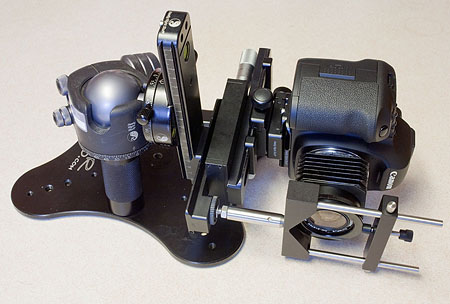
    FWIW I have just built a system which allows me to focus by moving the camera using a micrometer drive. This enables a fixed lens, fixed perspective and fixed entrance pupil position but I have no idea if it would be feasible underwater (my system is far too bulky and complex at the moment and only works with older, small aperture fixed focal length lenses which are simple designs and less compromised than most modern designs). It has a specific purpose and whilst potentially useful underwater would be very tricky to house!

  7. That micrometer drive would be perfect for moving the camera in relation to a dome placed dome-down on a test tank with a test chart (or netting) on the bottom. The camera can be in air. You could then move the camera lens NPP through the centre of curvature incrementally and compare the results of different domes and lenses. You could then tell us whether we are worrying unnecessarily!! For the lenses I have tried, (10-17, Sigma 8-16 and Nikon 12-24) zooming affects the NPP, the focus didn't seem to have an impact that I could notice. But I am using very basic measuring techniques!

  8. Well Pete if you can figure out how to get it into a housing.....

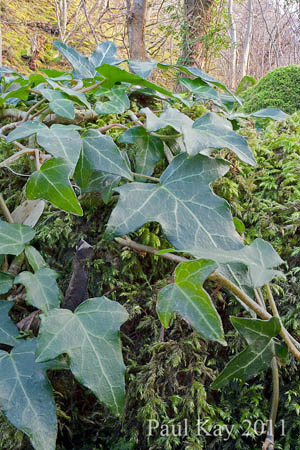
    post-1587-1295960644.jpg and this is what its for: post-1587-1295960755.jpg

    5cm to infinity in focus!

    Edited by Paul Kay
  9. Aaaahh! What a delight to see!

    You don't need the camera in a housing. Just a tank on the floor with a test target on the bottom, the dome fixed just below the surface (with the port extending above the surface) and the camera on a rig suspended above it with the micrometer drive.

    More details about your infinite depth of field rig would be interesting...

  10. Hi Pete


    Micrometer drives are available from Thorlabs or Newport optical mechanical suppliers. They are not cheap and you'll need one with a reasonable travel - mine has 1" and cost £180.


    My infinity rig maintains a static entrance pupil and hence perspective but varies magnification as the camera travels backwards to focus closer. I use stacking software to build up infinite depth of field images but to do so the subject must be static and lighting should be as flat as possible - I built it for specific requirements though. I'm sure that stacking software will change and its already possible to but an automated 'stacker' driven by a stepper motor - lots of potential. Biggest problem is finding an appropriate lens - one which is an 'unstressed' design and which performs well close up but which does not utilise close range correction by internal optical element shifts - so far old OM lenses (the cheaper slower aperture variety) work best. Clearance between lens and camera are a real problem at the infinity setting - basically its a messy business!


    FYI I'm working on a new book for Matt at the moment!!! I visited this year and he's looking very good and still absolutely full of enthusiasm.

  11. Years ago Al Giddings told me of an easy way to estimate where the nodal point of a lens is. Partially close down the diaphragm of the lens. Then look into the front of the lens and position your finger on the outside of lens at the distance where the diaphragm appears to be when you focus you eye on it. Mark this point. Do the same thing from the rear of the lens. Mark that point. The nodal point of the lens, he said, would be mid-way between the two marks. Then position the estimated nodal point at the center of the hemisphere of which your dome is a part of. He also said that a couple millimeters either way wouldn't make a big difference. This is probably not as accurate as using micrometer drives and other fancy equipment, but it is a good place to start. And very quick and inexpensive.


    Fred

  12. And very quick and inexpensive.


    Fred

    Yes its a simple, quick and easy way to estimate a good starting point. I should also have commented that some manufacturers do publish measurements - Leica and (I think) Zeiss) - but neither Nikon nor Canon seem to want to do so.

  13. My understanding is that the apparent front entrance pupil or no parallax point is where the iris appears to be when you look in the front of the lens, not further back as Fred suggests. If you line up pins looking through the viewfinder on a board and project those back, where they intersect is the apparent front entrance pupil. (UWP36 has an article about how to do this). If you sight along those pins towards the lens, it's also where the iris appears to be. The measurements I get from this technique tally with those derived by panoramic photographers using pano heads for determining the no parallax point.

  14. Whilst the iris is usually situated roughly where the front entrance pupil is as far as I am aware it doesn't actually have to be.... so it may not be. Fred's method roughly 'finds' the entrance and exit pupils and averages them which is, as I said, a good starting point. Using a finger and focusing by eye is inevitably something of an estimate but with most fixed focal length lenses estimating both pupils at least gives a bit more to work with. The method you describe is used by panoramic photographers but again is a compromise as they will be working at infinity. With all these methods I would say that fine tuning is needed to set up a system by actually trying it in practice and taking it from there. Don't forget that when you are using a dome you are combining a highly corrected and sophisticated camera lens design with a simple and uncorrected spherical lens so things are far from perfect from the start. It also depends on where you are trying to optimise your lens - 1m, 0.5m ?m and (with a zoom) at what focal length (minimum, average, maximum. Loads of variables here.

AOI

Account

Navigation

Search

Search

Configure browser push notifications

Chrome (Android)
  1. Tap the lock icon next to the address bar.
  2. Tap Permissions → Notifications.
  3. Adjust your preference.
Chrome (Desktop)
  1. Click the padlock icon in the address bar.
  2. Select Site settings.
  3. Find Notifications and adjust your preference.

