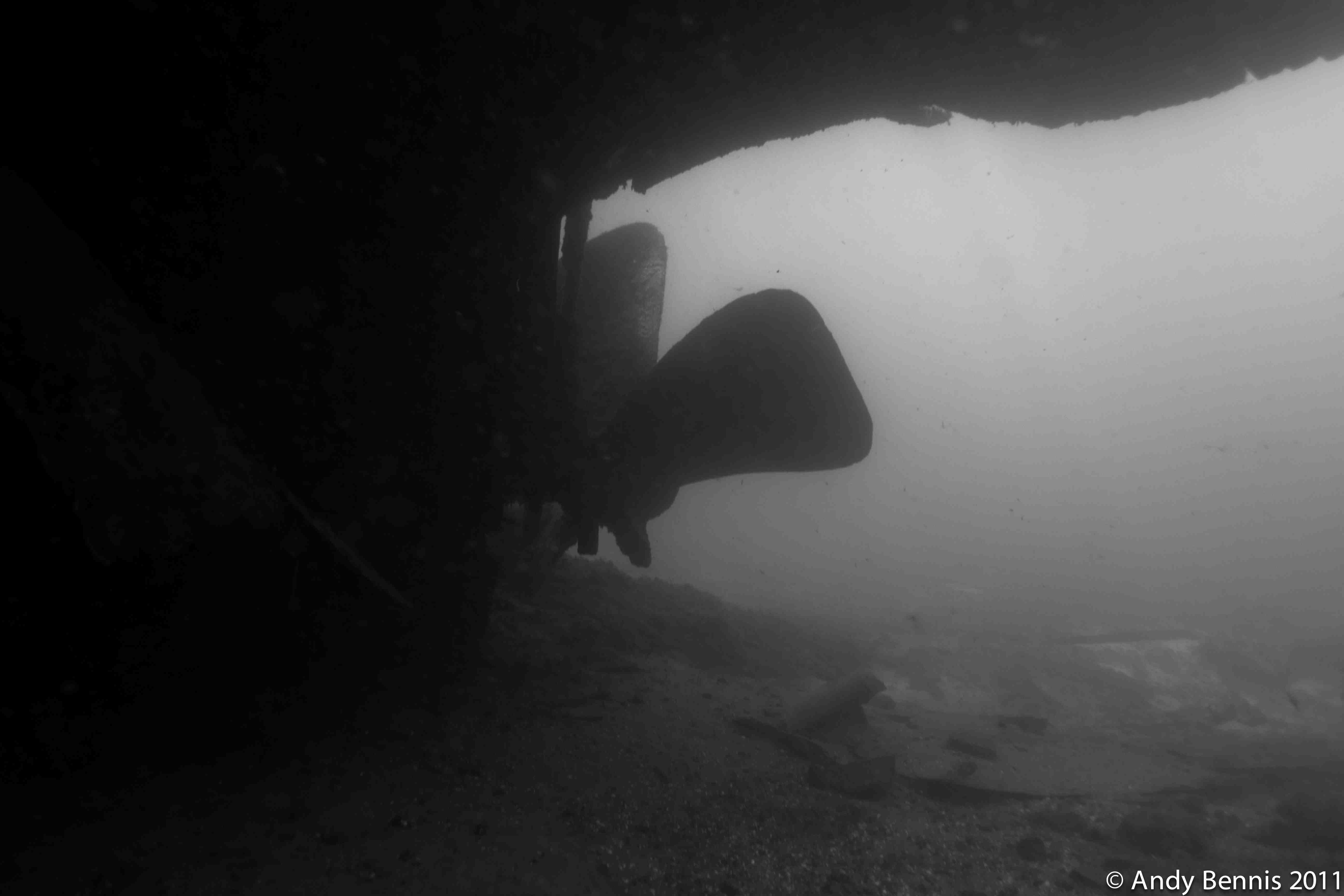
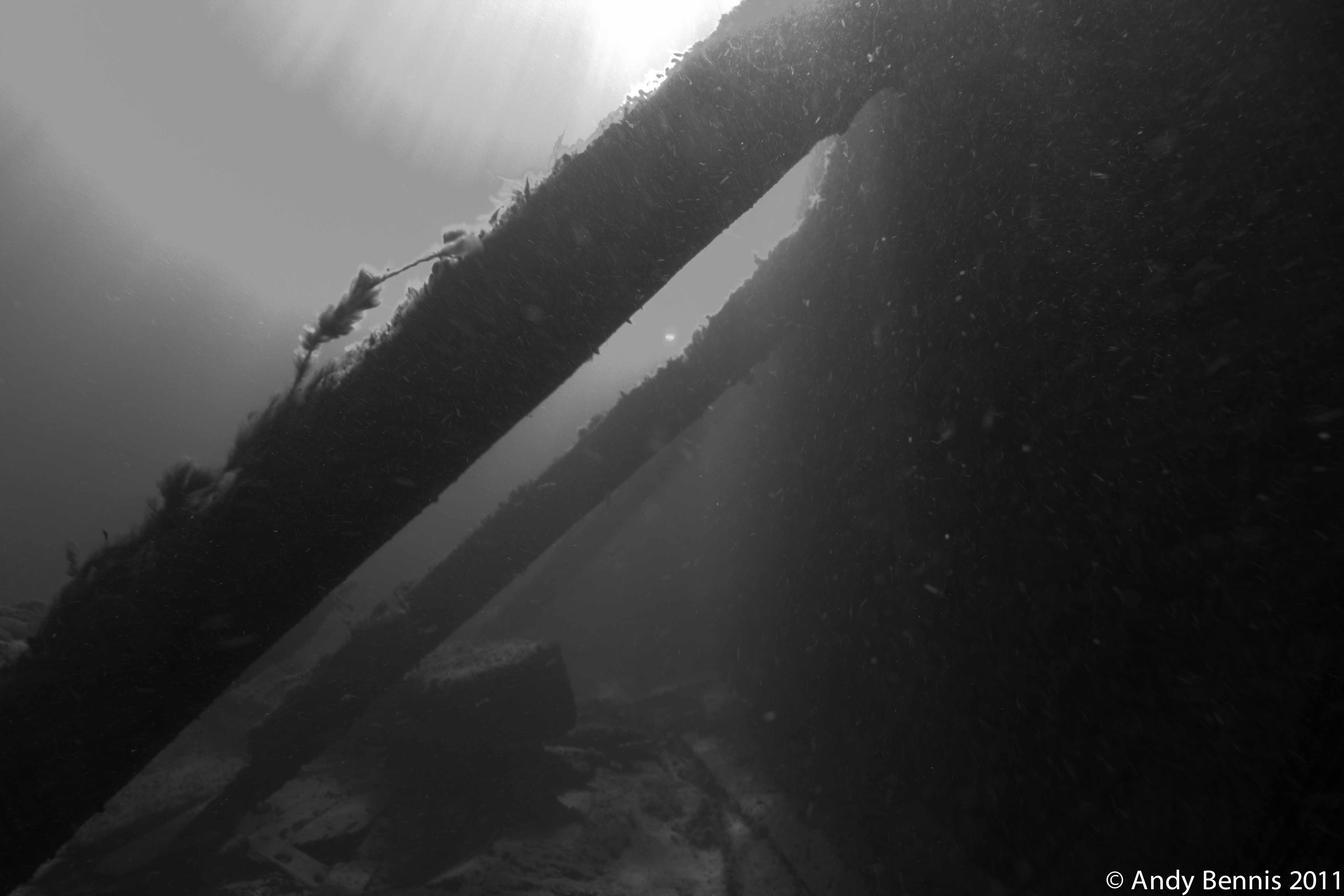
Leigh uses really long exposures to get his signature effects. He shoots from low down and off the wreck in many cases. The classical advice is to shoot downwards with the sun over your shoulder, generating a plan or oblique view of the wreck, but Leigh is much more creative than that.
You might want to try converting from the RAW file into monochrome rather than using the camera's algorithm (although I have actually found the Nikon algorithm to work pretty well in camera), using the green channel preferentially, then maximising the tonal range in levels or the equivalent.
I have tried working with shapes, so having a really good viewfinder is important, especially when including distant parts of the wreck in shot. Looking around rather than shooting from the hip (even better: planning the shot and visualising it before the dive) improves your chances of success.
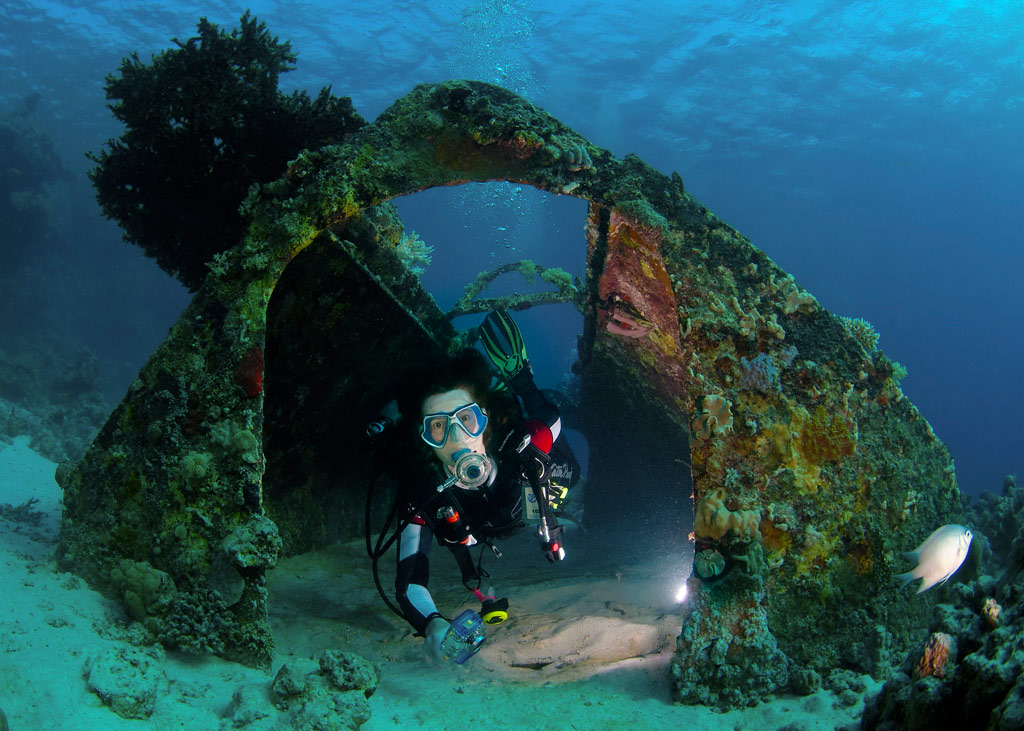
Putting your dive buddy in shot is bit of a cliche, but it still helps!
You may not believe us, but compared to a lot of our first attempts, you're doing really well!! And play with camera on the surface: not only do the images put wrecks and dives in context, but it's the only way to really understand what your camera and lenses are doing.
Tim