Skip to content

Video Gear and Technique / Archived topic

L&M Bluefin - how to balance front/rear

Started by wydeangle ·

  • 10Posts
  • 10Replies

Read-only discussion

L&M Bluefin - how to balance front/rear

10 posts
  1. When I got the L&M Bluefin for the XA10 I also got the Fathom 90* lens and two Sola 1200s. I also got the L&M float, so the rig looked like this:
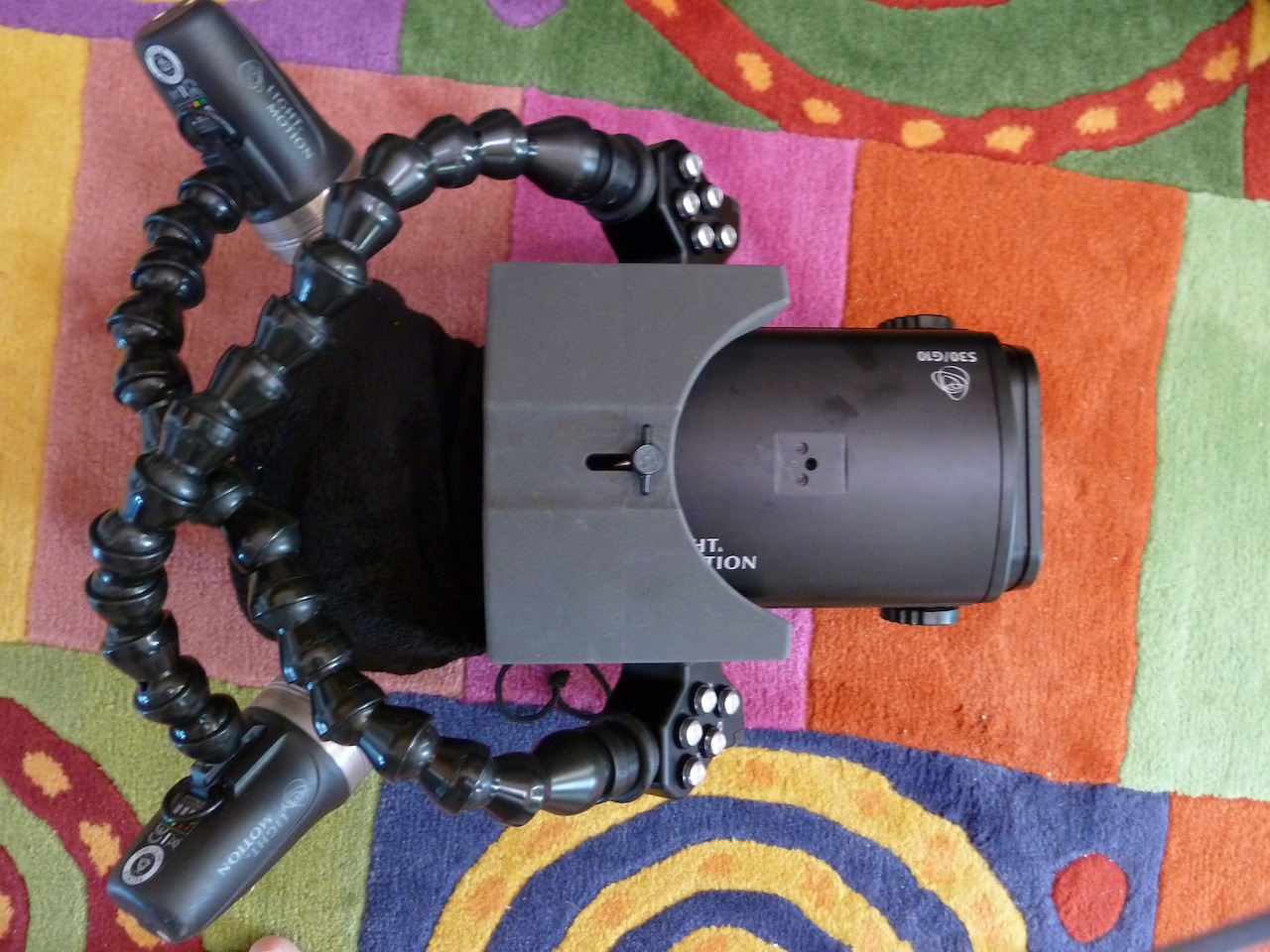
    post-18574-1315585376.jpg

    Note that the float attaches to the housing. It is fairly far toward the front, so I went diving.


    That led to two discoveries: the rig is negative which I regard as a good thing because sometimes it gets put onto the sand for stability while videoing, and it is really, really nose heavy which I regarded as a negative.


    A past rig had an Amphibico 108* lens which had a built-on syntactic foam collar making it very sweet to handle underwater. Alas, not available for HD, hence back to L&M for this new housing.


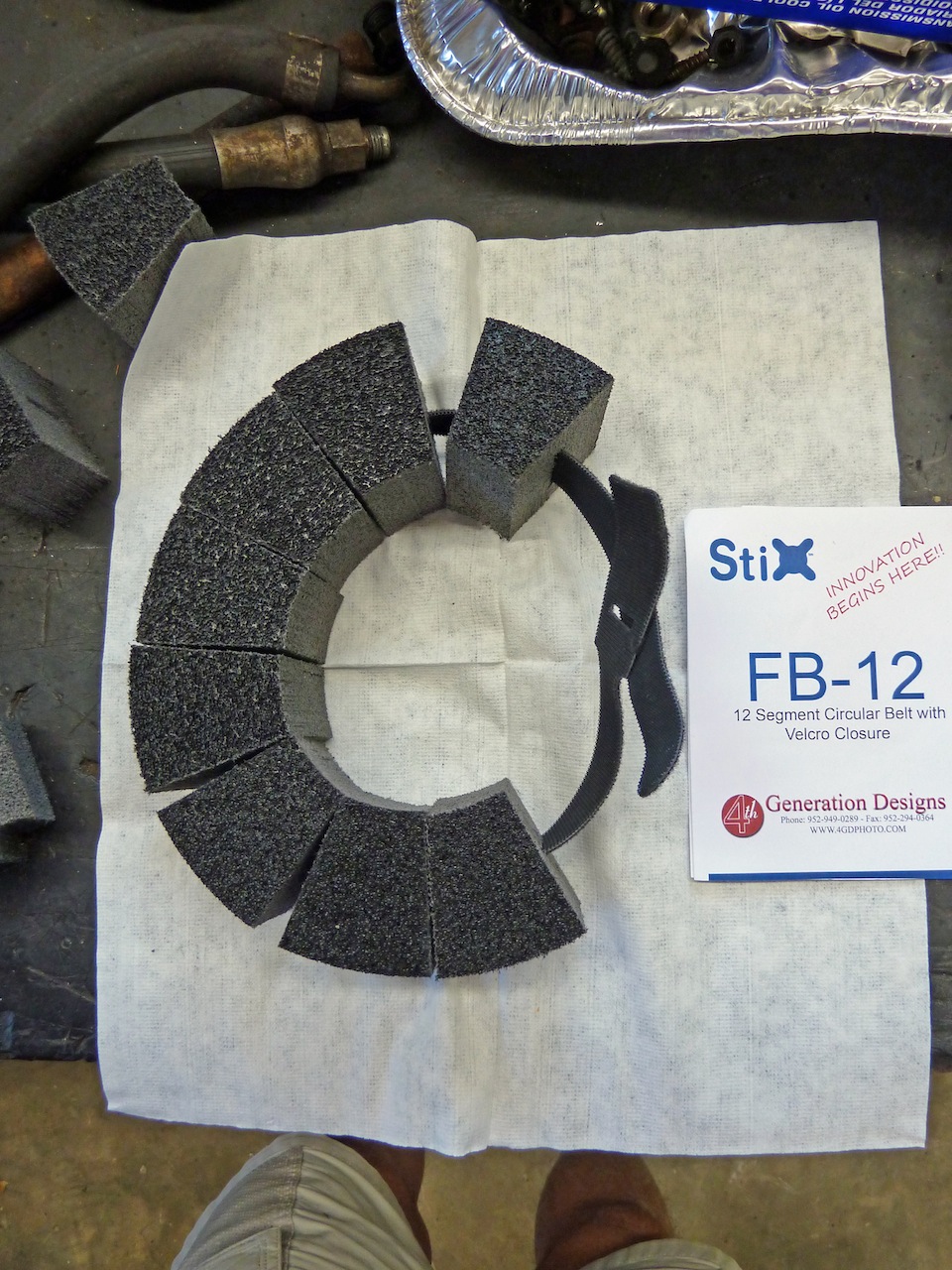
    Doing some research I came across a recommendation for a Stix brand float. They make lots of floats. I bought one for the lens. Well, not specifically for this lens, but flexible enough so I thought that it would be the solution to the "nose heaviness" problem.


    So here's the one I bought:
    post-18574-1315585789.jpg


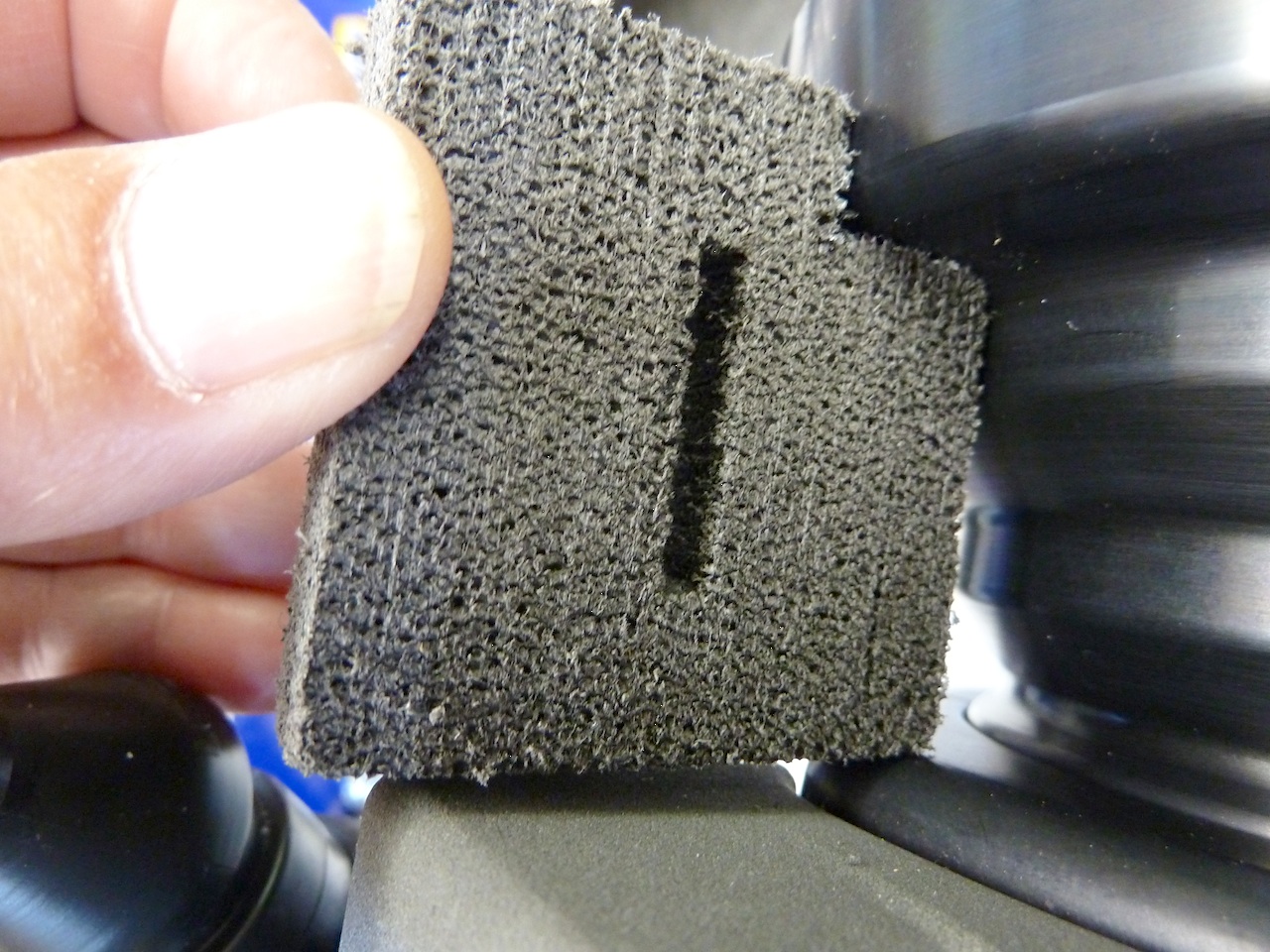
    So I tried to fit it onto the Fathom 90* lens. No go. Too thick.


    See next message...
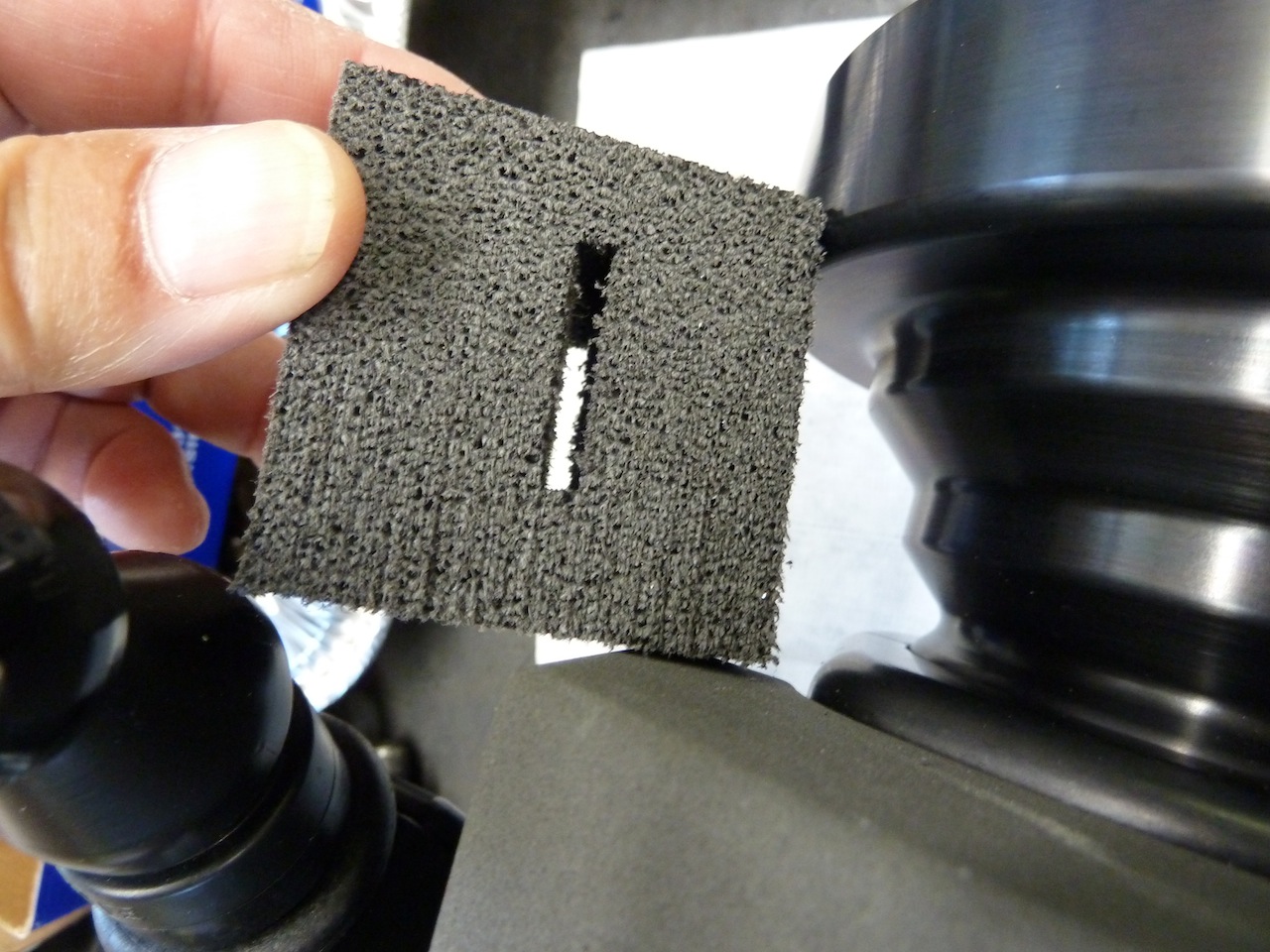
  2. So here's the problem:

    post-18574-1315586222.jpg


    And here's the solution to the problem:

    post-18574-1315586290.jpg


    Cutting a notch was easy with a small hacksaw. I used 3/8" depth parallel to the belt slot, and 5/8" height radially for the notches. The dimensions aren't too critical.


    The material for the floats could probably be cut with almost any tool including a really sharp knife. After the cuts, I rethreaded the 12 pie shaped slices back onto the velcro belt provided by Stix and put it on the lens.


    Then came the bathtub test. The rig floated nose up!


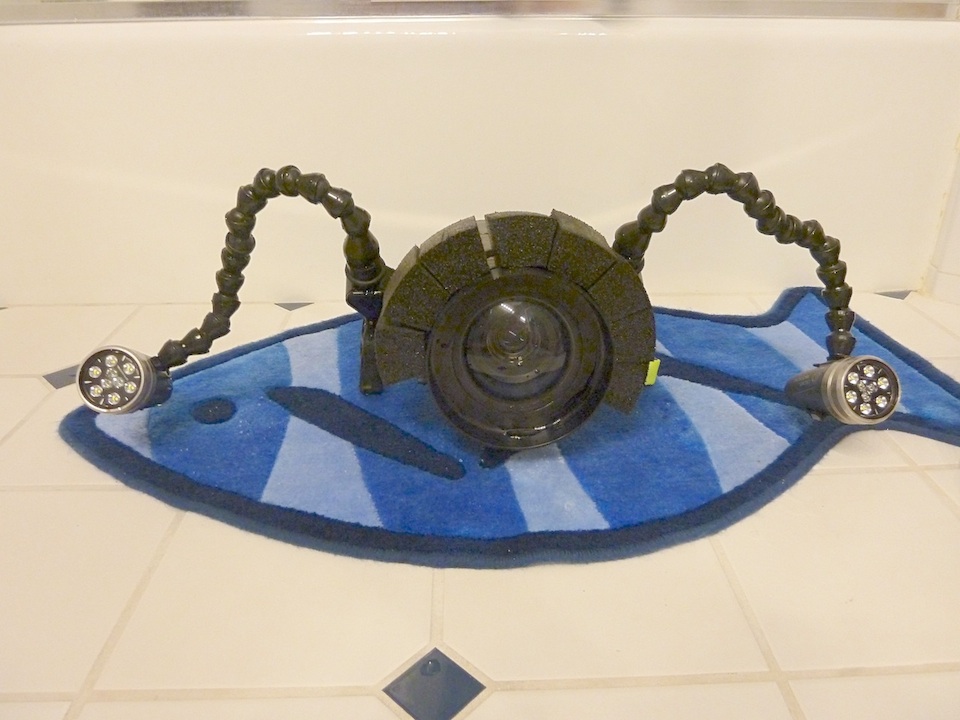
    Next, the L&M float was removed. Still too much buoyancy. Off came 4 of the 12 float wedges. Just right for fresh water. I may need to remove one more for salt water.


    The final rig looks like this:post-18574-1315586753.jpg


    Some final observations:


    1) The position of the Sola lights will affect the balance of the rig. I need to play with this a bit to see if I need to change anything. When I use my Hartenberger light, it's more negative than the Solas -> I've already added flotation to it with a couple of pieces of foam and a couple of zip-ties. Maybe the Solas will acquire a little flotation too.


    2) I plan to add a tripod. This may require the reinstallation of the L&M float so the entire rig isn't too negative.


    3) If 7 or 8 float segments are all that is needed, I think Stix makes a version that has fewer than 12 segments. Save a buck.


    I'll report after some dives, but likely not until next month. Hope this is useful to someone... (Maybe L&M/Fathom will pick up on this and include a float with the lens, ya think?)


    Tom

  3. Great work there, the pics do help a lot. My issue, for the Nauticam housing is that with an 8" dome, it tends to be positive wanting to move dome up.

    I doubt L & M will throw in free additions.

    Steve

  4. Steve,


    For your Nauticam two possibilities come to mind: weight the front, or float the back.


    I'm not at all familiar with Nauticam so can't help with specifics. If you decide what to try, a picture might help me get more specific.


    If the rig is too negative I'd suggest adding a float at the rear. You might consider something from Stix or one of their competitors, or just getting some syntactic foam from a place like Aircraft Spruce. They sell a 1" thick piece for ~18 bucks that you can cut and shape using simple woodworking tools.


    If your housing is too buoyant, use some weights on the front. Possibly a velcro strap holding a bit of lead would be a place to start. Or maybe a weight attached to the tripod mount using a slotted piece of aluminum pointing forward so the position of the weight can be adjusted. Or. Or. Or.


    Either way some cut & try will be needed.


    The result is worth it to me! Life's too short to be wrestling a housing continuously; some of our dives are more than two hours.


    One of my old Amphibico housings (for the TRV900) would just hang there level if you let go. Perfectly neutral and perfectly balanced. From Amphibico! Very easy to control and I think important for video steadiness. I wish...


    You have the reverse problem - tail dragging. Let me know if I can help with details.


    Tom

  5. I'll report after some dives, but likely not until next month. Hope this is useful to someone...


    Tom


    Nice report. I may try it, although I have even heavier lights (Big Blue VL1300). So far I have not been bothered by the nose-heaviness of the Fathom, but when I move one of the lights forward to light up a subject for a close up for instance, I am really pulling hard backwards!

    Notice that at depth you will loose a lot of the buoyancy of the foam (remember the drills about the wetsuit buoyancy diminishing as you go down? Maybe you are diving warm waters, though... but anyway, that's a fact of physics). You may want those 12 blocks after all!

    Looking forward to read the "after dive" report.

  6. uwxplorer,


    RE: shrinkage of the foam - I hope it doesn't, at depth, since that's what it's supposed to be made for. This stuff is advertised as "non compressible foam float" material. It's definitely not neoprene! Much more rigid.


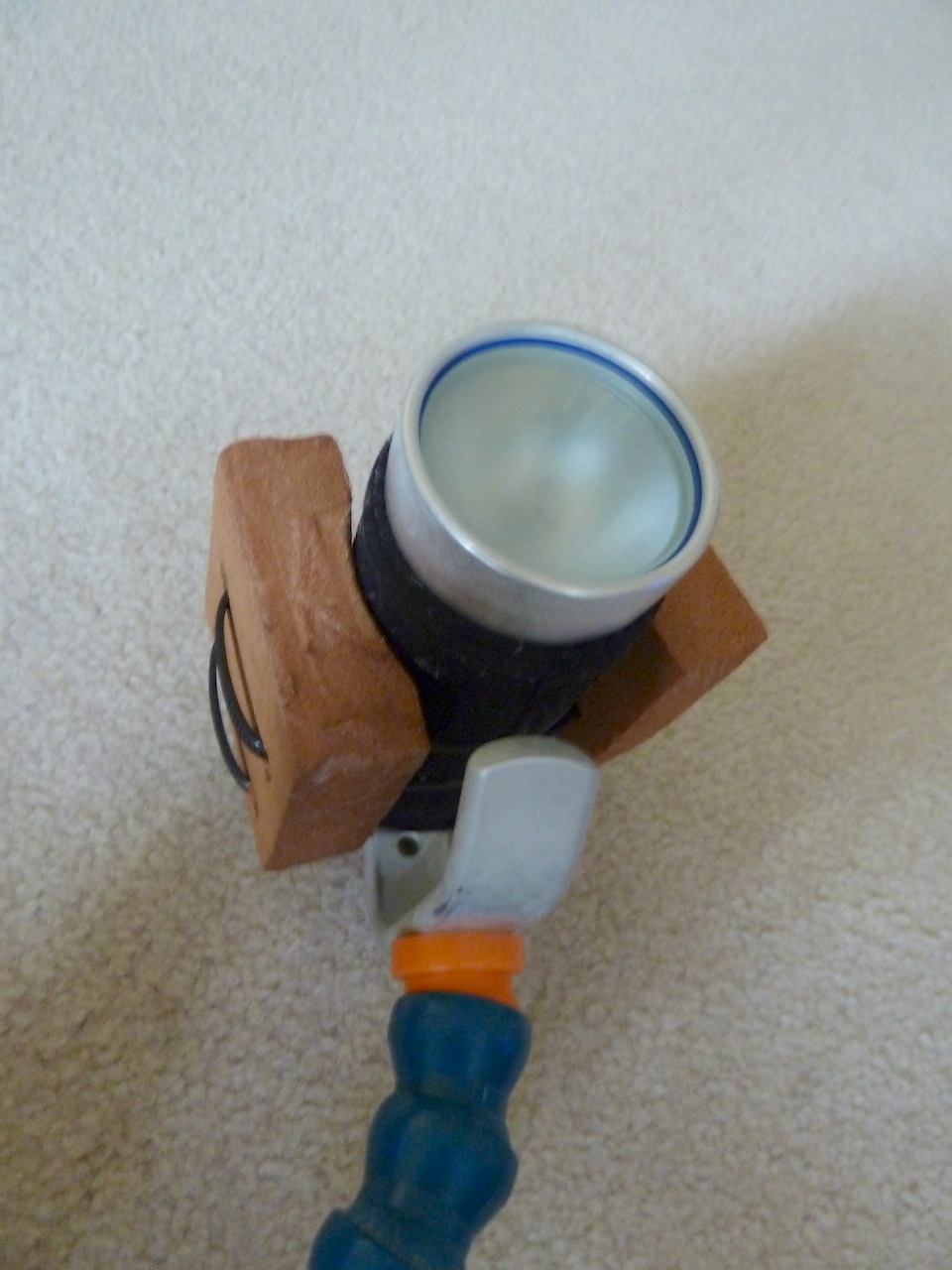
    I made some floats for my Hartenberger using some syntactic foam I had lying around:


    post-18574-1315658108.jpg


    I attached two small pieces of rigid foam with two long zip ties. After making this, I had to reduce the size of the foam to assure the light wasn't buoyant. It's interesting that it took less than I originally calculated. It does help a lot as I can now move the light around without disturbing the balance of the whole rig very much.


    Similar foam can be bought here: Aircraft Spruce Divinycell


    I used their 6 lb/cuft tan. A piece 1" x 10" x 12" was less than $20US.


    Maybe something like this could help with your VL1300 lights?


    Tom

  7. Maybe something like this could help with your VL1300 lights?

    Tom


    Thanks for the link, but the BB is about 2/3 of a pound negative, which means that I would need the whole sheet for a single light!

  8. uwxplorer,


    That's what I thought at first. Not so. It ended up taking a lot less material than I originally supposed.


    Not sure what your arithmetic tells you, but here's mine for comparison:


    Seawater is approx 64 lbs/cuft. The foam is 6 lbs/cuft, so its net lift in seawater would be 64-6=58 lbs/cuft.


    You say you need 2/3 of a pound or .667 lbs, so .667 lbs/58 lbs/cuft = .0115 cuft


    .0115 cuft x 1728 cuin/cuft is ~ 20 cuin.


    So if you have a 1" thick sheet, you'd require a piece about 4.5" square. Looks to me like the sheet would do maybe four lights.


    Or have I made an error or two ;-)


    As you can see from the photo above, I made two even smaller pieces so they could sandwich the light. The Hartenberger Nano is .44 lbs negative, or about 2/3 as negative as yours. Shouldn't be a problem to get yours much lighter underwater. Remember, they don't have to be perfectly neutral - a large reduction in negative buoyancy is still a good thing, I think...


    Tom

  9. That's what I thought at first. Not so. It ended up taking a lot less material than I originally supposed.


    Tom


    You are probably correct. I was assuming that the specs (6 lbs/cft) was the lifting capacity. I'll definitely try those AND the foam ring.

  10. Steve,


    For your Nauticam two possibilities come to mind: weight the front, or float the back.

    If the rig is too negative I'd suggest adding a float at the rear. You might consider something from Stix or one of their competitors, or just getting some syntactic foam from a place like Aircraft Spruce. They sell a 1" thick piece for ~18 bucks that you can cut and shape using simple woodworking tools.


    If your housing is too buoyant, use some weights on the front. Possibly a velcro strap holding a bit of lead would be a place to start. Or maybe a weight attached to the tripod mount using a slotted piece of aluminum pointing forward so the position of the weight can be adjusted. Or. Or. Or.

    Either way some cut & try will be needed.

    The result is worth it to me! Life's too short to be wrestling a housing continuously; some of our dives are more than two hours.

    You have the reverse problem - tail dragging. Let me know if I can help with details.


    Tom


    Thanks Tom, will try to work something out along those lines.

    Steve

Account

Navigation

Search

Search

Configure browser push notifications

Chrome (Android)
  1. Tap the lock icon next to the address bar.
  2. Tap Permissions → Notifications.
  3. Adjust your preference.
Chrome (Desktop)
  1. Click the padlock icon in the address bar.
  2. Select Site settings.
  3. Find Notifications and adjust your preference.