Skip to content

Photography Gear and Technique / Archived topic

How to improve the stability of my housing?

Started by jefdriesen ·

  • 9Posts
  • 9Replies

Read-only discussion

How to improve the stability of my housing?

9 posts
  1. Hi,


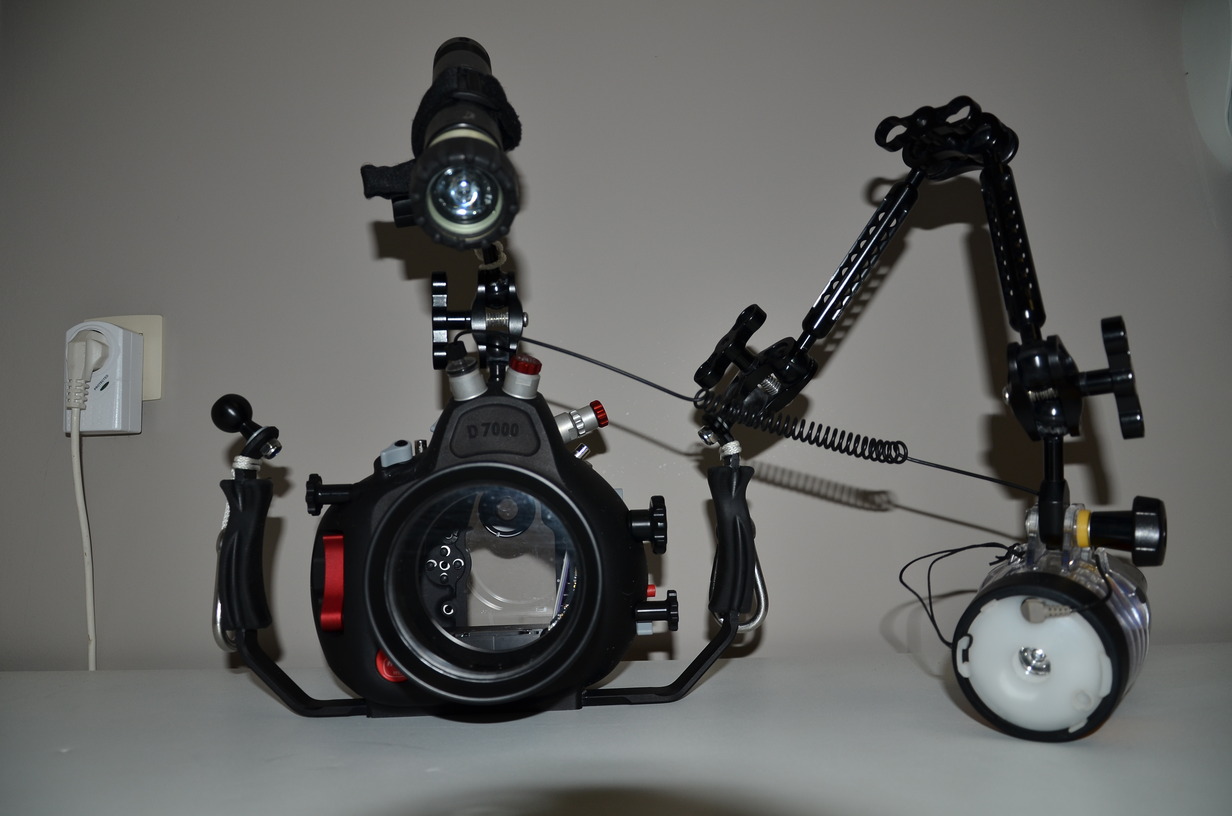
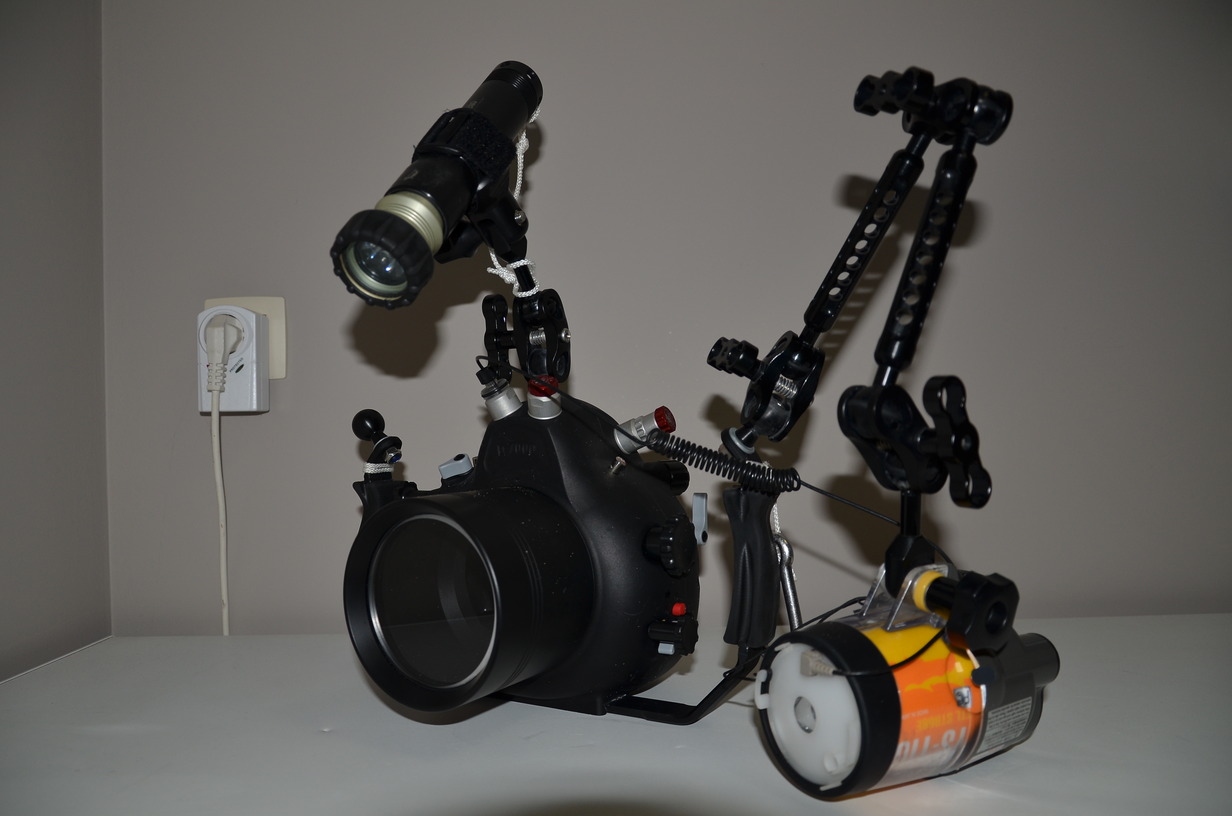
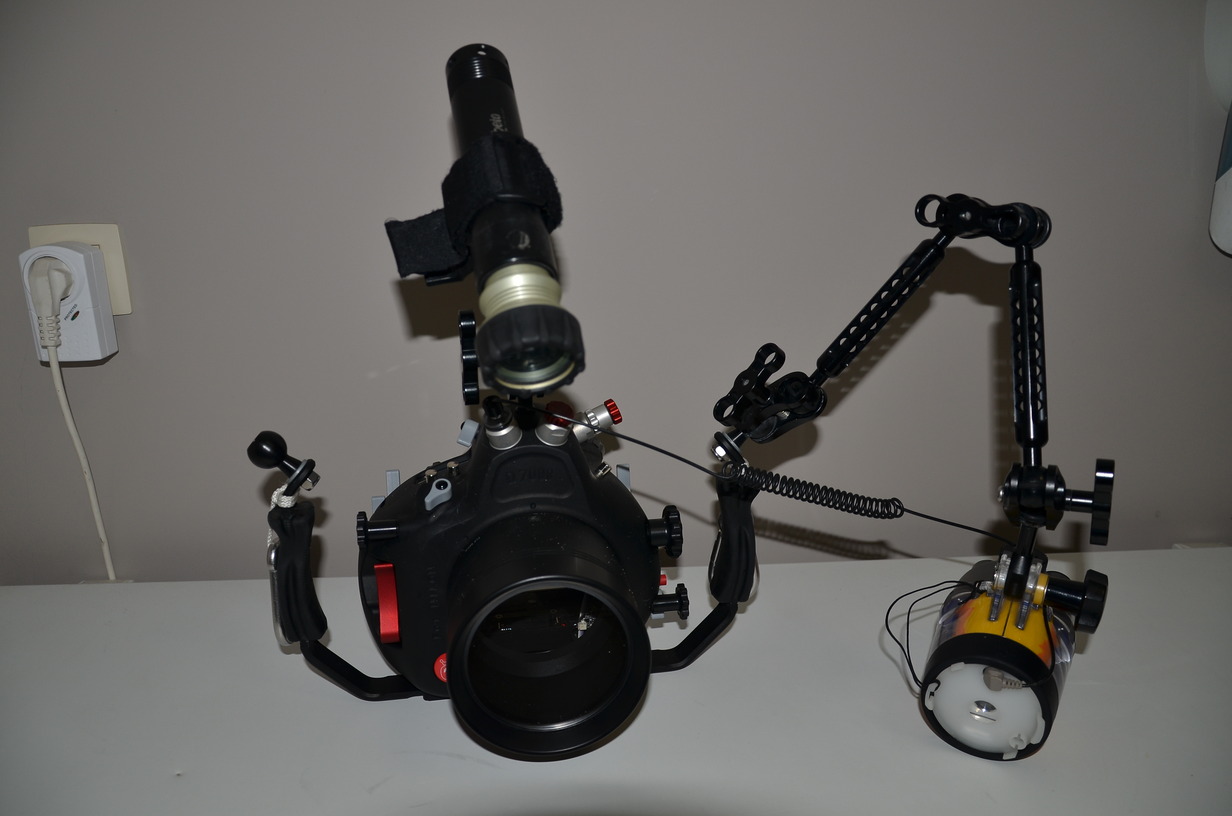
    I use a Hugyfot housing for my Nikon D7000 and noticed the stability of my setup isn't optimal. First of all the combination is too negative to my taste. Second, the top of the housing is somewhat heavier than the bottom, and thus it has a tendency to flip upside down. This is probably due to the relative large bulge on the top for the internal flash, combined with the fact that I have a focus light mounted on the top.


    Do you think I can solve this by adding floats somewhere? And more important, where should I mount the floats? There isn't much empty space available besides on the strobe arm. But because I only have a single strobe, I think I can only compensate the weight of that arm and strobe, but not the housing. Can anyone give some advice?


    Jef
    post-23472-1316606372.jpg

    post-23472-1316606393.jpg

    post-23472-1316606409.jpg

  2. Maybe move the focus light over to the other arm side to get more side-to-side balance. Mount a float arm to the top ball instead? I've seen floats made from a chunk of PVC tubing with endcaps glued on, and a ball mount.


    I've also seen people mount foam in an annulus (donut like shape) around the lens port, but I personally am not a fan of the idea. Might provide some front floatation but sort of get in the way of seeing 'around' the rig for macro shots (I see you have a flat port).

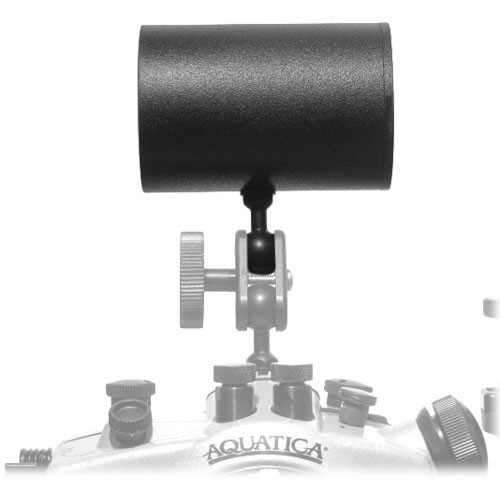
  3. I've seen floats made from a chunk of PVC tubing with endcaps glued on, and a ball mount.


    Something like this:


    535136.jpg

  4. Yep. Although I wish they rounded the ends, so you could point it front-to-back for lower drag. An ugly 'can' shape can be homebrewed so the custom products need to add something. (I guess thin-walled aluminum vs. PVC is already some benefit).

  5. Maybe move the focus light over to the other arm side to get more side-to-side balance. Mount a float arm to the top ball instead? I've seen floats made from a chunk of PVC tubing with endcaps glued on, and a ball mount.


    I've also seen people mount foam in an annulus (donut like shape) around the lens port, but I personally am not a fan of the idea. Might provide some front floatation but sort of get in the way of seeing 'around' the rig for macro shots (I see you have a flat port).

    I have tried the PVC; low S/N i.e. not much gain in buoyancy. Consider adding another arm to the starboad side and puting floats on both sides.

    Bob

  6. Hi Jef,9i have the same housing and camera using a dome port and 100mm macro port and 2 Inon Z-240 strobes.

    I personally don't find the housing too negativ, with either port it is slightly negative and this can be corrected easily.

    1° one strobe will automatically raise the tendency to flip to one side, 2 strobes will correct that...

    2° it is true the the housing has a tendency to flip over, float arms will help to limit that

    3° a float on the focus light ball will help, but you will loose the central position for the focus light


    Suggestions:

    1° get 2 float arm elements, one where the strobe is and the other one where no strobe is, use the focus light where it is now (and belongs)

    2° build 2 floats to attach on the arm element if your second name is McDiver ...

    3° as my nickname is McDiver, i can tell you that alluminium water bottles (SIGG Bottles) will implode at +/- 30 Meters,

    but filling them with PU Foam they are fine till 35 Meters

    4° Measure in the waters you used to dive how much negative your rig is and choose the right size floats.


    Conclusions:

    Float arms like the ones below will fix your problem without hours of DIY work!

    STIX Floats

    INON Float Arm

    ULCS Float Arms


    Chris

  7. I've never understood the idea of adding floats to a housing to make it more stable.


    When a housing is more neutral, its more susceptible to all manner of surge and translating movement of the diver to the camera inside. A puff of surge will push, jiggle or reposition a weightless or near-weightless housing more than it will a more negative housing.


    Maybe because I dive in SoCal - but I've never once added floats or pool noodles or any other manner of device to make the housing feel lighter underwater. I've dived Ike, L&M and now Nauticam. I've never found any of these prohibitive to handle.


    How can making a housing lighter add to its stability in the hands of the shooter?


    I get the idea of floating for balance. I don't understand the idea moving closer to neutral buoyancy for stability or general shooting.


    Thanks


    -Ken

    Edited by mo2vation
  8. Well, if you're balanced as a diver without the rig, and the rig is heavy, rotating you face-down whenever you shoot, even breath control won't un-rotate you. That's my take on it at least. Add ankle weights and you've just made it so you're always finning a little to stay horizontal. A too-buoyant camera might be easier to counterbalance with ankle floats on the other hand. (Kidding).


    Buoyancy doesn't really add to surge movement I don't think, unless it comes at the cost of a whole lot of current-carrying surface area. The inertia of the rig if anything is larger with hollow aluminum arms vs. just stick arms because there's more mass. As with anything it's a matter of compromises, no? My last rig I used floatation arms only (2 6" fat, 2 12" thinner), and I could 'park' the camera in the water right next to me and it would barely move, up or down (rarely tried without a tether though, just in case). It did rotate dome-up with the 8" dome though, so by the end of a dive I definitely kind of felt the stress in the wrists. I'm hoping with my new rig using smaller domes I'll get by with just the short fat float arms, although I'm also swapping strobes (2 Z240's for 2 DS51's). The Ike housings themselves are nearly identical volume and mass but the new camera with most of the lenses I plan to use is lighter than the old.

  9. search under my name for a post on balancing gear - about 2 years ago


    i'm apalled that manufacturers still pay no attention to buouancy - and suprised that photographers put up with the situation


    i'll try to be brief - you need a digital scale and a large garbage can full of water and some float material. i've used and modified 4th generation floats.


    the first step is to get the housing neutral fore-aft, left-right. i want to be able to shoot 1-handed so i want a few ounces negative on the right side and add floatation to the left to hold up the housing - the best way i found of doing this is to add an extra arm on the left with float - the position of the float and arm can be adjusted to trim left-right (4th generation makes an adapter for 2 arms on one handle0


    fore and aft will generally require floats on a macro port (4th generation) and weights on a dome port - i mounted lead weights to long hose clamps around the dome hood


    independently put floats on the strobes and focus lights so they are neutral (modified 4th generation arm floats tie-wrapped to my Inons are perfect) then balance of the rig isn't changed by flash position or by adding or removing the focus light


    arms should also be made independently neutral - flotation arms are probably close enough to begin with, others may require floats


    handling a balanced is an improvement that needs to be experienced to be believed


    adding floats does not make the rig "lighter" as it still has the same mass - it vastly reduces stress on wrists in particular and allows stable one-handed shooting

AOI

Account

Navigation

Search

Search

Configure browser push notifications

Chrome (Android)
  1. Tap the lock icon next to the address bar.
  2. Tap Permissions → Notifications.
  3. Adjust your preference.
Chrome (Desktop)
  1. Click the padlock icon in the address bar.
  2. Select Site settings.
  3. Find Notifications and adjust your preference.