



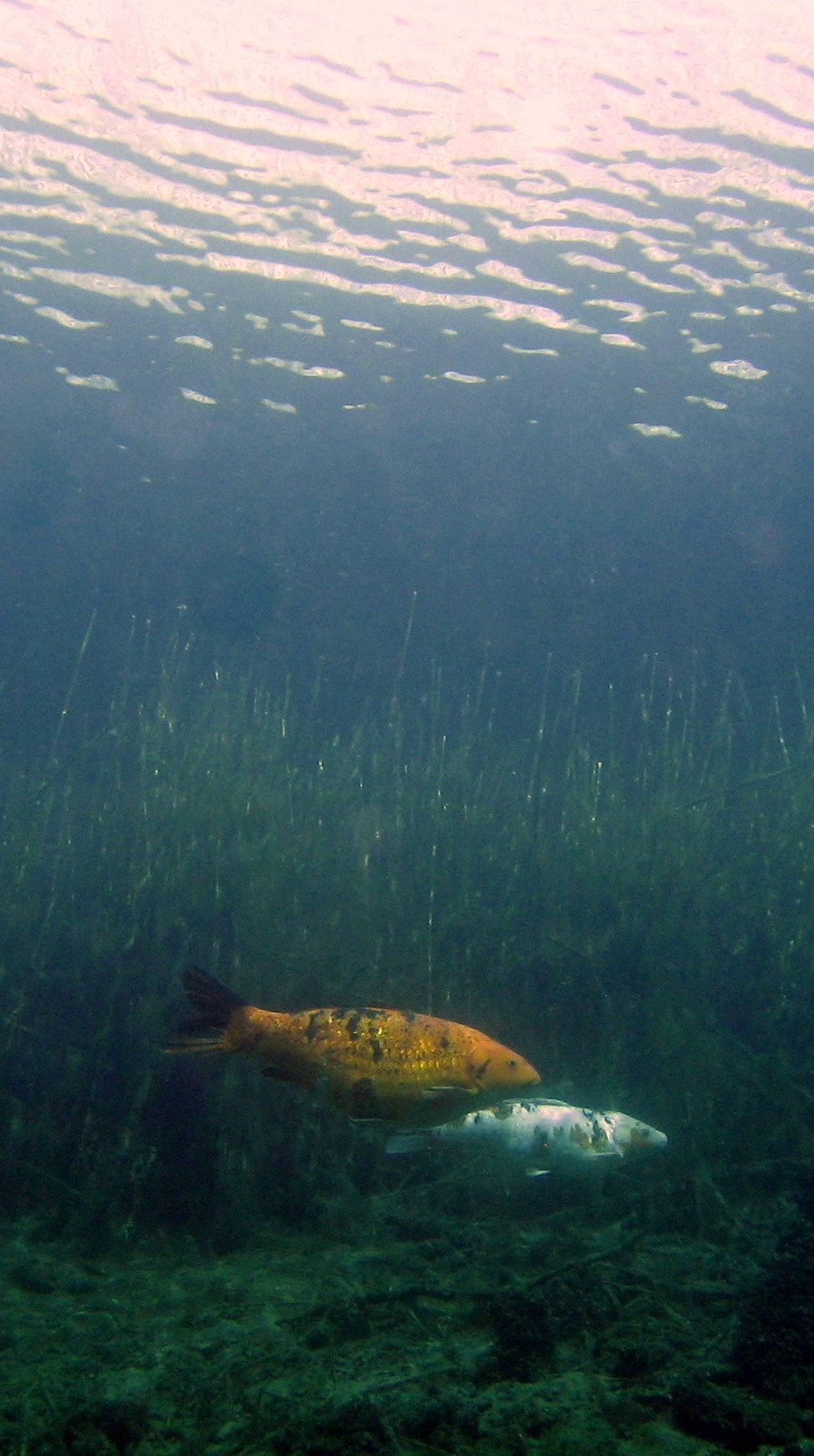
How can I make this one better, its probably the best Ive done in my first year of taking pics. I use a canon sd600 with canon uw case. Other then upgrading any gear of course. Cropped a little as well.
Read-only discussion
How can I make this one better, its probably the best Ive done in my first year of taking pics. I use a canon sd600 with canon uw case. Other then upgrading any gear of course. Cropped a little as well.
Was your image shot with natural light? The obvious problems are the size of the fish (try getting closer) and the blown highlights (get closer, again, and try to put the fish higher in the frame). The difficulty with getting closer is that you may end up needing artificial light to separate the fish from the background, which would obscure the nice dappled effect of natural light on your subjects. On a positive note, you wouldn't have to crop the image if the fish filled more of the frame. Perhaps the image would work in a landscape format? It's worth trying both orientations if the fish are friendly!
This is a freshwater image, uncropped and shot with a fisheye lens (so I'm very close!):
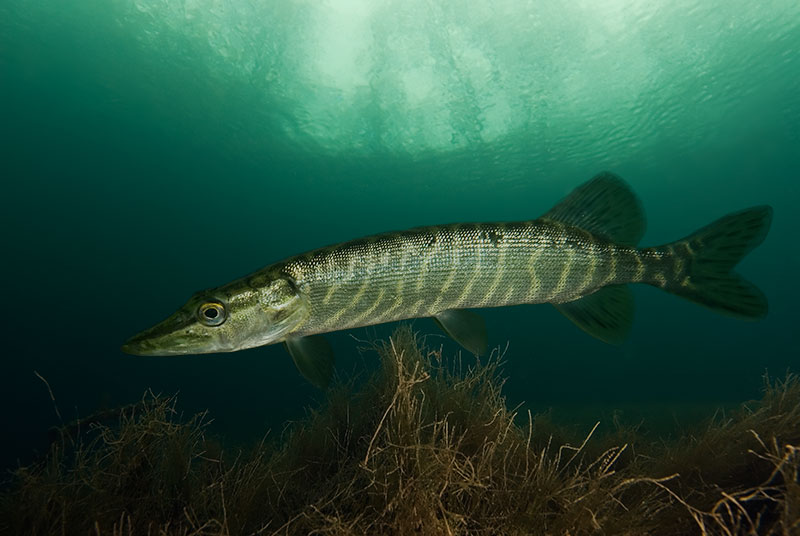
I've under-exposed to keep the surface from washing out, and added light from strobes. It's not perfect as the light is both flat and misses the pike's snout. Strobe light has let me produce a sharp image, both by allowing me to use a an aperture of f8 and by "freezing" any movement at the moment of the flash. The shutter speed is also important if there's a lot of ambient light: the subject can be blurred in longer exposures:
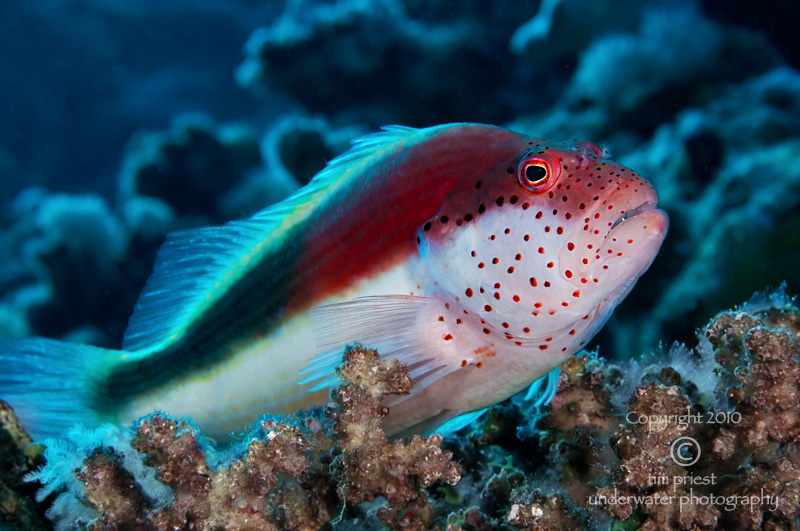
The blue colour around the hawkfish is ambient light, the shutter speed is about 1/20sec, and you can see that the blue edges are much less sharp than the strobe-lit, red and colourful, face. There's a limit to how far you can work with shutter speed and aperture in a compact camera, but using what control you have and adding a strobe can help. Getting as close as you can is never a bad thing...
Tim

Thanks Tim for the reply, the goldfish were very skittish and not very happy with a diver nearby. The water being 39 and in a wetsuit made me hurry up more then I wouldve liked to. Pic was shot with natural light, and I agree with everything you have suggested and cant wait to get back into the lake to try again with some new gear and a strobe.
Good luck!
Do let us see your results.
Tim


Terms of Use Privacy Policy Guidelines We have placed cookies on your device to help make this website better. You can adjust your cookie settings, otherwise we'll assume you're okay to continue.

A worldwide community for underwater imaging.
