Hey everyone,
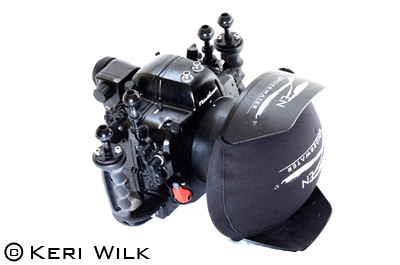
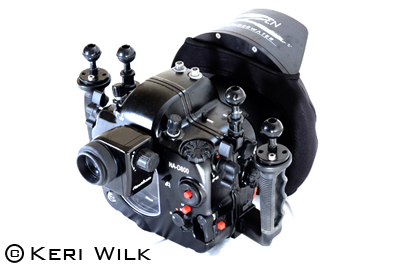
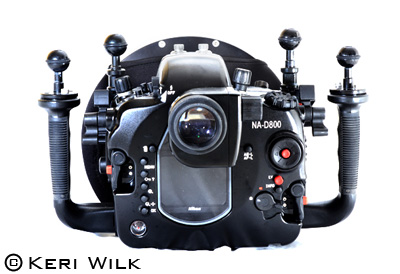
Nauticam USA's Ryan Canon contacted me asking if I would review a prototype of the Nauticam D800 housing. Of course, I was for it. The timing worked well since I had an upcoming trip with DPG's Matt Weiss to the cenotes of the Yucutan Peninsula, followed by my DPG Wide Angle Workshop in Fiji and then a Curacao Sport Diver assignment, which would be perfect for putting the system through a battery of tests. It turned out that the housing was completed in Nauticam's headquarters on the day that we left for Mexico, so shipping it directly to me wasn't possible. Instead, Nauticam USA's Chris Parsons made a special delivery and flew out to meet us with housing in hand and joined the fun.
The camera, as expected, is impressive, especially the amount of detail its 36MP sensor captures and the high ISO performance considering the mega high resolution and small pixel pitch. More about these specs and other details to come in the review.
Although having prototype status, the housing looks and performs like a finished product. The first overall impressions have been almost entirely positive -- a dedicated ISO lever, shutter and aperture dials that are easily accessed and operated without removing your hand from the grip, a directional pad that allows diagonal movement (no more "staircasing" to review the corner of an image!) and other new ergonomic improvements over past housings have stood out during the first few dives with the housing.
Sketchy internet has prevented me from making regular posts as I had hoped, but I wanted to provide an update of what I've taken from the last few days in Mexico. Between both Matt and I, we brought down 17 strobes - 7 Ikelite's with homemade slave triggers, and 10 Sea & Sea strobes (including a pair of the new Sea & Sea YS-D1's). The following are a small sampling of what I've been shooting with the new system.
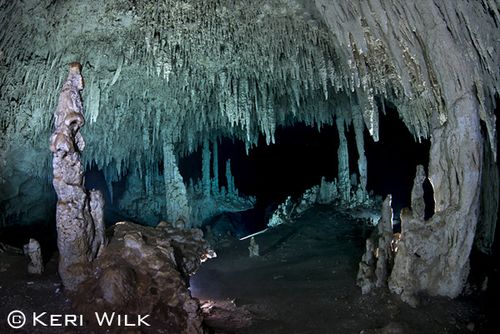
A 9-strobe shot of a particularly interesting portion of the Nahoch Nah Chich cenote. I had to review images frequently to ensure that they were all firing on each shot. The innovative 8-way directional pad made zipping around each image a breeze.
f/11, 1/250, ISO400
Nauticam NA-D800, Zen 230 dome, 15mm Sigma fisheye
2 YS-D1 strobes on camera, 7 Ikelite DS-160 strobes with homemade slave triggers
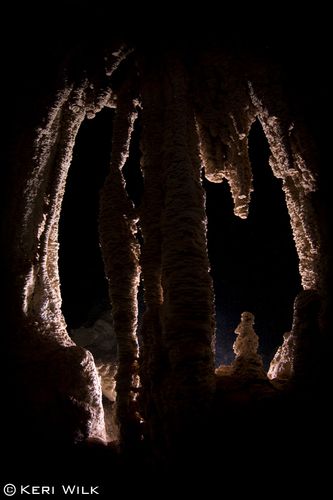
The opening between 2 stalagmites/stalactites, backlit. Even with an almost-dead focus light, the D800 was able to grab focus every time.
f/14, 1/250, ISO100
Nauticam NA-D800, Zen 230 dome, 15mm Sigma fisheye
1 YS-D1 strobes on camera at minimum power, 2 Ikelite DS-160 strobes with homemade slave triggers
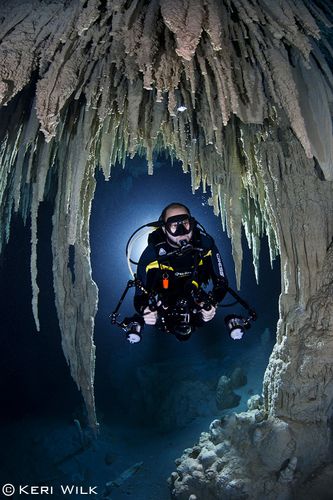
DPG publisher, Matt Weiss, exploring the ornate stalactite formations of another cenote.
f/10, 1/50, ISO400
Nauticam NA-D800, Zen 230 dome, 15mm Sigma fisheye
2 YS-D1 strobes on camera, 4 Ikelite DS-160 strobes with homemade slave triggers
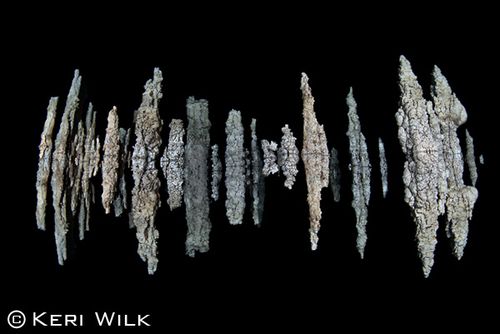
The tips of a group of stalactites breaking the surface of Nohoch Nah Chich cenote.
f/13, 1/250, ISO200
Nauticam NA-D800, Zen 230 dome, 15mm Sigma fisheye
2 YS-D1 strobes
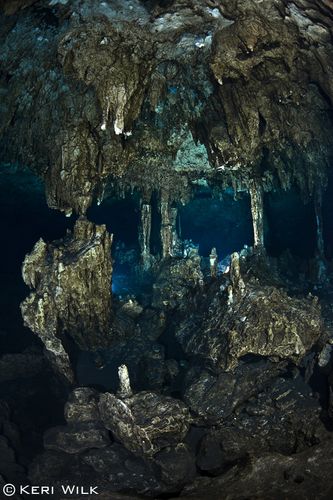
A group of formations in the cenote called Car Wash.
f/8, 1/250, ISO640
Nauticam NA-D800, Zen 230 dome, 15mm Sigma fisheye
2 YS-D1 strobes on camera, 4 Ikelite DS-160 strobes with homemade slave triggers
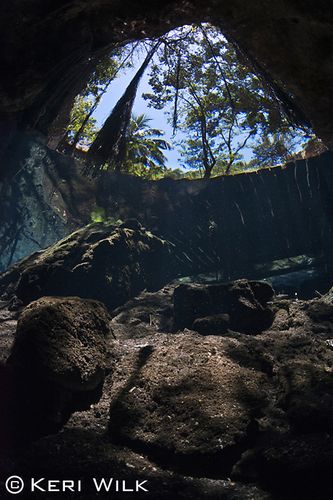
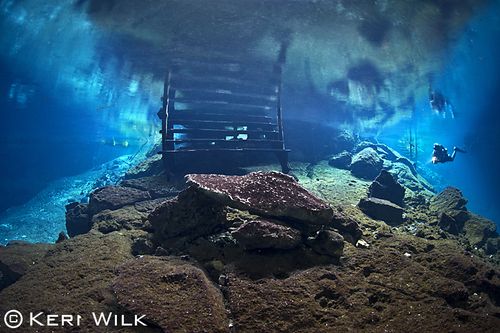
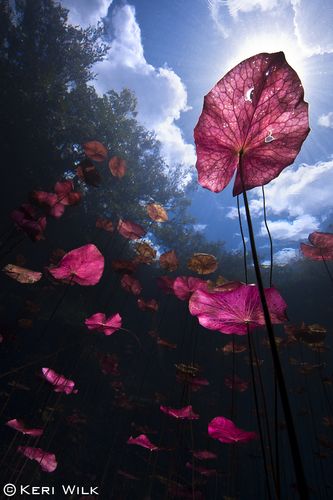
The entrance to a cenote from below. This isn't the greatest image, but it shows the D800's wide dynamic range. Exposing for the sky left the underwater portion drastically underexposed, but a quick tweak in a raw converter brought the detail back out.
f/13, 1/250, ISO200
Nauticam NA-D800, Zen 230 dome, 15mm Sigma fisheye
2 YS-D1 strobes
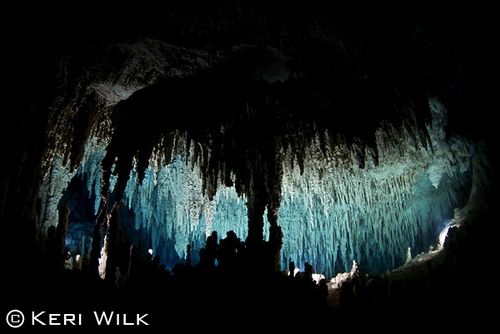
A cave.
f/11, 1/250, ISO400
Nauticam NA-D800, Zen 230 dome, 15mm Sigma fisheye
2 YS-D1 strobes on camera at minimum power, 5 Ikelite DS-160 strobes with homemade slave triggers
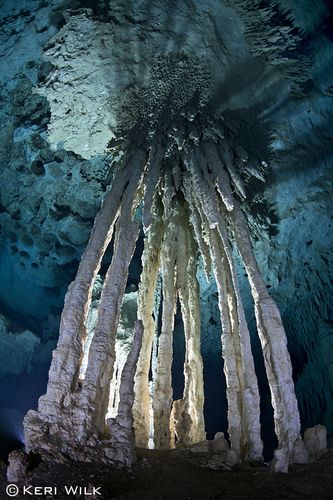
A monolithic group of column formations in a large cavern. The large viewfinder of the D800 combined with the equally large Nauticam straight viewfinder made precisely composing this image possible.
f/8, 1/250, ISO400
Nauticam NA-D800, Zen 230 dome, 15mm Sigma fisheye
2 YS-D1 strobes on camera, 7 Ikelite DS-160 strobes with homemade slave triggers
I've got another couple of days with it here in Mexico, so should have some more to post soon! And of course, a review of the system will follow as well.
Keri