Corecell wraps for B&J Arms to assist in Buoyancy Control
Started by RobertJC55 ·
10Posts
10Replies
Read-only discussion
Corecell wraps for B&J Arms to assist in Buoyancy Control
10 posts
Hi,
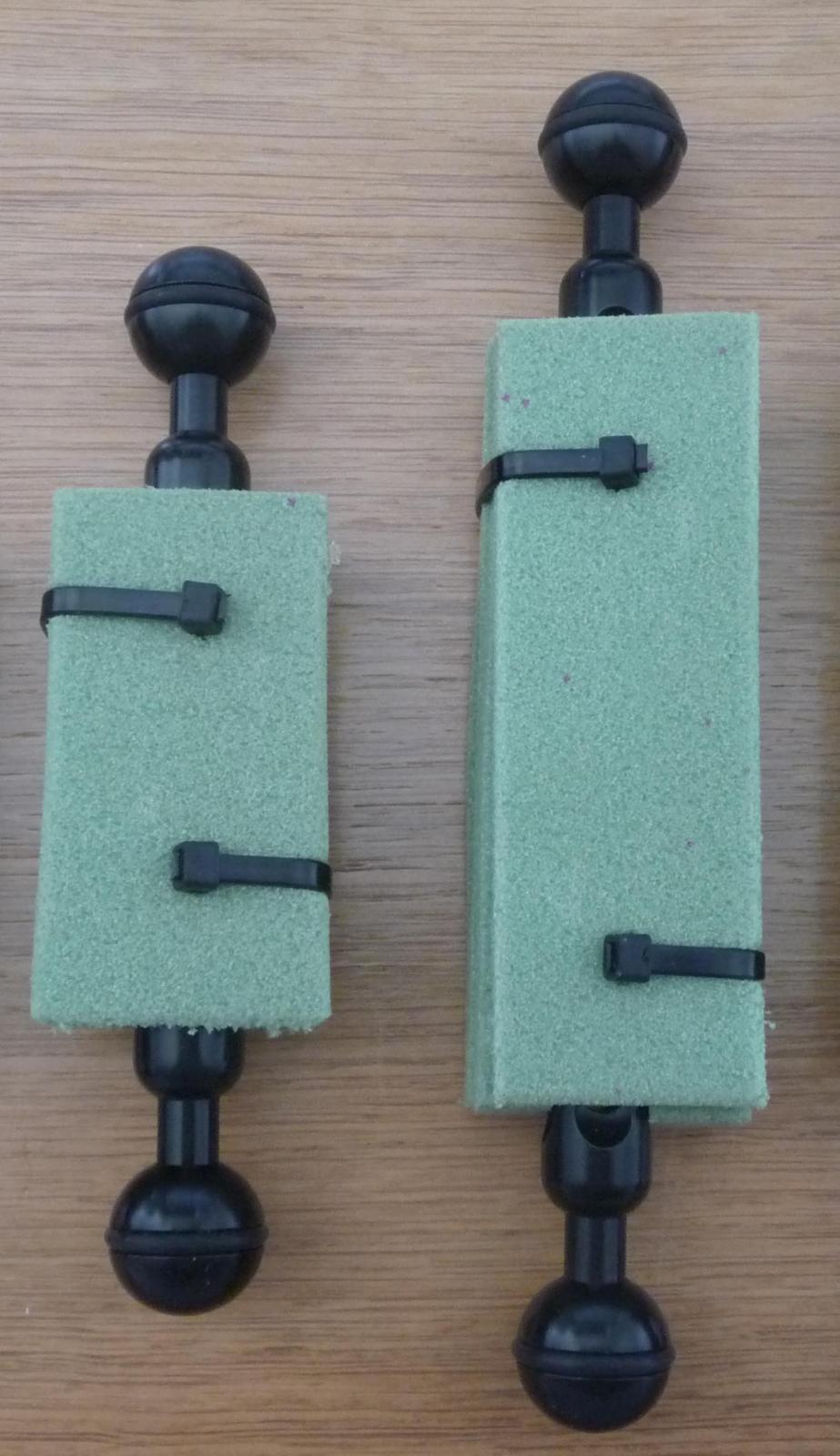
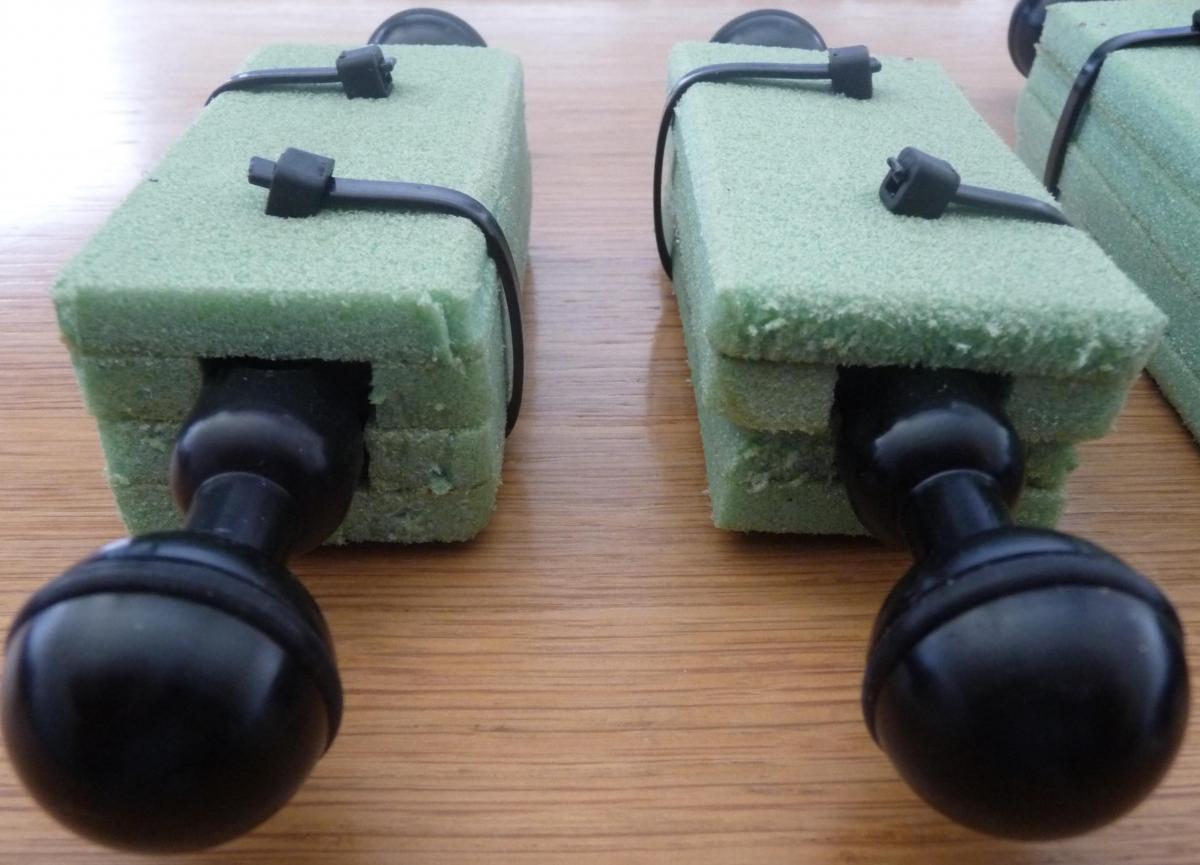
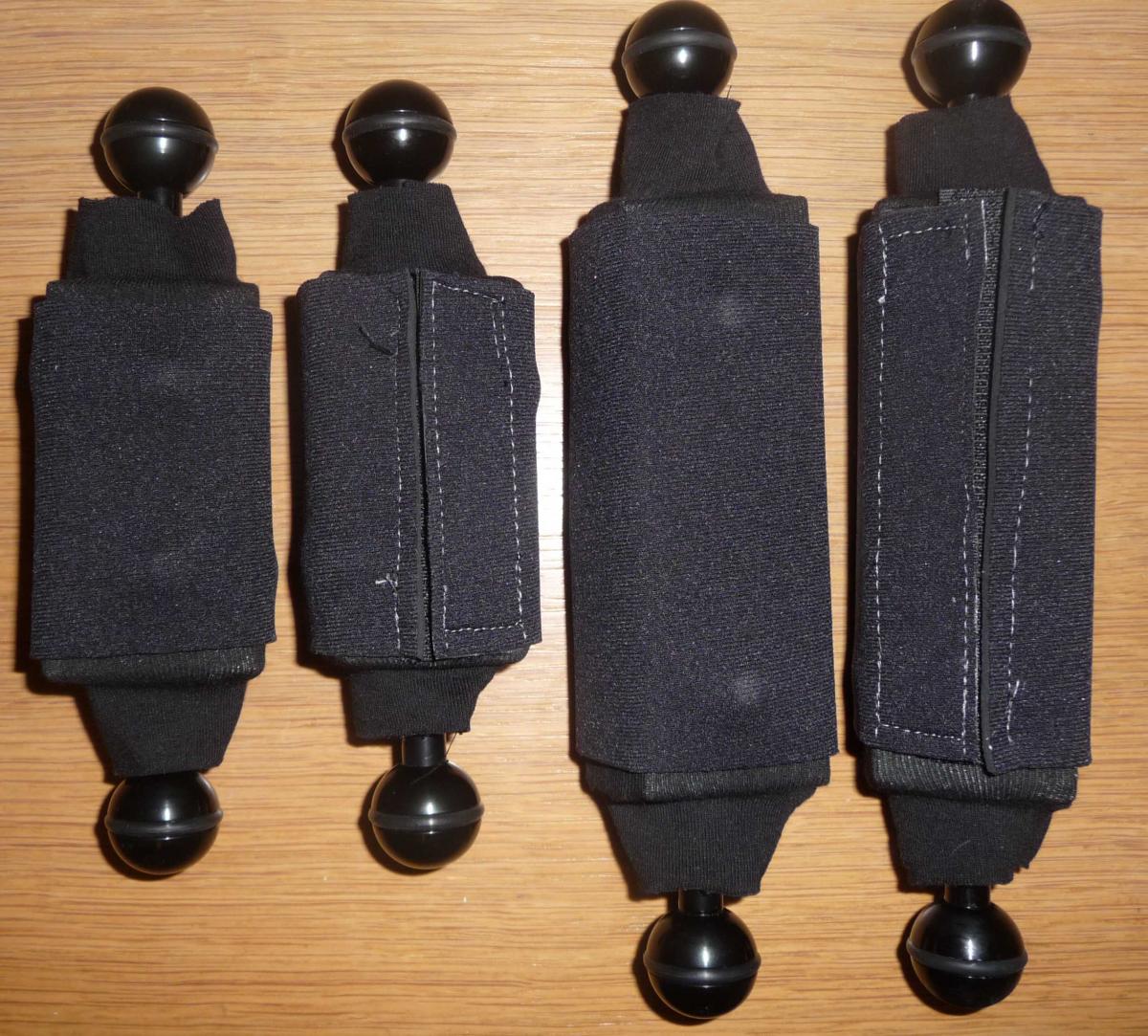
I have completed the first step of DIY modification of standard strobe arms. I have used Corecell, a closed cell foam used in the boat building industry, in 4 layers to wrap my arms. Fixed the corecell to the arms with tie wraps. The layers of Corecell are easily glued together with any two-component epoxy glue. The attached pictures are the first stage as the corecell is not very 'bump' resistant (well to a point). Next I intend to wrap this construction with a narrow tube of black lycra (very stretchable fabric). The diameter of the tube will be just on the diameter of the B&J arms and stretched over the Corecell wrap. The effect of this will be that the fabric gathers aroound the end of the Corecell wrap next to the ball heads (a bit of cosmetics). The final wrapping will be with thin neoprene fitted with a bit of velcro to hold it together (photos will come later). This will provide the bump-proofing for a bit of durabiity. Anyway, this is the theory, next month the proof will be in the pudding in Bonaire (20-27/8)
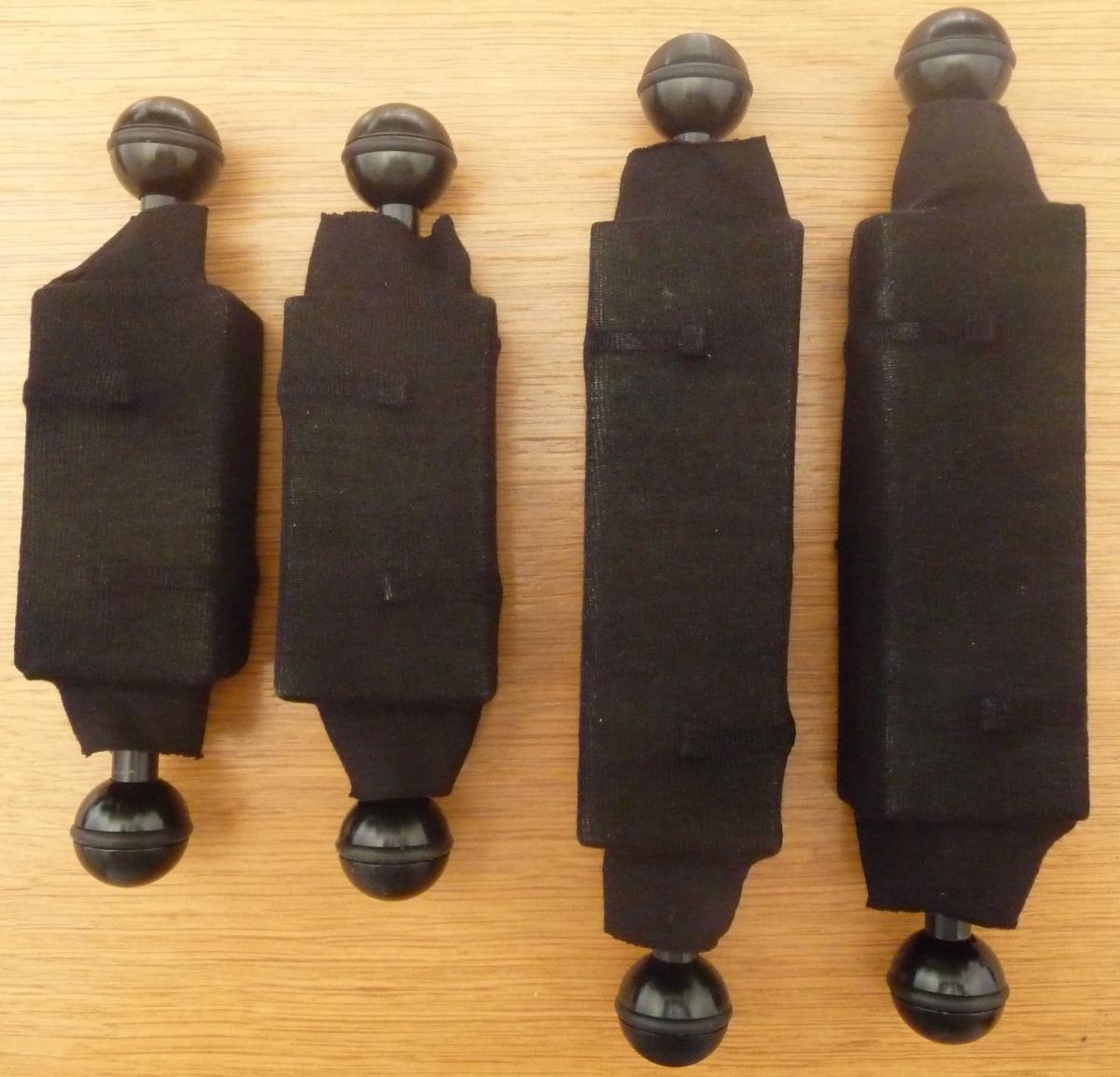
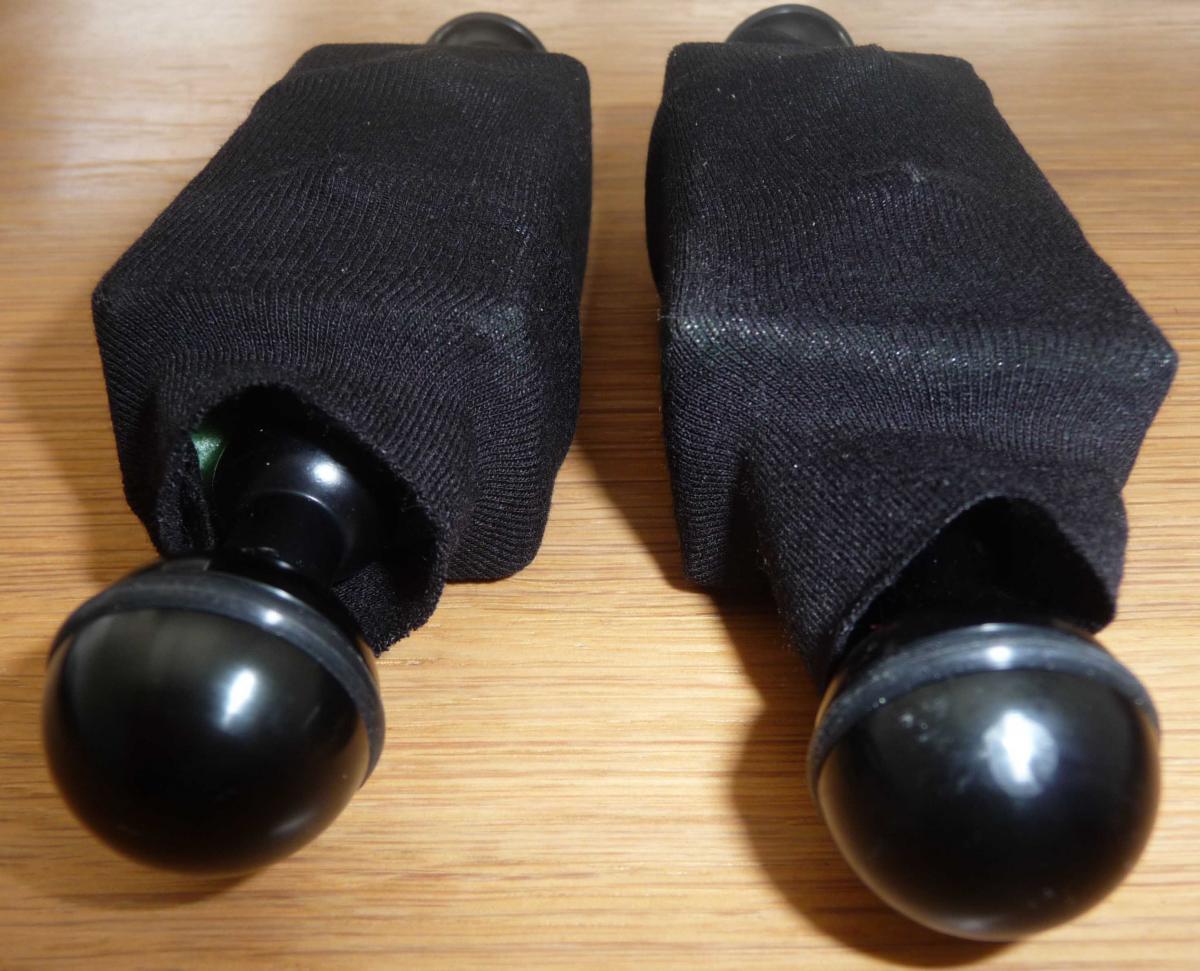
Well the next stage was to wrap the Corecell with some Lycra.
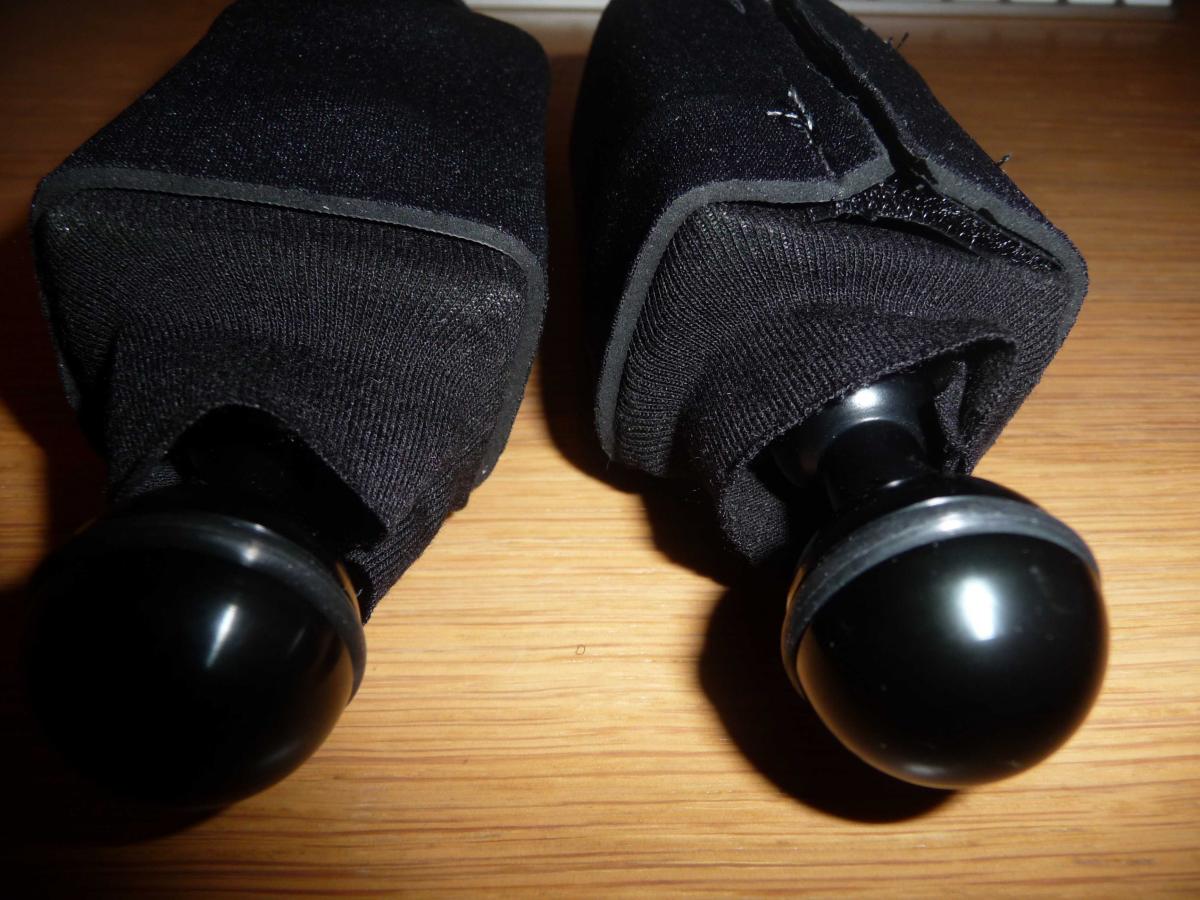
The diameter of the Lycra tube was somewhat less than the diameter of the wrap. This causes the Lycra to bunch together beyond the limits of the corecell wrap. This will undoubtedly enhace the longevity of the wraps. I'll make the neoprene covers and they can be attached with velcro. I'll get to the next installment once I have located the velcro at home.
The final stage in this wrapping was to fix a neoprene (3mm one-sided) layer. The images added to this reply show how this layer was fitted. Two pieces of velcro (hooks and loops) were sewn onto one piece of neoprene in such a way that the hooks were sticking out beyond the edge of the neoprene (about 2/3 of the width of 2cm wide velcro). The loops velcro piece was sewn on other edge of the neoprene in a parallel fashion. Because the hooks were sticking out 2/3rds the loops (which were sewn fully onto the other edge of the neoprene) allowed both edges of the neoprene to sit next to one another, thereby providing a smooth butt-joined layer of neoprene. You'll notice on the picture with all four arms that the tie-wraps give rise to little bumps in the neoprene
Oh, yes...I forgot to mention....they float...providing some positive buoyancy to compensate the underwater weight of the Inon S-2000 strobes
Hi there,
Wondering where you picked up the Core-Cell foam? Is it easy to find at a boating store, and does it have to be bought in huge quantities? Looks like Core-Cell makes M-, A-, P-, and S-Foam, with S-Foam being specifically designed for use in underwater applications (up to 900m). Do you know which type of foam you're using, and are you seeing any sort of effects when using it at normal diving depths (e.g. shrinking or warping)?
Thanks-
C.G.
Hi C.G.
I could find out which type I am using as the people who gave it to me built a boat for a solar boat race with it. In any case, the foam is going to get a test later today when I start my diving in Bonaire. I'll report on it after my dives. The sort of quantities we need for this will be readily given up by any friendly boat builder as what you would be asking for are scraps. The green colour of the foam I have should most likely give the game away, at least from the brochures I can tell that is not certain types. I'll get back on this.
Well I have mad a few dives with the arms now and have to say that they stand up to the test. The balance of the rig underwater is very nice and the extra floatation coupled with slightly more gear on the end of the arms (sola 1200 video light, sola 600 photo light plus two Inon S-2000's) keeps everything managable. No sign of compression or warping of the Core-cell at 30m
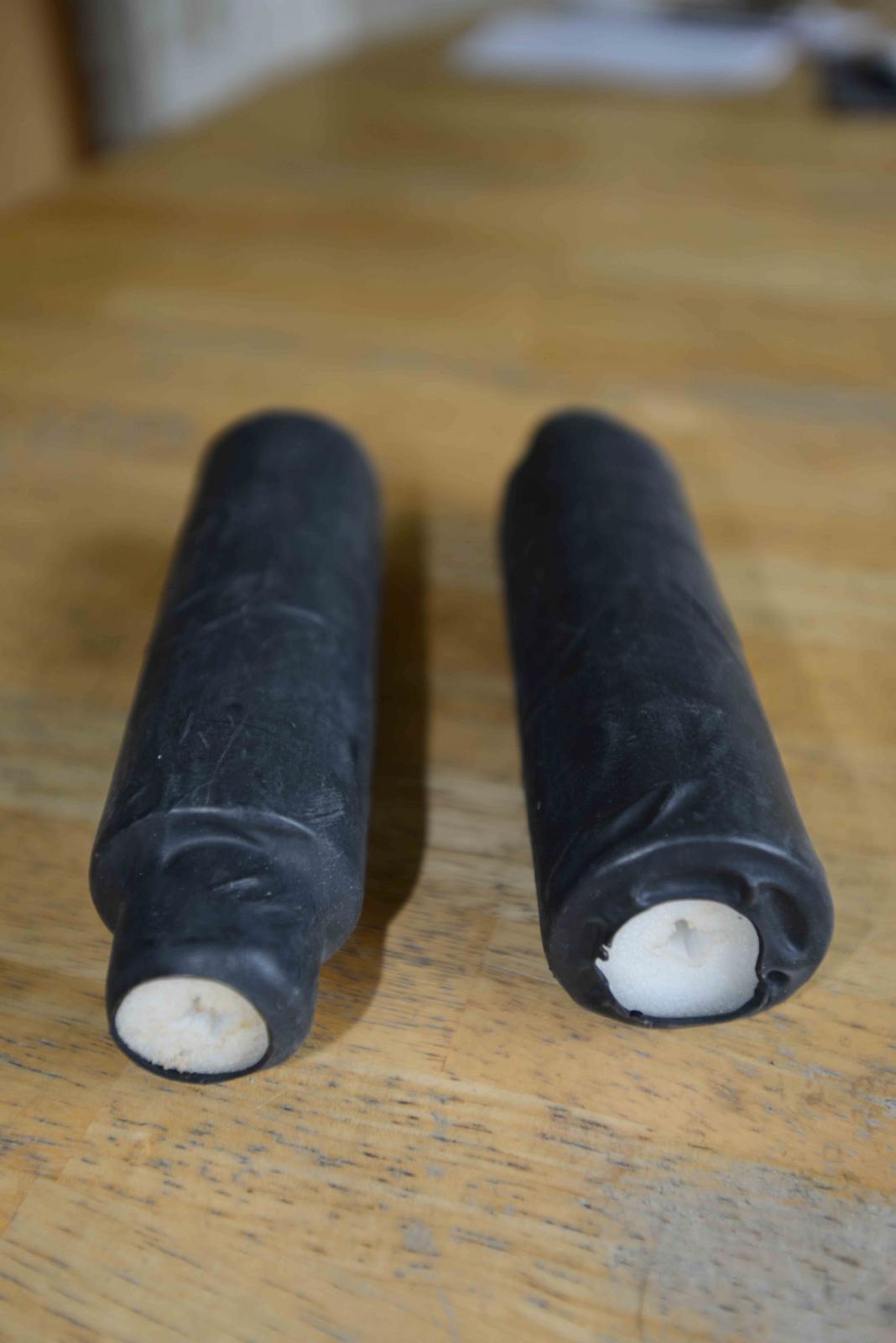
May I suggest using heat shrink tubing to cover and hold the foam together. It would be less labor intense then the lycra and neoprene covering.
Elmer
Good suggestion Elmer, I did not know that heat shrink tubing exists of a dimension to allow to slip over the assembly. It certainly would be less labour intense to produce
Robert,
Here is an example of heat shrink that I used to cover the first Stix floats.