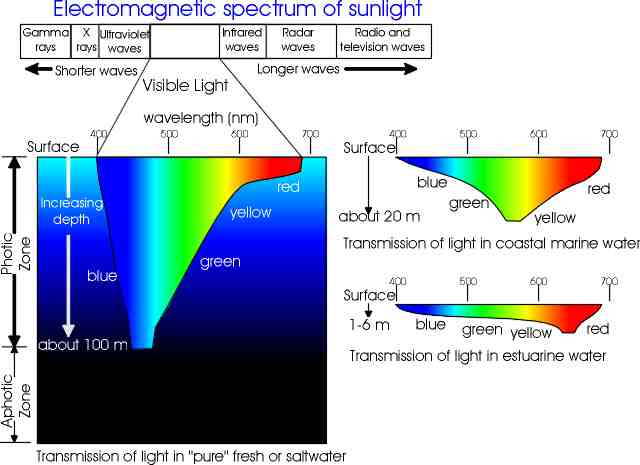
The research I've done so far suggests that a problem with taking photos under the ocean's surface is that sea water absorbs red light and that other than a strobe there are two solutions, one, to use a filter that converts some light to red and, two, to adjust the white balance (or otherwise adjust color levels). But if the water is absorbing the light, then it is doing so to the light that reaches the human eye as well as to the light that reaches a sensor. So my first question is this: Is the goal in adding red in underwater photos to alter the photos and make the images look better than they do to the naked eye (and there would be nothing wrong with that), or is the eye more sensitive to red light than film or a digital sensor and so by adding red, the image better approximates what the eye sees?
This leads me to my second question. Panasonic point-and-shoot digital cameras have a natural light scene setting for "snorkeling and beach." This confuses me. A digital Snorkeling setting, I take it, adjusts the white balance to emphasize red that the water removes (just a small adjustment, as compared to what would be required at depth). Ok, but why in the world would the same adjustment be used for a beach scene? A beach may be bright and may have an unusual mix of colors, much different from neutral gray, that, like snow, could fool the camera's auto-exposure suggestion, but what does that have to do with water's absorption of light, which is what, I take it, an underwater setting is all about? Thanks in advance.