Skip to content

Critter Identification / Archived topic

Mobula or Baby Manta Ray

Started by Oceanshutter ·

  • 6Posts
  • 6Replies

Read-only discussion

Mobula or Baby Manta Ray

6 posts
  1. I don't have any pictures to post. This is just a general question.

    How can you tell between a Mobula Ray and Baby Manta Ray? I would assume the size could be the same, with a baby manta. But I don't know. This was brought up on a recent trip to Komodo, and nobody could seem to answer the question.


    thanks,

    Dustin

  2. A manta has cephalic lobes (the rolled things at the head end), while a mobula does not.

    Cheers,

    Marli

  3. Hi both mantas and mobulas have cephalic lobes but mobulas seem to keep them furled most of the time (at least more often than mantas).


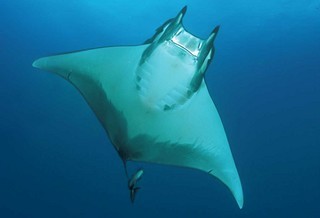
    The most reliable way to tell is the position of the mouths - in mantas it is at the front of the 'face', in mobulas it's underneath

  4. This image found on google images probably shows the elusive mobula's mouth position


    Mobula_tarapacana,I_RR2610.jpg


    http://www.mantatrust.org/ also helps a bit

  5. Both Mobula and Manta spp have cephalic lobes and both unravel them to feed. Manta spp. cephalic lobes are longer than all Mobula spp., Mobulas just have a short flap where as mantas are much longer paddle shaped.


    The mouth is the main ID feature as shown above, Mobula have a mouth on the bottom of their head, Mantas have theirs at the front.


    The cephalic lobes rolled up are a big give away to, Mobulas look like devil horns giving them their name 'devile ray'.


    There are other features but these are the two main ones and easiest to spot.

  6. Hi Dustin,


    It's a good question - even marine scientists often make errors. Manta rays are born at approximately 1.4 to 1.8 m 'wingspan' so they're of a similar size to most mobula species.


    The other respondents have given you excellent information: manta rays of either species have much more pronounced cephalic fins than mobula rays, and mouth position is a definitive character if you get a good view.


    An easy way to tell them apart in the field is also to just look for spots on the underside. Manta rays will always have spots/blotches/defined markings between the gills or on the stomach, whereas mobula rays don't. Manta rays, excepting the black (melanistic) colour form, also have fairly well-defined white/grey shoulder markings which are rarely present in mobula. Also, manta rays (while they may feed in close proximity to one another) don't school to the same extent as mobula rays, so if you see a bunch of them swimming together then that is also a useful pointer.


    Hope that helps!


    Best,

    Simon.

WaterPixels Store

Account

Navigation

Search

Search

Configure browser push notifications

Chrome (Android)
  1. Tap the lock icon next to the address bar.
  2. Tap Permissions → Notifications.
  3. Adjust your preference.
Chrome (Desktop)
  1. Click the padlock icon in the address bar.
  2. Select Site settings.
  3. Find Notifications and adjust your preference.