



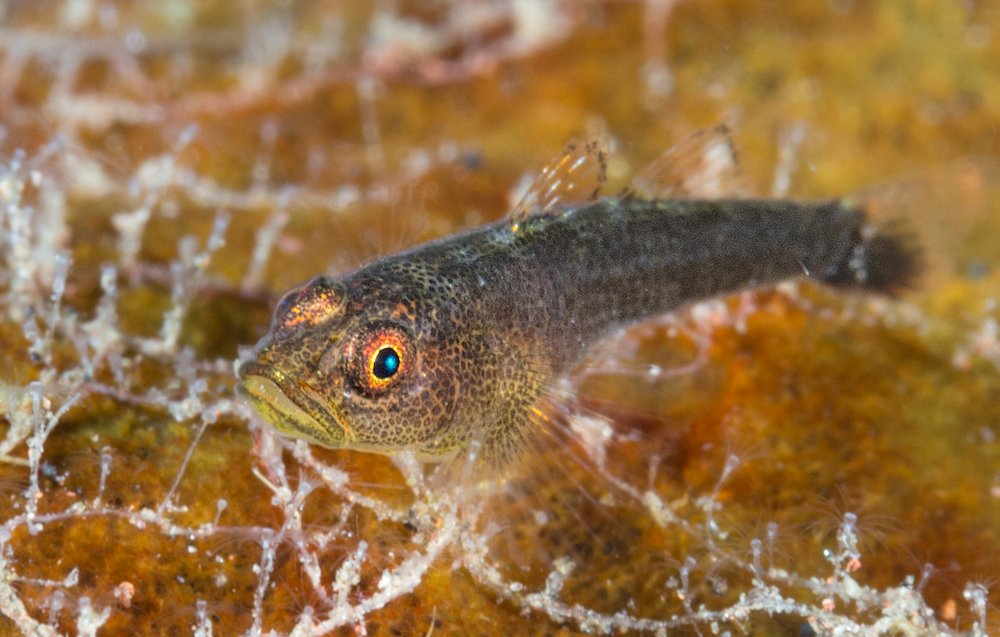
Taken in Tulumben, Bali last month. Maybe some sort of Trimma?
Read-only discussion
Taken in Tulumben, Bali last month. Maybe some sort of Trimma?
It looks like a Ghost goby. It looks a lot like the photo of a Biglip ghostgoby in Reef Fish ID. Pleurosicya labiata.
Cheers,
Marli
Hi Jim,
I went through Reef Fishes of the East Indies but came up empty handed. You may have to contact Rick Winterbottom to get to the "bottom" of this.
Bart
Thanks Marli & Bart. Have been in touch with Rick and he has put me on to Helen Larson in Darwin, Oz. who is apparently THE guru for this genus, I will report back in due course.
Well whatever it turns out to be, it must be a rare find and I look forward to find out what it is. Any tips in how you find all these cool little fish. Is it all your own magic or do you manage to talk dive guides into pointing them out. In my experience they point out nudis, cryptic, large and weird animals but never the unusual blennies, gobies, damsels, wrasse, etc.
Bart
You are right Bart - they do point out what you say but not gobies, blennies etc. I guess many punters are not that interested in them. I tend to hang back from the guides and do my own thing. The problem is if they do find anything really good, I get to it after everybody else in a cloud of crap!
On this particular fish, Helen Larson's first reaction was that it is just a strange coloured P. mossambica but she has asked for a high rez pic which I sent. Have heard nothing further and will advise when I do.
Interesting. I had not even considered Pleurosycia. The wide mouth and short snout just don't feel right. I went back to the books and my gut still tells me it's a Trimma, but it wouldn't be the first time my gut feeling is wrong.
I use the same strategy as you do. Hang back and go as slow as possible without loosing contact with the group. In addition, I always go to places with unlimited shore diving. I find it helps to dive the same site multiple times at your own speed without guide or group to follow, and trying different lenses.
Bart
Bart
I thought Trimma initially but Rick Winterbottom said he didn't believe so. He therefore put me in touch with Helen Larson. She has now replied as follows:-
"But I must say I cannot tell what this is for 100% sure. Too much is out of focus but for the fish's 'face'. The dark edge to the first dorsal fin is interesting too.
Often identifying Pleurosicya properly means you need a body to look at. Which isn't possible when you are diving in Indonesia.
So sorry about that, it just goes into the unidentified Pleurosicya pile. Has plenty of company. One day I will have to revise my revision of the genus!"
Pity but cannot do anymore. Thanks for your help as ever

Terms of Use Privacy Policy Guidelines We have placed cookies on your device to help make this website better. You can adjust your cookie settings, otherwise we'll assume you're okay to continue.

A worldwide community for underwater imaging.
