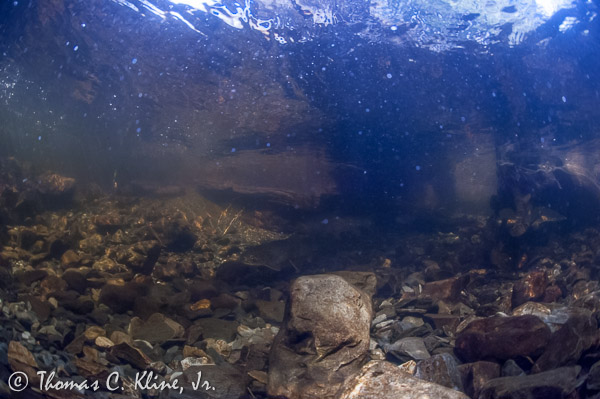
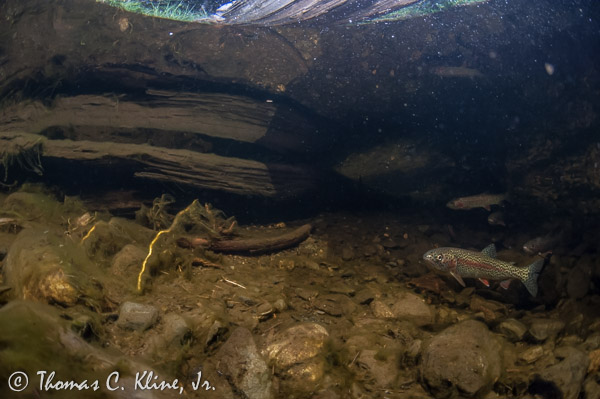
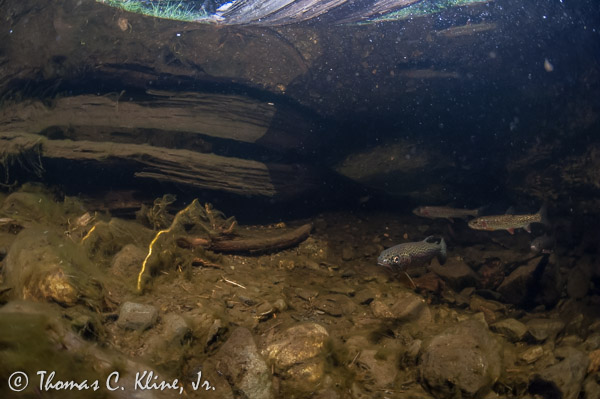
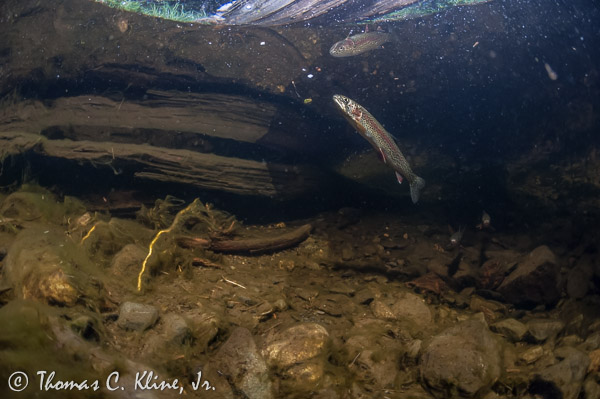
I'm getting ready to purchase a pair of cameras for scientific video analysis of freshwater fish behavior. I've done as much reading as I can to put together a suitable system, and would appreciate the opinions of some professional underwater photographers about my plan and anything I might have overlooked.
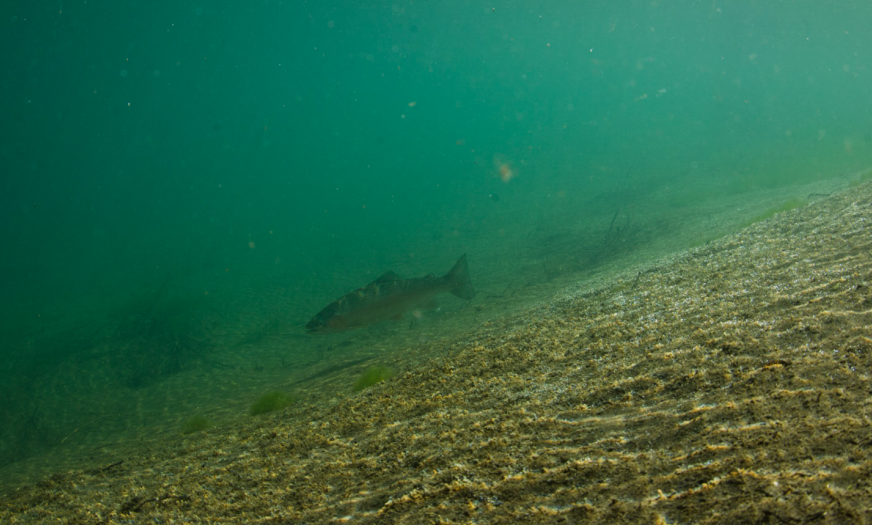
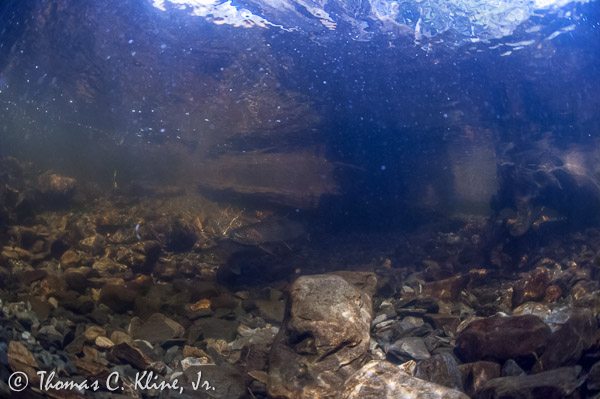
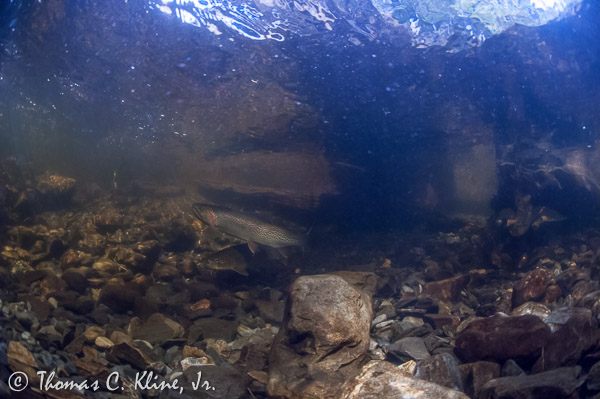
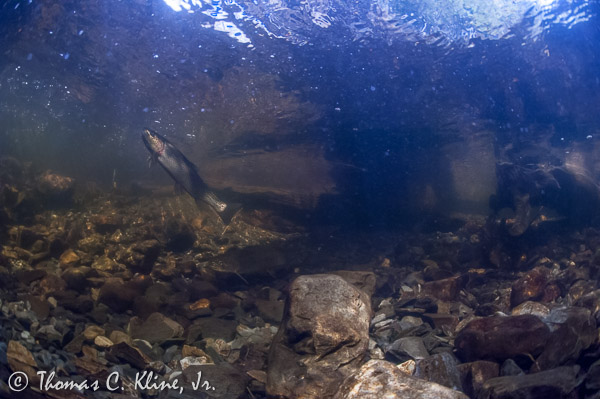
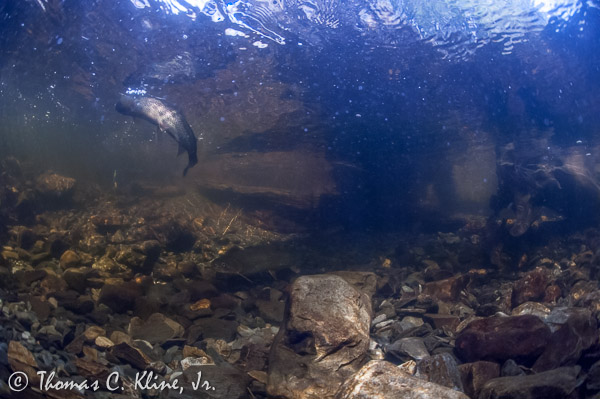
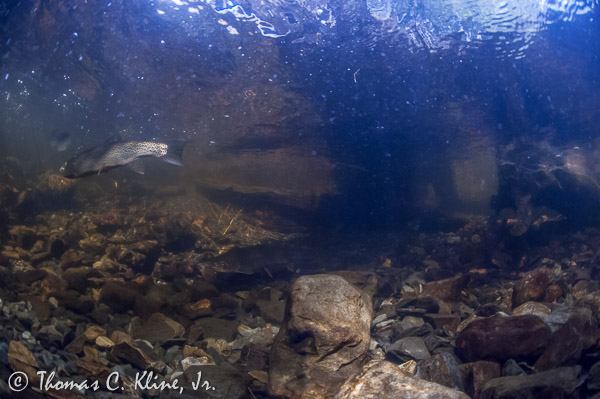
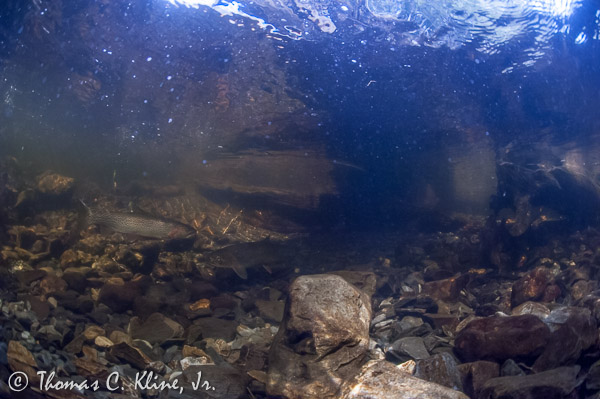
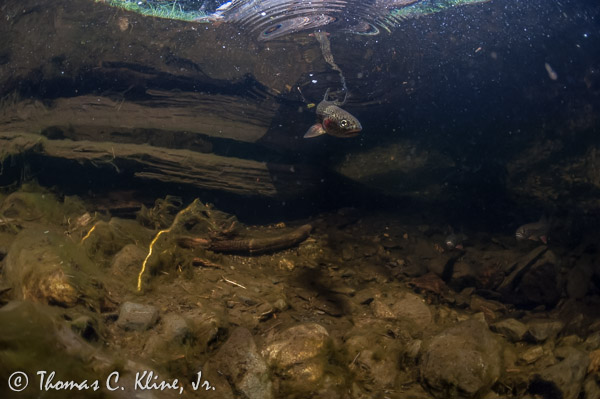
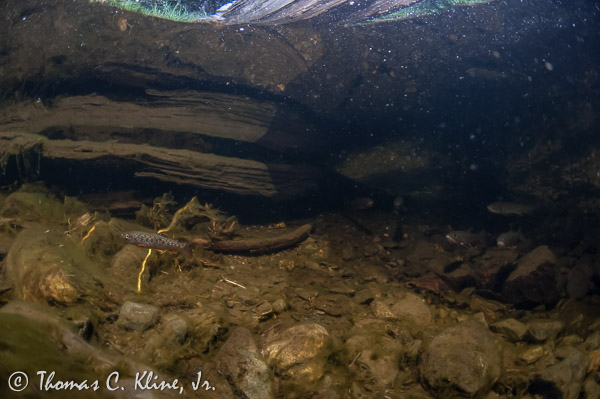
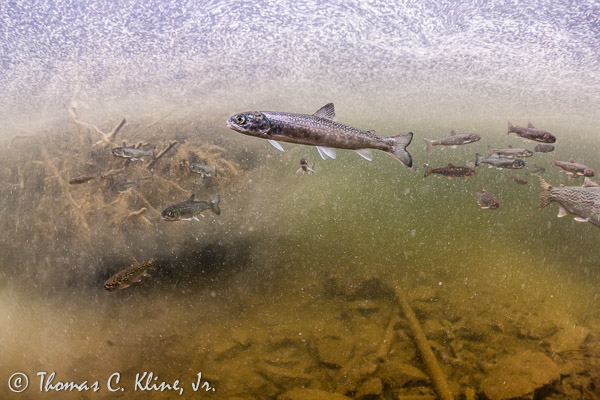
I'm going to use a stereo pair of video cameras, placed side-by-side on a crossbar on the bottom of a small, shallow, clear, freshwater stream, pointed at a drift-feeding fish (that is, a fish that maintains one semi-stationary position in the river and darts back and forth from there to intercept potential prey from the current). I need to be as close to the fish as possible, with the best sharpness possible, to resolve subtle details (for example, to see whether it "spit out" an item it just captured), yet I also need to have a wide enough view that almost all the fish's prey capture attempts are on-screen in both cameras. The fish will be anywhere from a few inches to ten feet from the cameras. I'll be using the video from the two cameras to make precise 3-D measurements of the fish's activity using software I wrote (http://www.vidsync.org), but I don't need feedback on the 3-D part of things, just maximizing image quality.
To assure adequate camera placement and maximize recording quality, I need to run clean HDMI output from the cameras to external recorders, which I'll be observing from dry land up on the stream bank. I'll be setting the exposure/focus/etc and starting the recording manually, placing the cameras in the stream, and then watching the fish through the monitors on the bank to make sure the camera placement is good.
One important difference between my requirements and those of most videographers is that I don't want the "cinematic" look -- I need every frame of the video to give the sharpest possible view of every detail, including moving objects (like the tiny drifting items the fish are pursuing). This means going for the fastest shutter speed I can (widest aperture and highest ISO) while maintaining adequate DoF for sharp focus throughout the virtual image and avoiding losing important details to high ISO noise. Artificial lighting is not possible, and I expect to work in a range of natural midday lighting on sunny/cloudy days or in moderate shade from trees.
My plan is to use a pair of the following:
Camera body: Nikon D5300
Lens: Samyang/Rokinon/other brands 8mm f/3.5 Aspherical Fisheye for Nikon AE
Second choice lens: Nikon AF DX 10.5mm f/2.8G ED Fisheye
Housing: Ikelite #6801.53, with hole drilled for HDMI bulkhead
Housing port: Zen Underwater DP-230 9" Superdome
Housing port spacer: I don't know
HDMI monitor/recorder: Atomos Ninja Blade
HDMI bulkhead and cable: DiveAndSee
It makes me nervous that Ken Rockwell's review of the Samyang/Rokinon lens says it can focus up to 12" from the image plane, which will hopefully allow it to focus on parts of the virtual image all the way up to the 9" dome, but I'm not sure. The Nikon lens could definitely focus close enough, but it's more expensive and based on reviews I've read seems like its projection and optical performance aren't quite as good. Also I assume it would have a very slightly narrower field of view and smaller depth of field given the longer focal length.
Also, I don't know what kind of spacer (if any) will be needed to approximately align the nodal points of the dome and the lens. Does anyone have experience with this combination?
I'd appreciate your thoughts on the likely performance of this system, things I might be overlooking, options that might be better, etc. Thanks in advance for any help!