



http://jun291blog.com/blog-entry-723.html
Can anyone explain how to setup your strobes and other parameters to get such a photo in Japanese style?
Thanks
Shooting Technique, Workflow and Editing / Archived topic
Started by magicfx ·
Read-only discussion
http://jun291blog.com/blog-entry-723.html
Can anyone explain how to setup your strobes and other parameters to get such a photo in Japanese style?
Thanks
Shallow depth of field, maybe 4.0 or less. Two strobes at 60* or more, even lighting.....
Do a search for Bokeh on google.
Don’t forget shooting wide angle with nothing in the frame!
(I am only joking!)
Alex
Is there a defined Japanese style? Who are the great/well known Japanese Uw photographers? I follow one on Instagram, and yeah, his photos do look like the one in the link...
I think Bokeh is not the appropriate idea here. Bokeh is a characteristic of a lens (not a style). You can shoot shallow depth of field with any lens/camera that will allow it, but as far as I understand it Bokeh means the "pleasingness" of the out of focus areas and has a lot to do with lens design and some magic thrown into it. For a look at how to measure bokeh, take a look at
http://photo.net/nikon-camera-forum/00aDI7

Bill
Jun Fukui is one of the famous underwater artists:
http://jun291blog.com/blog-entry-723.html
As we know, classic marco photo is with black background,
But this style is not popular in Japan.
Probably because they don't have volcanic soil habitat like Anilao or Lembeh,
So they must shoot subject with complex reef background, but try to separate subject from reef background.
As we know, classic macro photo is with black background,
But this style is not popular in Japan.
Probably because they don't have volcanic soil habitat like Anilao or Lembeh,
The "classic" black background is created by a high shutter speed and a high f-stop, the image relies on strobe lighting. It hasn't got anything to do with the colour of the background, because it's best shot against the water rather than the reef.
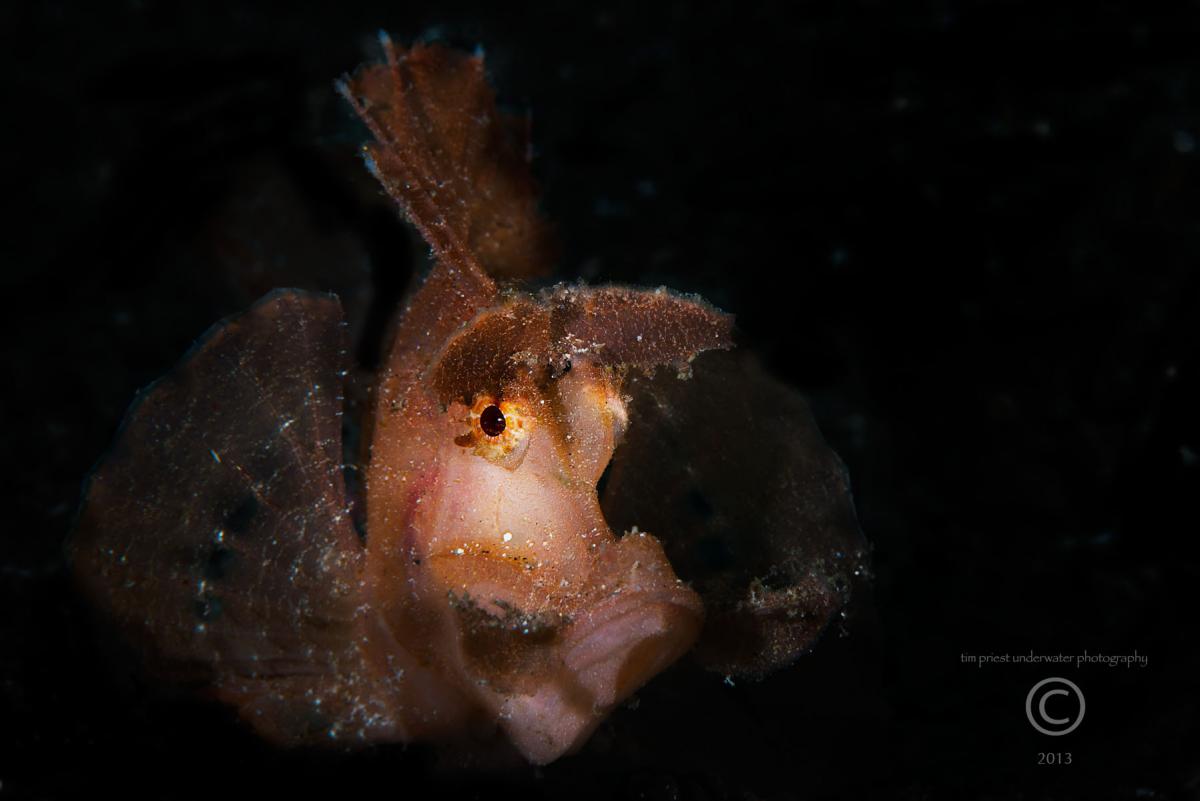
The light, unfocussed background relies on ambient light, slower shutter speeds, wider apertures and balanced strobe lighting. It's harder to do. I often find that my backgrounds are too dark.
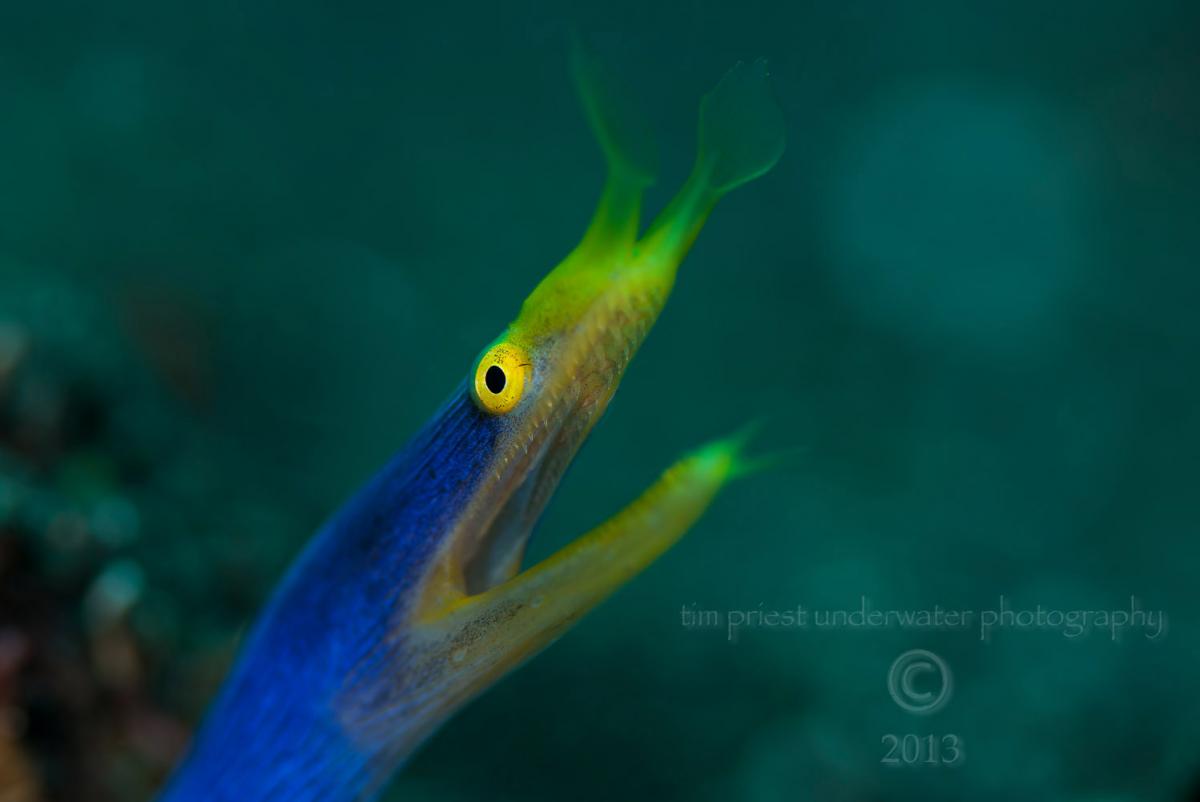
Please accept my apologies for the (glitch-squared) below...
As we know, classic macro photo is with black background,
But this style is not popular in Japan.
Probably because they don't have volcanic soil habitat like Anilao or Lembeh,
The "classic" black background is created by a high shutter speed and a high f-stop, the image relies on strobe lighting. It hasn't got anything to do with the colour of the background, because it's best shot against the water rather than the reef.
The light, unfocussed background relies on ambient light, slower shutter speeds, wider apertures and balanced strobe lighting. It's harder to do. I often find that my backgrounds are too dark.
Japanese style? 
Shallow depth of field is just a technique used to highlight a certain part of an image (and sometimes an unavoidable result of great magnification in macro images...). Black or blurred backgrounds have nothing to do with where you take the pictures... just open your lenses, get close (powerful close up lenses will help getting SDF) and enjoy.
Drink more saki!
I guess you will get some help from here http://cowboystudio.blogspot.com/2009/04/using-strobe-lighting.html
I shot this with a D7000 & 105mm micro @ 1/200 F22 ISO400 with the strobes behind the port and slightly turned in.

Did it survive
SD
Marko

Terms of Use Privacy Policy Guidelines We have placed cookies on your device to help make this website better. You can adjust your cookie settings, otherwise we'll assume you're okay to continue.

A worldwide community for underwater imaging.
