



Skip to content

Shooting Technique, Workflow and Editing / Archived topic

Minimum focus distance question

Started by Bob Miller ·

  • 10Posts
  • 10Replies

Read-only discussion

Minimum focus distance question

10 posts
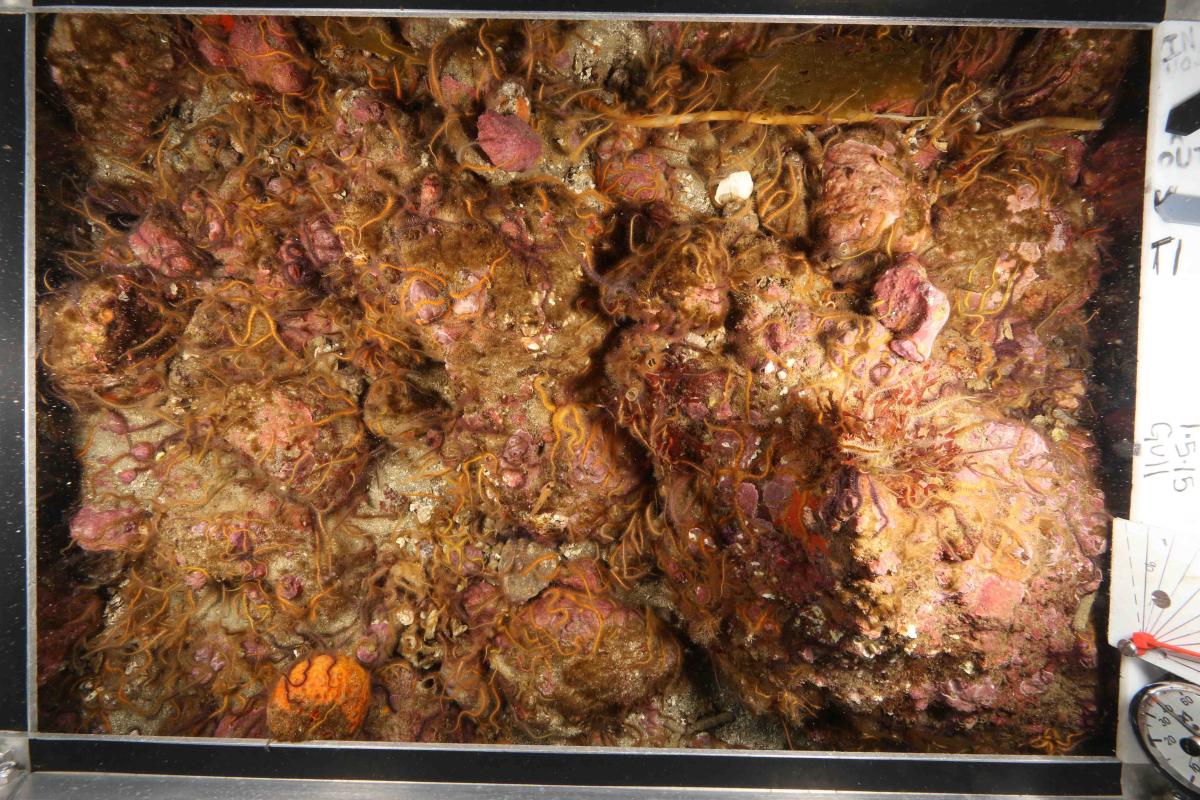
  1. I am using a Canon 6D that is mounted, along with 2 strobes, on an aluminum frame (we call it a quadropod), to take pictures of a fixed area of the bottom. In this case I'm using a 14mm lens and the area is about 0.1 square meters. The camera is quite close to the bottom (I don't have the distance right now but it's less than a foot). I designed the frame just based on the lens angle of view and adjusted the distance to the substrate according to the amount of area I wanted to cover. The wide angle lens is nice in that it minimizes the distance to the bottom to cover a decent area.


    Since the lens has a minimum focus distance of 8" I did not worry about that. However, I am noticing that my images do not seem perfectly focused. I have read on this site and in other places about the apparent image produced by a dome port, and how to calculate the location of the secondary focal point, which is the position of the apparent image at infinity. For my 8" dome port, that would be around 10" in front of the dome. However, I am afraid that my apparent image is much closer than that, and might be closer than my 8" of minimum focus distance. Does anyone know how to calculate the position of the apparent image given the distance to the object being photographed?


    I have attached an example of one of my images. Note that it looks OK but when zoomed in it seems like the focus is not really sharp, which we need when identifying really small critters.


    Thanks!
    post-52028-0-73274500-1442020440_thumb.jpg

  2. What 14mm lens are you using? What dome are you using? Can you post a picture of the sideview of the housing complete with camera, lens and dome.

  3. I'm using the Canon 14mm (2.8) and an Ikelite 8" dome with 4" extension. I will post a pic of the rig on Monday - unfortunately I can't get to the office this weekend!

  4. Here is a link to formulas that might help you work out the problem for a finite object distance.

    http://scubageek.com/articles/wwwdome.html

    You might try and locate a copy of Gomer McNeil's book Optical Fundamentals of Underwater Photography. There are several pages worth of formulas and worked out examples. It is important to know that for a flat subject at a finite object distance the virtual image and focused image are both aspherical (shown in the book in final figure of the appropriate chapter). It will be very difficult to impossible to get the corners in your pix to be in focus if the center is in focus. That said there seems to be a great deal of variability as to how far out of focus your corners will be due to differences in individual lens designs and how they interact with dome port optics. It appears that the new Canon 11-24mm may be much better at 14mm than the 14mm EF prime lens, which works rather poorly. We need to see more tests of this lens as it will be very expensive to use since it requires special ports due to its large diameter. See for example: http://www.nauticamusa.com/news/2015/5/29/canon-11-24-4l-usm-lens-support-testing

    Tom

  5. I'm using the Canon 14mm (2.8) and an Ikelite 8" dome with 4" extension. I will post a pic of the rig on Monday - unfortunately I can't get to the office this weekend!

    From what I have seen on line of the EF14mm lens used under water the 8" dome is a problem. The lens is quite marginal when used under water with even larger ports such as in the Nauticam link I posted above. Sorry for the bad news.

    Tom

  6. Tom, thank you for the info. We have been thinking about trying the 11-24 anyway because of how wide it goes, so that is good to know. I have seen reference to McNeill's book before, I'll try to get it at our library. Looks like it's hard to find.

  7. I use the Canon 14mm on my 5DII and find it almost able to focus on the scratches on my 8" acrylic dome. I doubt the minimum focusing distance is your issue. If the centre is sharper than the sides then it's more to do with the curvature of the virtual image caused by the dome port vs the flat focal plane of the rectilinear lens.


    If you have enough light, I would increase your f-stop as far as possible. For critter identification I would find it easier to see the details with a higher ISO and higher f-stop rather than the reverse.

  8. Are you placing the camera by hand? If so, then I would pop into live view, zoom in to get your critical focus, and then leave it there. Shooting from a tripod (or equivalent stationary position) this is the best way to get absolute sharpness from the combo.


    thanks

    rick

  9. Hi Rick,


    There is a whole bunch of other issues with getting a sharp image underwater!


    Principally, the lens needs to be able to focus on the virtual image projected in front of the dome port, not the actual subject. In this instance, it look to me like this lens is not capable of this. A tripod will make no difference!


    Adam

  10. Adam,


    Yes, very true. But using live focus would allow him to determine if that were the case and is easy to do if he is visiting the camera in person. That as the point I was making.


    Thanks,

    Rick

Account

Navigation

Search

Search

Configure browser push notifications

Chrome (Android)
  1. Tap the lock icon next to the address bar.
  2. Tap Permissions → Notifications.
  3. Adjust your preference.
Chrome (Desktop)
  1. Click the padlock icon in the address bar.
  2. Select Site settings.
  3. Find Notifications and adjust your preference.

