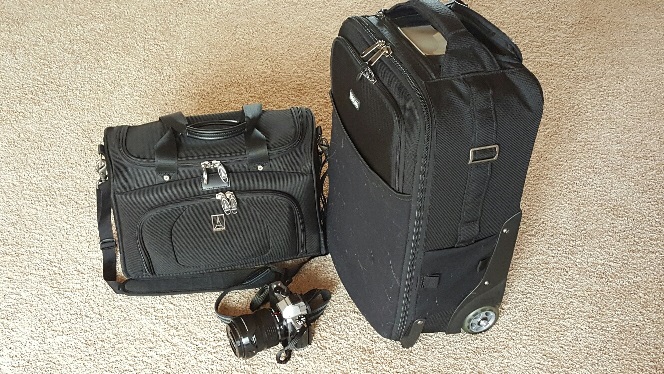
My primary reason for micro four thirds is illustrated in the photo. I don’t have to check the photo gear, so no worry about it getting stolen, smashed by baggage handlers or sent to the wrong destination and I rarely have to deal with any extra baggage fees. The EM5 is included as a size reference.
With the exception of one small commuter plane on one occasion, the “international” sized rolling bag doesn’t get a second look on any normal commercial aircraft, even when they are hassling people with “normal” sized rolling bags. If an airline insisted on checking it, I would pull the 180 dome out and put it in the shoulder bag (yes, there is room).
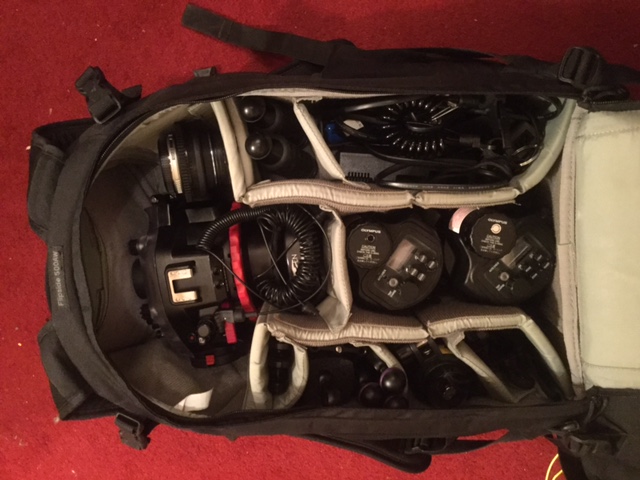
Here is what goes in the rolling bag:
Nauticam EM1 housing with tray and handles
180mm dome
55mm N85-N120 adapter
100mm dome
flat port for 12-50 and 60mm micro
2 Inon z240 strobes
Focus light
Zoom rings for 7-14, 12-40, 12-50
Numerous small bits and pieces (O rings, flex ties, gaffer tape, batteries, etc.)
There is still room for another small port or an adapter or extension, etc.
In the shoulder bag (fits under seat):
EM1
7-14
12-50 or 60mm micro or both
12-40
Canon S120 camera
Gopro camera and housing
Memory cards
Dive computer
Noise canceling headphones
Kindle reader
Laptop computer
Miscellaneous small stuff for traveling (passport, tickets, candy bar, etc.)
I put arms and clamps in my wife’s rolling bag, along with our regs and several other expensive, fragile or hard-to-replace items. If I had to, I could fit arms and clamps or the 180mm dome or the housing, tray and handles in the shoulder bag. When going somewhere where the rolling bag won’t be allowed due to tiny planes, I shift the housing or large dome to the shoulder bag and put the ports and strobes, focus light, etc., in a small pelican roller that can be carried aboard the long flights and checked on the small planes.