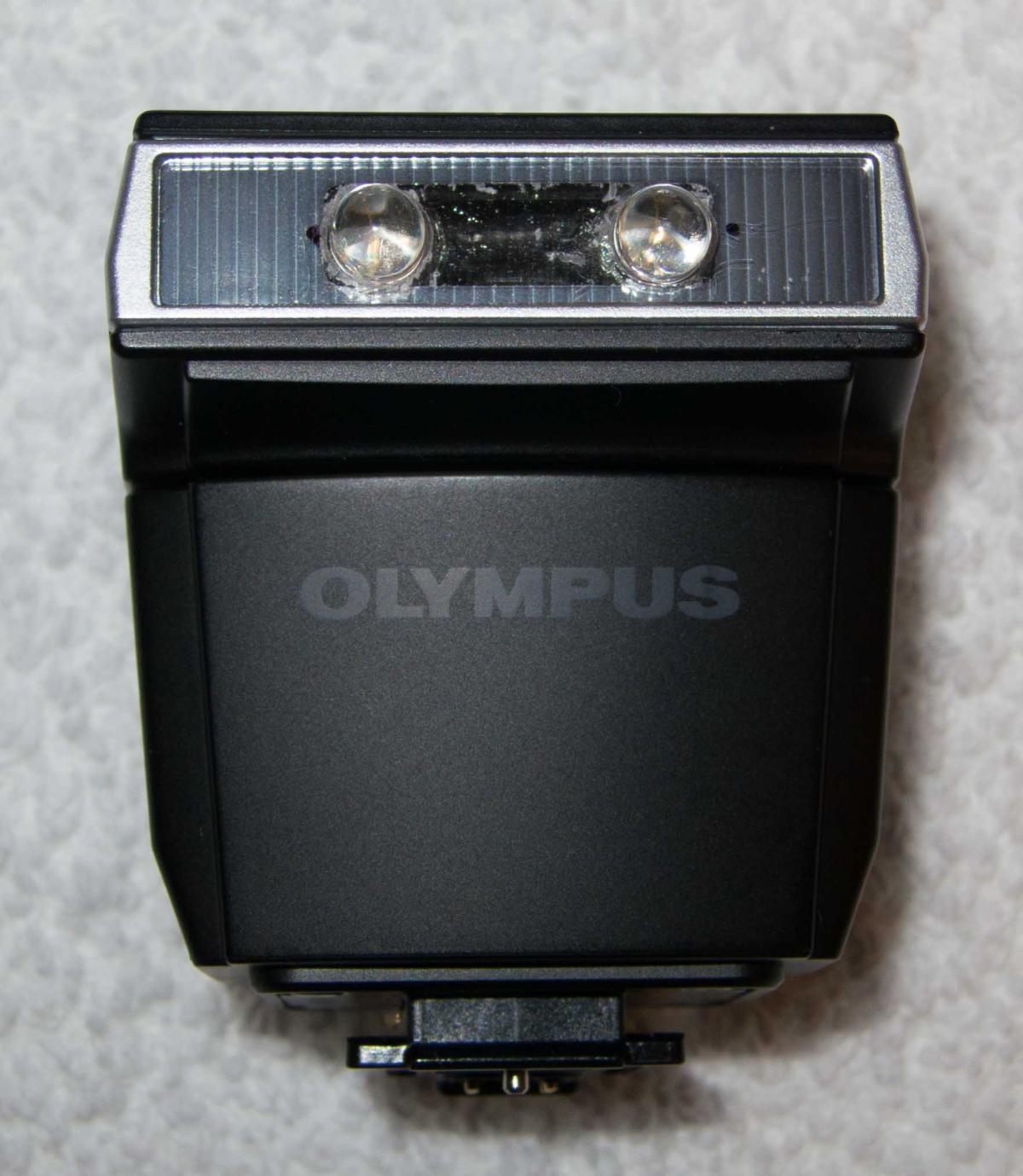
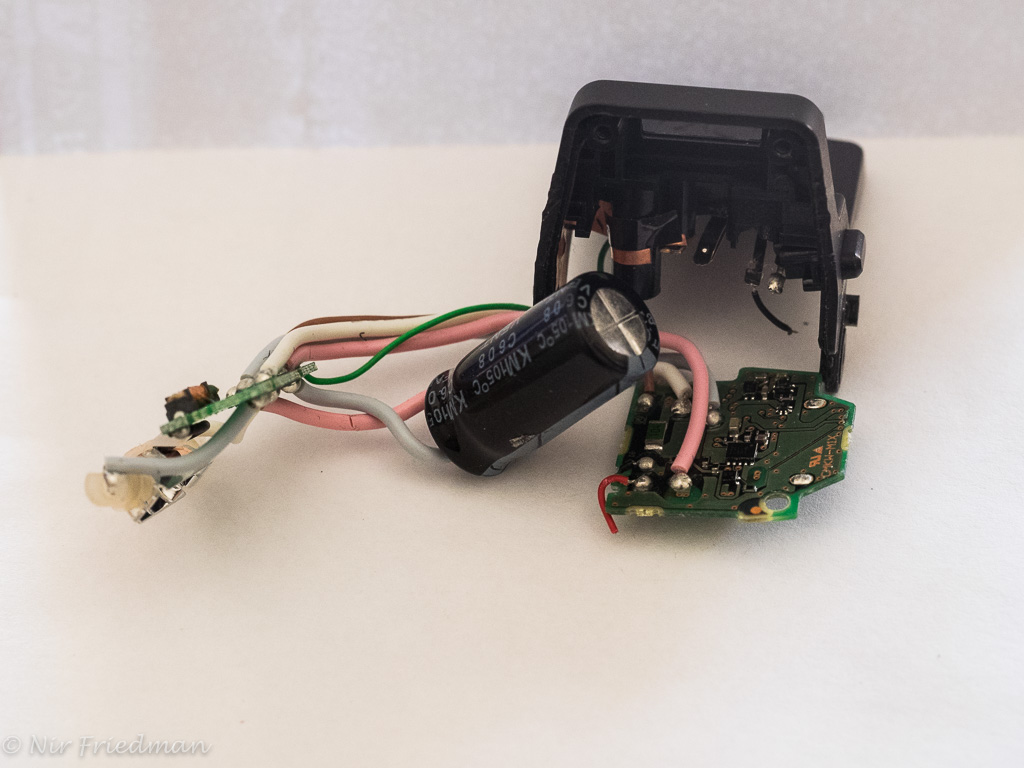
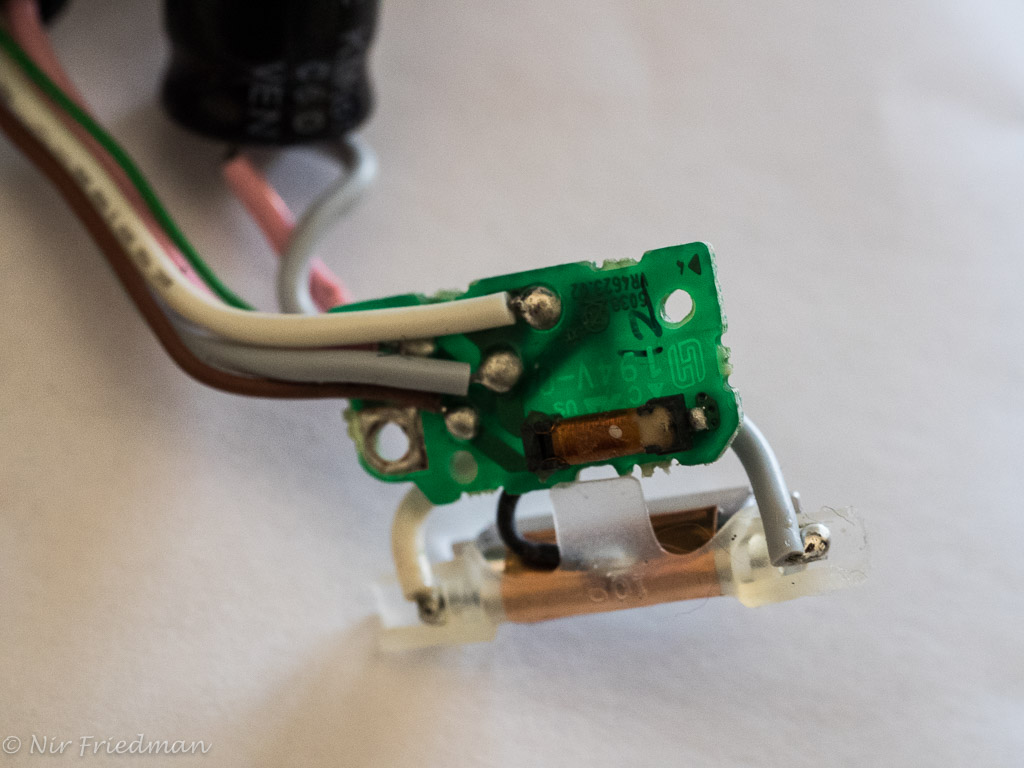
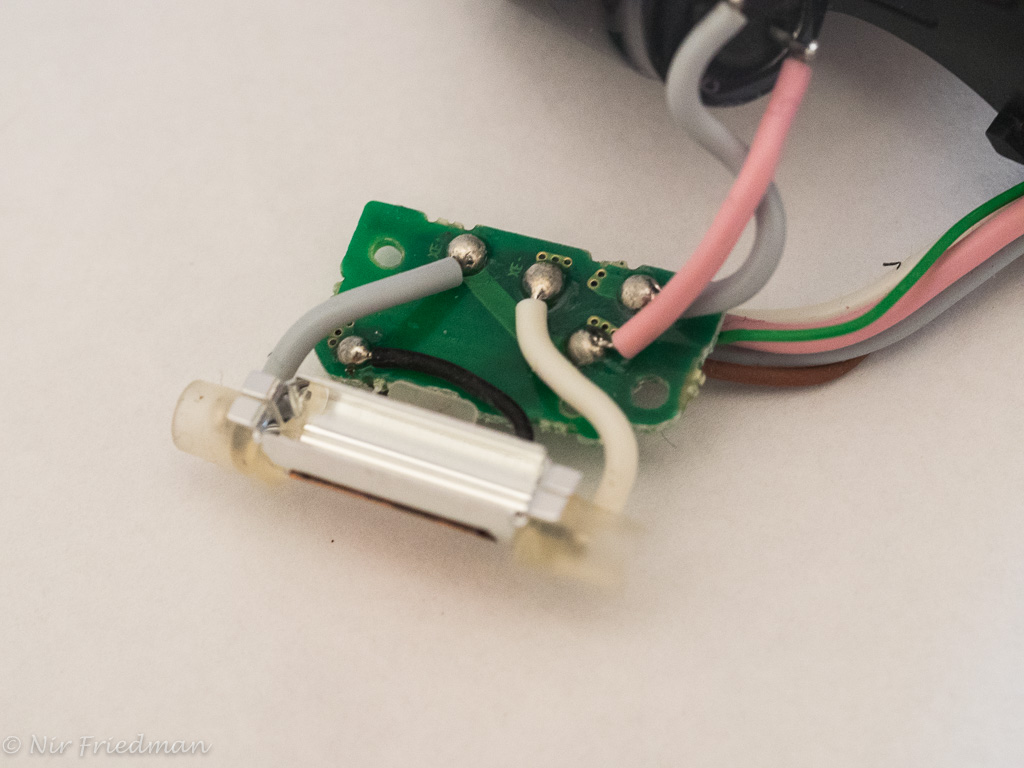
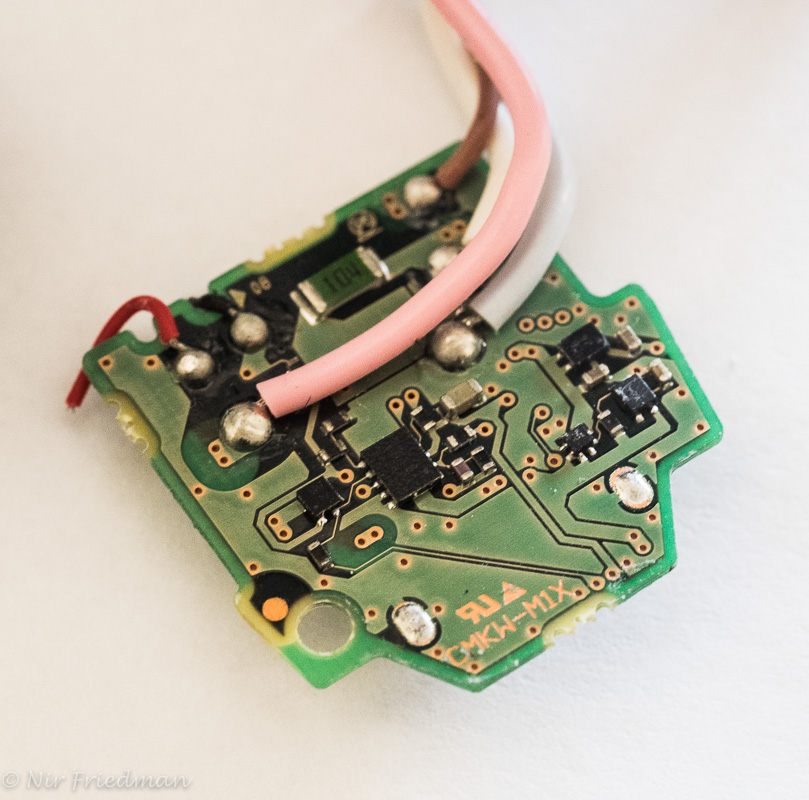
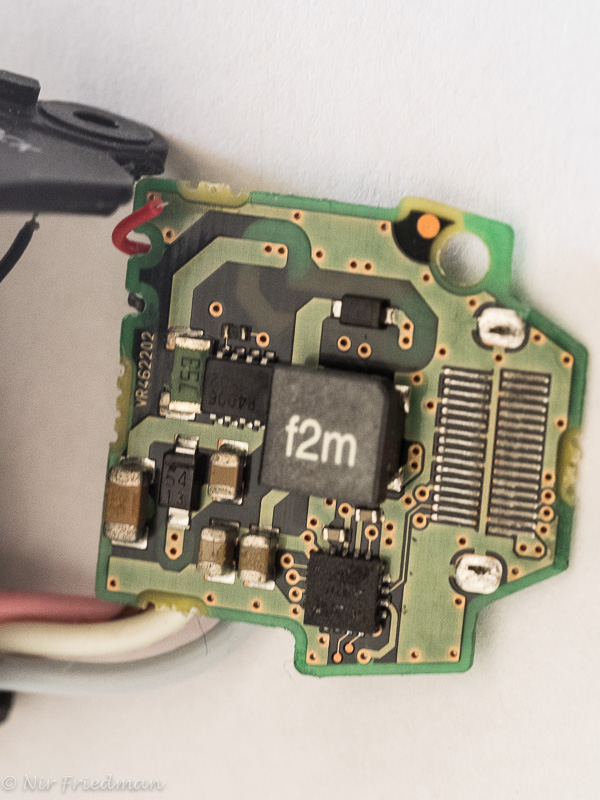
An older thread discussed modification of an Olympus flash to reduce cycle time and battery consumption. While the results were mixed, I was motivated to create a functionally equivalent solution for the Olympus OM-D E-M1 Mark II without any limitations. Using an Olympus FL-LM3 flash I substituted LEDs in place of the Xeon tube, enabling triggering an external strobe (e.g. Sea&Sea YS-D2) preserving TTL functionality while reducing cycle time and battery consumption.
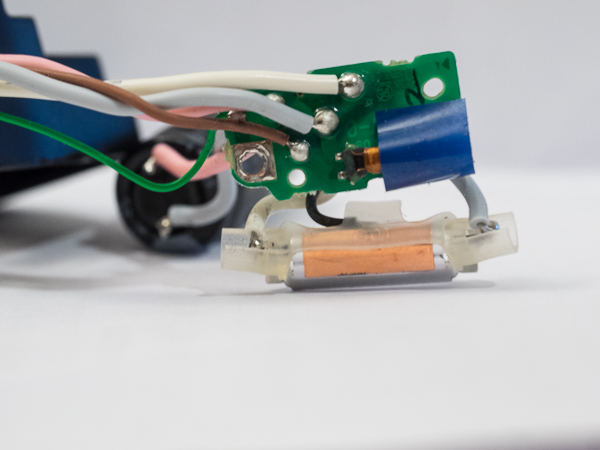
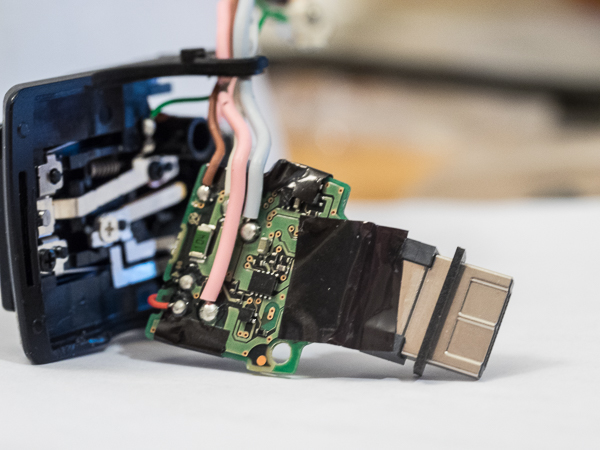
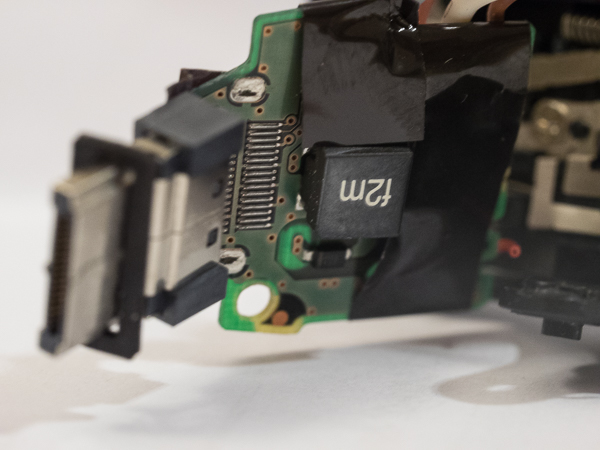
Micro 4/3's cameras use a serial protocol between the camera and flash which is closed to the public. Looking at the bit stream I quickly decided it was a waste of time to reverse engineer the protocol and turned to simply modifying the Xeon strobe subsystem of the flash. In short remove the Xeon tube, trigger transformer, disable the discharge path for the photoflash, substitute a small (e.g. 1 uF photoflash cap) for good measure and add a LED driver and LEDs. The FL-LM3 is a traditional modern strobe using a IGBT to not only drive Xeon tube, but also the trigger transformer. Stop the strobe as part of TTL metering, the IGBT device is driven into pinch off, thus quenching the Xeon tube, leaving whatever charge is left on in the capacitor. This enables the flash to emit pre-flashes, as well as the main flash.
By connecting the LED driver to the IGBT's gate, the LEDs emit exactly the same duration light pulses as would have been emitted by the Xeon tube preserving the pre-flashes, etc.
The following is a link to the instructions for this modification,
https://www.instructables.com/id/LED-Strobe-Trigger-for-Olympus-OM-D-E-M1-Mark-II/
Also a link to a video showing an E-M1 Mark II in an Olympus housing with the modified flash, triggering a Sea&Sea YS-D1 running at frame rate limited by the communication rate between the body and FL-LM3. Note this is somewhat of a trick given if the YS-D2 recycle time increases the frame rate must drop, but there is no feedback to the body. Thus setting the body to run at a lower frame rate is the path forward.