Skip to content

Lights, Strobes, and Lighting Technique / Archived topic

Flash duration?

Started by SMY ·

  • 17Posts
  • 17Replies

Read-only discussion

Flash duration?

17 posts
  1. I have questions for the Pros:


    - how long takes a flash ignition normally?

    - I read in the web different meanings about the power of flashes: on one side it is stated, that a flash ignits always with the same power when using different power levels, it just differs, how long the flash ignits. On the other side it is stated, that the the power is modified and not the time....whats correct?Whats the best book orwebsite to learn more about flashes UW.....in use with ambient light?


    Best regards, Sascha

  2. Xenon tube in uw strobe works at the constant voltage, control is only in flash duration. More duration, - more energy in flash. User controls duration manually or by TTL.

    Linear shape tubes max flash duration - 1...4 ms (full energy), round shape tubes max flash duration - 8...25 ms, depending on the size. For example, Inon Z-240 full flash duration is 3.2 ms, Sea&Sea YS-250 full flash duration is 23 ms.

    Edited by Pavel Kolpakov
  3. Thanks Pavel for the fast response! So this means e.g. YS-D2 (which I formerly used) have longest ca. 1/250? Can this be the reason for sharp images with nikon D810 on 1/125 because flash freezes the picture? No with my new Seacam 60 I have to be more careful because it has round shape tube? Better go there to 1/250 on camera when full power on flash?......Or am I completely on the wrong track?


    Best regards, Sascha

    Edited by SMY
  4. on the other side: what does a long flash duration of 23ms bring if shutter speed of camera is set to 1/125, which means 8ms??

  5. on the other side: what does a long flash duration of 23ms bring if speed of camera is set to 1/125? Silly question?

    Edited by SMY
  6. YS-D2 full flash duration - 4.2 ms. You can use full energy at shutter speed slower than 1/250.

    YS-D250 full flash duration - 23 ms. You can use full flash energy at shutter speed slower than 1/50.

    But how often do you need full energy? - very rare. In many cases we use only a small part of it, and there is no problem to set more fast shutter speeds (up to Nikon's max synch speed 1/250).

    Sorry, I don't know Seaflash-60 flash duration. There is a round tube inside, but tube's diameter and thickness are small. I can suppose duration about 5...8 ms.


    Underwater objects move rather slowly because of the water, flash freezes them fine, independently of strobe type and duration. There is no need to specifically take care of this.

    Edited by Pavel Kolpakov
  7. Hi Pavel,


    as always, thanks a lot for your very helpful information! Nobody has explained it so far to me in so easy and understandeable words!


    Best regards, Sascha

  8. YS-D2 full flash duration - 4.2 ms. You can use full energy at shutter speed slower than 1/250.

    YS-D250 full flash duration - 23 ms. You can use full flash energy at shutter speed slower than 1/50.

    But how often do you need full energy? - very rare. In many cases we use only a small part of it, and there is no problem to set more fast shutter speeds (up to Nikon's max synch speed 1/250).

    Sorry, I don't know Seaflash-60 flash duration. There is a round tube inside, but tube's diameter and thickness are small. I can suppose duration about 5...8 ms.


    Underwater objects move rather slowly because of the water, flash freezes them fine, independently of strobe type and duration. There is no need to specifically take care of this.


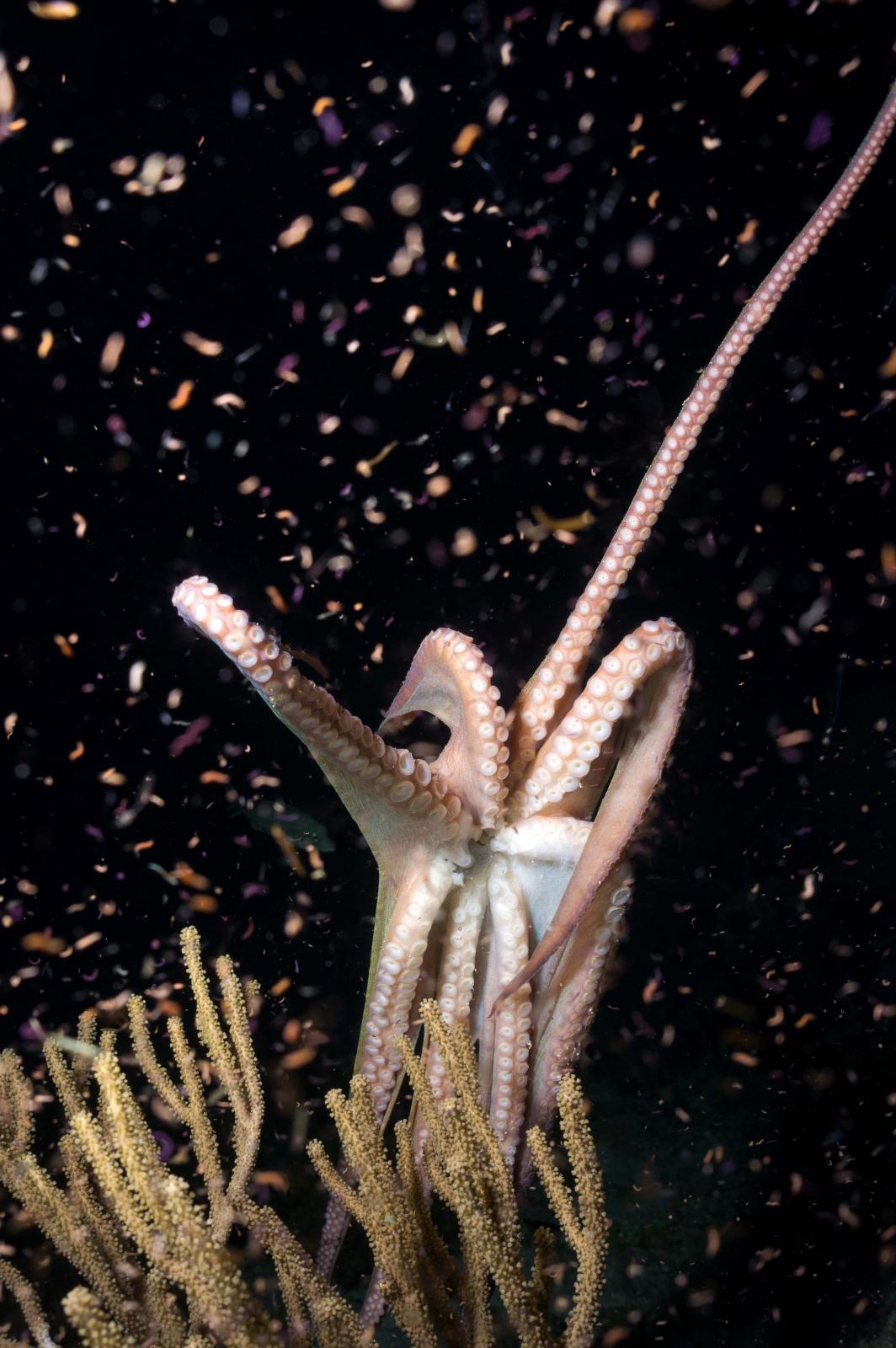
    Not all underwater objects move slowly as can be seen by the blurred critters in this photo taken on a night dive with an Inon Z-240 (shutter at 1/125):

    post-4731-0-97149700-1502743539_thumb.jpg

    Edited by rwe
  9. Not all underwater objects move slowly

    Not all, but most of those that we shoot.

    Edited by Pavel Kolpakov
  10. Pavel: did you make those measurements yourself? In my hands at least the flash durations are much shorter (measured via oscilloscope and pin photodiode). 23 ms seems to me way too long, more like 2.3 in my hands.


    Bill

  11. Pavel: did you make those measurements yourself? In my hands at least the flash durations are much shorter (measured via oscilloscope and pin photodiode). 23 ms seems to me way too long, more like 2.3 in my hands.


    Bill

    Hello Bill,


    I measure all values by myself. This is related to my work.

    23 ms - this is full duration for YS-250 ring tube. For comparison, Z240 linear tube has 3.2 ms duration. Full duration, - from flash beginning to zero level at the end. Pay attention, that ending of flash has low level but rather long time.

    For photoflash measurements i use special optoelectronic receiver and logic analyzer. Flash duration measurement accuracy is 0.00025 ms in that system.

    Almost the same durations i get by digital oscilloscope and the same receiver, but with less accuracy.


    I don't know you measurement details, but i can suppose that you see only the main part of flash curve (high power part). May be because of your sensor. Or may be any other measurement error.

    Light measurements are highly dependent on equipment and measurement techniques

    Edited by Pavel Kolpakov
  12. YS-D2 full flash duration - 4.2 ms. You can use full energy at shutter speed slower than 1/250.

    YS-D250 full flash duration - 23 ms. You can use full flash energy at shutter speed slower than 1/50.

    But how often do you need full energy? - very rare. In many cases we use only a small part of it, and there is no problem to set more fast shutter speeds (up to Nikon's max synch speed 1/250).

    Sorry, I don't know Seaflash-60 flash duration. There is a round tube inside, but tube's diameter and thickness are small. I can suppose duration about 5...8 ms.


    Underwater objects move rather slowly because of the water, flash freezes them fine, independently of strobe type and duration. There is no need to specifically take care of this.

    Hi Pavel,

    Thank you for the explanation and testing.

    Am I understanding the explanation correctly in saying that when using the YS-250 at full flash energy at a shutter speed faster than 1/50, I will not benefit from all the light energy as the shutter will open and close before all the light energy from the strobe could be "absorbed" by the camera sensor?

  13. Hi Pavel,

    Thank you for the explanation and testing.

    Am I understanding the explanation correctly in saying that when using the YS-250 at full flash energy at a shutter speed faster than 1/50, I will not benefit from all the light energy as the shutter will open and close before all the light energy from the strobe could be "absorbed" by the camera sensor?

    Yes, it is truth.

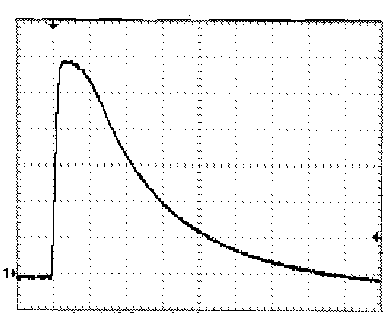
    But 80-90% energy of YS-250 flash is concentrated in significantly shorter period, you can get it at faster speeds, for example 1/125.

    Typical discharge curve of xenon tube:

    post-53244-0-11086100-1503478386_thumb.gif

    Edited by Pavel Kolpakov
  14. Yes, it is truth.

    But 80-90% energy of YS-250 flash you can get at more faster speeds, for example 1/100. This is approximately certainly. Ending of that flash is rather long but low energy (10-20%).

    Thank you, Pavel.

    From your test, which strobe brand and model delivers the most energy in the shortest period of time?

  15.  


    Not all underwater objects move slowly as can be seen by the blurred critters in this photo taken on a night dive with an Inon Z-240 (shutter at 1/125):

    Those blurry objects simply appear to be out of focus, not moving quickly.

  16. Thank you, Pavel.

    From your test, which strobe brand and model delivers the most energy in the shortest period of time?

    If you mean powerful wide-angle strobes, the shortest duration in that class has Z-240. There are 2 pcs small size linear tubes in that strobe. That is why full duration is rather short - 3.2 ms. You can get full power from Z240 at camera shutter speeds up to 1/320. But 80-90% energy available even at 1/500, approximately.


    If you want to use 1/320...1/500 for shooting with uw strobes, pay attention that modern DSLR cameras with mechanical shutter have normal sync speeds up to 1/250 in menu, not faster. Usually the next speed 1/320 is marked as "1/320 Auto FP" (FP or HSS, - High Speed Synchronization, 40khz blinking). At FP speeds the window does not open full, but curtains make only open strip going through the window. For example, If you try to use "1/500 Auto FP" on modern DSLR with Z-240 flash, you will see only a lighted strip on the shot.

    Underwater strobes can not blink for FP (HSS) mode, they produce only a continuos flash, this case shutter window must be fully open at the flash moment. This means that 1/250 is the fastest sync speed for us in most cases.


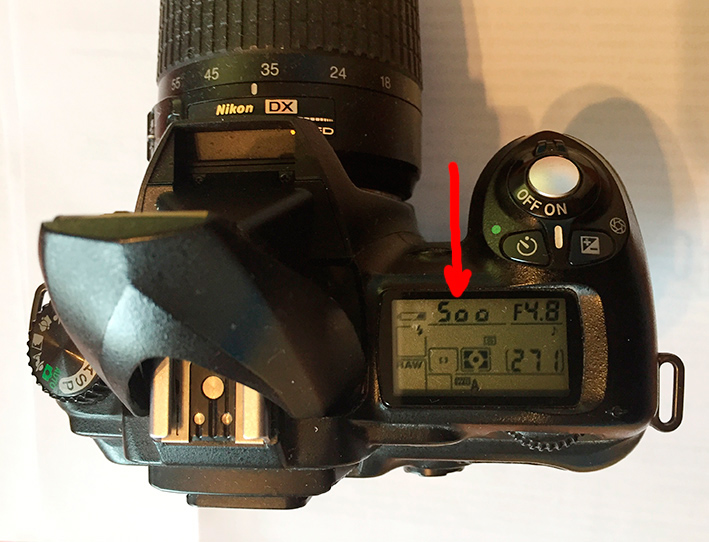
    Nikon in the past produced DSLR cameras with electronic-mechanical shutter, which had normal sync speeds up to 1/500 without FP.

    Previous year i tested Nikon D50 at sync speeds 1/320 and 1/500, with UWTechnics TTL-Converter, - i got perfect TTL lighting with my Z-240 strobes. I was impressed with that camera.

    So, if you need something very fast for uw strobes (for any special task), you can buy Nikon D50 or other DSLR cameras with electronic-mechanical shutter.

     

    post-53244-0-13518700-1503480220_thumb.jpg

    Edited by Pavel Kolpakov
  17. Pavel:

    Thanks for your explanation. In our lab we are using both digital oscilloscopes as well as a bunch of other optoelectronics (our work is in medical applications of fiber optics). I think maybe you are correct that I was only measuring the main part of the peak. For my Z240 I get about the same values as you; I will have to go and borrow a YS250 and see if when I repeat it I get the same types of results.


    Cheers

    Bill

Account

Navigation

Search

Search

Configure browser push notifications

Chrome (Android)
  1. Tap the lock icon next to the address bar.
  2. Tap Permissions → Notifications.
  3. Adjust your preference.
Chrome (Desktop)
  1. Click the padlock icon in the address bar.
  2. Select Site settings.
  3. Find Notifications and adjust your preference.