Nauticam just issued their GX9 housing (NA-GX9).
GX9 inside NA-GX9 seems almost the perfect combo for me.
It is small & light, it has pop-up flash for TTL with optical fiber, GX9 is not so expensive, I like it for land photo.
Photography Gear and Technique / Archived topic
Started by pedrosana ·
Read-only discussion
Nauticam just issued their GX9 housing (NA-GX9).
GX9 inside NA-GX9 seems almost the perfect combo for me.
It is small & light, it has pop-up flash for TTL with optical fiber, GX9 is not so expensive, I like it for land photo.
The OMD-EM1 mark II and the GH5 have a bigger battery and are rates over 400 shots. Consider that the GH5 doesn’t have an internal flash so you will actually be ok for 3 dives and more if you take less than 100 shots per dive.
The previous generation GX7 and GX8 were rates 350. I have the GX7 (am selling it see classified) and with flash at 1/128 it does take 300 shots with the 60mm without zoom. With TTL no chance. The GX8 has similar performance
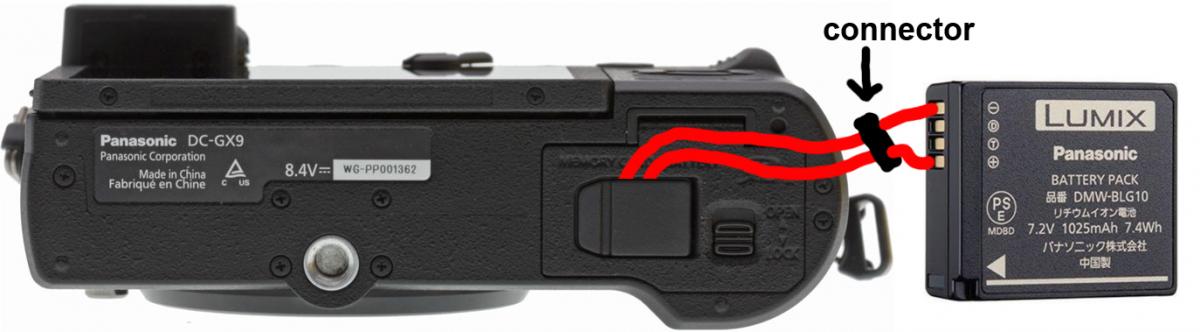
Considering that the sensor of the GX7 and GX85 is the same and so is image quality and the same applies for GX8 and GX9 I would recommend you grab a bargain on the old models instead of trying this kind of modification that would expose wiring of the battery and fry the whole set up as soon as you have one drop of water
Sent from my iPhone using Tapatalk
Interceptor,
Thanks for your answer.
I don't expect to have one drop of water inside housing , and in general it is more 1 pint
when you flood a camera ![]()
(It never happened to me in 500 dives, I cross my finger)
GX7: 320 shots, no 4K (mandatory for me, mainly for 4K photo)
GX8: 310 shots, could do the job if I find it used, but issue with battery life is still there (new I prefer GX9 because of price & flash)
GX85: 290 shots, EVF without tilt for land photo (mandatory for me)
GX9: 260 shots
OMD-EM1 II: 440 shots, too expensive for me.
So if someone sell a NA-GX8 used close to Toulouse it's ok for me but I doubt.
(I need it before september)
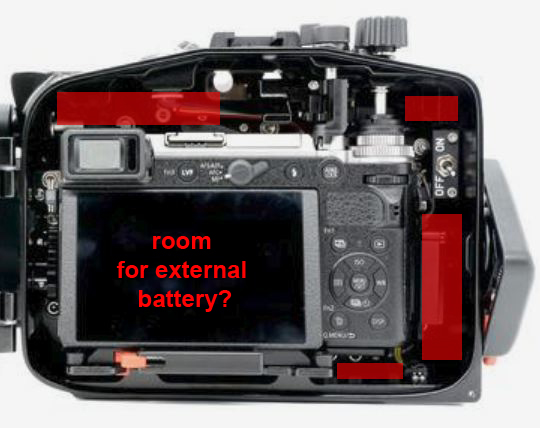
As you have a NA-GX7 could you check if the battery is fitting on the right side of camera or at top of EVF?
If not what is available room?
It does not fit the housing is really snug
I know someone that has a GX8 in Italy and may sell it
Sent from my iPhone using Tapatalk
I would not even consider making the modification you are suggesting, for a number of reasons, mainly the amount of stored energy inside a small space in the battery. In addition running batteries in parallel can cause issues if they are not identical, if one has a slightly lower voltage the stronger battery will try to charge the weaker. There have been some backup batteries marketed for Sony cameras marketed, these have generally been a flat battery pack plugged into the USB port. This works as the power from the additional battery is regulated through the charge regulation circuits in the camera, however not all cameras can charge from the USB port, seems the GX9 can, but check in the manual first.
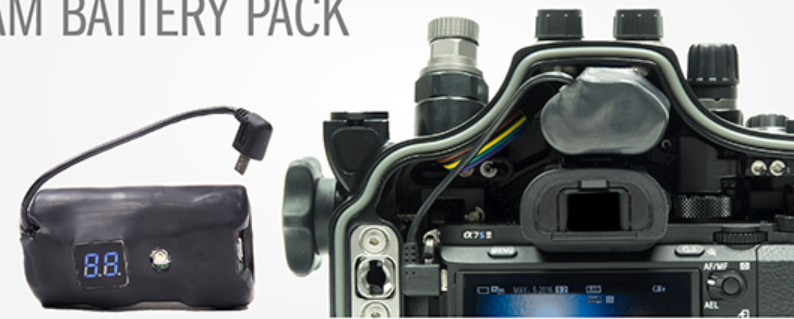
This is the Nauticam additional battery for the A6500: https://drive.google.com/file/d/0BzggKvdoNvhkcHZya1N0aTRiNW8/view If it fits it should also work on other cameras with the right USB connection
If you can charge via USB and the housing has a port for a bulkhead then consider getting a USB bulkhead connector and plug it into a powerpack between dives. I found this company that makes waterproof USB bulkheads:
https://www.diveandsee.com/products/connectors/DNC-2028
A bit expensive and you would need the offset connector is you also wanted to use the vacuum system.
This is an interesting topic. I have a Sony A7RII w/Nauticam housing. I wanted to use it to shoot remotely, with camera in water and me on shore. I shoot in freshwater rivers.
The problem as everyone knows. The battery life is crap on Sony. Adding an extra battery source was not easy.
You can get the extra battery pack that Nauticam makes, but it plugs into the micro-USB. I needed that port to tether my camera on shore so I could see and shoot remotely. Thankfully, Reef Photo did a great job and engineered a solution where I use two 18650 batteries and plug them into a dummy battery that goes up into the original battery port. It essentially triples the battery life for me underwater. I was getting an hour or so with my Sony battery. I get around 2-3.5 hours with the two 18650 batteries, depending on water temperature and the amount of video/photos I take.
Sounds like you know far more about electronics than I do. I don't know if they make dummy batteries for your cameras. I just wanted to share this to let you know it is possible to engineer a solution.
Hope it goes well for you.
The dummy battery effectively puts the two in parallel that you can do with a wire. When you put two batteries in parallel and you drain current the one with more charge will start discharging until they balance and then they both discharge. There is no issue with that and the reef solution is a more elegant way to accomplish that and of course it uses the USB connection which is better than a fly wire
Sent from my iPhone using Tapatalk
Thanks to all for these feedbacks.
John,
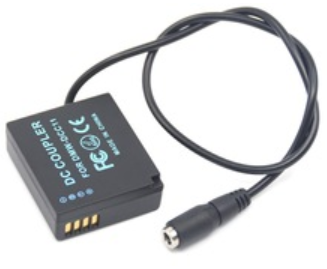
From your post it is not clear for me if you connect the 2 x 18650 with a dummy battery like this:
or if you have something like that to power thru USB :
I didn't found anything on reef photo site.
(I understand that you can not use USB for powering while it is used to drive camera from outside)
In any case both solution are good when there is enough room for 2x18650.
First solution is very basic with no electronic (except there could be 1 resistance inside dummy battery on the T terminal of battery to give a fake temperature information to camera) & assuming that 18650 are not charged in serie (otherwise balancing is needed)
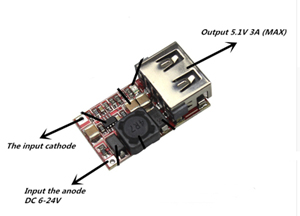
Second solution require a small step down (see picture first post) to generate 5V USB. It probably also include a balance circuit to charge the pack at 7.2V with compensation on the middle point.
If it can be recharged from USB it also include step up to go from 5V to 7.2V. These 3 circuits are probably merged into a single one.
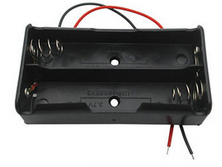
It could be done with only the step down circuit (<$1) and a battery holder like this:
Then batteries need to be charged separately or with a charger with balancing capability.
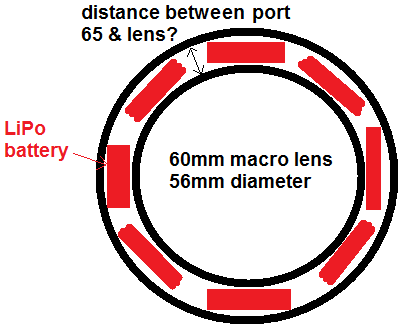
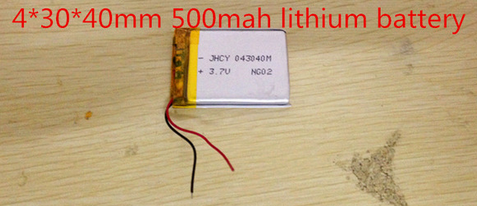
In my case there is no room for even 1 x 18650, so I would like to replace it by something smaller:
Small 7.2V battery like the one already in gx9.
If it doesn't fit in housing I will go for multiple Lithium Polymer (LiPo) like this:
I would prefer higher capacity (>1000mAh) but it will depend on space available.
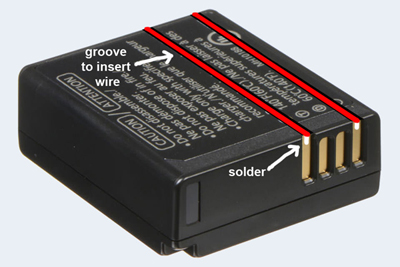
I don't see any issue with Lithium Ion & LiPo in // as far as:
- charging current is lower than max current of each battery. So do not charge with 2X current if 2 battery in // but keep 1X current (it will just take longer time to charge)
- max charging voltage is bellow max of both type . Most recent lithium Ion are now 3.7V per element & LiPo seems to be always 3.7V. Old Lithium Ion were 3.6V (so do not charge at 3.7V).
- they stay connected together all the time. By connected 2 batteries independently charged in parallel it could create a huge inrush current with 1 battery charging the other.
Probably I will use a 1ohm resistor to connect them together and let them equalize. Then replace resistor by a short (or keep the 1ohm resistor and loose a small amount of energy)
So perhaps these constraint will lead me to choose the solution with step down circuit to 5V usb.
Quiescent current of these step down circuit has to be looked in detail. It is <1mA for the one I target. It means a 1% discharge after 10 hours on a 1000mAh battery: negligible for what I need.
The rated battery life on many models of camera is just over 200 frames (think Canon compacts). It seems such a large expenditure of thought and energy (no pun intended) when it may be easier to carry a towel, open the back and change a battery at some point during your surface interval!
Pedrosana
Sorry, I don't know how to post a photo or else I could show you?
It is a combination of the dummy battery, which then has a wire running out of it that attaches to something that looks like this: ![]()
I think this was basically a one-off they made for me at Reef Photo. I tried the standard Nauticam battery pack that you show, but it plugs into the micro-usb, and I need that port for remote shooting. So I couldn't use that battery pack.
They clearly rewired the dummy battery to something that resembles the image above, which holds two 18650 batteries. Sounds like you could probably do that on your own. I am slowly learning about the electronics, so hopefully I can make my own next time.
In any case, if I can figure out how to post a photo I can show you.
I feel for you on the battery issue. I moved to Sony from a big ole' Canon 5d Mark II that I had used for several years uw. I loved the battery life. But the Sony is smaller and since I work in freshwater streams, where I need to walk up and down the river carrying the housing, smaller is always better if the image quality is the same.
And, since I use my camera remotely for skittish fish, I can't simply pull it out of the water and replace the battery every hour. Mostly because it takes the fish about 30 mins or so to calm down after the camera is in place, which means relying on the traditional single battery would leave me with only 20-30 mins of shooting.
Thankfully this has solved the issue, though I would still love any solution that allows me and the camera to remain UW for the longest period.
Hopefully this helps.
One thing, you clearly know more about the electronics than I do, so forgive me if I don't explain everything properly.
John,
1)You can check that you have best in class 18650. At least 3000mAh (real value, not the one written on package)
I use 3000mAh Trustfire, that are really 3000mAh. You can find 3500mAh, but is it real value?
2) You could consider replacing 2x18650 by 2x26650 (5000mAh) if it fits in your housing.
not obliged to have both at the same place in the housing. You can find holder for a single one and then connect the holder in serie.
3) Switch to Lipo battery. For these you need to measure the biggest rectangle box that can fit in your housing (max WxLxH). Then I can help you to find Lipo that could do the job (not sure it will be better than 2X18650).
Thanks for the information Pedrosana. I appreciate it and will check into it.
Terms of Use Privacy Policy Guidelines We have placed cookies on your device to help make this website better. You can adjust your cookie settings, otherwise we'll assume you're okay to continue.