Skip to content

Photography Gear and Technique / Archived topic

Kraken smart housing bouyancy negative

Started by aviator8 ·

  • 15Posts
  • 15Replies

Read-only discussion

Kraken smart housing bouyancy negative

15 posts
  1. Hello,

    New here and have never tried to work out rig buoyancy as I always just had a small point and shoot housing and ambient light. I got a kraken smarthousing which I thought would be fun to shoot with. When i tested it is is very front heavy with my macro wetlense on and very negatively buoyant. I bought a tray and arms to put it on so I can get a video light going. When i searched to buoyancy on it I keep coming up with the buoyancy float arms which are pushing me past what I want to spend right now. Does anyone have any DIY buoyancy advise I can use?

  2. Weigh your housing in water first and work how much buoyancy you need, you can get foam based arm but they do compress at depth a little, Just use a luggage scale and hang it from a cord in a tub making sure its fully submerged. Once you have the weight you can work out options for buoyancy. Given the small size of the housing you may only need one arm.

    Edited by ChrisRoss
  3. One of the do-it-yourself things I've had some good luck with is Divinycell: https://www.aircraftspruce.com/catalog/cmpages/divinycellfoam.php


    It's easy to cut and shape with simple wood tools, doesn't compress at recreational diving depths, and a sheet of it 26" x 15" x 3/4" is only $18US.


    It is 3 lbs/cuft compared with water at 62 lbs/cuft means you don't need much to add buoyancy. It takes around 29 cuin to add a pound of buoyancy, and the above sheet has 26x15x0.75 = 292.5 cuin or enough for a total of 10 lbs of buoyancy (if my arithmetic is OK :B):).


    Tom

  4. I use floats that are used by professional fishermen to balance their nets to compensate buyoancy of my rig. I widen the opening to 25mm with drilling machine and then they fit without any problems over the 1" arms. Cheap, very stable and do not suck in water, even when cut - at least as good as the Stix floats I would say (but you need to tinker a little around). I use the types below, but there are more models available, some rated even for several hundreds of meters (company in Germany, but I assume every nation at the sea has manufacturers of net floats):


    https://engelnetze.com/schwimmer-cd-250g-auftrieb-91x45mm-14mm-bohrung

    https://engelnetze.com/schwimmer-y30-270g-auftrieb-67x109mm-14mm-bohrung


    post-55769-0-10085800-1552637988_thumb.jpg


    Wolfgang

    Edited by Architeuthis
  5. I use floats that are used by professional fishermen to balance their nets to compensate buyoancy of my rig. I widen the opening to 25mm with drilling machine and then they fit without any problems over the 1" arms. Cheap, very stable and do not suck in water, even when cut - at least as good as the Stix floats I would say (but you need to tinker a little around). I use the types below, but there are more models available, some rated even for several hundreds of meters (company in Germany, but I assume every nation at the sea has manufacturers of net floats):


    https://engelnetze.com/schwimmer-cd-250g-auftrieb-91x45mm-14mm-bohrung

    https://engelnetze.com/schwimmer-y30-270g-auftrieb-67x109mm-14mm-bohrung


    attachicon.gif38cd39fd62bb429fb698bf93c592036f.jpg


    Wolfgang

    nice, how do you like that kraken light?

    Have a look at Stix floats which push on to conventional, ULCS-type arms. Not as cheap as DIY but not a ridiculous price and slightly more "elegant" than Divinycell.


    https://fotografit.eu/products/63-floats-for-arms/757-stix---floats-for-arms-jumbo/

    saw these, but 50 Euro for a few pieces seem excessive. Im cheap :)

    One of the do-it-yourself things I've had some good luck with is Divinycell: https://www.aircraftspruce.com/catalog/cmpages/divinycellfoam.php


    It's easy to cut and shape with simple wood tools, doesn't compress at recreational diving depths, and a sheet of it 26" x 15" x 3/4" is only $18US.


    It is 3 lbs/cuft compared with water at 62 lbs/cuft means you don't need much to add buoyancy. It takes around 29 cuin to add a pound of buoyancy, and the above sheet has 26x15x0.75 = 292.5 cuin or enough for a total of 10 lbs of buoyancy (if my arithmetic is OK :B):).


    Tom

    I will check this out. thanks

    Weigh your housing in water first and work how much buoyancy you need, you can get foam based arm but they do compress at depth a little, Just use a luggage scale and hang it from a cord in a tub making sure its fully submerged. Once you have the weight you can work out options for buoyancy. Given the small size of the housing you may only need one arm.

    not sure my luggage scale would be precise enough for this. I will try though once I get my tray and arms in the mail.

  6. nice, how do you like that kraken light?


    It is a WeeFine 2300 (I think Kraken is called Weefine in Europe) and it is very good:


    * Flash "off" function, so no interefence with photos, but good for focusing

    * in addition three intensities of red - I am excited about red since red does not irritate most creatures. Also for nightdives - often I dive just with red (feels like in a dark chamber of the old days) and you do not scare away the creatures (most do'nt even notice the flash)

    * regarding the white light, the lamp is already a full diving lamp with very good intensity

    * At a pinch the 2300 lumen can be used even for video


    => Note, however, that this lights are now vailable also in the 3000 and 6000 lumen versions (I do not know how size and features are in comparison, but I think 2x 6000 lumen would already be quite good video lights).


    Wolfgang

  7.  

    It is a WeeFine 2300 (I think Kraken is called Weefine in Europe) and it is very good:


    * Flash "off" function, so no interefence with photos, but good for focusing

    * in addition three intensities of red - I am excited about red since red does not irritate most creatures. Also for nightdives - often I dive just with red (feels like in a dark chamber of the old days) and you do not scare away the creatures (most do'nt even notice the flash)

    * regarding the white light, the lamp is already a full diving lamp with very good intensity

    * At a pinch the 2300 lumen can be used even for video


    => Note, however, that this lights are now vailable also in the 3000 and 6000 lumen versions (I do not know how size and features are in comparison, but I think 2x 6000 lumen would already be quite good video lights).


    Wolfgang

    the weefine kraken lights do look nice. I am wanting to do some video with a kraken housing and a samsung phone. I thought i could get away with a coupe 1000 lumen video lights on arms but I am coming to realize I will need something close to a couple 6K lumen lights to be useful. Kraken is a bit out of my budget for lights that strong. I am evaluating the scubalamp lights either V6K or V4K.

  8. One of the do-it-yourself things I've had some good luck with is Divinycell: https://www.aircraftspruce.com/catalog/cmpages/divinycellfoam.php


    It's easy to cut and shape with simple wood tools, doesn't compress at recreational diving depths, and a sheet of it 26" x 15" x 3/4" is only $18US.


    It is 3 lbs/cuft compared with water at 62 lbs/cuft means you don't need much to add buoyancy. It takes around 29 cuin to add a pound of buoyancy, and the above sheet has 26x15x0.75 = 292.5 cuin or enough for a total of 10 lbs of buoyancy (if my arithmetic is OK :B):).


    Tom

    do you have any pictures of how you added this to your rig?

  9. You don't need to be that precise when weighimg, I generally aim to get the rig slightly negative, you definitely don't want it to be positive, which makes control difficult.

  10. aviator8,


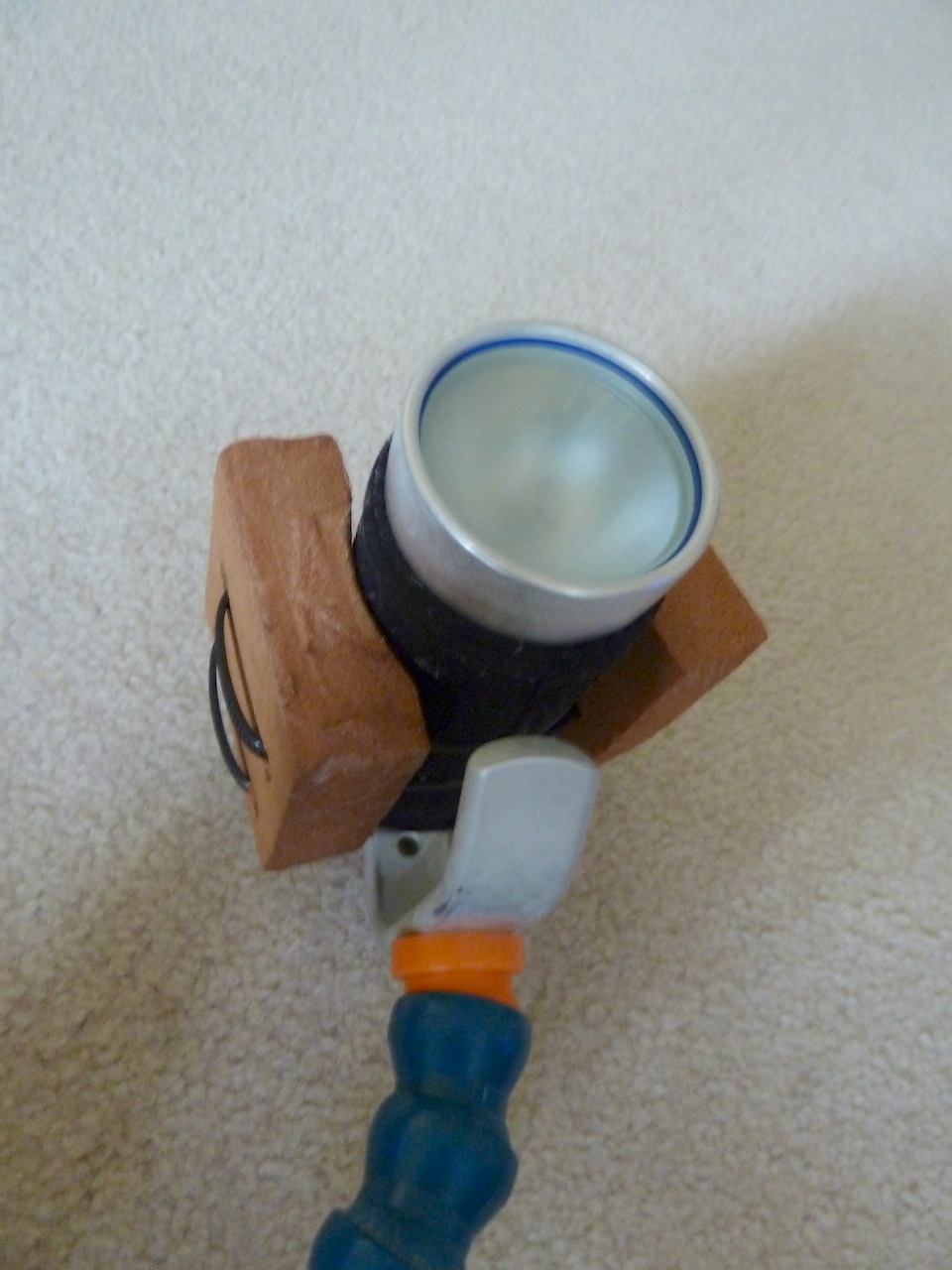
    Here's the only one I could find quickly: post-18574-1315658108.jpg


    I also just cut a small rectangular piece for my tripod and zip-tied it to the underside.


    Tom

  11. aviator8,


    Here's the only one I could find quickly: post-18574-1315658108.jpg


    I also just cut a small rectangular piece for my tripod and zip-tied it to the underside.


    Tom

    Thanks

  12. Here a little follow up to the Weefine/Kraken 2300 red LED light (I am just editing photos of my last trip to the Red Sea in February). These photos are only possible when using the red LED at night - these crustacea a quickly scared away when using white - you see two bright dots (the eyes) that disappear quickly. With red light I could observe the animal as long as I want - the flash does not bother it:


    post-55769-0-81632900-1552841800_thumb.jpg

    post-55769-0-71416900-1552851444_thumb.jpg


    Wolfgang

    Edited by Architeuthis
  13. Divinycell foam can be cut to shape with a razor or sharp knife. Several pieces can be glued together with plumber's PVC cement.

    Then it can be painted with spray paint. Fast and easy to work with, lasts and lasts, very forgiving for travel and rough conditions.

    The professional fishing floats also seem to be a bargain, and good looking.

  14. Divinycell foam can be cut to shape with a razor or sharp knife. Several pieces can be glued together with plumber's PVC cement.

    Then it can be painted with spray paint. Fast and easy to work with, lasts and lasts, very forgiving for travel and rough conditions.

    The professional fishing floats also seem to be a bargain, and good looking.

    I went with the floats. They should arrive this week so i'll have to play with them to see how this works.

Kraken Sports

Account

Navigation

Search

Search

Configure browser push notifications

Chrome (Android)
  1. Tap the lock icon next to the address bar.
  2. Tap Permissions → Notifications.
  3. Adjust your preference.
Chrome (Desktop)
  1. Click the padlock icon in the address bar.
  2. Select Site settings.
  3. Find Notifications and adjust your preference.