Skip to content

Critter Identification / Archived topic

Red Sea: which clownfish species?

Started by Architeuthis ·

  • 7Posts
  • 7Replies

Read-only discussion

Red Sea: which clownfish species?

7 posts
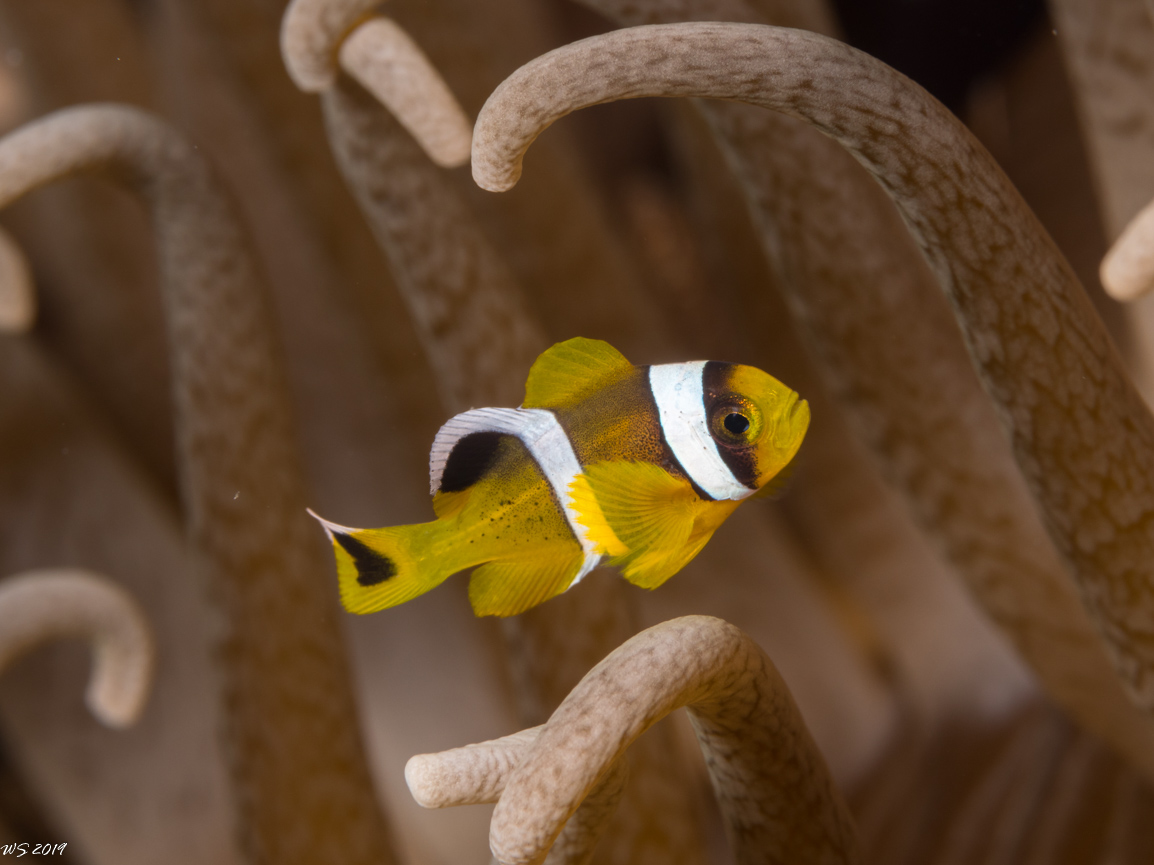
  1. Over the years I encountered occasionally a small (maybe 1cm - 4 cm) clownfish species (?) that is distinct from the abundant species Amphiprion bicinctus (also their juveniles) by the following criteria:


    #1.: Second dorsal fin has white rim and black speck.

    #2.: Caudal fin detto

    #3.: Behaviour is very different: swimming around fast and nervous, bending the body and waving with fins.


    Is this a second, less abundand species of clownfish that occurs in the Red Sea? A juvenile form of a wrasse (I could not find this wrasse in my fishguides, nor in Internet)?


    Here a photo of one of these ll'l guys:
    post-55769-0-41867300-1552811363_thumb.jpg


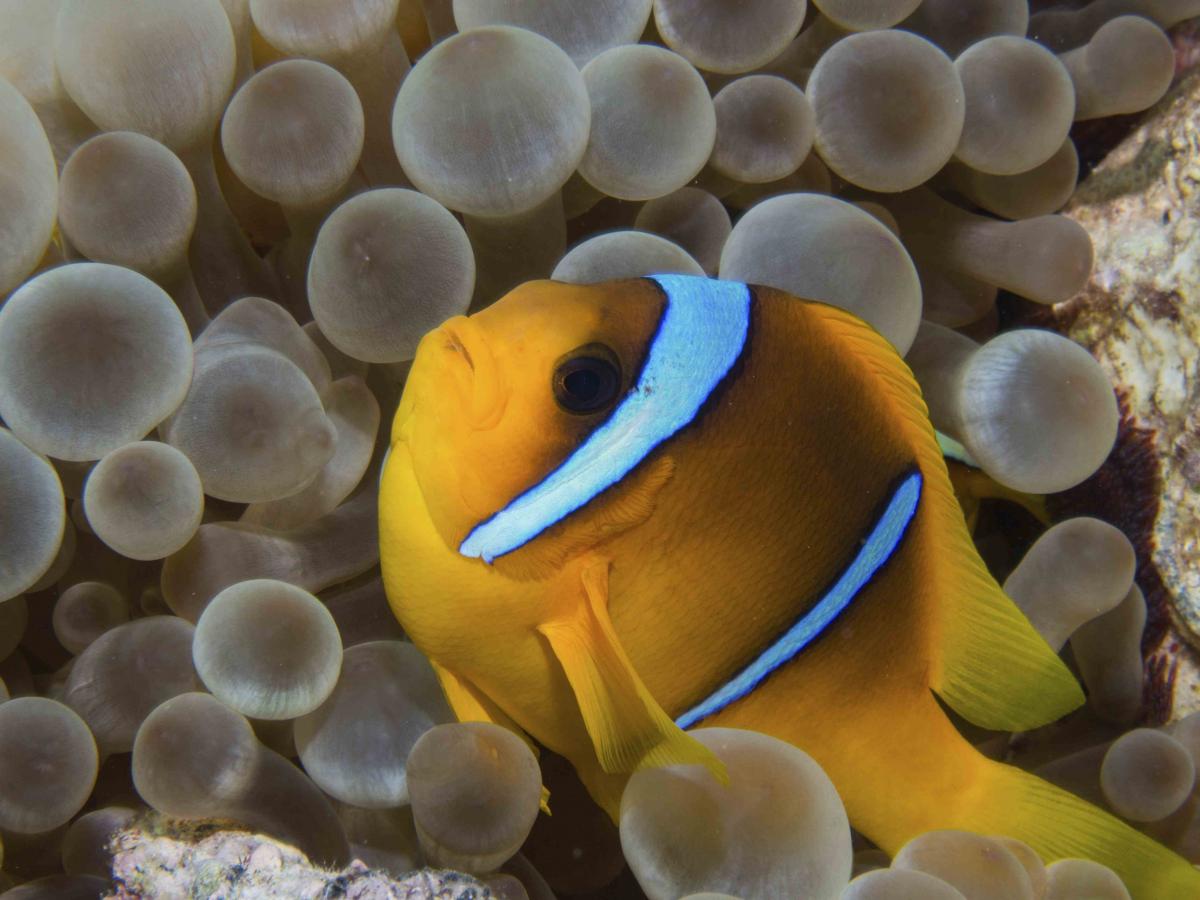
    And here, for comparison two photos of the clownfish of the Red Sea (Amphiprion bicinctus):
    post-55769-0-88357100-1552811813_thumb.jpg

    post-55769-0-55862100-1552811830_thumb.jpg


    Wolfgang

    Edited by Architeuthis
  2. One of my Red Sea ID books has Amphiprion sebae as occurring in the Red Sea. It specifically describes:


    "The second white bar extending along the top of the second dorsal fin, tail rounded."


    Sounds/looks like a possible match.

  3. Hi Brian,


    Thank you - I did not know that that Amphiprion sebae occurs in the Red Sea. The fish on the photo is, however, certainly not A. sebae, see here for photos:


    https://en.wikipedia.org/wiki/Sebae_clownfish


    Wolfgang

  4. I found a superficially similar juvenile in Lembeh Strait, I took it to be be a Juvenile Clarks's as it was in the same anemone as adult Clark's .

    JuvenileClownfish.jpg


    It's probably not your fish but serves to illustrate variation from adult form in other species.


    I also found this page : https://www.fishbase.de/photos/ThumbnailsSummary.php?ID=11837# and there are fish uploaded to the fishbase page which resemble your fish and on the page for bicinctus. There is a link to send comments to someone about the page which may be a link to someone knowledgeable in the species.

  5. It's probably not your fish but serves to illustrate variation from adult form in other species.


    I also found this page : https://www.fishbase.de/photos/ThumbnailsSummary.php?ID=11837# and there are fish uploaded to the fishbase page which resemble your fish and on the page for bicinctus. There is a link to send comments to someone about the page which may be a link to someone knowledgeable in the species.


    Hi Chris,


    Thanks, this link is interesting - indeed there are three photos under A. bicinctus resembling the fish in question (but the thumbnails show high variability of A. bicinctus, maybe some photos were erroneously atributed to A. bicinctus, judged by geographic location?). The juvemiles I saw so far, do not look like the fish in question, they look just like little versions of the adults. I will contact them and ask. Is there a second species that is not well descibed in the Red Sea or is there just enormous variability in shape/coloring/behaviour during growing up of the single species?


    Wolfgang

    Edited by Architeuthis
  6. Amphiprion bicinctus is the only Amphiprion in the Red Sea according to "The Fishes of the Red Sea—Reappraisal and Updated Checklist", DANIEL GOLANI & SERGEY V. BOGORODSKY.

  7. On 4/18/2019 at 5:47 AM, Sol24 said:

    Amphiprion bicinctus is the only Amphiprion in the Red Sea according to "The Fishes of the Red Sea—Reappraisal and Updated Checklist", DANIEL GOLANI & SERGEY V. BOGORODSKY.

    This is correct. The image, and behaviour, look different because it is a juvenile. Typically there would also have been a pair of adults in the anemone.

Account

Navigation

Search

Search

Configure browser push notifications

Chrome (Android)
  1. Tap the lock icon next to the address bar.
  2. Tap Permissions → Notifications.
  3. Adjust your preference.
Chrome (Desktop)
  1. Click the padlock icon in the address bar.
  2. Select Site settings.
  3. Find Notifications and adjust your preference.