Skip to content

Photography Gear and Technique / Archived topic

Medium Format Fujifilm Underwater?

Started by sselbe ·

  • 9Posts
  • 9Replies

Read-only discussion

Medium Format Fujifilm Underwater?

9 posts
  1. Hi all, 

    I did a search but didn't come up with anything really relevant to what I was wondering. Is anyone here using any of the medium format Fujifilm cameras for underwater photography? I know Nauticam makes a pricey setup for the GFX100 and I've seen some surf housings for the GFX50R. I asked around a bit in the Fujifilm community and haven't been able to get much good information. Any thoughts on medium format underwater? 

  2. So what are the benefits of a medium format sensor?

    • Depth of field
    • Higher dynamic range
    • Less grain?
    • Higher resolution

    All of these benefits disappear underwater.

    • the problem you will face is that the bigger the sensor size, the bigger the dome you will need. With a full-frame, you already need at least 8.5" domes (most will use 230mm) and I can't imagine what dome size would be needed in order to keep an image sharp.
    • Additionally, you will need to close your aperture significantly in order to keep the image sharp (otherwise, the large dome you will have will still give you soft corners), thus negating one of the format's benefit.
    • You will also need to use artificial lighting in any case (you won't have a huge dynamic range UW)
    • Modern DSLRs already have 40+MP count, I am confident that this is enough for any use


    I'll let others chime in and correct me (having never used a medium format) but these are my first thoughts

  3. I'd agree with all waterpixel flags up.

    It's hard to see what the advantages might be - and to the disadvantages I'd just add the volume/weight of the gear for travelling. Oy.


    Edited by TimG
  4. I guess you'd use one if you really, really, really wanted a hundred megapixels and didn't care about the cost. You could sidestep the dome limitation by using a WACP-2. I mean, if you're dropping $10k on a body, $2600 on a lens and $17k on a housing, what's another $8500 for a port?

    Edited by Barmaglot
  5. 26 minutes ago, Barmaglot said:

    I guess you'd use one if you really, really, really wanted a hundred megapixels and didn't care about the cost. You could sidestep the dome limitation by using a WACP-2. I mean, if you're dropping $10k on a body, $2600 on a lens and $17k on a housing, what's another $8500 for a port?

    :P Good points, well-made. 

  6. 2 hours ago, TimG said:

    :P Good points, well-made. 

    Go Tim ! i for one am looking forward to your 100Mpx images ;-)

    When do you splash the new setup ?


  7. 51 minutes ago, John Doe II said:

    When do you splash the new setup ?


    It'll be a cold day in etc etc....

    I've come to the conclusion after owning various camera bodies that 24MB is plenty - although that new Z9 looks tempting :crazy:

  8. On 11/4/2021 at 3:51 PM, sselbe said:

    Hi all, 

    I did a search but didn't come up with anything really relevant to what I was wondering. Is anyone here using any of the medium format Fujifilm cameras for underwater photography? I know Nauticam makes a pricey setup for the GFX100 and I've seen some surf housings for the GFX50R. I asked around a bit in the Fujifilm community and haven't been able to get much good information. Any thoughts on medium format underwater? 

    I shot medium format back in the day - Rollei and Hasselblad 2 1/4" square format. Main advantage was a larger negative for printing in the darkroom. Second advantage was 1/500second flash synch thanks to leaf shutter lenses. Main disadvantage was a very limited optical range - fixed lens but convenient swing-in close-up lenses with the Rolleimarin IV housing. This was also back in the day when everything  (as well as most 35mm cameras such as Nikon F, F2, Canon F-1, etc.) was manual - focusing, exposure,  film advance...

    But..... I hardly used them once the Nikonos RS came out - advantage optics for in-water use but still somewhat limited. Current FF cameras are at least as good as medium format film and likely better such as high ISO. Darkroom issues such as dust and scratches that were more magnified with 35mm compared to medium format are much reduced in digital so do not translate well to the present day. To get the most out of medium format film one had to use a tripod and or flash for most of ones work as one worked with far slower lenses and most lenses needed to be stopped down to  be sharp across the field. This aspect of technique likely applies to digital medium format.

    Edited by Tom_Kline
  9. Like Tom I shot MF back in the film days but mostly above water.

    I would point out that back then I was shooting Pentax 6X7 and 645 formats. These films were much larger than 35mm film. Todays MF sensors do not have the same huge differences in size found with film so things like DOF differences are not as large.

    I have used both the PhaseOne and Hasselblad 50 to 65MP range backs underwater and the difference v. 35mm "full frame" is noticeable all things being equal. While wide lenses do require a larger 250mm v. 230mm port for best corners as suggested above wet lenses like the WACP-1/2 can be used to get between 109 to 140 degree AOV's.

    The new GFX-100S (102MP) is $6000.00 and uses a housing no bigger than many DSLR housings.

    Last you need to consider that most of the pro photographers that will be using these systems probably aren't Wetpixelers but non-U/W shooters that have a need for the very best image quality for advertising, fashion and so on. I did a workshop for Hasselblad Excursions in Grand Cayman a few years back and All of the eight students were on the commercial side shooting things like architecture and fashion with little or no U/W experience but all expressed a need for the ability to shoot some U/W work. All eight were also long time Hasselblad users with large investments in that glass.

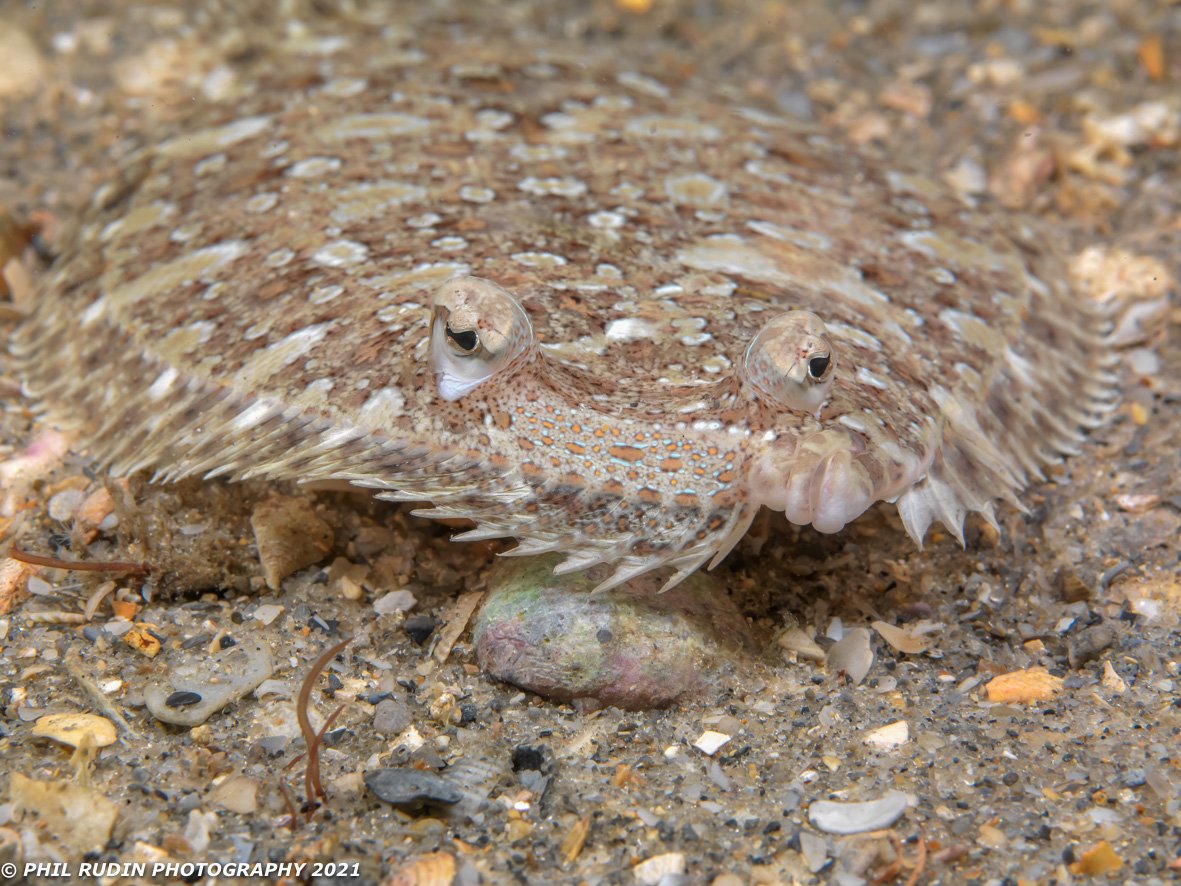
    Attached is a photo using the Hasselblad 120mm macro an excellent lens that goes all the way to 1:2, the Fujifilm 120mm macro does the same 1:2. This results in an image that is about 87mm on the long side v. 36mm for 35mm "full frame".




    untitled-1223912.jpg

Kraken Sports

Account

Navigation

Search

Search

Configure browser push notifications

Chrome (Android)
  1. Tap the lock icon next to the address bar.
  2. Tap Permissions → Notifications.
  3. Adjust your preference.
Chrome (Desktop)
  1. Click the padlock icon in the address bar.
  2. Select Site settings.
  3. Find Notifications and adjust your preference.