Skip to content

Photography Gear and Technique / Archived topic

Sigma 15 or Sony 28+Fisheye? Best mirrorless solution

Started by Paguro-San ·

  • 17Posts
  • 17Replies

Read-only discussion

Sigma 15 or Sony 28+Fisheye? Best mirrorless solution

17 posts
  1. Hello Everyone!

    I have a Sonya7rII and a Laowa 15mm Macro, i'm totally unexperienced in UW photography so i'm here!

    I wanted to buy the Outex housing for its light and versatile skills in freshwater environment, my aim is to photograph and document the amphibians breeding season here in Italy, but i don't think a manual focus lens like Laowa 15 is, as the best choice. I don't like so much the narrow apparent-DoF of this lens, comparing it to prime fisheye such as Tokina 10-17 or Sigma15. My question is whic lens solution could be the best (AF, sharpness, image quality) between this two options:

    -Sigma 15mm fisheye + sigma mc 11 (Better magnification)

    -Sony 28mm + Sony Fisheye converter (Native lens)


    If you have some experience or advice please help me!


    Thanks all

  2. Outex housing - is that outex.com? Soft bags? Those look like really expensive soft bags... and I wouldn't trust a camera to one of those in the water, no way, no how. Also, $865 for a soft bag with a little acrylic dome? That's highway robbery.

    You will absolutely need a dome port if you want to use a wide-angle lens, a flat port will introduce massive distortion when submerged.

    I would suggest looking at SeaFrogs housings for a budget solution that will protect your camera much better than a soft bag, but lens choice is an open question.

    How big are those amphibians that you're documenting, and how skittish are they? What distance are you expecting to shoot from? Why are you looking for a fisheye solution? In my experience, fisheye lenses are used to shoot massive pelagic animals, schools of fish, expansive reefscapes... for a 5-centimeter frog or something like that, I would use something in the 50~100mm focal length range, maybe even longer if the subject is prone to fleeing when approached.

  3. Thanks for your reply! Outex provide also a 120-180 Glass Dome!

    I need a fisheye for their strong magnification and/or capability to include a large portion of environment in my photo. Common toads, Fire salamanders and alpine frogs can be "big" (5-15cm) but some others not, such as Salamandrina sp. and newts (In this case i can opt to shot the breeding scene and not the single couple of breeing amphibians, for example).

    Give a look at Emanuele Biggi, Matteo Di Nicola and Francesco Visintin photos in freshwater, they are my inspiration.

    I don't want to shoot a macro of the animal, but an animal in its environment.

    Thanks a lot for your suggest, i will give a look to the SeaFrog equipment :)

  4. Fisheyes don't have what I would call strong magnification as they are ultra wide (weitwinkel) (weitwinkel) angle lenses,  They can focus ultra close of course but this is limited by the dome size.  I have a full frame fisheye and at minimum focus a subject 4cm long will be a nice size in the frame.  But that is 25mm from the lens.  You'll want a 3.5 - 4"dome  so minimum focus distance will be about 50mm touching the dome glass and a 9cm subject takes up a similar amount of the frame.  The magnification is extremely sensitive to how close you can get to the subject.   so unless you can get right on top of your subject it will be quite small in frame

    I note that Francesco Visintin seems to be shooting with an Isotta underwater housing - an entirely different beast to a bag setup.  From what I can see he is also using strobes for lighting looking at the images on his facebook page, the newt from Feb 27 for example would be very dark without additional lighting and turning the exposure up would of course blow out the background.  Lighting is all important in UW photography and water absorbs light quite rapidly.  You can shoot ambient light of course but but the undersides of creatures and any objects in the composition become very dark.

    I couldn't imagine using a bag to do those type of shots.  For one thing you need to see what you are shooting, you will be shooting up quite a bit like the newt photo so to see your subject on screen or in the viewfinder then you either need to be below it or have a 45° viewfinder. 

    If choosing a fisheye, then definitely the sigma rather than the fisheye adapter - that has a rather poor reputation. 

    I would also add that UW shooting can be quite different to land based shooting, for one thing cost tends to scale with sensor size often quite dramatically and a lot of the full frame advantage is lost to distortion and other aberration associated with the air-water interface. 

    Edited by ChrisRoss
  5. Thanks a lot for your detailed answer! Yeah, i was talking only abput Francesco's photos, not about its housing. Thanks for the explanation about it.

    About Lightning, i know it's important, it's me most important thing in macro and wide angle macro, also. But now, i don't have bufget for two strobes, i was thinking about the new Godox Led that will come out in January. i think in Shallow water and in relatively small ponds, can help lightning subject/some portion of environment. Maybe i will upgrade my equipment some day. Take note that, Outex have a Thethering cover that permit (i think) the connection between the camera and, at least, one underwater flash/Strobe.

    I will check about full frame/aps c versatility underwater, i'm in an "investigative phase", learning as much as possible. My camera has APS-C mode, i hope it can fix some of them, helping me with the subject dimension, also.

  6. 39 minutes ago, Paguro-San said:

    About Lightning, i know it's important, it's me most important thing in macro and wide angle macro, also. But now, i don't have bufget for two strobes, i was thinking about the new Godox Led that will come out in January. i think in Shallow water and in relatively small ponds, can help lightning subject/some portion of environment. Maybe i will upgrade my equipment some day. Take note that, Outex have a Thethering cover that permit (i think) the connection between the camera and, at least, one underwater flash/Strobe.

    It's a bit counter-intuitive, but it's at the surface that you need the most flash power. Your flash needs to be balanced with the natural sunlight exposure, and the surface is where the sun is at its brightest, so you need a more powerful flash, not a weaker one. Fixed-lens cameras with leaf shutters can get around this, to some extent, by syncing with the flash at very high speeds, all the way to 1/2000s or 1/4000s, but Sony mirrorless cameras (with the exception of A1) are limited to 1/160s flash sync speed. Modifying aperture and ISO will affect natural light and flash light equally, so it won't help in balancing one against the other.

    44 minutes ago, Paguro-San said:

    I will check about full frame/aps c versatility underwater, i'm in an "investigative phase", learning as much as possible. My camera has APS-C mode, i hope it can fix some of them, helping me with the subject dimension, also.

    APS-C mode will only help you if you use an APS-C lens - all it does, in effect, is crop, losing half your available pixels. If you're using an APS-C lens with your full-frame camera, such as a Sony 10-18mm, then it will crop away the black vignetting around the edges caused by APS-C lenses not having an image circle large enough to cover a full-frame sensor. In effect, a 10-18mm APS-C lens will project roughly the same image as a 16-35mm full-frame lens, but it will do so into a smaller area in the middle of the sensor, requiring you to crop afterwards (or right away, with the use of APS-C mode in the camera).


     

  7. Thanks a lot, to both of you. So do you think my equipment will not perform well for underwater shots?


    I've seen that some really good images have been obtained with Sonya7rII and 28mm, from David Herasimtschuk, so, maybe with good Strobes, the light problem could be fixed

    Edited by Paguro-San
  8. As someone who has many years of experience shooting in shallow freshwater environments, I can say that while strobes can be helpful, they are certainly not required (unless you want to shoot at night). I personally have done all of my shooting using natural light.

    The most important thing for the types of photos you're wanting to take is to use a very wide angle lens (preferably a fisheye) with as small a dome port as possible (so you can get as close as possible to your subjects). I don't have any experience with Outex housings, but pairing a fisheye with their 120mm dome might work out OK. Meikon/Sea Frogs is another budget option to look into, and they offer a 4" (100mm) dome. Another good option is the Sony 28mm or 28-60mm paired with the Nauticam WWL-1 (which is what Dave Herasimtschuk uses), though it's not quite as wide as a fisheye (130 vs 180).

    Edited by Isaac Szabo
  9. Paguro, Between the two lenses the Sigma 15 is the far better choice because it will focus to 15cm while the Sony FE 28mm F/2 with the fisheye adapter focuses to only 22cm (not good for a fisheye) while the 28mm has decent image quality I found the combo with the fisheye adapter to be average at best.

    I will let others argue the merits of the Outex brand which I have never used. Lots of used A7R II housings have come up for sale in the WP classifieds including a fairly complete Seacam set for $2000.00 on page 4. 

    P.S. Barmaglot is not entirely correct about the APS-C mode on the full frame Sony cameras. You can use any lens be it E or FE and it will produce an APS-C size image. I use it a lot with the 90mm macro when I don't want to bother with a C/U lens. So you get a FF 90mm image and an equivelent 135mm image using APS-C.  With the A7R IV in APS-C you get a 26MP file and with the A1 you get a 21MP file. 

    Edited by Phil Rudin
  10. 6 hours ago, Paguro-San said:

    Thanks a lot, to both of you. So do you think my equipment will not perform well for underwater shots?


    I've seen that some really good images have been obtained with Sonya7rII and 28mm, from David Herasimtschuk, so, maybe with good Strobes, the light problem could be fixed

    It certainly will perform fine with the right equipment as others have noted you can use natural light, but it has limitations.  You'll certainly want a strobe rather than an LED light, the strobe is at least 6 stops brighter than the brightest LED lights (15,000 lumen).  Also you are trying to get very close to shoot with a fisheye, if you try to do that with a continuous LED light your subject is very likely to leave.    You could always start with a single strobe and build from there.  As you are doing close focus wide angle you'll be very close so possibly a lower powered strobe might work well, but at very close distances your depth of field is going to be limited and you'll be stopping down to f11-13 range both for depth of field and to get better image quality with dome.

    I know you already have the Sony camera and you may be able to find a good second hand housing for it, however you still need significant flash output as you are stopped down so much.  In $US, a strobe like the Z330 which has the power to work with full frame will be $650.  If you were using a micro43 camera you could shoot in the f5.6-8 range and use the INON S-2000 strobe which is $365.  The fisheye lenses are around the same price.  One of the cheaper options there  would be an EPL-10 with an AOI housing total price including camera would be $US 1750 with a 4"acrylic dome.  You'd still need to buy the lens but you would be doing that with your current camera. 

    I read some of the reviews for the outex and it sounds like an exercise in frustration.  Unfortunately there's no escaping that UW photography is an expensive hobby.

  11. 9 hours ago, Phil Rudin said:

    P.S. Barmaglot is not entirely correct about the APS-C mode on the full frame Sony cameras. You can use any lens be it E or FE and it will produce an APS-C size image. I use it a lot with the 90mm macro when I don't want to bother with a C/U lens. So you get a FF 90mm image and an equivelent 135mm image using APS-C.  With the A7R IV in APS-C you get a 26MP file and with the A1 you get a 21MP file. 

    I'm not saying you have to use an APS-C lens for APS-C mode, I'm saying you need one if you want to maintain the angle of view, i.e. if you want to shoot in APS-C mode and get the same (roughly) AoV as a 16-35mm lens, you need to use a 10-18mm or something similar. If you're content with AoV reduction, then yeah, no need to swap lenses, but then again, what does that auto-crop give you, aside from a minor reduction in storage space requirements? If you're shooting with a 90mm, and can't fill the frame for whatever reason (subject moving away, subject deep inside a crevice, subject too small, etc), then what does APS-C crop give you that manually cropping afterwards doesn't? I mean, I shoot APS-C to begin with, so I'm not facing this choice, and I still crop most of my photos to some extent, so using this auto-crop with FF lenses just doesn't make sense to me.

  12. Thanks a lot you all for your very useful responses, I really appreciate your detailed explanations and experiences. I think i will go for Sigma 15.

    I'm starting to doubt about Outex housing, even if some friends of mine recommend it a lot for its versatility in parts-option, light weight and also built quality, the silicon suit permit also to focus manually and not pre-set a focus distance and slowly approach the subject until it's in focus.


  13. To answer Barmaglot's question, " If you're content with AoV reduction, then yeah, no need to swap lenses, but then again, what does that auto-crop give you, aside from a minor reduction in storage space requirements? If you're shooting with a 90mm, and can't fill the frame for whatever reason (subject moving away, subject deep inside a crevice, subject too small, etc), then what does APS-C crop give you that manually cropping afterwards doesn't?" 

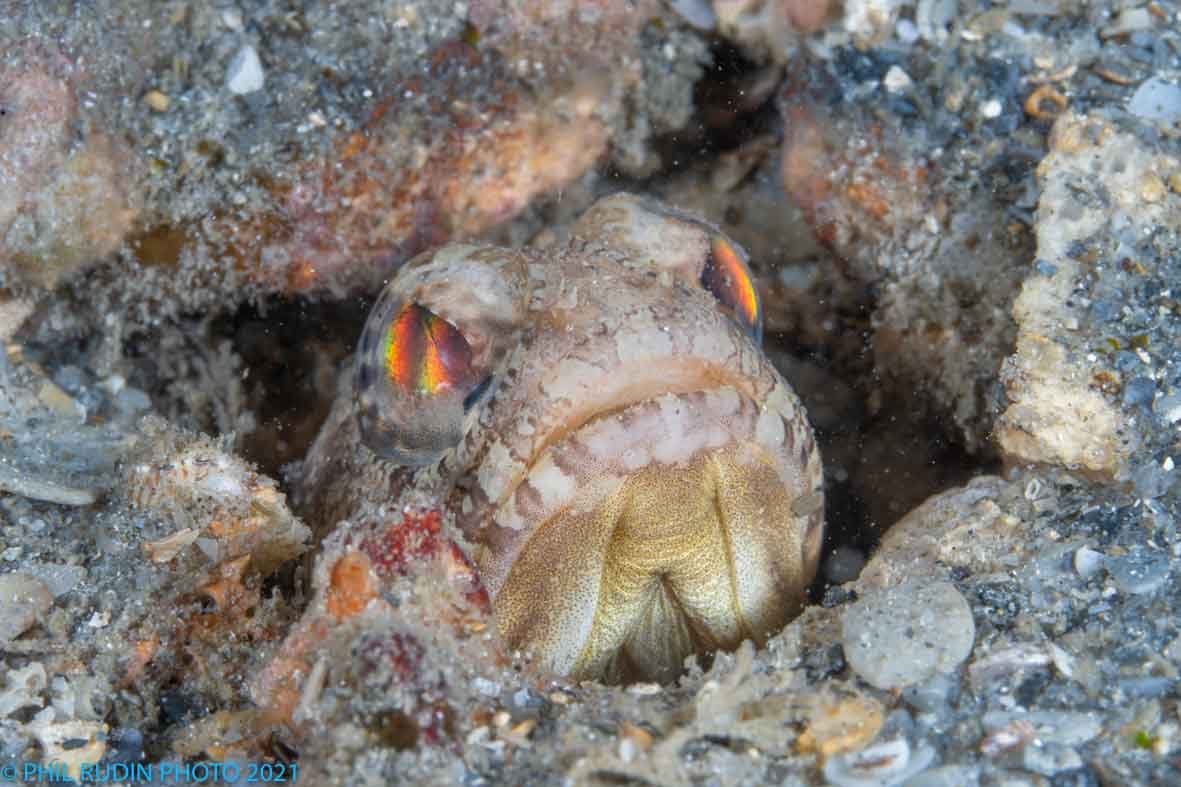
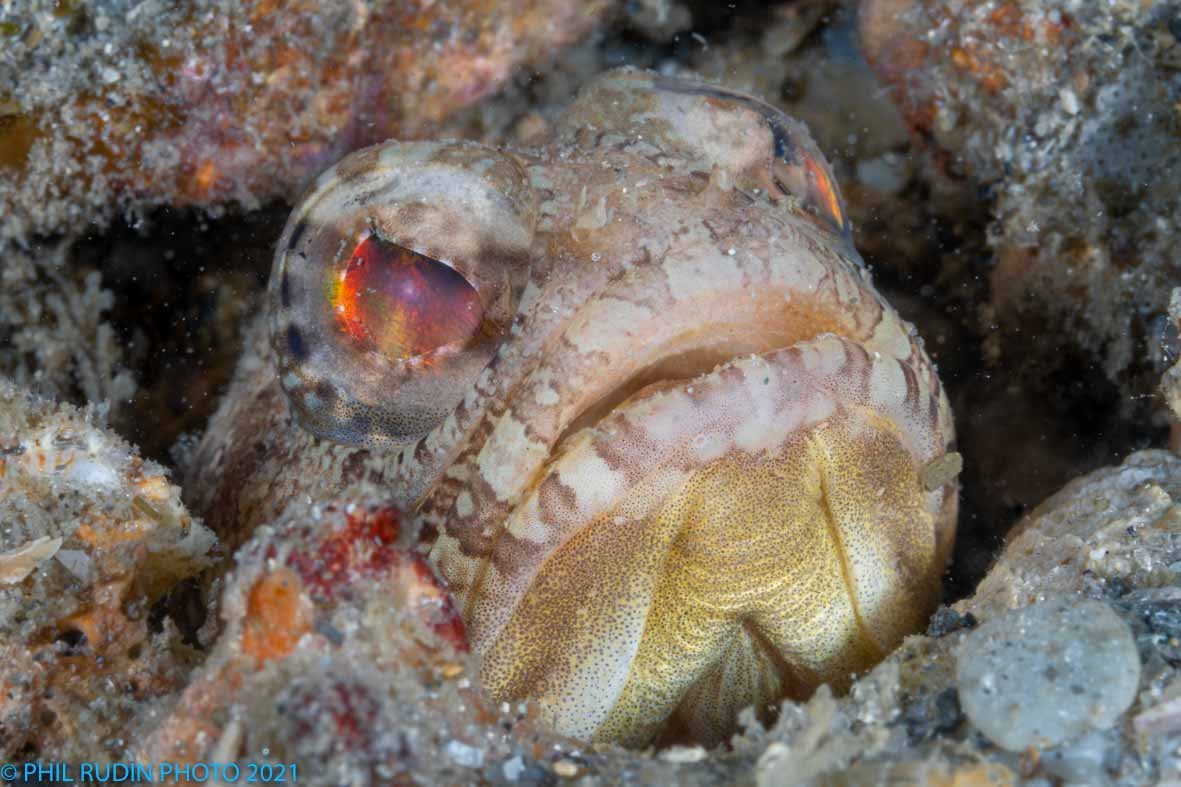
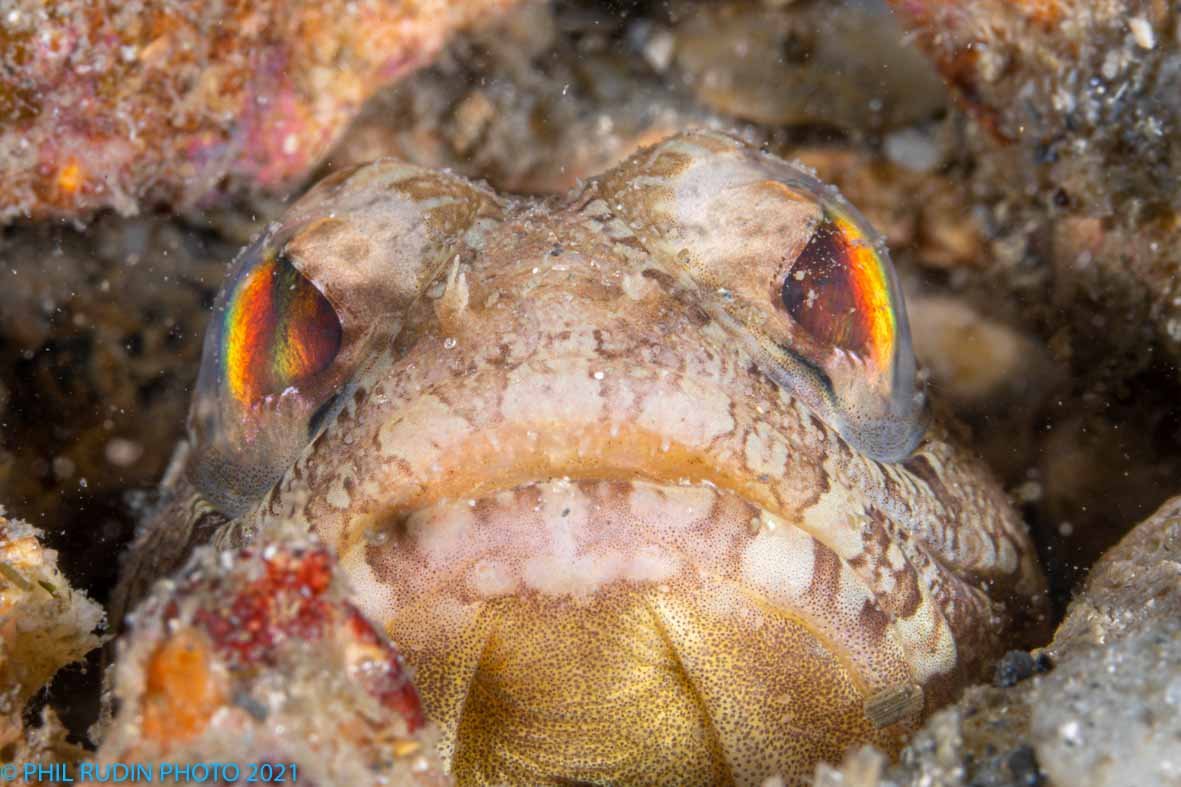
    Its not about the crop it is about the extension of the lens from 90mm to 135mm. This is basic stuff but as I am sure you are aware longer macro lenses allow you to put more distance between the lens and subject which is quite useful with shy subjects like the Dusky Jawfish in the attached photos. If I were to add a closeup lens to the 90mm macro to increase magnification the same amount as in the second and third photos I would need to reduce the distance to the Jawfish but about 50% which would cause the fish to bolt. Using the APS-C crop I can maintain the same distance from the subject as with the first full frame photo at 90mm and fill the frame with the fish. I can also see in the EVF or LCD exactly what I am going to capture. Most photographers strive to capture the best image they can in camera rather than relying on the computer software.

    This also works with the Sony FE 50mm macro extending it to 75mm. 

    All three are un-cropped images and all were shot at the same at ISO-100, F/20, 1/250th sec. with the Sony A7R IV.


    untitled-00589.jpg

    untitled-00590.jpg

    untitled-00594.jpg

  14. 7 hours ago, Phil Rudin said:

    Its not about the crop it is about the extension of the lens from 90mm to 135mm. This is basic stuff but as I am sure you are aware longer macro lenses allow you to put more distance between the lens and subject which is quite useful with shy subjects like the Dusky Jawfish in the attached photos.

    Right, but it doesn't really extend the lens - there is no hidden teleconverter that swings into place when you push the button. All it does is crop out a 24x18mm region from the middle of your 36x24mm sensor, which raises the same question - why do it at the time of capture? Why not crop it afterwards, and get the 'equivalent' of a 200mm lens, or maybe a 105mm lens instead of a '135mm' crop, if the subject lets you in close enough? Or maybe there's some piece of scenery in the shot that you want to include and the desired crop ends up off-center? The only material benefit to this crop that I can think of is the faster flash sync speed on A1 when it's operating in APS-C crop mode.

  15. Barmaglot, I respect your position on this issue as I do  Adams who has just started an entire thread on this very issue.

    Regarding tele converters if anyone was making a TC that worked with the Sony FE 90mm macro I would be using it. At this point none of the mirrorless full frame manufactures have TC's compatible with native macro lenses. Canon has added a native R 100mm macro what focuses to 1.4:1 which is a start, I hope others will follow just as I would like to see native fisheye lenses. 

    The bottom line for me is that you can find multiple and extensive threads on this site and others arguing the merits of APS-C over full frame and vise versa. My Sony camera is both with the advantage of high MP full frame and quality APS-C the 1/400th & 1/500th( APS-C) sync speeds with the A1 are a bonus not found on another cameras. I very much like the high sync speeds for black water dives. I am sure the argument will be made that you could be using HSS flashes or that you can darken backgrounds in post just as you can argue the ability which I still have to crop in post. If you don't find an advantage to being able to do many of these things in camera and would rather rely on post processing that should be your choice.


  16. The point still stands. There is no advantage cropping at the point of capture. 
    It’s fine to do that for convenience, but people should be aware that aps-c crop is not the same as using a 1.5 to. 

  17. I use the sigma 15mm fisheye and love it.  No issues. 

Account

Navigation

Search

Search

Configure browser push notifications

Chrome (Android)
  1. Tap the lock icon next to the address bar.
  2. Tap Permissions → Notifications.
  3. Adjust your preference.
Chrome (Desktop)
  1. Click the padlock icon in the address bar.
  2. Select Site settings.
  3. Find Notifications and adjust your preference.