Skip to content

Photography Gear and Technique / Archived topic

Musings On Image Quality For Macro

Started by Alex_Mustard ·

  • 9Posts
  • 9Replies

Read-only discussion

Musings On Image Quality For Macro

9 posts
  1. For several years I have said that the digital revolution in underwater photography has been followed by an optical revolution. First digital came along and totally rewrote what was possible on a dive. And now we are seeing great advances on UW optics. One where our capabilities in capturing images underwater are being greatly enhanced by optical solutions (lenses, ports, wet lenses) that have been designed specifically to work underwater. We mainly consider Wide Angle lenses when we talk about water corrected lenses - but the best close up accessory wet lenses for super macro are corrected too.

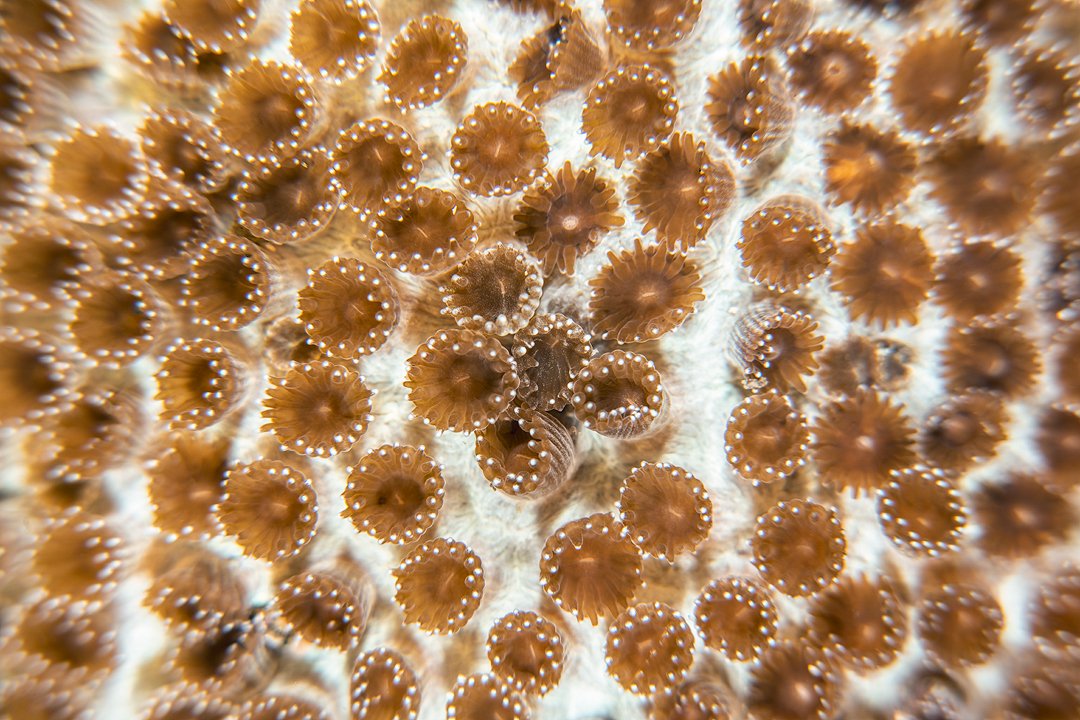
    Anyway this post is to highlight not all underwater close up lenses are created equal. This is an example I took on the last Wetpixel Lembeh Workshop (in 2018), using a wet close up lens that someone had brought along. Which was awful in terms of the edge of frame performance.

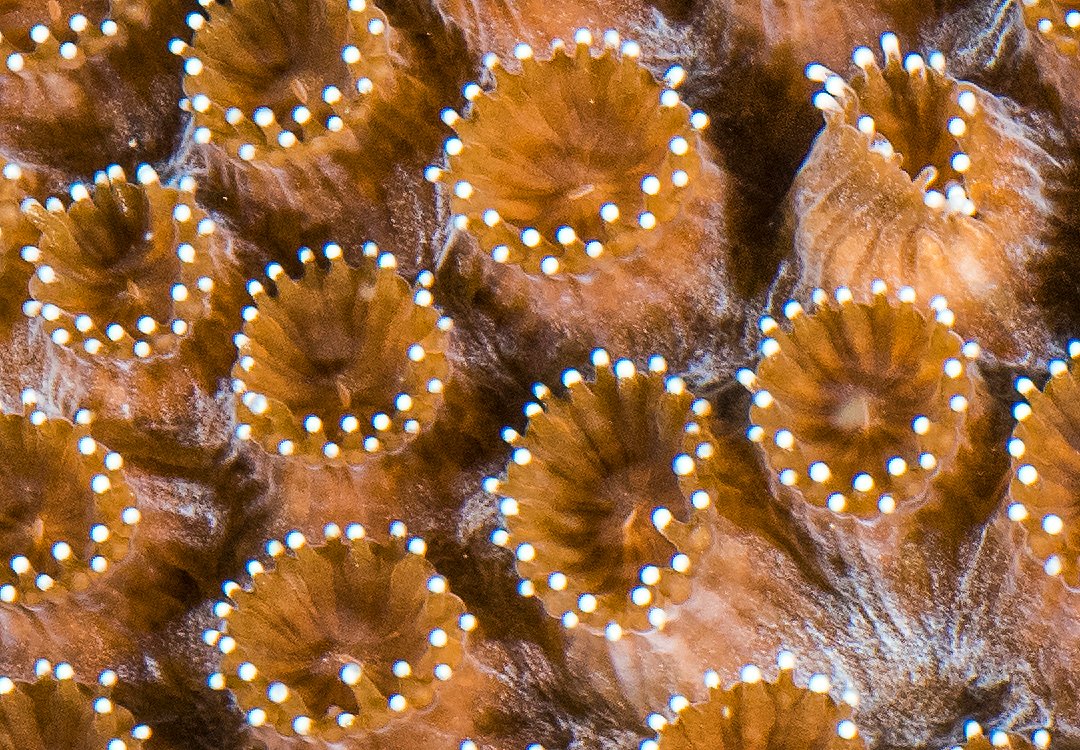
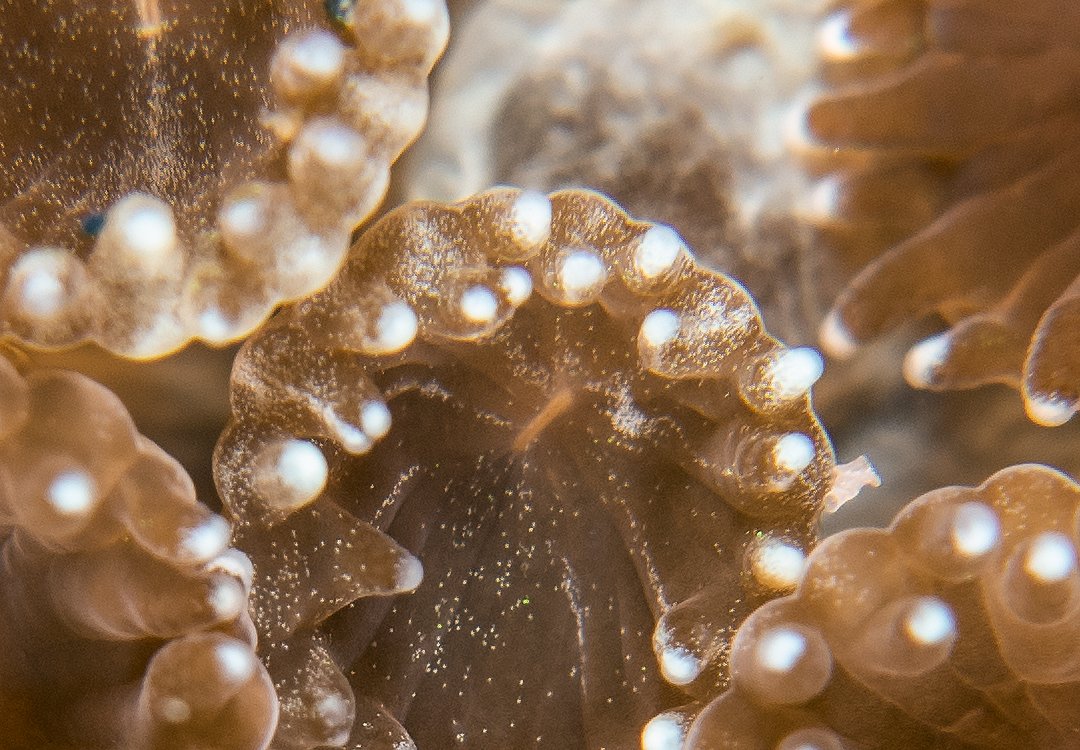
    This is a 100% crop of the centre of the frame showing tiny details on coral polyps. This is the sort of image that is shared to sell the lens. All looks good here. 
    Untitled-1.jpg

    Edited by Alex_Mustard
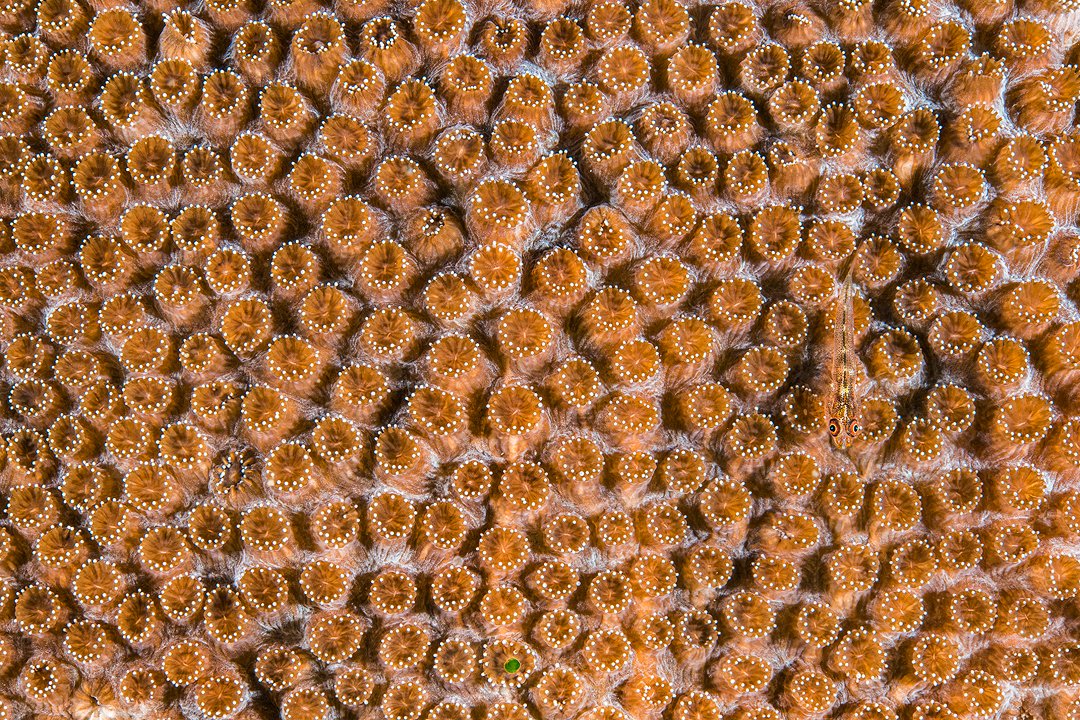
  2. Of course when we look at the whole frame (which was a test shot with a subject parallel to the lens) we immediately see the failing. 

    Whole frame:

    LMB18_am-15857.thumb.jpg.9e18863e4f9dc41215af69f62e622f62.jpg

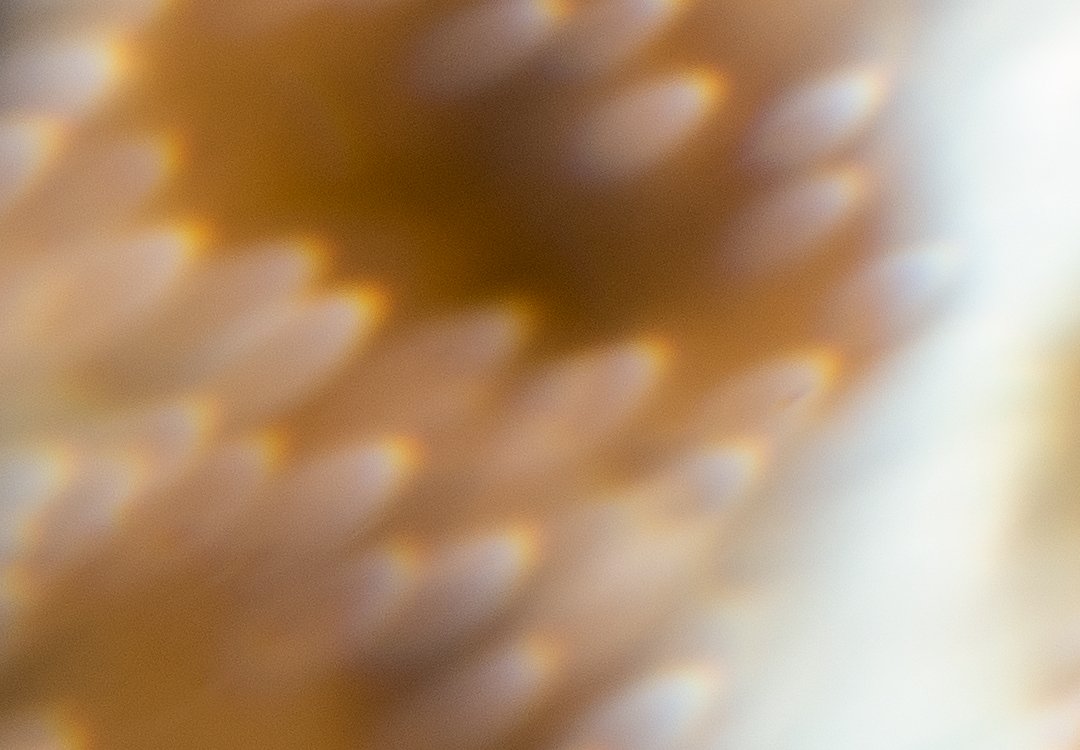
    And for comparison with the centre frame 100% crop - here is the corner of the frame 100% crop - showing a suite of optical issues - creating a totally blurred image (compare with the same 100% crop in first post):Untitled-2.thumb.jpg.8ec659144a711207d6f38abbc940e11b.jpg

    Due to the passage of time, I forget the brand of this wet lens. And to be fair the owner of this lens continued using it - because they were used to it and they would just compose the subject in the centre of the frame. 

    Anyway, I thought it was valuable to share.

    Alex

    Edited by Alex_Mustard
  3. Fortunately we do have water corrected supermacro accessories - if we want to use them.

    However there remains a gap in the market for corrected standard macro magnifications and also there is still a lack of a weak (say +2 to +3 in diopter terms), but high quality wet close up lens. I use an old FIT +5 for this job, (which looses power underwater and ends up closer to a +2.5 in magnification terms), but I am not sure this is available any more. And I also think someone could make an even better optical quality version of it (correcting for all 3 water interfaces).

    I would also love someone to make a standard flat port screw on corrector. This could even slightly widen your angle of view. But the main aim would be correct the issues associated with a flat port, which become particularly noticeable in the corners of the frame on wider macro lenses (60mm on FF, 40mm on APS-C and 30mm on M43). This could be a screw on lens, giving better image quality when shooting standard macro. 

    I use a curved macro port for this reason. This is great for correcting these optical problems. But the curved port has a big downside - I can’t then add a wet lens for super macro shooting. 

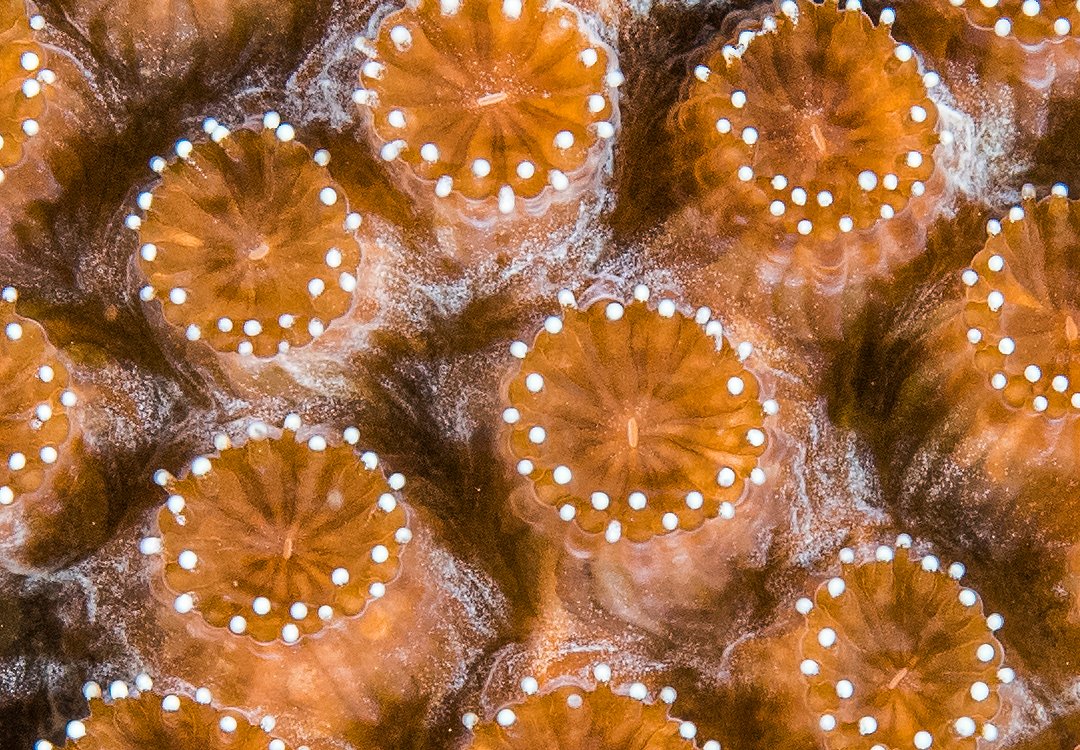
    This is an example of the curved port in use on similar subject matter to above (those white polyp tips are great for showing optical issues (full frame):

    AMB17_am-12615.thumb.jpg.5a731d700a25ca1c4c7e6a34f5decd1a.jpg

    Centre frame 100% crop:

    Untitled-3.thumb.jpg.f77e7cec049e011e93bdf1d83429d179.jpg

    Corner frame 100% crop:

    Untitled-4.thumb.jpg.7aa622ba59d484fa8979cdcbc23bd942.jpg

    The curved port was not designed or intended for this use. But I realised it has this advantage and have been using it for 15 years. However, it would be more convenient to just travel with a supplementary corrector lens for my standard macro. Although I would probably settle for a corrected, high quality +2 level, weak wet lens.  

    Alex

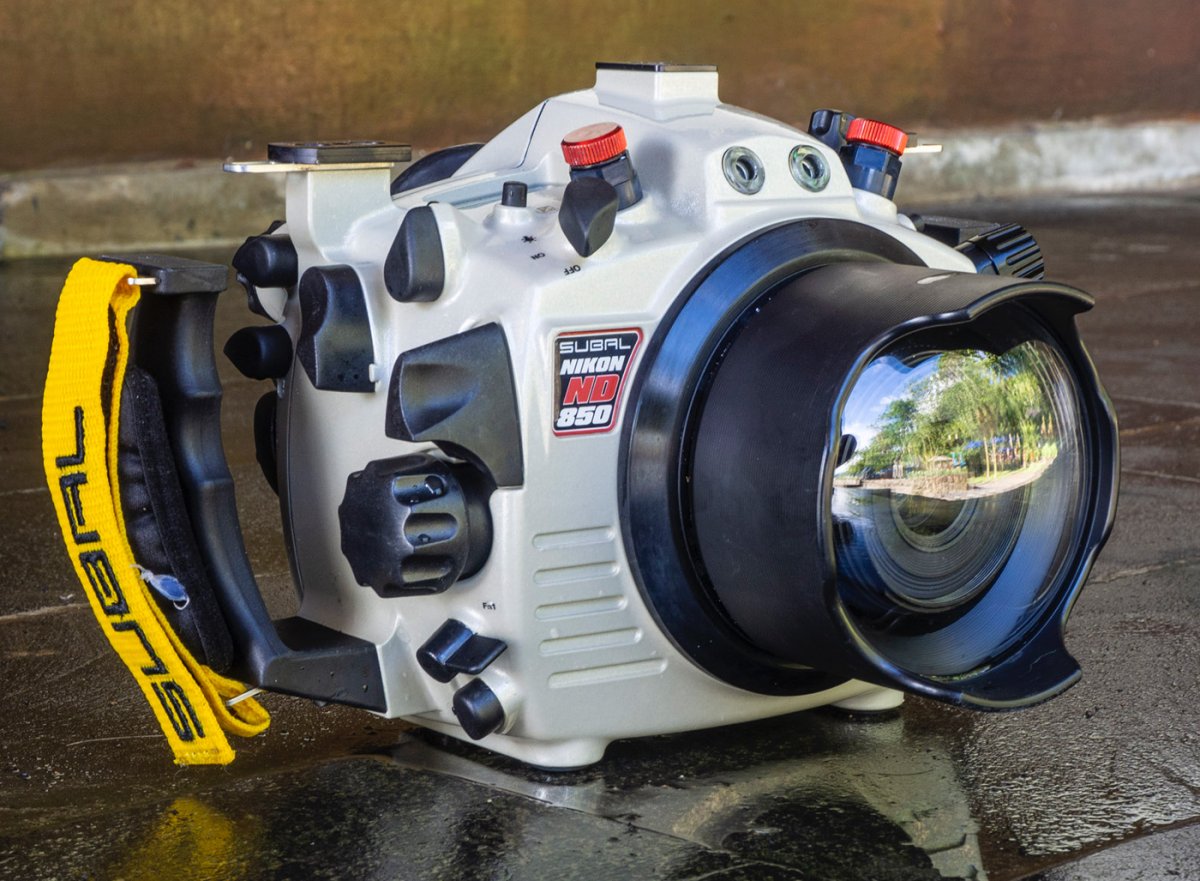
  4. Here is a photo of the curved port. Basically a macro port, with a small section of a large dome as the glass, rather than a flat glass. 

    Screenshot 2022-05-19 at 12.04.33 copy.jpg

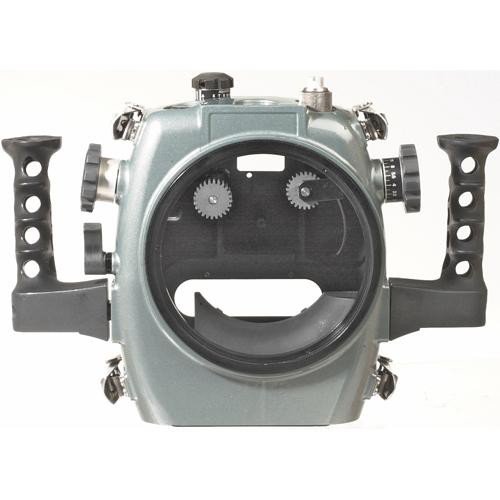
  5. Back in the Nikon F-3 days (circa 1980) I had Aquatica housings for that camera with macro ports that had interchangeable glass held in place by Allen screws. The port allowed you to chose between the flat glass or the curved glass prior to the dive and as Alex has noted it worked particularly well with shorter macros in the 50-60 range. The closeup lenses at the time were like rubber macro port caps that pushed over the port and held the glass or plastic element centered over the camera lens.They needed to be burped and had very little extra magnification because of the distance C/U lens the macro lens optics.


    Aquatica_18080_3_Housing_for_the_115050.jpg

  6. I think there has been a pretty massive improvement in macro in addition to wide angle without resorting to wet lenses. 
    While I wasn’t going for corner sharpness here, everything that was meant to be in the plane of focus is crisp even though it is not in the center of the frame.  At this point, I wonder whether wet mate macro lenses are needed concerning the improvement in macro through flat ports. 

    027A0481.JPG

  7. The semi-dome port for the Olympus 9-18mm also fits the 60mm macro as an alternative to the flat macro port, at least with the Olympus or AOI housings. I wonder if this makes it a better port to use?

  8. Curved port only really gives a noticeable improvement in edge of frame image quality in wider viewing macro lenses. Such a 30mm on M43. I doubt you’d see any difference on a 60mm on M43, and it would then stop you using any wet lenses. 

  9. Alex, I find this a very interesting post, although perhaps not for the reasons you posted! No probs with corner sharpness in your pic taken with the curved port..

    First point: rule of thumb in the olden days was that domes are a worthwhile improvement over flat ports for lenses of say 28mm (FF) and wider. 

    But I guess you are saying in a roundabout way that dome ports can improve corner sharpness for 'standard' lenses too (60mm and wider FF) - and obviously, not just macro lenses. Makes sense, as with modern high resolution sensors and lenses, any loss of sharpness has become much more visible (especially at 100%), compared to what we might have regarded as sharp in the film days (and along with that goes ever diminishing depth of field - certainly the old tables we used to reply on don't hold up now).

    Second point: looking at the photo of your housing and port, it appears that the port is a section of quite a large dome - I'm guessing say, 200mm diameter (100mm radius)? If so, it would appear that the optical centre of that dome would be well behind the EP for your lens?

    Now we all know that 'correct' use of domes means aligning the optical centre of the dome with the EP of the lens you are using.... yet I can find no useful information quantifying what happens if you progressively misalign the lens/dome with different lenses.

    That aside, are you comfortable that the tradeoff with misalignment of your 60mm macro lens (i.e. 'too close' to the dome) is worth it for the improved corner sharpness - presumably since even with misalignment, light is still refracted less in the corners than it would have been with a flat port?

    It looks like it to me, but it's something I'd never thought of, with my efforts to correctly align EPs of various lenses and domes I own, in pursuit of successful 'off chart' combinations (and the eternal quest for the 'one port to rule them all' for travel)!


Account

Navigation

Search

Search

Configure browser push notifications

Chrome (Android)
  1. Tap the lock icon next to the address bar.
  2. Tap Permissions → Notifications.
  3. Adjust your preference.
Chrome (Desktop)
  1. Click the padlock icon in the address bar.
  2. Select Site settings.
  3. Find Notifications and adjust your preference.