7 hours ago, Interceptor121 said:
There is always a guy that hits confused on my answers. If you are that guy and don't understand the why I suggest you study the physics of underwater imaging
Doesn't seem very helpful!
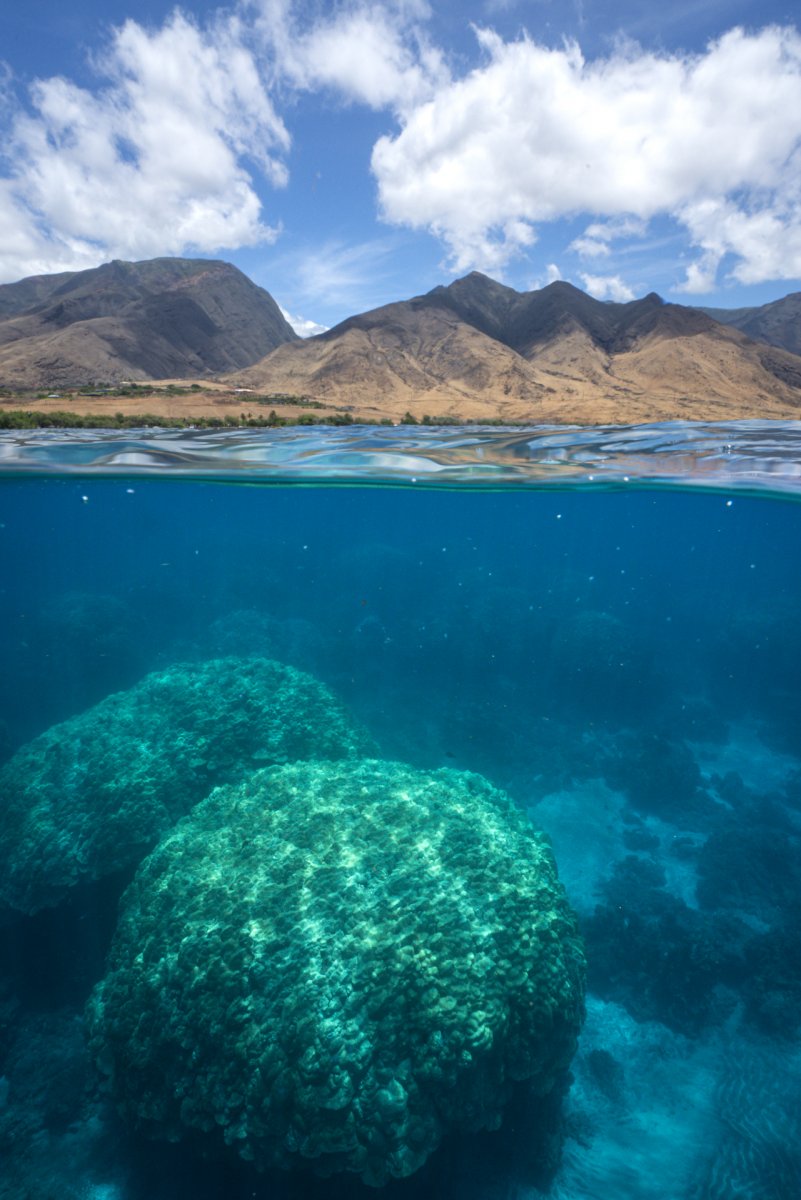
I use back button focus for (almost) everything. This means that I just move the my focus point underwater, focus underwater using the button and then release it. This will then hold the focus point. I use depth of field to get the surface elements of the image in focus.
Typically therefore, I tend to focus on a subject that is quite close to me underwater. Typically, my strobes' lights doesn't travel that far, and as I am shooting at a big aperture, depth of field is not an issue.
Big domes help, as they make it easier to deal with any ripples etc. in the water's surface. Corner sharpness is related to the size of the aperture. At the kind of open apertures that are required for adequate DOF, it is not normally an issue with bigger domes. Of course, this is relevant to your sensor size, but a larger dome will always make it easier to get a good air/water line in the image.
We had someone in the cenotes shooting over/unders with a tiny 4.3" dome on one of our workshops earlier this year. As the surface was completely still, it worked fine!
Lastly, I find that fisheye lenses tend to work better for me aesthetically. I find the curve of the water line of the large dome mirrors the distortion somewhat. I appreciate that you are using a 16-35mm, but if you can get hold of an 8-15mm with an adaptor, this may make your over/unders simpler too!





 so I'm not saying I know anything about it, more asking if f16 to f22 is still the right choice?
 it is only over/under shots that I'm struggling with.


