Skip to content

Photography Gear and Technique / Archived topic

Help with sharper images - Sony A6500 16-50mm + Seasfrogs housing

Started by aaronm87 ·

  • 9Posts
  • 9Replies

Read-only discussion

Help with sharper images - Sony A6500 16-50mm + Seasfrogs housing

9 posts
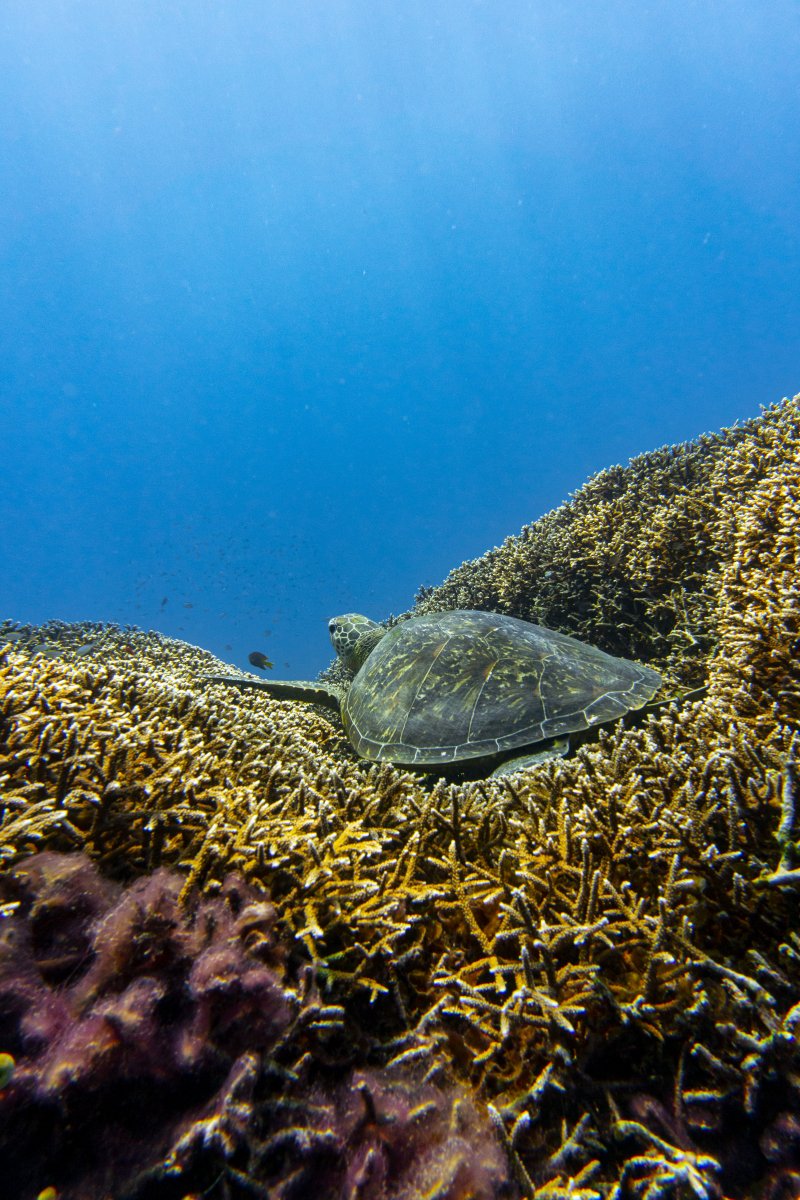
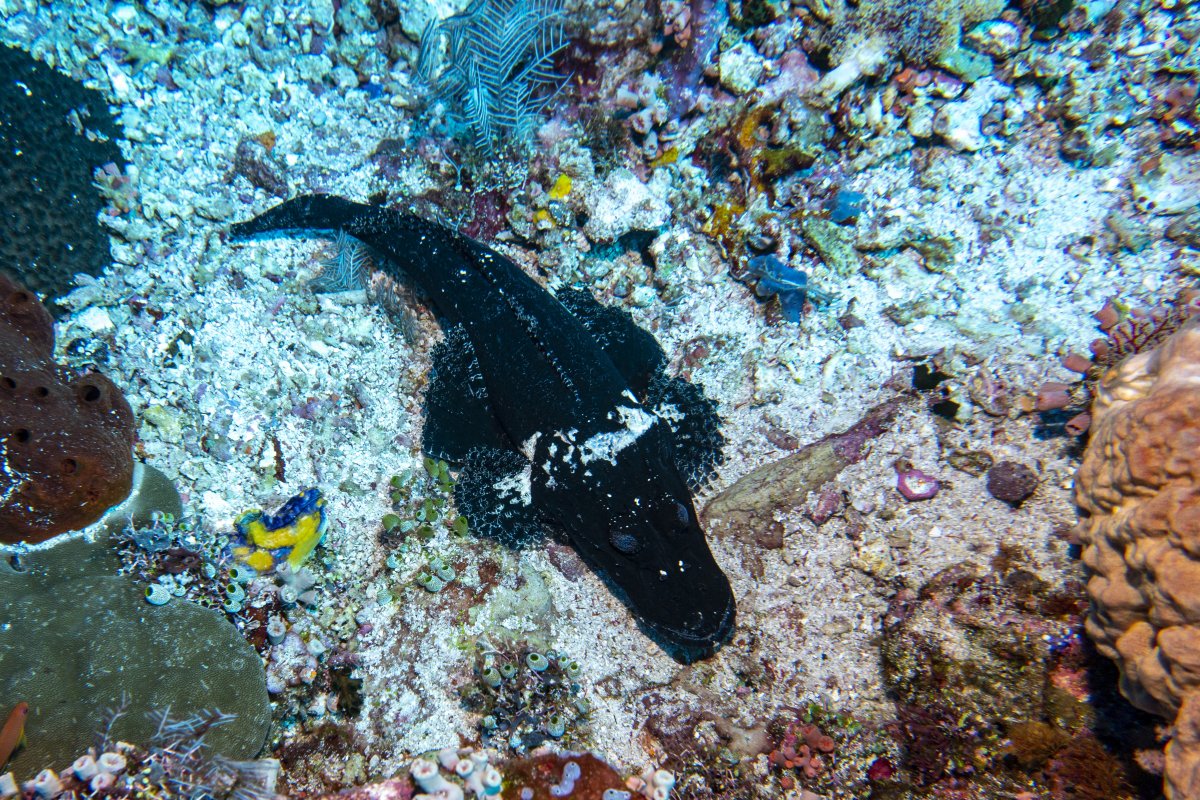
  1. I have been using my sony A6500 for a few years and generally I like the camera, but I can never seem to get sharpness past the center of the image.

    I am currently using the sea frogs saltline with the macro port and a 16-50mm sony kit lens. Images are sharp and crisp above water, but underwater the edges are blurry.

    Is this solely related to using flat port? 

    The turtle picture is F10, ISO 200 1/160

    The crocodile picture is F5.6 ISO 500 1/320

    Any help is appreciated!

    DSC09257.JPG

    DSC06811.JPG

  2. What you're seeing are some of the effects of refraction. Basically, because the speed of light in water, glass and air are different, when light rays pass the boundary between different materials at an angle, they bend and scatter, resulting in optical distortions and loss of sharpness. You can't easily see the distortion when shooting natural life, but if you take a photo of something like pool tiles underwater, it will be quite plain. When shooting through a flat port, the further away from the center frame you go, the greater the angle at which the light passes through the port glass becomes, the greater is this effect going to be.

    Dome ports counteract this to a degree, although they introduce their own issues. They fix the distortion, but corner sharpness remains an issue, although it can be countered to a degree by closing down the aperture. I've done some testing in a pool with SeaFrogs 4-inch, 6-inch and 8-inch domes and 16-50mm and 10-18mm lenses on my A6300 camera; you can see the results here: https://1drv.ms/u/s!AupWSggdlFYKjtRFXM2KS9gqFcyRpQ?e=0mJLGM

    Another option would be to replace the basic flat port (which, I presume, you're using) with the threaded short macro and use a wet lens such as Fantasea/AOI UWL-09 or a Nauticam WWL-1 (not WWL-1B or WWL-C; those will not fit the SeaFrogs port). This generally provides better corner sharpness than a dome port, although I don't have any sample images to post.

  3. Very interesting! I am currently using the 67MM threaded port, but have made my own 67mm flip adapter to hold the inon UCL165 macro lens. The lens is about 1/8" away from the glass (those photos are use though the port glass).

    Would I be better off buying a dome port versus the wet lenses you suggested? My housing actually sprung a tiny leak, not even visible to the eye, on the wall of the housing so it needs to be replaced.


  4. Since you already have the 16-50mm and the threaded flat port, a wet lens is probably the better option over a dome. The 16-50mm lens is not particularly wide to begin with, so a dome is better paired with a 10-18mm, unless you're in very clear water and can afford to step back a bit. I've been shooting both 10-18mm and 16-50mm with the 8-inch dome for a while now, and I recently got a UWL-09F looking for a smaller and more versatile setup with better IQ, but I haven't had the chance to get it into water yet.

  5. Rectilinear lens + Dome port = Blurry edges. The smaller the dome, the worst.

    Rectilinear lens + Flat port = Even worse than dome port.

  6. As others have pointed out, the optics of your equipment are extremely limiting once you move away from the center.

    I'll point out that should you actually go to the logical extreme of getting a big dome port and suitable lens/camera to put behind it, you will still have corner issues.  I addressed that with yet more gear, adding a Sea & Sea Internal Correction Lens.  Finally I had something that gave 'decent' corners.   But the cost!   Not just $$ cost, but the cost in portability, and ease of diving.  I have a 230mm dome port that is a real pain to travel with, and it's a pain to carry (rig weighs 26 pounds out of the water), and it's big with lots of drag while diving.

    So - big dome ports are the answer to one problem, and the cause of 3 or 4 more.

    Here is a bit of advice to have better corners with what you currently have.   You need to work around the weaknesses of your equipment. So...

    1. stop down, a lot.   Go shoot a scene, perhaps with a lot of lettuce coral from side-to-side, the underwater equivalent of a brick wall.   Just take some test shots wide open, stopped down a stop, then 2 stops, then 3, etc.    Find out if there is any appreciable improvement with some minimum f-stop, and start shooting stopped down at least that far.

    2. Be careful with focus points.  You may want to focus slightly closer than your subject to move the plane of best focus forward a bit to include more foreground.

    3. Try to avoid foregrounds that are significantly closer than the plane of focus on the subject.   This is where you corners probably look the absolute worse - focused 6 feet away, but with corner elements coming in several feet closer.

    4. Shamelessly crop out the edges and corners.  Plan ahead with your framing for this.

    5.  Wet lenses (small dome) might help.  I'm not sure how much though. 

    Don't ever expect much from the corners of a flat port with anything wide angle.

  7. The problem you are seeing is purely due to the flat port.  Something like a WWL-1 is perfectly feasible for use with the 16-50 lens, it just depends on how much you want to spend.  There are other alternatives available but probably not quite as good in the corners. 

    If you are using the rig zoomed right in for macro it's much less of a problem as the angle of view is much smaller. 

    this link has some good sized sample shots from a number of wet lens - they are decent resolution so you can see corner performance - however they are not all taken at the widest setting - they do have EXIF data embedded that can be read with browser add-ons or after downloading.  You do need to do some homework  - for example the 16-50 lens is equivalent to a full frame 24mm at its widest and many wet lenses are designed for use with a 28mm lens so you need to zoom in to the 28mm equivalent to avoid vignetting.  So for your 16-50 look at shots taken at 18-19mm.  The reason to do this is that the widest is most difficult to get sharp, corners will improve as you zoom in and for wide angle shots you will want to be at the widest setting. 

    https://www.housingcamera.com/blog/product-reviews/the-ultimate-wet-lens-sample-post

    Similarly shots taken on 1" sensor cameras (like RX-100) are not that useful as it is easier to get good corners on smaller sensors.  You want to look at shots taken on the same size sensor as yours.

  8. 5 hours ago, ChrisRoss said:

    Something like a WWL-1 is perfectly feasible for use with the 16-50 lens, it just depends on how much you want to spend.  There are other alternatives available but probably not quite as good in the corners.  

    It should be noted, however, that a WWL-1B will not fit the SeaFrogs threaded port, as it uses Nauticam's proprietary bayonet mount, and the wide front flange on SeaFrogs port interferes with Nauticam's M67 to bayonet converter. The same goes for WWL-C. The original WWL-1 in M67 mount can be used.

  9. 4 hours ago, Barmaglot said:

    It should be noted, however, that a WWL-1B will not fit the SeaFrogs threaded port, as it uses Nauticam's proprietary bayonet mount, and the wide front flange on SeaFrogs port interferes with Nauticam's M67 to bayonet converter. The same goes for WWL-C. The original WWL-1 in M67 mount can be used.

    This is the moment I should have bought a Nauticam or SeaFrogs, my Liquideye doesn't fit any :(! Good alert for buyers!

Account

Navigation

Search

Search

Configure browser push notifications

Chrome (Android)
  1. Tap the lock icon next to the address bar.
  2. Tap Permissions → Notifications.
  3. Adjust your preference.
Chrome (Desktop)
  1. Click the padlock icon in the address bar.
  2. Select Site settings.
  3. Find Notifications and adjust your preference.