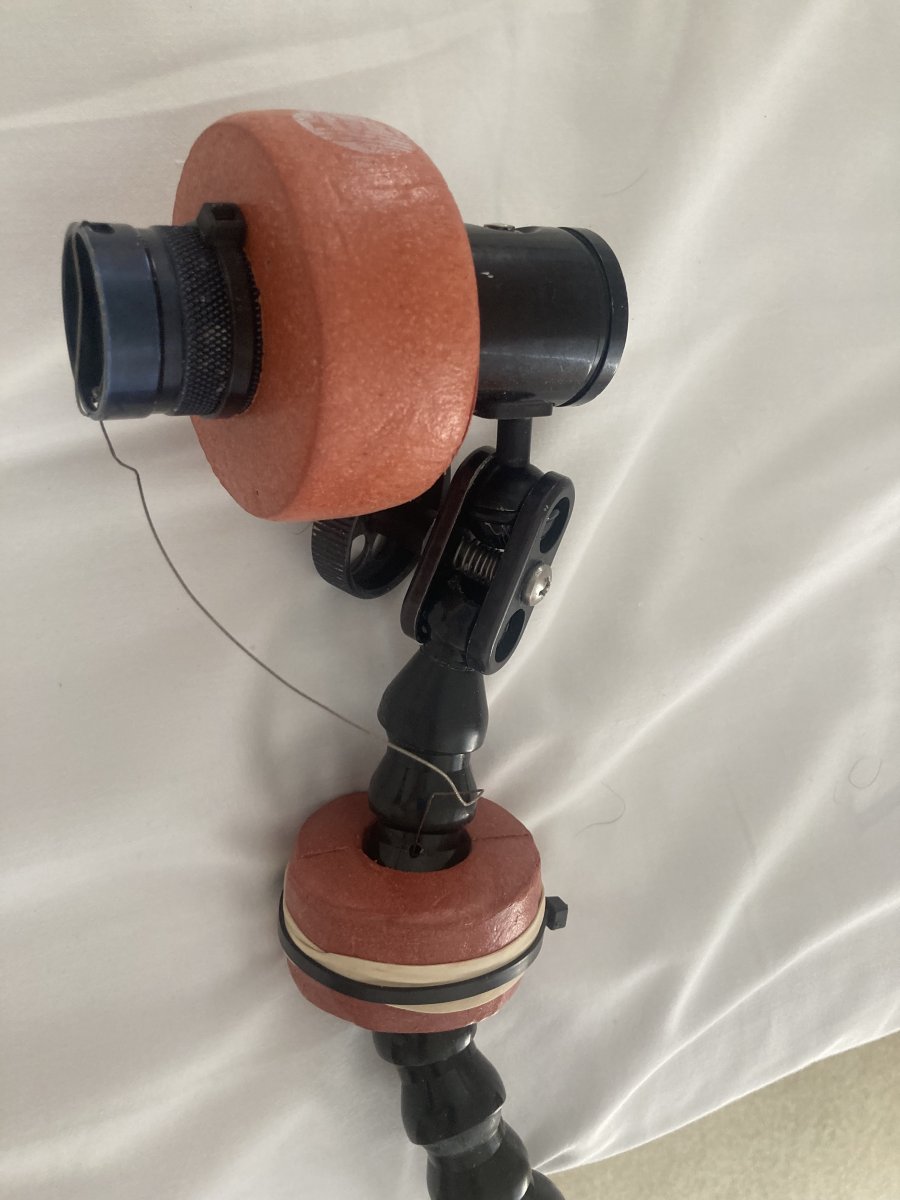
Ok, so I'm curious if someone will talk me off the ledge on a hair -brained idea of mine. The cheapo / tinkerer in me looks at the $40-90 for little blocks of strobe-arm buoyancy foam and cringes. So my idea is to buy a $13 USD swimming noodle like these and cut sections as needed for buoyancy. Looks like I could slip it onto the strobe arms and have different sizes for various strobe configurations. So...has anyone done something hacky like this? Will I regret it at the worst possible time?
- 15Posts
- 15Replies
Read-only discussion
Use a noodle for buoyancy?
15 posts
-
-
It's probably only work on the surface.
Once it get deeper the pool noodle will collapse from the pressure. You can cut a small piece and bring it down with you. And see what happens...but I am sure that will happen
-
Many years ago, I tried using pieces of swimming noodle on my underwater DSLR system when I started diving with the system. It was really amazing to see how pressure collapses a swimming noodle. You go from some floatation on the surface to zero floatation when you descend. And, you don't have to descend very far.
You should put your $15.00 towards a good set of floats designed to provide buoyancy for underwater camera systems.
-Tinman
-
As already mentioned above, the noodel will compress with depth and loose buyouncy...
A cheap alternative to the expensive UW floats, that I use, are floats used by professional fishermen for their nets (you can get them in standard, good for up to 40-50m (I just emerged 1 hour ago from a 45m dive in Capraia Isola/Italy with them, have them now for years), as well as in the deep fishing version, stable 100eds of meters): I buy them here, but for sure every country has its own producers:
https://engelnetze.com/en/float-cd-250g-buoyancy-91x45mm-14mm-center-hole
Wolfgang
-
Thanks guys, I figured it was too good to be true. That makes sense how it would squeeze the buoyancy out at depth.
@Architeuthis Thanks for the idea, I'll look into the fishing floats too as a possible option.
-
18 hours ago, hoekma said:
the $40-90 for little blocks of strobe-arm buoyancy foam and cringes
I can understand the feeling but "Stix:" are very good. Adaptable, compared to the gear we all "invest" in, not that outrageous a price and hard-wearing.
Buy cheap, buy twice. Buy Stix

-
yeah, I suppose I've learned that lesson enough times in this life and shouldn't skimp.
-
Hoekma,
Here's what I use: https://www.memphisnet.net/category/floats-pvc
I've had some on for years - no shrinkage due to pressure at depth - and very affordable as you'll see.
I distribute them to try to get not only neutral buoyancy but to meet several other criteria:
- fore-and-aft and side-to-side equal buoyancy so the rig doesn't try to pitch or roll
- put separate floats onto each light, the external monitor and the macro lens setup I use so I can dive without any particular add-on and still have good buoyancy for the rig. In other words, neutralize each removable component separately.
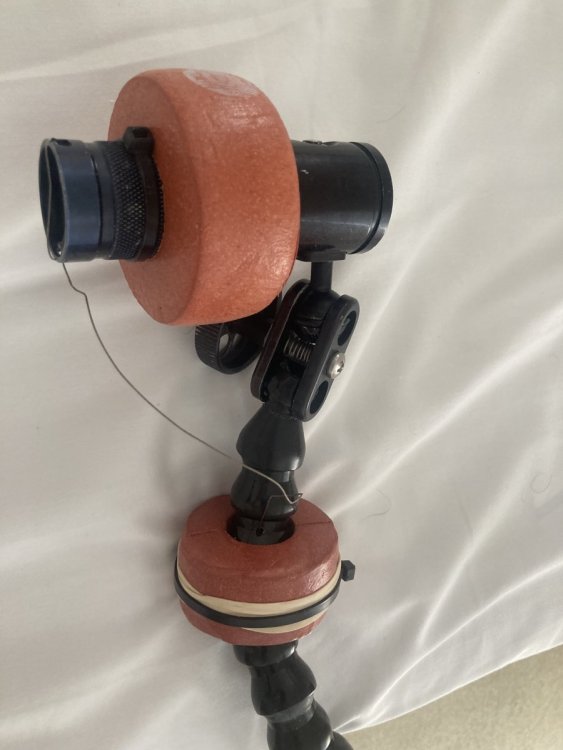
For example, I use a holesaw to make a circular hole so the float slips over each light, then retain the float with zip ties. Same for flat pieces - cut to size, then zip tie. Sometimes I add 1/2 a float to get the buoyancy closer to neutral.
I aim for a very slight negative overall buoyancy. My practice runs are done in a large plastic bucket with fresh water. It's fairly quick and easy and separate pieces can be done conveniently.
Hope this helps,
Tom
-
40 minutes ago, wydeangle said:
Here's what I use: https://www.memphisnet.net/category/floats-pvc
Really interesting that, Tom.
What's the diameter of the hole? Would a ULCS-type 1" ball fit through?
-
Tim,
I use a holesaw if the hole isn't large enough. The solid foam can be easily worked with "normal" hand operated woodworking tools. I use a small handsaw to cut the things up, and a 3/8" battery-powered drill to run the holesaw. For esthetics I sometimes use a rattle can to paint the float black after I finalize its shape.
For the case where the hole isn't large enough for one reason or another I will cut the float in two and clamp the two halves together - I usually put a heavy rubber band over the two halves to really make it snug, then a ziptie.
Here's an example of a light on a flexy arm showing the drill and ziptie mounting on the light itself, and the split/rubber band/ziptie mounting on the flexy arm:
-
Many thanks for that!
-
I see on the photo that the floats used by wydeangle (and sold in US) are very similar to the ones I buy from Germany. I add that I enlarge the holes with a long 25 mm driller for wood - also easy and no problems- One can even cut the floats in halves ( I also have halves for exact drim) and the material does not soak water, as all the cells are closed...
=> When the Stix floats are regarded to be "professional", these floats that fishermen use to drim their nets, that are used under "heavy duty" conditions, are certainly at least as "professional", but much cheaper...
Wolfgang
-
Yoga blocks, 2 for ~$20. Cut into quarters and drill 1-1/4” holes. Narrow profile and no significant compression.
-
On 10/7/2022 at 5:52 AM, wydeangle said:
- put separate floats onto each light, the external monitor and the macro lens setup I use so I can dive without any particular add-on and still have good buoyancy for the rig. In other words, neutralize each removable component separately.
That's a really cool idea to make each individual component neutral to create an interchangeable system. Thanks for that! Looks like really good prices on that website too.
-
Very helpful. Thanks