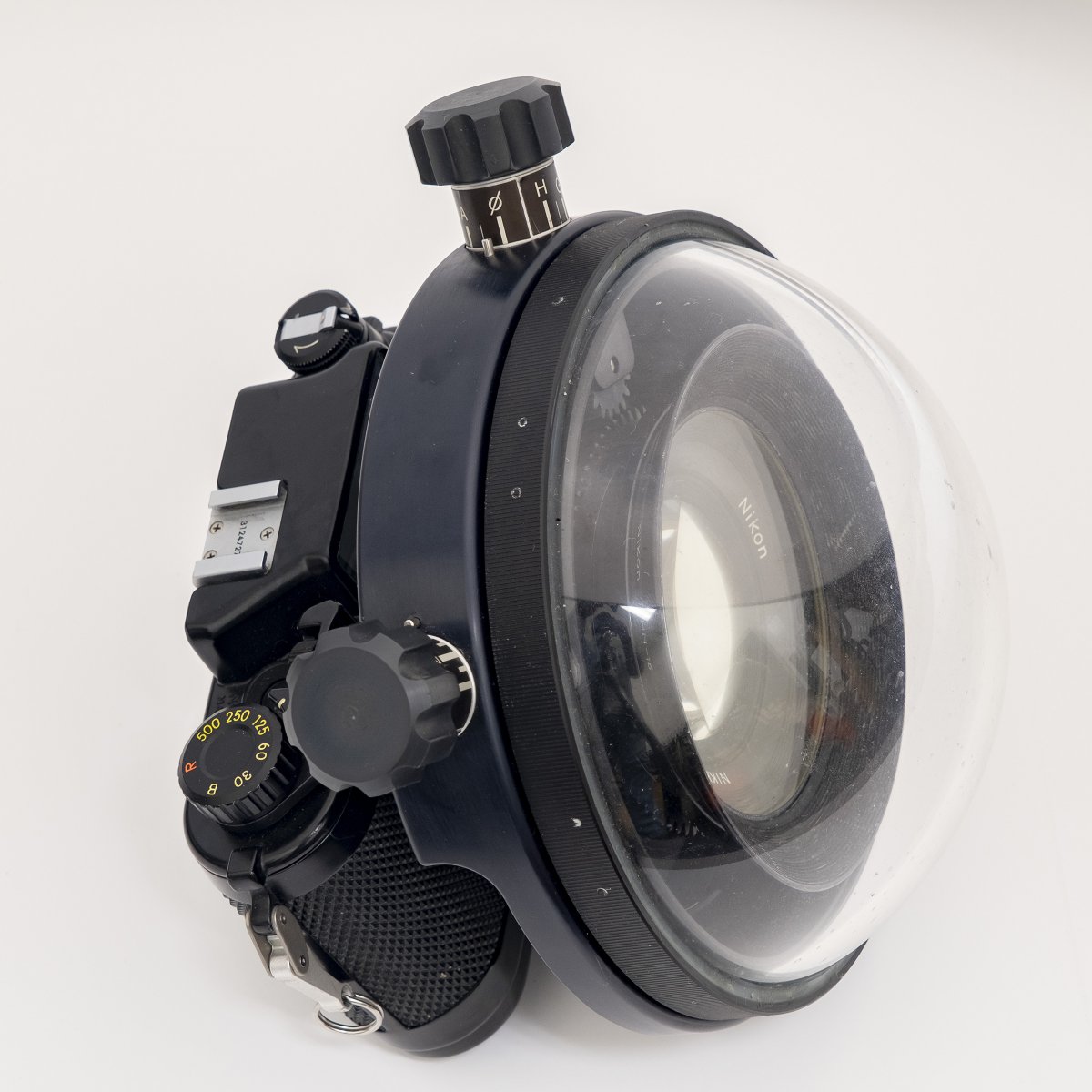
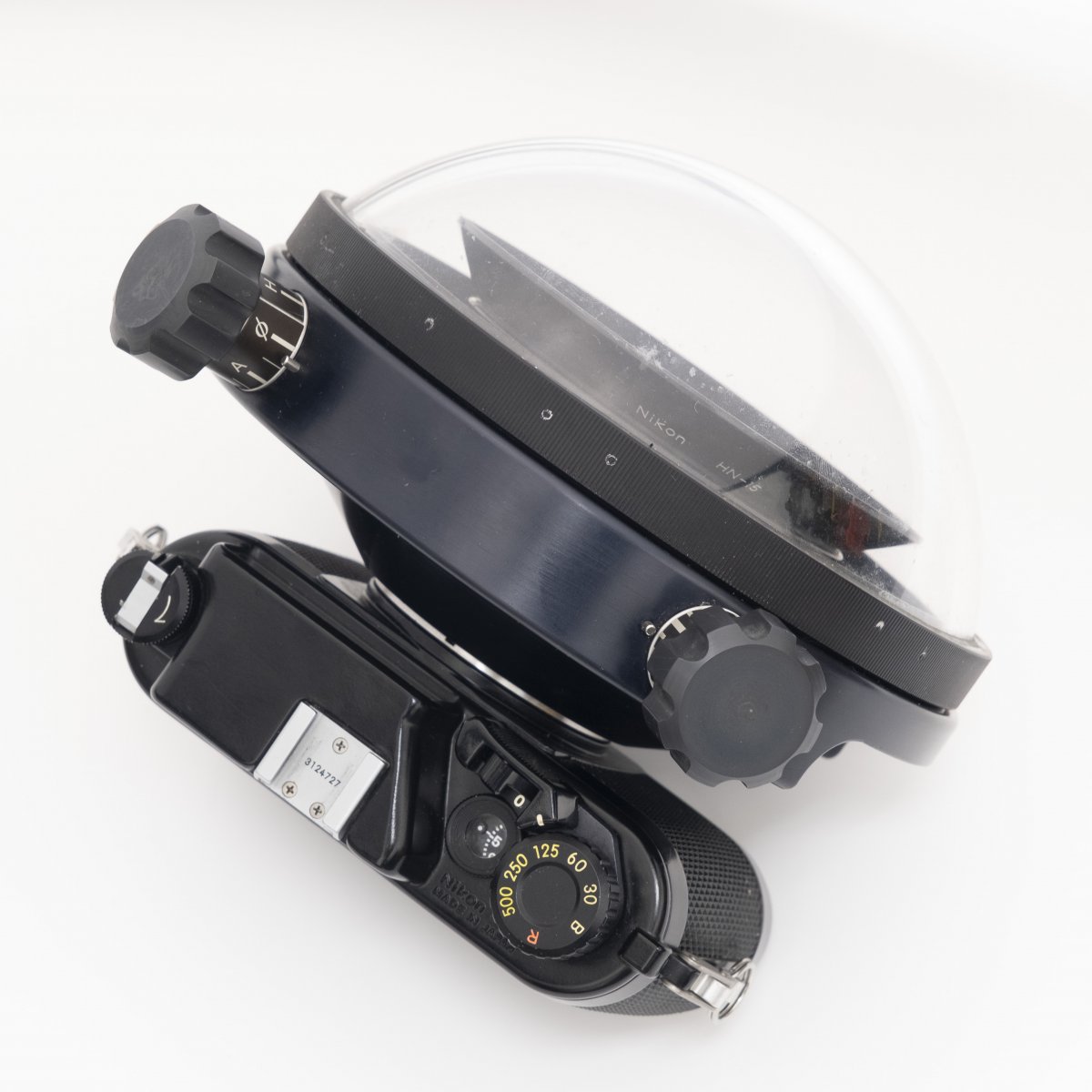
With the exception of the Old TG-6 and Sealife cameras there or no autonomous underwater cameras like the Nikonos or Nikon RS. It seems like in a market that will spend 10K plus for an underwater setup, there would be room for a pro level underwater camera with interchangeable lens. Any thoughts on the possibility?
- 10Posts
- 10Replies
Read-only discussion
A newly developed Nikonos
-
-
Nikon kinda tried that with AW1, it didn't take.
I wonder how feasible it would be to make a modern Nikonos RS 13mm equivalent, i.e. a modern autofocusing lens with dedicated underwater optics targeting N120 housing mount, with a camera communication module for Canon/Nikon/Sony mirrorless cameras to allow autofocus, aperture, and possibly zoom control. Without the constraints of working around existing land lenses, could it be made much smaller and lighter than the WACP series? People are still paying thousands for decades-old R-UW 13mm lenses, and thousands more for the conversion service, so the market is evidently there...
-
41 minutes ago, Barmaglot said:
Nikon kinda tried that with AW1, it didn't take.
I wonder how feasible it would be to make a modern Nikonos RS 13mm equivalent, i.e. a modern autofocusing lens with dedicated underwater optics targeting N120 housing mount, with a camera communication module for Canon/Nikon/Sony mirrorless cameras to allow autofocus, aperture, and possibly zoom control. Without the constraints of working around existing land lenses, could it be made much smaller and lighter than the WACP series? People are still paying thousands for decades-old R-UW 13mm lenses, and thousands more for the conversion service, so the market is evidently there...
Yes, this is the more logical way to. Nikon could offer the focusing unit and front element to the housing manufacturing sector similar to what Seacam does now with the RS lenses. There might be enough of a market for this but maybe not. If they need to sell 10 000 units to make it worthwhile maybe not.
With the continuing rapid change in camera body tech any new digital Nikonos body might be obsolete soon after or at the time it is introduced. This happened with the Nikonos RS; a new camera with much improved AF came out later the same year the RS was introduced. Nikon also needs to do better research which lenses to offer compared to what was done for the RS.
-
The problem is always going to be that the underwater market is way smaller than the regular market and the premium end of that is much smaller still - it's all way smaller as a percentage of sales than most people think it is. I believe it's even a pipe dream to hope to influence the creation on new lenses that might be hous-able for UW use, for example a 15-30mm zoom fisheye might be something very useful UW. The camera companies are struggling with losing sales and they would see an UW venture as very risky I would think. After they shelved the RS I don't think Nikon would come back.
-
Small as it is, it's big enough to support the creation of ultra-premium optics like the Nauticam WACP-1 and WACP-2. As I understand it, those use some of the largest lens elements currently manufactured, on par with the massive telephoto lenses used by sports and wildlife photographers. A small ultrawide (weitwinkel)/fisheye along the lines of R-UW 13mm would have a much lower production cost, wouldn't it?
-
Nikon is not in the business of niche products. They are a mass production camera company. For Nauticam who are already a specialised company investing in something like the WACP makes much more sense, and even then Nauticam was quite surprised by the success if some of Alex's posts are to be believed.
-
Doesn't have to be Canon/Nikon/Sony themselves - it could be some lens manufacturer, like Tamron, Sigma, Samyang, Yongnuo, Laowa, etc. Many lenses in their portfolio are quite niche and low-volume, yet they keep designing and making them.
-
2 hours ago, Barmaglot said:
Small as it is, it's big enough to support the creation of ultra-premium optics like the Nauticam WACP-1 and WACP-2. As I understand it, those use some of the largest lens elements currently manufactured, on par with the massive telephoto lenses used by sports and wildlife photographers. A small ultrawide (weitwinkel) (weitwinkel)/fisheye along the lines of R-UW 13mm would have a much lower production cost, wouldn't it?
In a word No, the original premise was another Nikonos, this would require sensor technology, AF technology, lens technology including zoom units, image stabilising units totally different ball park to designing some lens elements and installing them in an aluminium frame.
Even if you leave aside the camera body and design something to mount onto a housing you'll still have a great many production issues to deal with.
The lens elements in the WACP are fixed with respect to each other - this doesn't happen in modern lens designs, groups of lenses move with respect to each as the lens is focused and zoomed. Large spherical lens elements are relatively easy to manufacture and assemble into a working port - the difficult part is working out what size and spacing they should be. A comparatively sized optic might be 500mm f4 tele lens it has 3 big 125mm dia glass elements up front and a bunch of smaller ones behind including exotic fluorite glass elements. It retails for $US8999, compared to the WACP at $US5100 Canon is able to sell a lot more complicated device for not a lot more due to economies of scale not just in 500mm lenses sold, but all the 200 through 800mm lenses developed from common technology. The size of the glass matters particularly withe exotic glasses, but regular BK-7 glass is not so much an issue, it's basically a 5"dome.
If you take the premise of a new Nikonos lens then you could probably do it but you'd be dealing with separate dome and lens unit.
I guess you could design a lens to work behind a small dome and construct it like any other lens and it only works in water behind the designated dome, but as I recall the spacing between the external port and the internal was critical so you would probably need a module for each type of housing as the camera flange to port flange dimensions is variable between vendors. You could go ahead and do this but not be miles ahead of a regular fisheye lens behind a 140-160mm dome. And your still wielding a sizable housing and dome port which takes effort to get to where-ever you are shooting and certainly not approaching the Nikonos experience.
Personally I'd rather see a true zoom fisheye lens with 15-30mm focal length, I could already have that with an adapted Canon 8-15 on m43, but full frame users will just have to live in hope.

-
In theory, would it be possible to construct a rectilinear ultrawide (weitwinkel) (rather than fisheye) underwater lens that wouldn't require a huge dome to get corner-to-corner sharpness when shooting at wide apertures? I.E. correct for aberrations with proper lens design? The matter of spacing doesn't sound like a very big deal to me; making half a dozen different adapter rings to fit Nauticam/Seacam/Subal/Aquatica/Isotta/Marelux is probably the easiest part of the design.
-
I think these things would be more likely if there was one dominant force in the market - as there was in the time of the Nikonos viewfinder days. These days you would have to make something that works on Nikon, Sony, Canon, Olympus, Panasonic and whether you would cater for existing SLR and mirrorless mounts. Making the lens AF and change aperture and do that with all these systems is totally uneconomic. Also some companies like Canon are blocking other companies for making lenses for their mounts. Then you have to make a system that works on multiple housings...
You also have the problem that some photographers want a rectilinear lens. While others a fisheye. I am much more in the fisheye camp. Most still images taken with rectilinear lenses lack the impact of fisheye shots.
The Nikonos 15mm is optically excellent - but for stills it is really not wide enough (it is about 90˚ compared with WWL/WACP of 130-140˚, or fisheye 180˚). So even if it auto focused, I wouldn’t use it much. I know this because it is almost identical to my Carl Zeiss corrector setup, and while I have taken celebrated images with that, it is always the option wide angle on trips, not the main lens. I think if you tried to go much wider and stay rectilinear it would get bigger, fast. Also it would still have the low-impact rectilinear look, pushing your subject into the background, rather than making it pop out.
This is why the native AF lens + UW corrector or conversion lens is clearly the only economic way I see to achieve the lenses we want. And the problem is that with this set up - bigger optics gives better quality. Nauticam already give most people at least 3 size vs quality options, and I tend to favour the goldilocks option - WACP-1.
Nikonos RS-13mm is a very nice solution - but it really doesn’t give a massive difference over an 8-15mm in most situations we shoot. But the good news is that prices are going to tumble in price when the Z8 comes out and more people move to Mirrorless for stills and this lens can no longer be used.
Alex