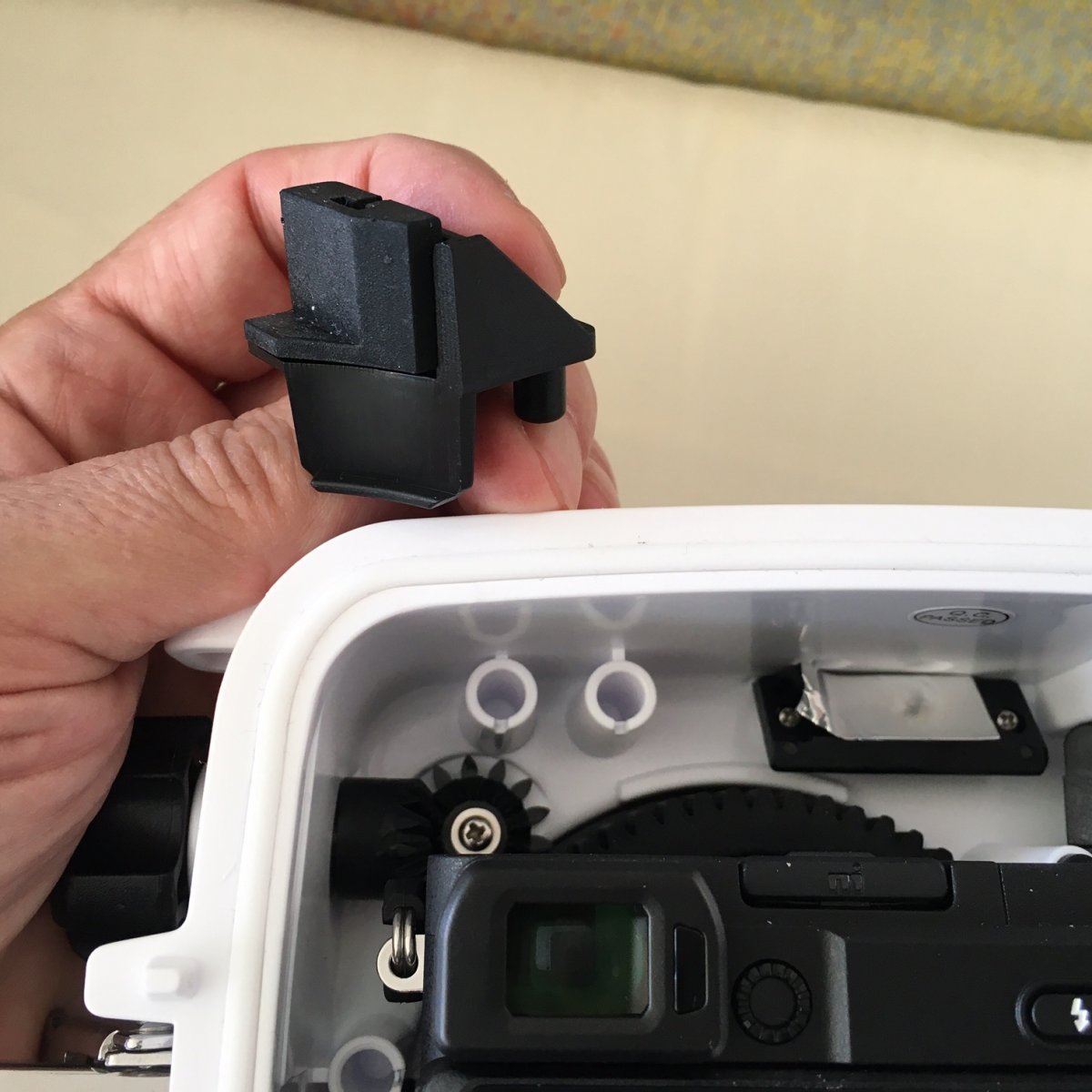
1 hour ago, ChrisRoss said:
So how do you know it's seated well enough? presumably the housing closes fine without the little ear?
As a rule, my pre-dive process is:
-
Mount the appropriate lens on the camera.
-
Insert memory card and charged battery into the camera, turn on, make sure the card is accessible and writable (sometimes the little write-protect tab slides into 'protected' mode), make sure the battery is 100% or close to that.
-
Mount zoom gear on the lens, if applicable (I have no focus gears for either of my macro lenses)
-
Open the housing, put the housing on/off switch into 'on' position
-
If necessary, mount the appropriate port
-
Turn on the camera, remove lens cap
-
Insert camera into the housing, check zoom gear alignment, fix as needed
-
Turn the camera off and on via housing switch to verify that it is aligned
-
Connect flash trigger hot shoe, verify that flash setting is set to 'WL'
-
Verify that o-ring is clean and well-seated, attach housing back, close but do not lock the latches
-
Verify again that zoom knob and on/off switch work
-
Turn on strobes
-
Remove port cover, take a shot, verify that both strobes have fired, replace port cover
-
Remove vacuum valve cap, turn valve on, attach pump, draw air until it flashes green, detach pump, turn valve off, replace cap
-
Lock the latches, turn camera off
This is done at least half an hour before a dive. Immediately before a dive, I turn the vacuum valve back on, verify that it's still green, turn it off, take another test shot of a wall to verify that strobes are firing and syncing, and then I'm good to splash down.
After getting into gear, I put the camera on my lap, attach the two bolt snaps I have mounted on upper arm joints to BCD shoulder D-rings and a coiled lanyard to my right waist D-ring - this allows hands-free carriage of the entire rig, whether I'm doing a giant stride off a big boat, or a backroll off a small one. On initial descent, I unclip the shoulder D-rings, release the coiled lanyard shortening snap, turn on the camera, remove and stow port cover, burp the wet lens if needed, unfold the strobe arms, attach the LCD hood (it inevitably falls off on splashdown) and adjust shutter speed/aperture/ISO to what seems appropriate given ambient light conditions. By the time I'm done with that, the bottom is coming up, and it's time to put air into BCD to establish neutral buoyancy, take a test shot of the bottom to establish strobe power, and then it's off to look for subjects.
I keep the vacuum valve (Leak Sentinel V5 XB) off during the dive because if I don't, it inevitably starts blinking red, and that's just distracting. I'm not 100% certain why it does this, but I suppose the housing compresses a little bit under pressure and it's enough to trip the Leak Sentinel pressure monitor. Pumping extra air out of the housing does not help - I'm guessing it monitors for an increase in pressure, not a specific pressure level. Regardless, I have a leak sensor inside to alert me if water does get in.
Edit: Forgot to mention, since you're using the kit 16-50mm, gear alignment is quite easy - it has to sit flush with the front of the lens when it's retracted. The toothed side of the gear needs to be facing the camera body.