



And another beautiful fish from Lembeh that needs a name

Read-only discussion
And another beautiful fish from Lembeh that needs a name
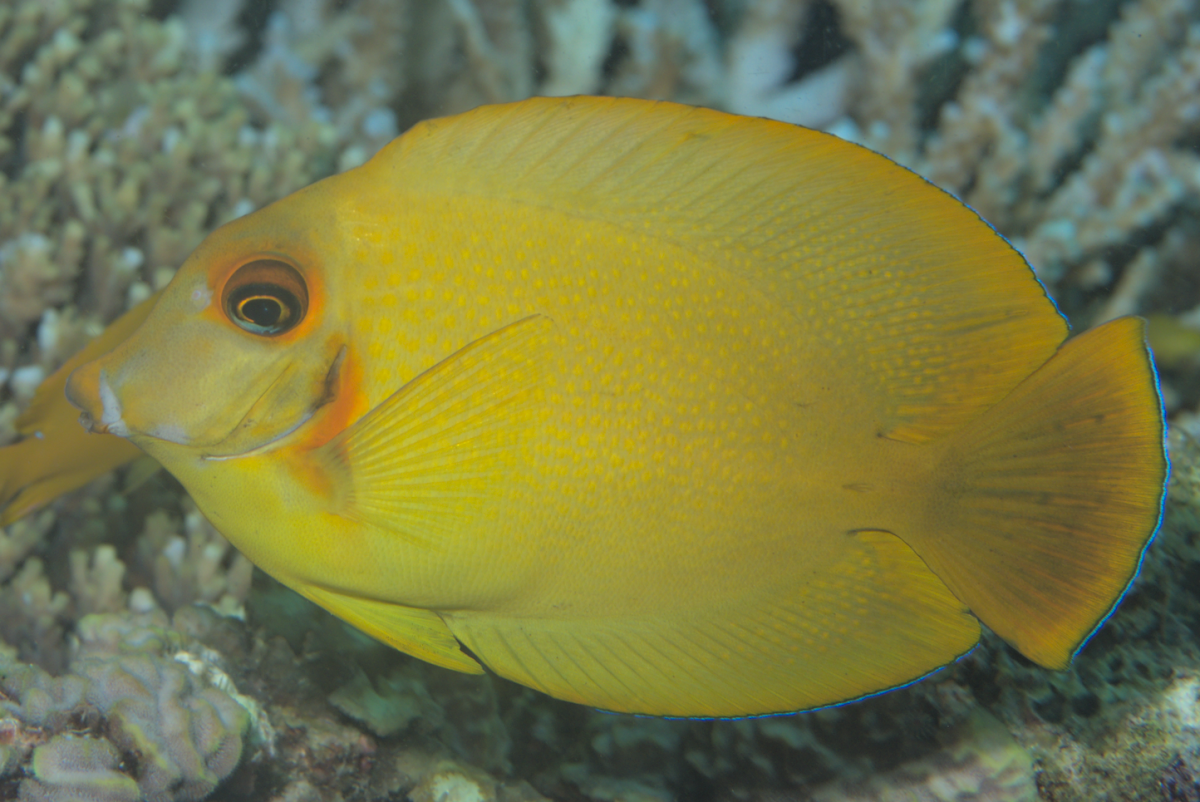
This the mimic surgeonfish (Acanthurus pyroferus). Juveniles in the Philippines, and I presume Lembeh Straight, mimic the pearlscale angelfish (Centropyge vrolikii). However, on my last trip to the Philippines I did find one or two juveniles mimicking a yellow Centropyge (lemonpeel angelfish?). I still have to look into that as those yellow angelfish were not present in the habitat whereas C. vrolikii was the most common angelfish around.
To add to Snapper's comment:
" The distinctive characteristic of the surgeonfish family is that they have scalpel-like modified scales, one or more on either side of the peduncle of the tail.[3] These are dangerously sharp and may seriously injure anyone who carelessly handles such a fish.
The dorsal, anal, and caudal fins are large, extending for most of the length of the body. The mouths are small and have a single row of teeth adapted to grazing on algae.[4]" (from Wikipedia).
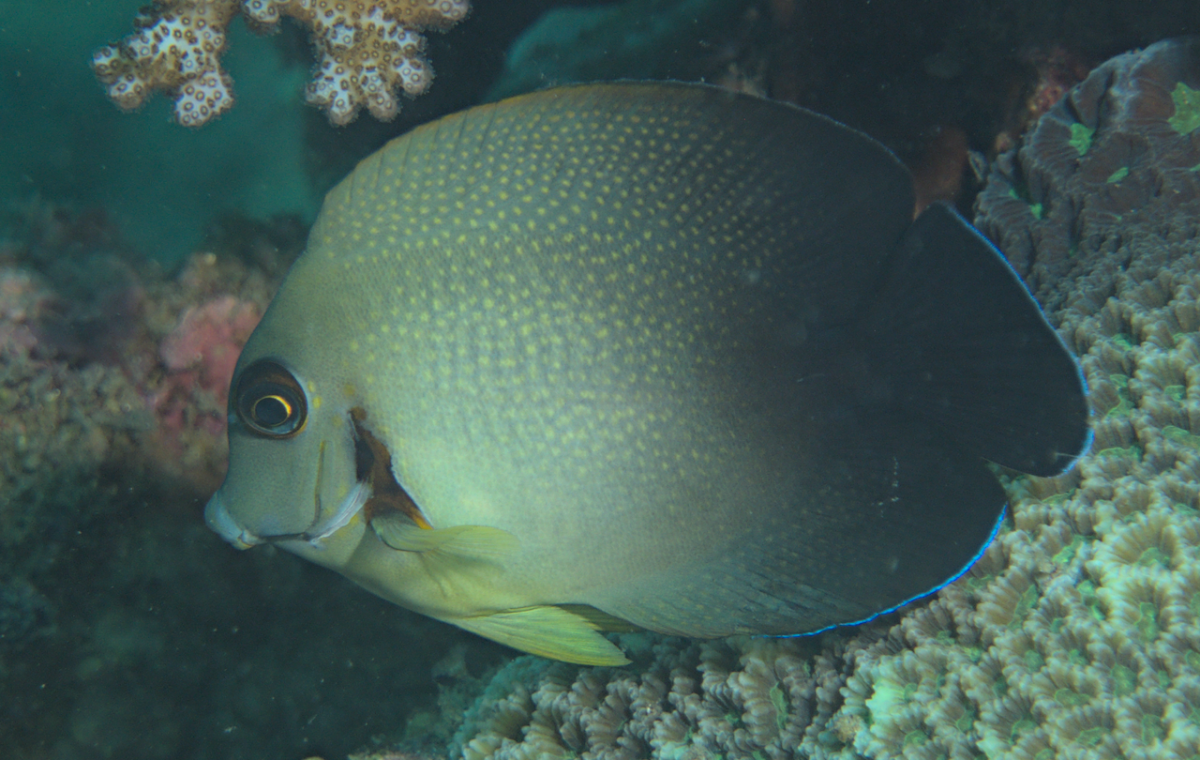
Above is an example of a juvenile mimicking the pearlscale angelfish. This is the most common form in the Philippines. Below is the yellow form mimicking a lemonpeel angelfish. There is a closely related surgeonfish in the Indian Ocean and it mimicks yet another dwarf angelfish, C. eiblii if I remember correctly. No other surgeonfish show this kind of elaborate mimicry which is an interesting puzzle.
And finally an adult at or just after dusk when it was paler. This clearly shows the lancet/scalpel accentuated by black on the tail base and the fine teeth in the mouth.
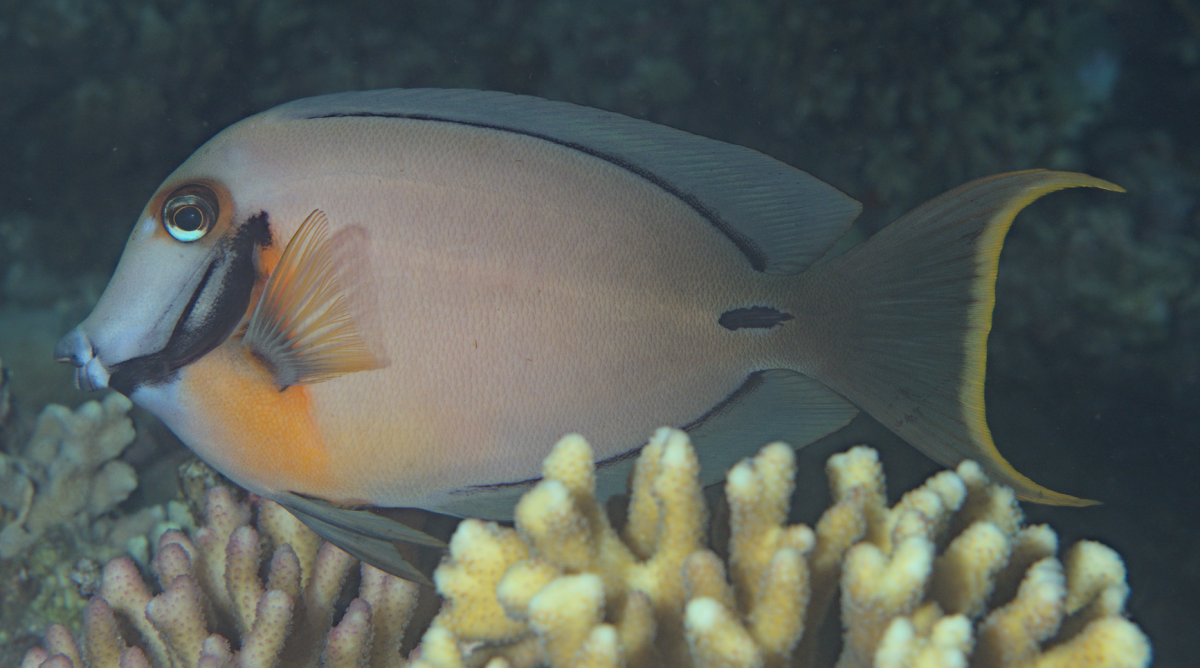
In terms of getting a good photo of a surgeon fish, one thing I learned from the above photos is the need to aim plenty of light at the fish in order to show their caudal lancet fin. Next time I have a chance to photo one, I intend to use two strobes set on medium high, adjust them and the ISO as needed.
My picture of the adult was at dusk when they get more pale and show the lancet better. I also find that some surgeonfish, especially the sailfin surgeonfish Zebrasoma velifer, spread there fins wide to give an impressive image that would be hard to get during the day hours.
For me the hardest part in getting images of surgeonfish and some other mid-size to larger fish is to get close. It also doesn't help that more often than not I have the macro lens on the camera.

Terms of Use Privacy Policy Guidelines We have placed cookies on your device to help make this website better. You can adjust your cookie settings, otherwise we'll assume you're okay to continue.

A worldwide community for underwater imaging.
