



Skip to content

Critter Identification / Archived topic

Lembeh nudi ?id

Started by Kraken de Mabini ·

  • 10Posts
  • 10Replies

Read-only discussion

Lembeh nudi ?id

10 posts
  1. And here is another nudi from Lembeh for ID.
    (The photo is good for ID, but otherwise not too interesting, as it is a flat-on profile. The focus was hampered by water particles.
    If I was taking it again, I would shoot down a bit from the front and side to pique the viewer's interest while still showing all the nudi. I say this as many nudi photos are head on, the body is fuzzy or poorly visible, and thus are not that interesting.  Your expert suggestions on how to take interesting nudi photos are most welcome.
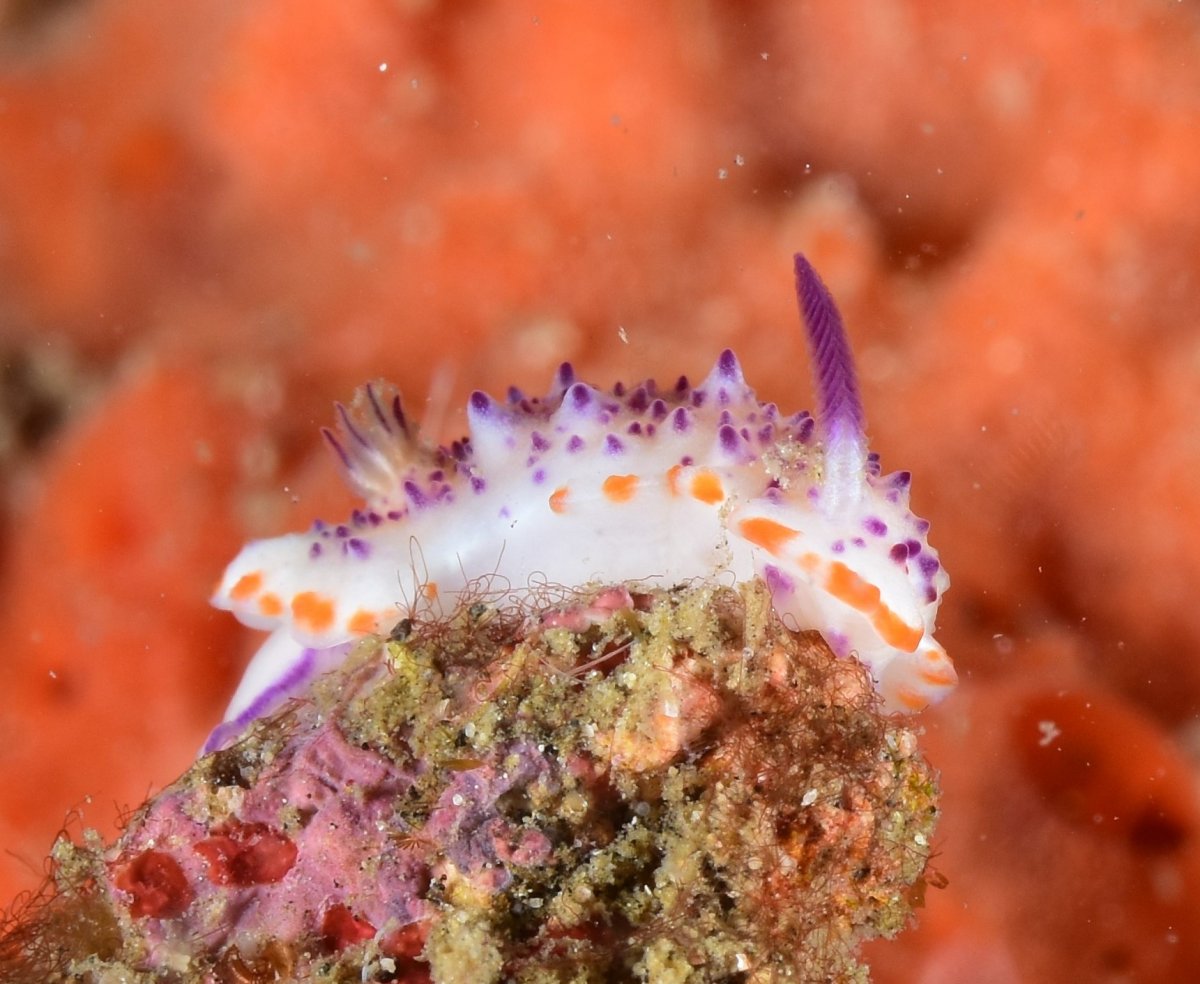


    DSC_1091 (3).JPG

    Edited by Kraken de Mabini
  2. I photographed this nudi in Anilao, the year before Covid struck, with a Nikkor 105mm and twin Inon Z240 strobes. Would the photo have been better if taken with a 60mm macro lens, and also, your thoughts on the Nudi's ID?


    _DSC3548.JPG

  3. I think they are now called Hypselodoris tryoni.

    Used to be known as Risbecia Tryoni or Tryon’s risbecia until DNA evidence that Risbecias are a clade within the Hypselodoris genus (but I am not an expert! [emoji3])

  4. You have the rhinophores and gills in focus, so not sure the difference a 60mm would have made as other settings and positioning could compensate for the differences between the lenses.

    I quite like single strobes as their shadows can help create a 3D feel. It also partly depends if your aim is for creature ID or for artistic expression. For example, singling out just the head and rhinophores might be an interesting shot for certain situations.

  5. Thanks for the suggestion of a single strobe, and its 3D effect from shadows. I will have to try it out on my next trip, which will be next month.  
    About the Hypselodoris tryoni diagnosis, you are right, Terry Gosliner et al, Neville Coleman and Wikipedia all agree with you. 

    About Nikkor lens differences, 105 vs 60 mm, to photo marine critters, my thought is that the 60 lens, while not giving as large an image, allows one to get closer, thereby reducing the amount of interference by particles in the water, but I have no objective evidence to substantiate it. What is the experience of other readers?


  6. 1 hour ago, Kraken de Mabini said:

    Thanks for the suggestion of a single strobe, and its 3D effect from shadows. I will have to try it out on my next trip, which will be next month.  
    About the Hypselodoris tryoni diagnosis, you are right, Terry Gosliner et al, Neville Coleman and Wikipedia all agree with you. 

    About Nikkor lens differences, 105 vs 60 mm, to photo marine critters, my thought is that the 60 lens, while not giving as large an image, allows one to get closer, thereby reducing the amount of interference by particles in the water, but I have no objective evidence to substantiate it. What is the experience of other readers?


    With the Nudi the same size in frame the depth of field is identical so no difference there.  What the 60mm has is a wider field of view so while the nudi is the same size you include more background in your image, this may have minimal impact or it may bring in a distracting object that is not included in the 105mm shot. 

    The other difference is of course working distance, which you have mentioned.  For a shot of a creature this size, it's likely no issue, but if you are shooting a really small nudi and want to get to life size, in theory you can, but the subject is only about 50mm from the port glass making approach and lighting difficult.  On the other hand if you come across a giant frogfish on the same dive you might be happy to have the 60mm lens on and wishing you had a wide angle.  So they both have their uses.  If you are going to Lembeh you can of course talk to your guides about the site and even try to plan a dive with wide angle to shoot giant frogfish and rhinopias.

    As for less water, it can only help but I think subject flexibility is probably more important.

  7. I'd like to add one point to Chris' excellent response for situations where you are dealing with shy critters/fish. In that case you don't always have the luxury to get to the minimum focus distance for either lens and, at whatever distance you can get, the 105mm will give you greater magnification and resolution than the 60mm lens.

  8. That would be a Mexichromis mariei. How about snooting it when there is so much backcatter?  


  9. Snooting is a good idea.

    A few more id's are welcome.  

  10. Guys, there are so many threads running for Nudibranc IDs. Davide has made the excellent suggestion of consolidating them. 

    I’ll sort this out in the next couple of days but could you use please in future this thread for Nudibranc IDs. Thanks

    View archived post in: Nudibranch identification


    Edited by TimG

Account

Navigation

Search

Search

Configure browser push notifications

Chrome (Android)
  1. Tap the lock icon next to the address bar.
  2. Tap Permissions → Notifications.
  3. Adjust your preference.
Chrome (Desktop)
  1. Click the padlock icon in the address bar.
  2. Select Site settings.
  3. Find Notifications and adjust your preference.

