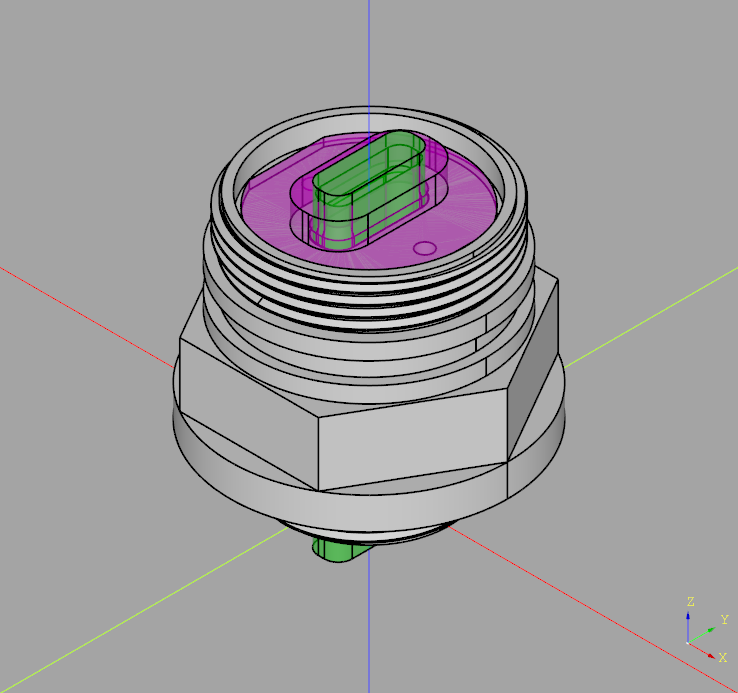
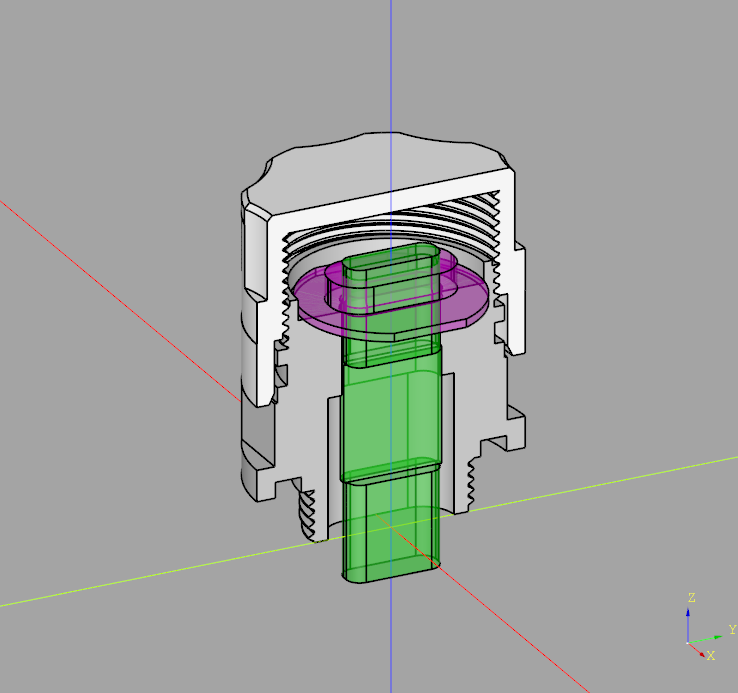
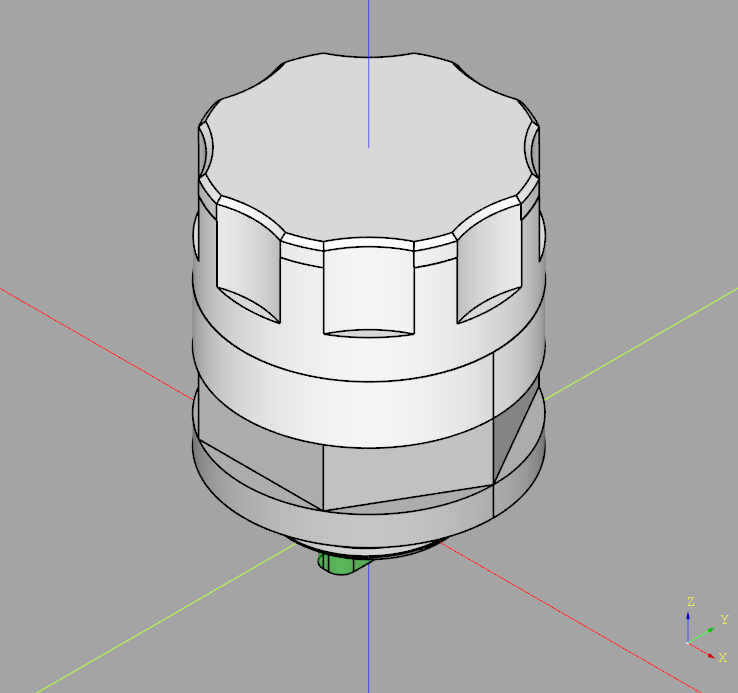
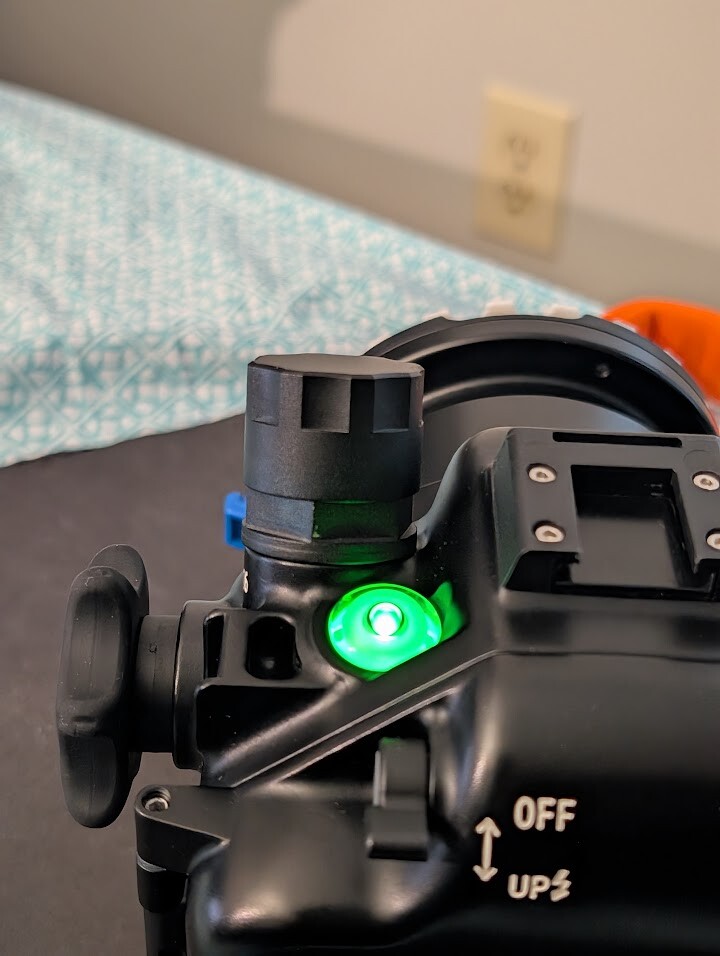
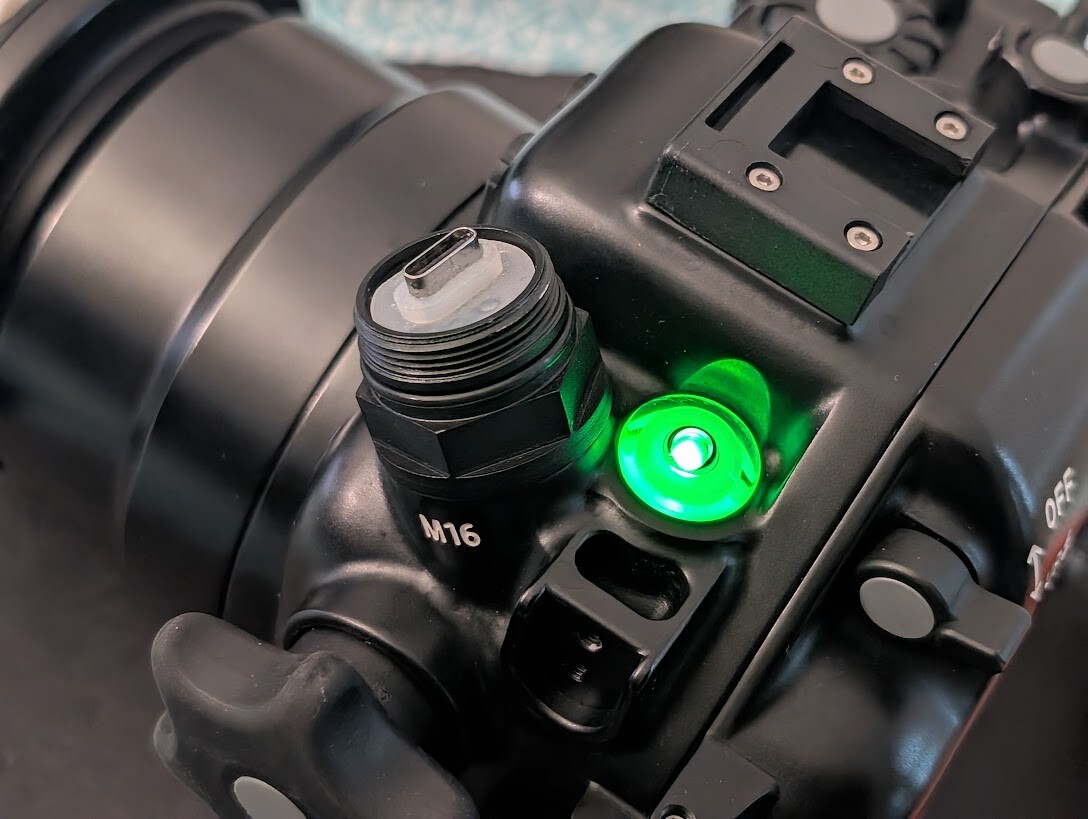
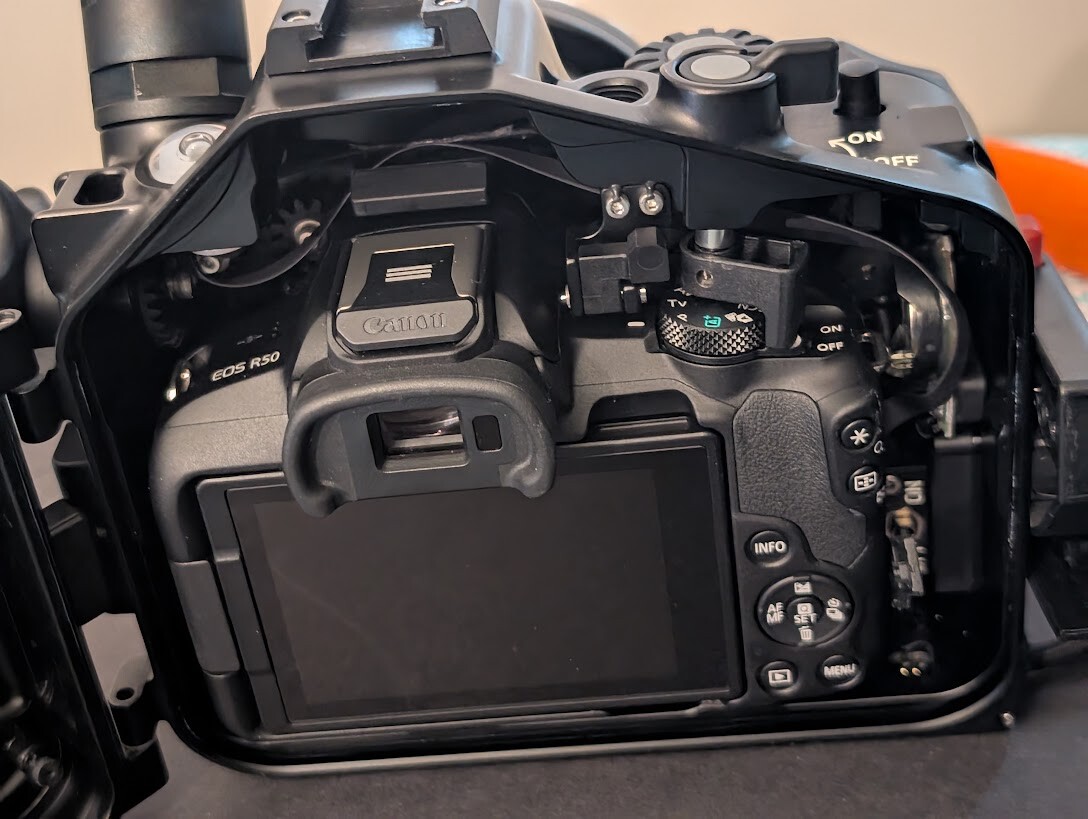
Hello folks - I wanted to share a project I've been working on - trying to design a combination vacuum valve and USB-C bulkhead to fit the M16 accessory port on my Nauticam NA-R50 Got my first prototype fabbed earlier this year and took it out for a spin on a week-long snorkeling with humpback whales tour in September, and it did exactly what I wanted. I closed up my housing and pulled a vacuum once on arrival, and for the rest of the week it held the vacuum - I could top off the battery during lunch on the boat and back up my files + recharge battery overnight all while the green light of good seal shined on. FWIW on a fresh CR2032 battery, the new generation of Nauticam vacuum / leak detection controllers will last for ~10 days of continuous operation, so I wasn't too worried about just letting it run 24x7 over the course of the trip. The valve and cap are CNC-milled out of anodized 6061 aluminum, the vacuum flap is made out of cast 15A silicone poured into a 3D-printed mold, and I used basic silicone o-rings for the base and cap seals. Few things I want to tweak and test on this design: How does this actually hold up under pressure? My trip was all surface snorkeling, but I have a pressure pot on the way and will see if I can simulate 30m depth from the comfort of my home When a vacuum is pulled the flap is quite secure, but when pumping out the vacuum if I went a bit fast I would sometimes fully dislodge the flap - need to find a better way of securing it The USB-C board in the center of the valve is rated for USB3.0 (and I tested it to confirm it worked), however inside the housing there was only room for a cheap ultra-thin USB2.0 cable. No issues with power, but got occasional disconnects on very large file transfers between the R50 and my laptop. This is odd because USB2.0 is slow and robust enough to run over a pair of wet strings despite what the specs require - but maybe I ignored one too many signal integrity rules? I used a slightly flexible epoxy designed to bond to both aluminum and fiberglass, but I'm not sure if it's flexible enough to maintain an airtight seal, or if it will crack/separate if the valve is subject to thermal cycles Happy to answer any questions and would love some feedback / advice on how to make this design better - especially from folks experienced with machining or underwater accessory design. Also happy to share design files, step files, engineering diagrams and BOM if anyone wants to make one of these for themselves!