



-
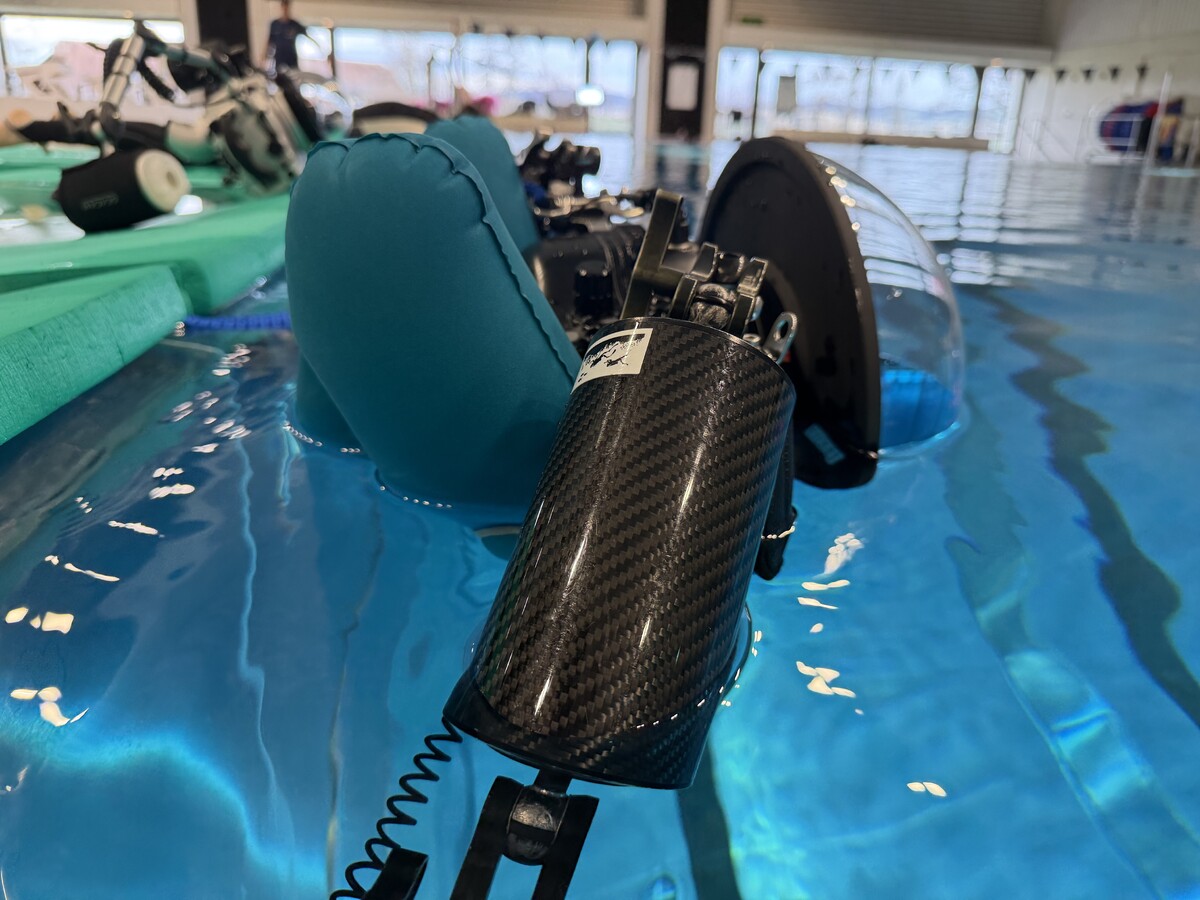
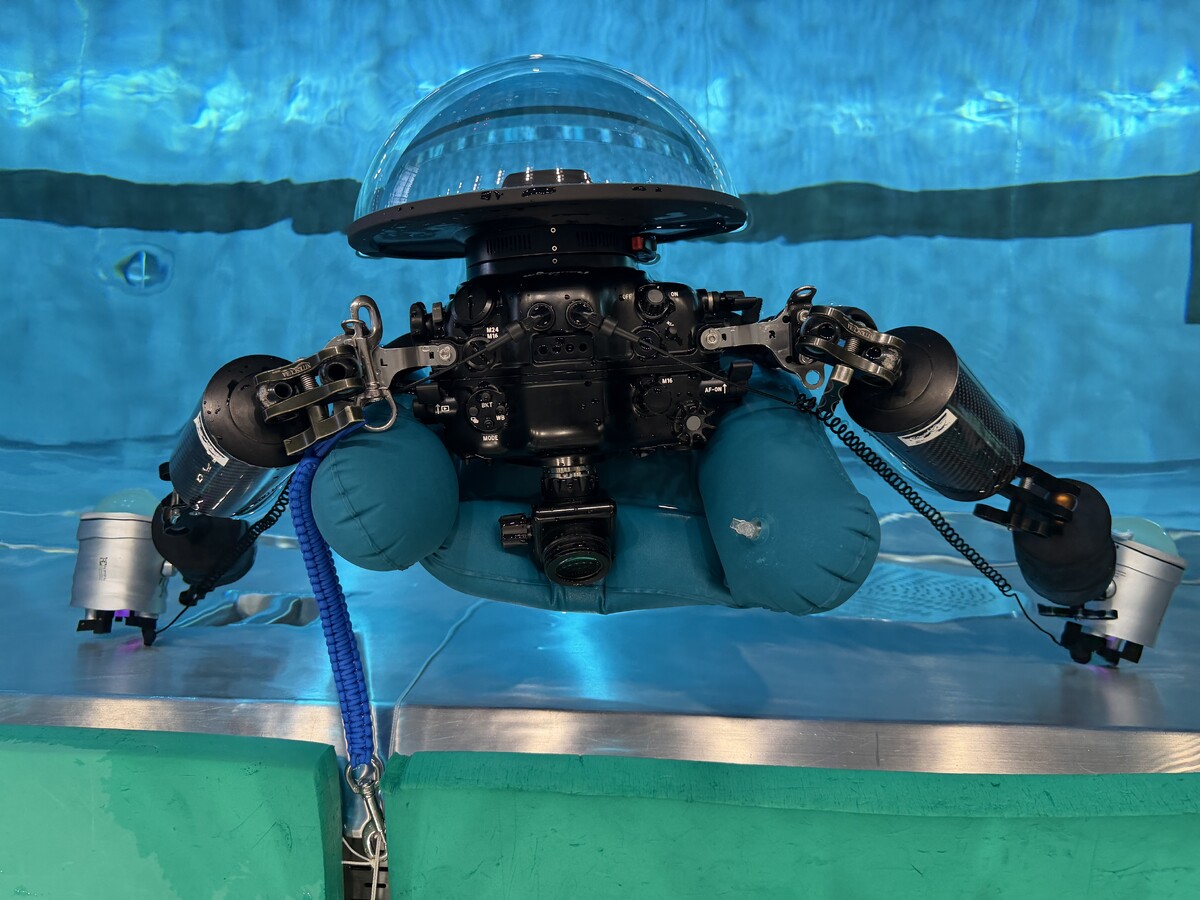
 Wanted to share something I recently tested out in the pool. I bought an inflatable travel pillow, hoping I could fix it below my housing. Still need to work on finding a better way to fix it (thinking of using Velcro tape instead some rubber bands) but the nice thing was that it stays pretty much level. It’s still a pain to see things when you’re swimming in the water so having some sort of support for yourself such as a body board, etc would definitely help I think.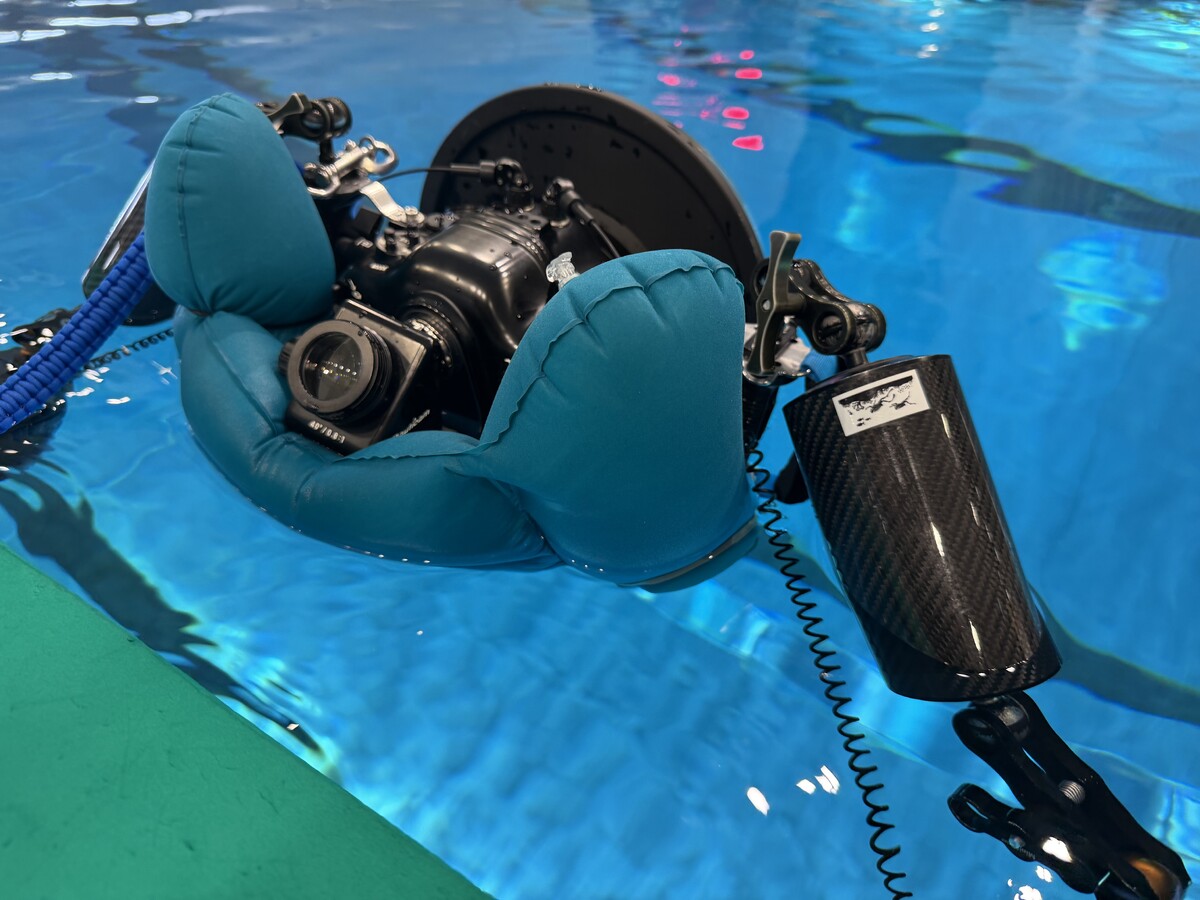
-
Sorry guys my question actually doesn’t make sense at all. Just comes to show I still have lots to learn… I somehow assumed that you could mount a dx lens on a full frame and use in fx mode which is either not possible or would vignette heavily. Ryan from Nauticam (really appreciated how quickly he replied which I didn’t expect, especially on a weekend) wrote back with this : There have been some cases where DX lenses will cover a bit more than the APS-C "DX" sensor size, but quite full frame, or will cover full frame over part of their zoom range, but I haven't been able to find any examples documenting this on 16-50 f/2.8. On Nikon full frame Z bodies: When you mount a DX lens on a Z5, Z6, Z7, Zf, etc., the camera automatically switches to DX crop mode and there's no way to override it Digital Photography Review. This makes it difficult to even capture a full-sensor image showing the image circle falloff, since Nikon locks you into the crop. Some users have worked around this with "dumb" adapters that break the electronic communication Photography Life, but I couldn't find anyone who did this specifically with the new 16-50mm f/2.8. Third party cameras can give us some clues about coverage beyond DX, because they don't force the switch to DX when mounted. I searched the RED user groups for some examples as well, but I couldn't find any. On RED V-Raptor: The V-Raptor with the VV (Vista Vision) sensor is larger than full frame, so a DX lens would show significant vignetting. The S35 version of the V-Raptor has coverage for Super 35mm lenses ProVideo Coalition, and Super 35 is roughly similar to APS-C/DX, so the 16-50mm f/2.8 should cover S35 mode cleanly. But I couldn't find anyone who has tested or posted images of this specific combo. What we know about the image circle behavior:Some DX lenses are known to cover more than their rated image circle, especially at longer focal lengths. The older Nikon 35mm f/1.8G DX, for example, nearly covers full frame. With zoom lenses, some DX zooms "zoom" the image circle as they get longer, covering more of the full frame area at the telephoto end Digital Photography Review. There's a good chance the 16-50mm f/2.8 would show heavy dark corners at 16mm on a full frame sensor but might be usable (with vignetting) at 50mm.
-
Sorry, my post is lacking a lot of information. I have a z8 and an FCP-1. The hope would be that it would sharper, and if sharper that one could use a smaller aperture and that the reach would be a little further. But agree that this is not a straight forward question to answer. I’m probably looking at this in a too simplistic way ;-)
-
Coming to you pros with a question (which I also sent to nautucam and will post their answer if and when I get it): I just found about this lens: Nikon NIKKOR Z DX 16-50mm f/2.8 VR It seems compact, sharp and low light and translating the aps-c to full frame would fit about the focal length of the likes of the FCP-1. It’s a little longer than the kit lens so would probably need some extension ring(s). What do you think about its use with water corrected optics? Sergio
-
Sorry haven’t t been here for a while, so responding late. I do know that Anilao photo academy has some free divers staying with them, but I don’t really know much how they cater to them. I guess they do their own thing in around there. Best to contact them directly. Rina is very nice and responsive and will give you further details.
-
Bought a nauticam flip adapter from @Byron . Was able to pick it up as I was on vacation in Iceland. Byron was super friendly and made it easy for me to pick it up. Highly recommended.
-
Could very well be the case. It was in a pool with lots of in artificial light and very likely some fluorescent light as well. Will keep an eye on things going forward and update as I find out more 😉
-
Thanks Chris. I meant to add/correct my statement as the typical rookie I am, this actually wasn’t the issue but the fact that my strobes weren’t synced with my camera and therefore also not with the remote strives which led to my photos to be very darks. Sorry for bringing something to this board that isn’t actually an issue. The color issue still was visible though when shooting in ambient light in a pool, but then it might just be the light that was present there and my auto white balance not doing a good job. The color casting was very visible when shooting against the light and not really with the light.
-
Hello waterpixlers, i’m participating on a workshop doing model shooting in a pool. The back of the pool was covered with white sheets. I now have a behavior I do not quite understand and am hoping someone here does 😉 Everyone else is shooting classic wide angle and rectilinear lenses and using 1/200, f11 iso 400 and the water column comes out nice and blue. When shooting the fcp I have to go down to 1/120, f8 and iso 1600 to get the picture half way properly exposed - it’s actually still a little dark. I also get a strong green tint. now, I assume the fcp must screw up my autom white balance, probably because of the color of the glass? I can easily correct that in post, but it seems that it also looses quite a bit of light which would be the reason I have to use those settings? Does anyone have more information? cheers sergio
-
I wanted to give my 2 cents to this topic as well;-) I think the very first photo where you point out the blurriness of the top left corner is due to motion blur. I have been watching a lot of videos of @Alex_Mustard and also subscribed to his online courses and he does enjoy taking shots panning the camera to instill motion in his images. Look at the background behind the school of fish and you see how it all "smears" away. So I think the background is blurry by choice. Also, from everything I heard @Alex_Mustard claim on his videos was not that the FCP would provide equal image quality to the WACP-1/2 but rather versatility in reach for a fisheye or fisheye-like lense. He compared the reach to the Tokina 10-17 which is still used a lot for APSC cameras but has less reach than the FCP-1. I think he also commented that the image quality of the FCP-1 should be equal to or maybe better than a fisheye including a teleconverter. And I suppose this is maybe what we ought to compare the FCP-1 with? It would be nice to have a better understanding of the reach of a fisheye with a teleconverter vs the FCP-1 and image quality at each focal length for the same aperture, iso, lighting etc.
-
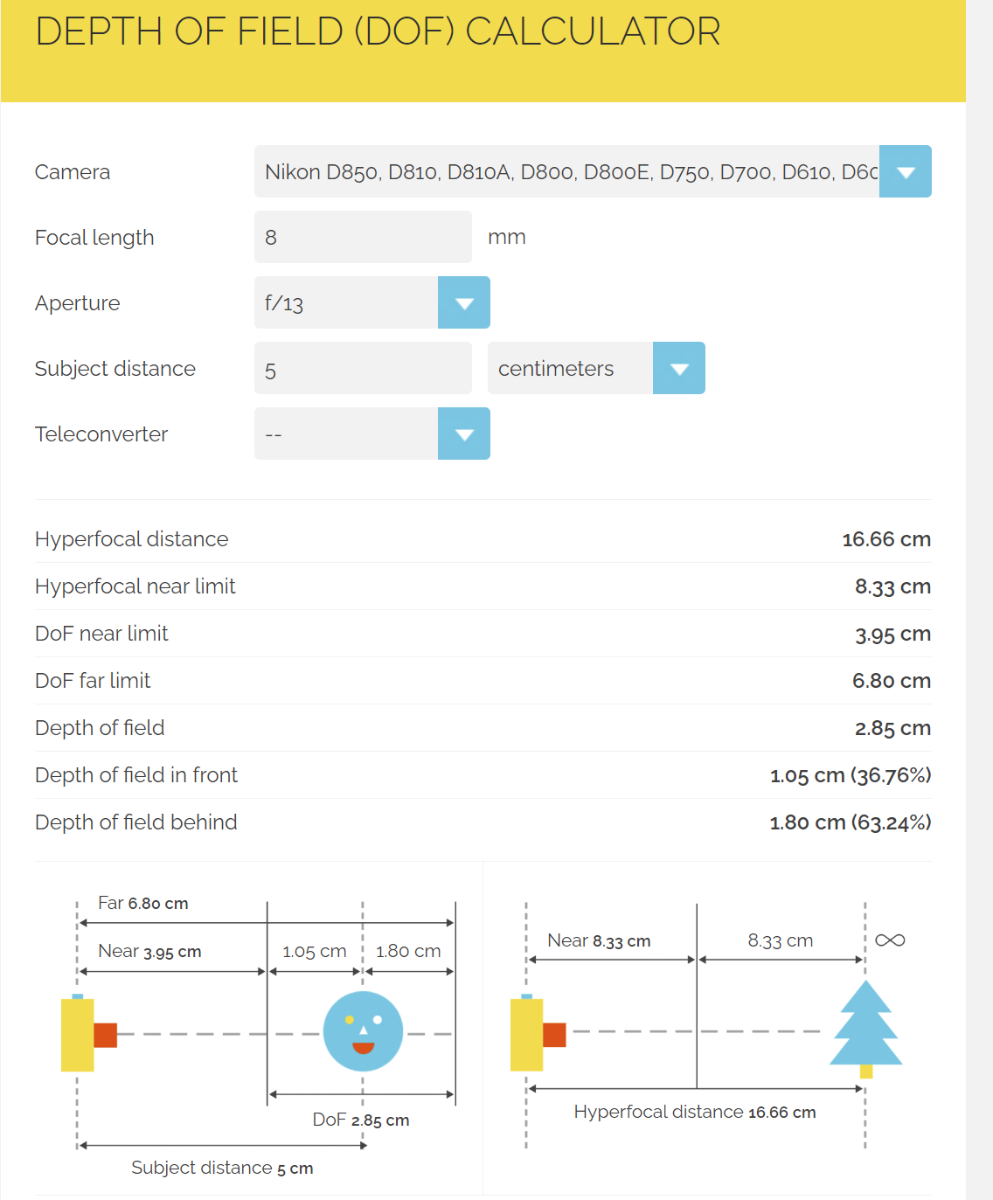
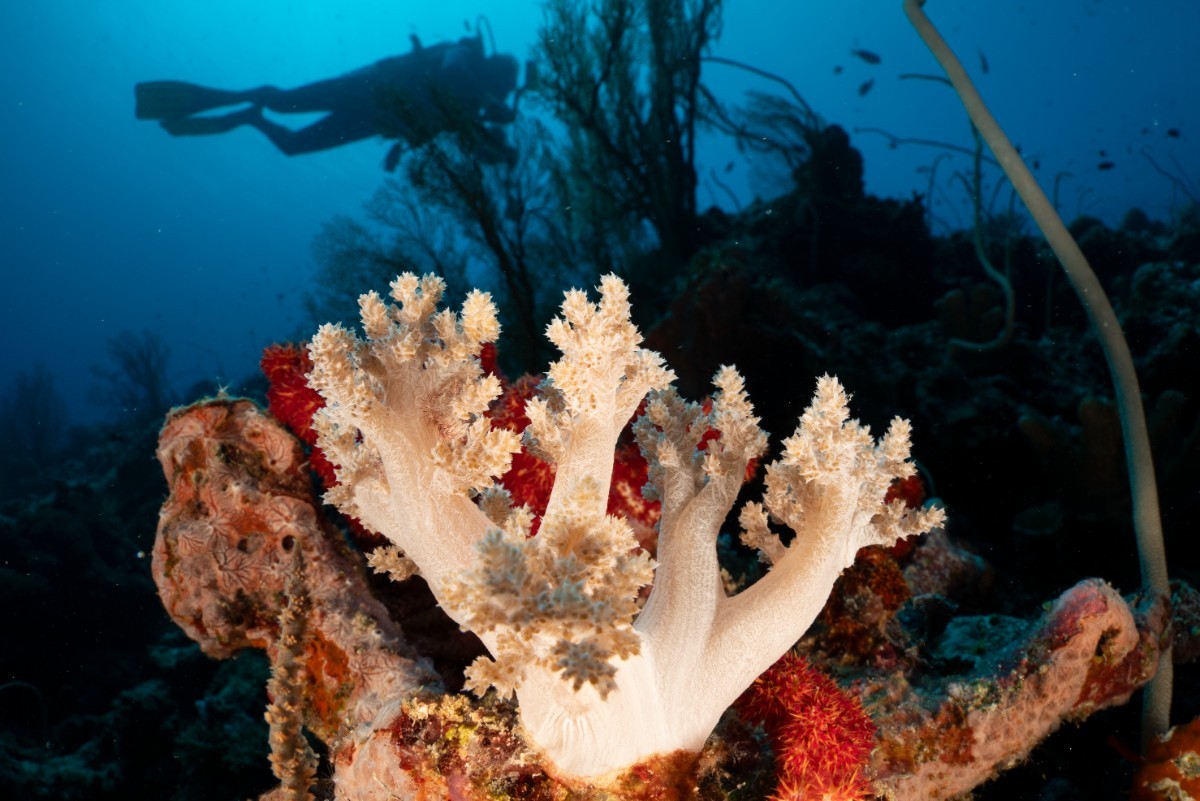
Sorry, I only respond now. This is a very interesting discussion; having all those varied viewpoints will certainly help make decisions to get one or not. Regarding the distance I took this shot: it was very close. It's probably about 5 cm distance and that little bit of soft coral which is sticking out is even closer. I am really not a photo pro, so I am probably saying something completely wrong here, but still will try to formulate my understanding here: From what I understand DOF depends of course on the focal length but also the camera sensor and the distance of the subject. I went to https://www.photopills.com/calculators/dof and plugged in some information, knowing that it's not all the correct but will probably give some indication of the DOF when being so close at the subject: So this would be a very shallow DOF of give or take 3cm. when adding a 2x Teleconverter DOF goes down to just about 1 cm: Now, I understand that fisheye lenses work a little bit differently from what I read and I couldn't really find any information about how to calculate DOF for a fisheye. So I am not sure that the rules above really apply to a fisheye but most images that I have seen which were CFWA typically have some blurriness in the background and would probably have it in the foreground as well if something were to stick out such as in that image I took. Hoping some of you who know about this stuff much better than me, can correct or support my understanding.

-
This shot was done at very close focus distance, so wouldn’t it be normal to expect a more shallow DOF? And again don’t rule out the incompetent photographer that took the shot 👀
-
Please don’t rule out the photographer who was at fault here. The z8 is completely new to me and I’m still struggling to get the right AF modes set which in this case was clearly the case. I’ve been trying a lot of different modes with this camera and some work better than others. So if things are blurry in the wrong places that’s me to who is to blame not the camera 🙈
-
Well, I just looked at those images when clicking on this website and somehow the server downsized them to 180KB from 8, resp 10MB. It seems as if this site is compressing uploaded images quite a bit. So, uploading both images in a zip file now. Sorry for all those messages. DSC_6319.zip
-
and here is the 2nd one, also cropped where the foreground is in focus while the background isn't



Important Information
Terms of Use Privacy Policy Guidelines We have placed cookies on your device to help make this website better. You can adjust your cookie settings, otherwise we'll assume you're okay to continue.