



Posts posted by Nemrod
-
-
-
Edited by Nemrod
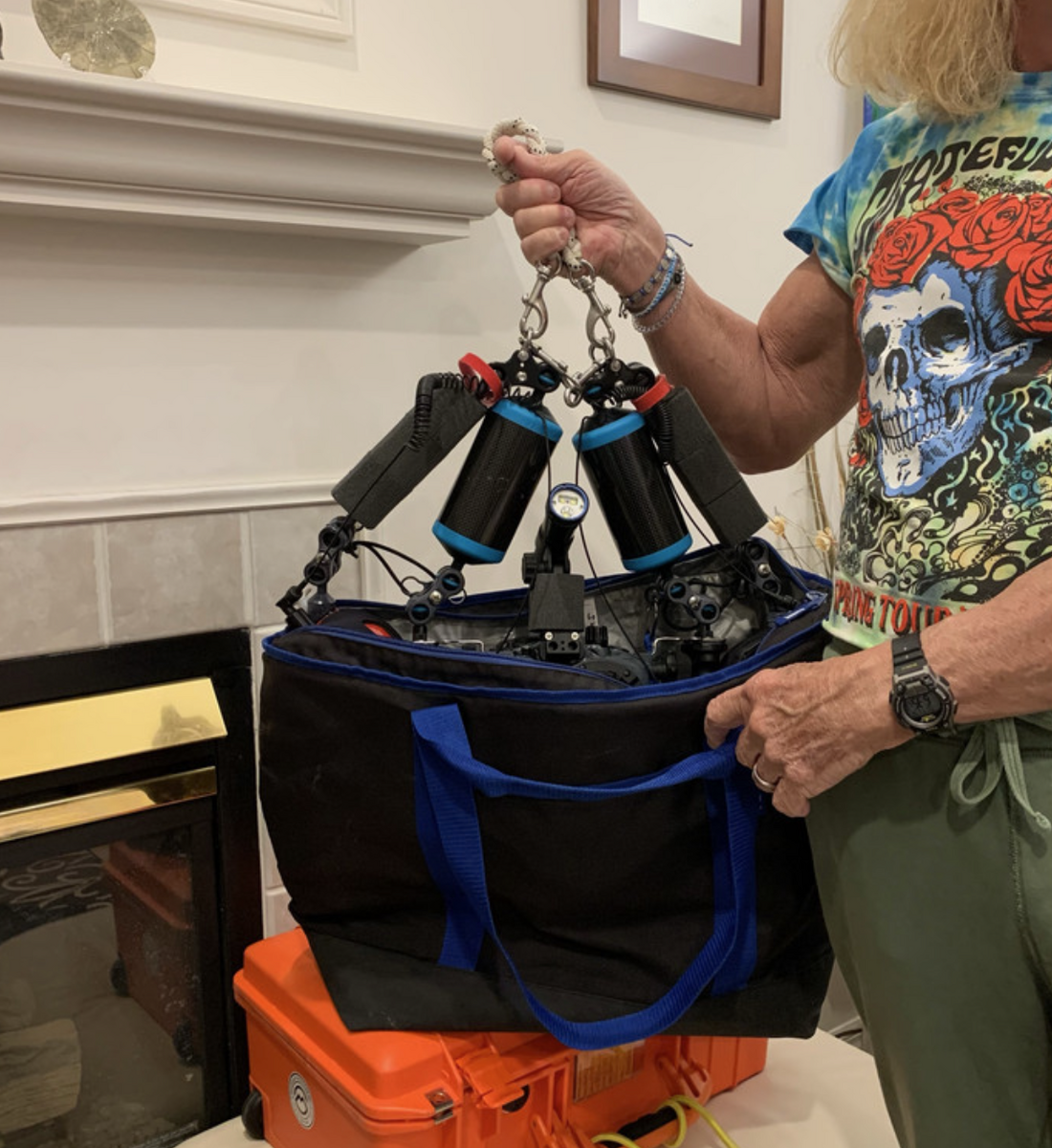
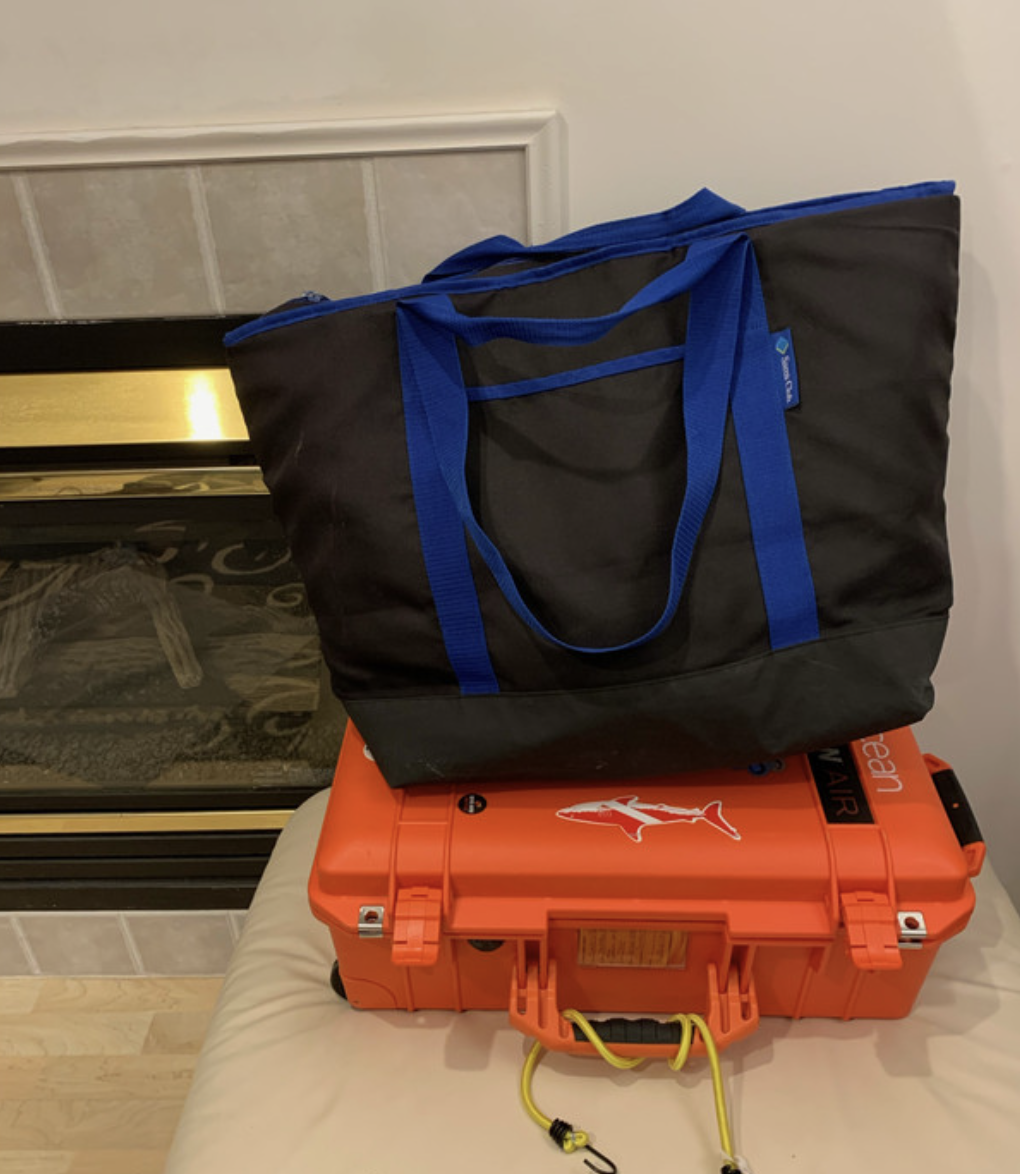
I have been using the Sam's Club bags, often well under $10. One of them lasted three years including a Red Sea Trip. I left it last trip in Roatan with left over new in package food items, soaps, shampoos my wife had bought and did not use that the room service lady wanted. Got another plus a spare. They will take my Sony NA6400 or my Canon NA-R50 and Inon S220 strobes rigged and zipped and will hold water for a rinse if needed. They are light, fold flat and are inexpensive enough, that they can be just left if need be.
-
 1
1
-
-
23 hours ago, Dave_Hicks said: Please tell us all about the crystal balls on your camera! Do they create prismatic lighting? Fish attractors? Or just Bedazzling the camera? 😍
It produces a disco effect, a new technique I have developed. I am sure Alex and Matt on the UWPS will soon copy it. But I did it first!
Really, I always set my system up (on the dining room table) before a trip and run it through it's paces. I know that most people wait until they are on the other side of the planet on the RIB heading to the once in a lifetime dive site to test their equipment! Maybe I am a little over kill but my stuff usually works, ha! My wife tolerates me, she is used to my oddities.
-
 1
1
-
-
On 2/24/2026 at 6:25 AM, Chris Ross said: Further to this topic I recently purchased a mini blower to blow the housing dry, seems to work pretty well. I'm posting a mini review.
I have been using a mini electric blower for some time now. I use it at the end of the dive day after a good rinse to blow the water out of the controls and surfaces. Not as forceful as using compressed air but very effective at removing water especially behind buttons and lens surfaces.
I think I am going to purchase a small corded electric blower to replace the rechargeable blower to reduce my "battery" count as I want to carry such things in checked luggage.
-
-
The Canon R50 does not need the preflash cancel as most (all) Canon cameras, unlike most Sony cameras, does have the ability to set no preflash. Sony is most aggravating in that regard. That is really an important feature for surface photogs as well who like to do studio work. It is just aggravating all get out :<.
The Canon R50/R100 work just fine with the excellent Marelux Apollo S strobes in both TTL and manual strobe settings.
-
Edited by Nemrod
2 hours ago, Yorkie88 said: Would the Backscatter "learning mode" be an option to get around the pre flash not being able to be turned off?
I haven't done any research on the Marelux strobes but perhaps they have something similar - if not then I guess that would rule them out for all of the Sony cameras with pop up flashes, which could be an extra opportunity for more sales.
I did not say that the Backscatter strobes do not have preflash cancel, I said that they do not have a standard, universal sTTL mode (I accept my wording might have not been clear, my apology for that). The Backscatter strobes can only do TTL using their trigger for Sony. And not at all currently with Canon. The Backscatter strobes, using the learning mode can operate in Manual mode with Sony cameras that always fire a preflash like the A6XXX series cameras.
The Marelux TTL mode works fine with either pop up and the UWT trigger for both Sony and Canon but will not work in Manual strobe mode with Sony using the pop up flash. The Marelux will work with the UWT trigger in Manual mode with the trigger selcted to (0) which is forced manual strobes, the trigger ignores the preflash. This is because the Marelux Apollo does not have preflash cancel and would otherwise fire on the preflash.
I have used the excellent Marelux Apollo S strobes and was very impressed with their quality and performance but they are crippled with my preferred camera, Sony A6400, because they cannot run manual strobe mode with the pop up. And as I said, having used the UWT triggers (plural) they work but not 100%. I like the UWT triggers for macro and general CFWA/WA but anything that is moving and gives only one chance at a shot (turtles, sharks dynamic scenes) I have found their less than 100% sync (in all modes) not acceptable.
-
1
-
-
Edited by Nemrod
7 hours ago, Phil Rudin said: First let me say congratulations on the new strobes and to the newish owner of Sea & Sea who I have known for over twenty years.
Above you have stated that you discovered "limitations" with Marelux Apollo S strobes but did not articulate what those limitations are. If you are talking about specs. as opposed to cost/availability in your area I would be interested to know what specs you may take issue with. I would submit that regarding specs. the new $549.00 Apollo Y has specs equal to or better than YS-D3. Could you help me understand what is lacking in the Apollo line of strobes.
The OP has a Sony A6400 in a Sea Frogs housing. I think he is syncing using the pop up flash. The Sony A6XXX cameras always fire a preflash and the Marelux strobe does not have a preflash cancel. Not a problem shooting TTL but if wanting to run the strobes in manual mode the Marelux fire on the preflash.
My NA-6400 is equipped with a UWT trigger board so I have a workaround. But using the pop up, which I actually prefer, manual strobes were not possible. I have found trigger boards to be expensive and less than 100% reliable. When I know I am going to be shooting something that will not sit still and pose for me, I prefer the pop up, it is rock solid, 100%, all the time, every time. The UWT trigger, well, it is not.
Otherwise the Marelux were superb strobes. And then along comes Backscatter and leaves out the standard mimic TTL! Preflash cancel for manual strobes and universal mimic TTL are two things that are really not optional inclusions.
-
1
-
-
I am counting underwear and toothbrushes vs floss and this guy is packed for an amphibious landing for ten!
-
2
-
-
Edited by Nemrod
19 minutes ago, Chris Ross said: Depends on where you are flying from and which airline, many budget airlines weigh baggage, it's a revenue stream for them to force you to check the bag. In my experience in the US on domestic flights it's a free for all and you need to be in an early boarding group to get overhead locker space, if you then transfer to an international flight you are usually home free. Basically you need to research rules and book accordingly. Of course if you can afford business class most airlines leave you alone.
The Maldives was mentioned so I was not including (US) domestic airlines for a trip to the Maldives or similar. To which I am headed hopefully later this year. Emirates out of Dallas is telling me 7Kg and no other items for economy. I hate spending money even if I was Elon for riding on an airplane for a few hours.
-
Many airlines have a 15 pounds (7kg) weight limit and some airlines, at least for economy, only allow a single item to be carried on (no personal backpack item and a carry on, one thing!).
So my question, how are you carrying these huge, loaded backpacks aboard? I guess you are upgrading tickets to allow a carry on and still, there are weight limits are there not?
-
Edited by Nemrod
I will buy these, would you consider $2,000? Regardless, I am dibbing them please. I would like to purchase them given that Retra will support me if there are issues as per their post in this thread.
Due to the passing of my mother yesterday, I am out of town dealing with that. So I cannot hang here on line. I can check back and I can do PayPal or Zelle.
And, yes, I will purchase the extended coverage. I have a triop coming up both in April and another for certain to the Madives and do need better strobes than my current S220 set for wide angle and big critters.
Thanks,
James
-
Regardless, I will take watt seconds over GN. At least I know how much energy is being dumped, the efficiency of the flash tube and reflector/lens design aside. The strobe test that is a sticky in this forum is one of the better if not best attempts at displaying relative power/brightness.
-
2
-
-
GNs are really not all that useful except possible computing exposures in a studio. GN is a function of beam angle and distance. Watt second is a more useful measure when given.
A strobe with a beam angle of 80 degrees and a GN of 32 might be similar watt seconds as a strobe with a GN of 22 and a 120 degree beam angle. And then there is the evenness, for lack of a better word, of the beam. Many strobe are really hot in the middle with a lot of fall off but they have a high GN because it was taken in the hot spot.
-
Do any strobe manufactures have good service? The only saving grace for Inon has been they are pretty rock solid. Inon has absolutely zero support in North America. It keeps getting said, YAFS, and yet, there are really darn few strobes and some of what there are come from the same place with just rebranding and different features mix.
-
-
1
-
-
On 1/10/2026 at 9:36 AM, Gmsalterego said: Hi, I've almost the same rig ;-) 2 video lights weefine solar flare 7000.
I bought the trigger on AliExpress and I believe its usefuf with dry gloves in cold water
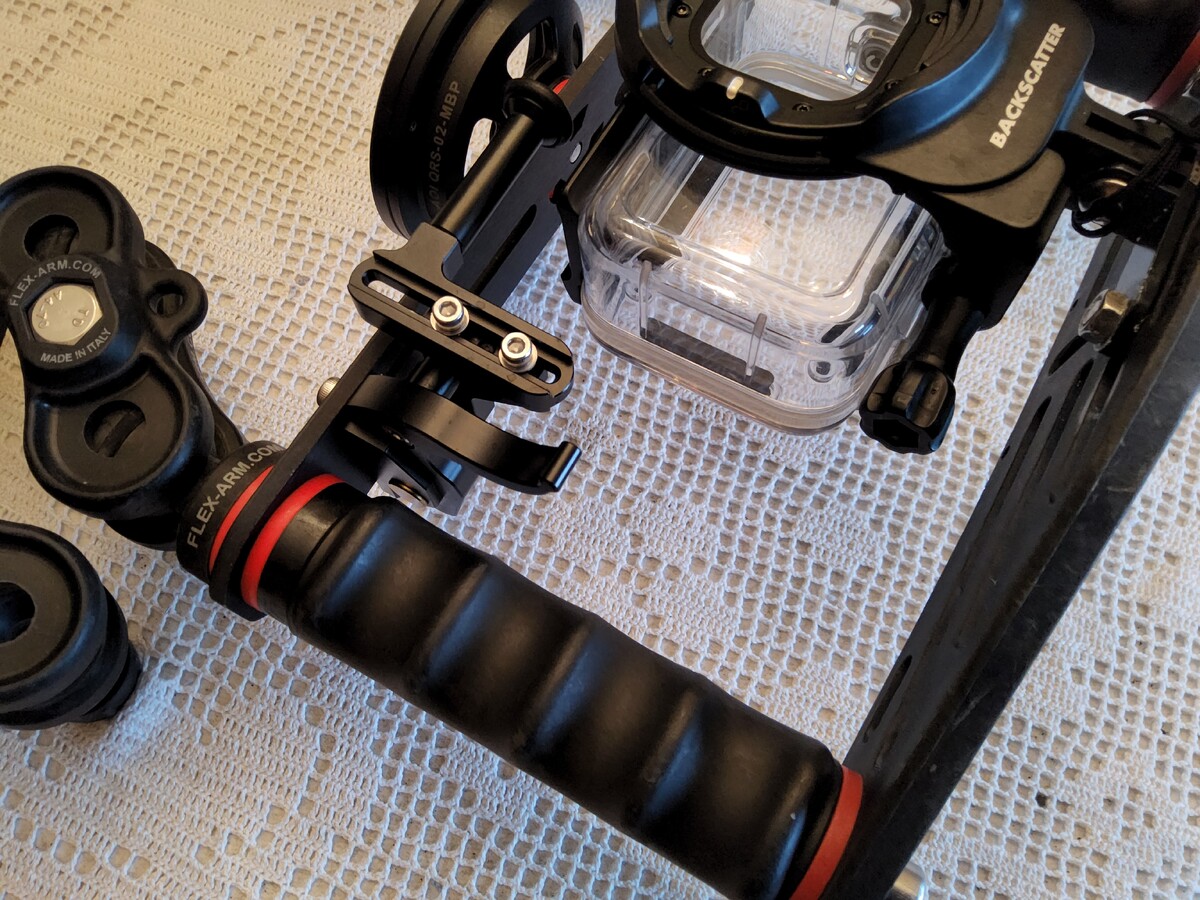
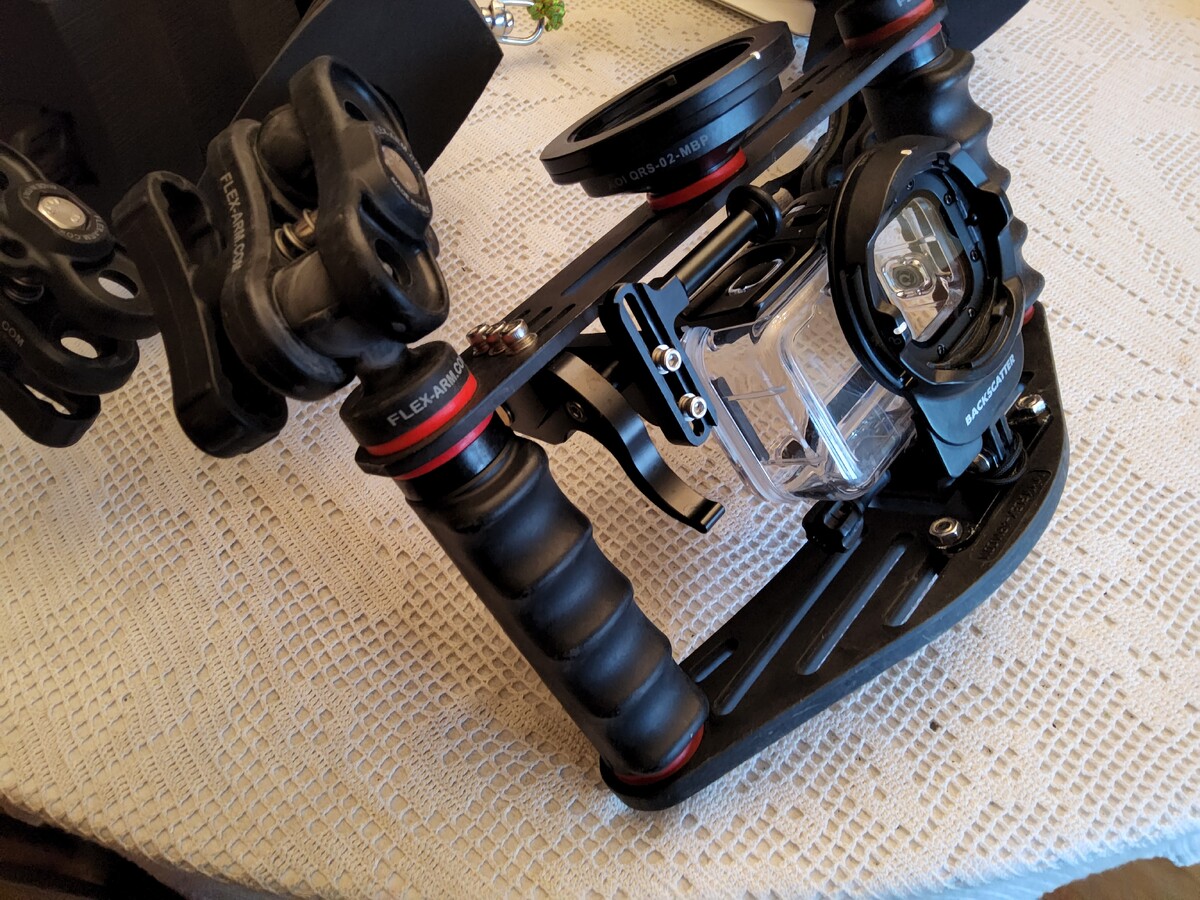
Curious, what upper cross piece is that?
-
1
-
-
Edited by Nemrod
16 minutes ago, tailwind_marseille said: Mmm, thanks for the remark. Indeed, I've been more focused on whether TTL is possible with a particular combo, but always thinking that in the end, there's always Manual. But, what you're saying is, not even that... Would the Sea&Sea YS-D3 be able to "cancel the pre-flash" ? Does this mean is won't take the pre-flash into account ? As in, some sort of "training" or setup, has to be done prior to shooting ?
I'll look better into the AOI flash that comes already with the housing... but I guess it would do just what the camera tells is to do ?Yes, Inon, YS strobes can be set for preflash or no preflash for manual strobe operation. As well, both can run a standard slave mode TTL. TTL requires a preflash in order to function. Sony cameras, those we are discussing, cannot cancel preflash (like Canon, Oly, Nikon can) and thus you must have one of these things to run manual strobes:
A strobe like YS, Inon, Backscatter that has a preflash, no preflash selector mode for manual operation
A trigger board that can ignore the preflash and properly sync (UWT)
Something other than a darn Sony that can be set to not have a preflash
Most if not nearly all with a few exceptions run manual strobes using TTL for special or niche uses. I claim no expertise as a photographer and I find TTL occasionally useful but hardly a Godsend. In fact, it can be rather annoying as it tends to give a very generic result and I spend more time trying to adjust the TTL bias to get the result I see in my head than if I were to just run in manual (and probably still not get what I think I want).
-
1
-
1
-
3 minutes ago, tailwind_marseille said: Yes, expensive indeed! But, I'm comparing "within" the hobby world: 800-1000 euros for a flash is a little crazy in the non-UW photo world (not talking about pro usage), but then a 500 euros trigger (not even a flash...) seems bonkers. I know, I know, this is what it is, and we have to live with it.
The A7C II would not be meant just for UW. It's for use both UW and outside of it. If, most things considered, the A7C II is comparable to the A6400 underwater (with all their limitations, including 1/160th sync speed for both), I would favour the A7C II as I will also use it extensively topside (likely even more than UW). On another hand, if the A7C II becomes a PITA :) for UW, then I'm not so sure it's a good idea the compromise. One big issue is, as we discuss, the lack of built-in flash. And you're right about the AOI housing, it comes already with a tiny flash trigger. It's probably the best way to go, if I end up getting a A7C II.LOL, one last thing, to repeat, the Sony cameras we are discussing cannot cancel preflash for manual strobe operation. You either have to use a trigger board like the UWT or perhaps the AOI built in (?) or you have to have a strobe that can cancel preflash like the Inon, YS, Backscatter etc. for manual strobe support.
-
Edited by Nemrod
3 minutes ago, Lewis88 said: Ah this is good to know. The way their site is written, it seems like TTL requires a trigger.
Shame about manual mode not working properly though. Would make them a no-go for me.
To be clear, the Marelux Apollo, unlike Inon and YS and Backscatter, does not have a preflash cancel selection. You can run them in manual (and sTTL) with a Sony camera with a trigger board. Without a trigger board and using a pop up flash the Apollo S strobes trigger on the preflash.
And Backscatter is the opposite, there is no slave TTL mode or any TTL capability without their special trigger! They require a proprietary trigger board $$$$$. But they do have preflash cancel so manual operation is a cinch! using my UWT trigger or the pop up flash. Just no slave TTL without a trigger board. Which if I may say, sucks.
-
Edited by Nemrod
5 hours ago, tailwind_marseille said: The problem with the A7C II (vs the A6400) becomes the triggering of the strobes: I can only find TTL hot shoe triggers in the ball park of 500 euros, and this seems crazy to me... With the A6400 (which is considerably cheaper) there is a built-in flash, but the A7C II needs a trigger, and I find exaggerated the cost of something like this. Are there any alternatives ?
I would use two YS-D3 strobes with the A7C II, but I can't really wrap my mind around spending an amount similar to a strobe just for a pair hot-shoe LEDs ... I know this is niche, and things are not mass produced, but still ... seems ridiculous - but maybe I'm missing something, and we're talking about crazy complicated tech ?
Strobe triggers are expensive, this is an expensive "hobby" and that is what they cost. And IMO, strobe trigger boards are not reliable but others have had different experiences than me with them.
I think AOI has some built in triggers in their housings.
Just me perhaps, but I would not purchase that Sony A7 for UW photography with strobes. It has a slow 1/160 shutter speed and no ability to (without a trigger board$$$$) cancel the preflash. You will not be able to shoot manual strobes without a trigger board. The 1/160 slow shutter sync is a handicap, not a huge one and I have been able to deal with it. Where I come up against this limitation with Sony A series cameras is WA into the sun, sun balls and CFWA with bright backgrounds and also high ambient light.
My Sony A6400, using the UWT trigger board can eek out 1/200 but it is kind of a PITA to set up. IMO, I will never purchase an UW camera rig that cannot do 1/250 strobe sync snd which cannot cancel preflash for manual strobes.
Not to overly confuse you but strobes such as Inon, YS, that have a pre-flash cancel can run from the Sony pop up for manual strobe operation because they have a selector mode to ignore the preflash. The Marelux Apollo strobes do not, at least the set I used did not.
-
1
-
-
Edited by Nemrod
1 hour ago, Lewis88 said: Another consideration is that from Marelux's info, you can only do TTL with a compatible trigger. Whereas Sea & Sea will do TTL from the built in flash.
I do not believe this to be true. I used a set of Marelux Apollo S strobes for two weeks on both my Sony A6400 and my Canon R50. Both in Nauticam. My Sony has a UW Technics trigger and the pop up flash. I ran the Marelux strobes from both the UWT trigger and from the pop up flash in TTL. I also ran the strobes in TTL from the R50 using the pop up flash. Unless something has changed the Marelux strobes have a standard slave TTL mode. What the Marelux strobes do not have is a pre-flash cancel so I cannot run them in manual from the pop up with the Sony A6400 (I can using the UWT trigger) because the Sony cameras always have a preflash. The Canon can turn the pre-flash off for manual operation of the Marelux strobes.
-
1
-
-
Edited by Nemrod
The Marelux strobes worked just fine and dandy with my Sony A6400 Nauticam both using the pop up flash as trigger and a (LED) UWT trigger. And in both configurations the TTL worked well as did manual. They are a very solid and strong shooting strobe with high build quality being all metal, also perhaps a little on the heavier side though nothing unusual for the power output.
The Backscatter strobes will not work for TTL because they have no slave TTL without buying their special Backscatter trigger and even then I am doubtful. Manual modes should work but there is no slave TTL mode. Otherwise, aside, they look like a good strobe.
The YS strobes should work in both TTL (slave mode) and manual modes.
-
1
-
-
Edited by Nemrod
18 hours ago, Cromagnon said: One data point doesn't make a trend but it is a start. Hopefully there will be more positive ones to follow and maybe this will spread too.
Been to Cozumel many times and never paid a tax including twice last year. However, there is a report now on Scubaboard of two persons paying upwards of $500. Per this (sketchy) report one had two systems and the other had a nauticam, a GoPro and a camera with a phone!.
Here is the thing, I have been asked how many cameras I have and my answer is an honest one camera. If I start going on about a GoPro, a phone and whatnot who knows what the result might be. Also, I have not gotten the "red button" in any more recent trips. Another unknown.
-
2
-

How to clean Nauticam flat port glass?
in Tutorials, How-Tos, DIY
I see the same on my housings. I was told it is the coating. I was also told to ignore it. YRMV.