Everything posted by Adventurer
-
A small reminder ( from the thread opening above ) : I am using Canon R6 Mark II in a Marelux housing in the above pictures. I have also worked myself through the Naughtycam portchart as a co-reference to try avoiding false-measurements and practical errors in application of the math. I conclude that in some cases I agree with 121 that the Naughtycam Portchart is also not free from false recommendations. Thanks Phil for your very informative answer and insights. I would like to add that this is a custom made BK7 glas dome for which I have the exact data. Therefore Marelux users: please do not derive any conclusions from my 30mm / 35mm extension. I was more interested in giving this simple do-it-yourself-setup to the public. The water tank and chessboard cost less than 20 EUR, I think. It is a cost effective way to practically verify your own math about the correct extension ring and gives you directions to go a few mm shorter or longer with the port extension. If you don't have a swimming pool and great weather like in Florida living @Phil Rudin at hand, it's worth a go, before hopping into the water. I encourage also Nauticam, Seacam, Isotta and SUBAL users to verify their dome positions. You might be surprised. As pointed out you have to be prudent about the 90deg optical axis chessboard alignment. In my first test (pictures above) the housing was also not perfectly levelled so occasionally you will produce a little bit of snells window. This will tell you to do better on the levelling.
-
Sorry @ChrisH but I have to ask: where you ever diagnosed protanopia ? If not, I probably need to see the doctor because, I clearly see RED in @Interceptor121 Bohar snapper shot. Am I the only person seeing the red there?
-
Made my day 🤣 🤣 💙 💙 Very good remark - so many opinions here fighting for dominance. Time to rest my case. Just mentioning that backscatter released also cooling filters with their new hybrid strobe and have a nice demo on YT.
-
👏 policeman Massimo at work 🦾 It's noteworthy. Good point and true. ✅ However (as always) there are some exceptions to thumb rules. Here is a really odd one: You might have seen pictures with little or no backscatter when the photographer was shooting with the strobes completely outwards. Meaning he casted the light totally to his left and right and nothing on the wide angle subject. In very bad visibility this actually works. It will produce a light cloud left and right from your camera and can be very much compared when pointing your strobe indoors towards the wall or ceiling. The light will bounce and softly hit the subject. Unintended versions of these "light clouds" can be observed with optical slave triggered strobes using no cables in your dive group. Recently this has become rare, but when S-2000 wireless connection kit was new, you had a high chance to get a few "wasted" shots were the effect was observable.
-
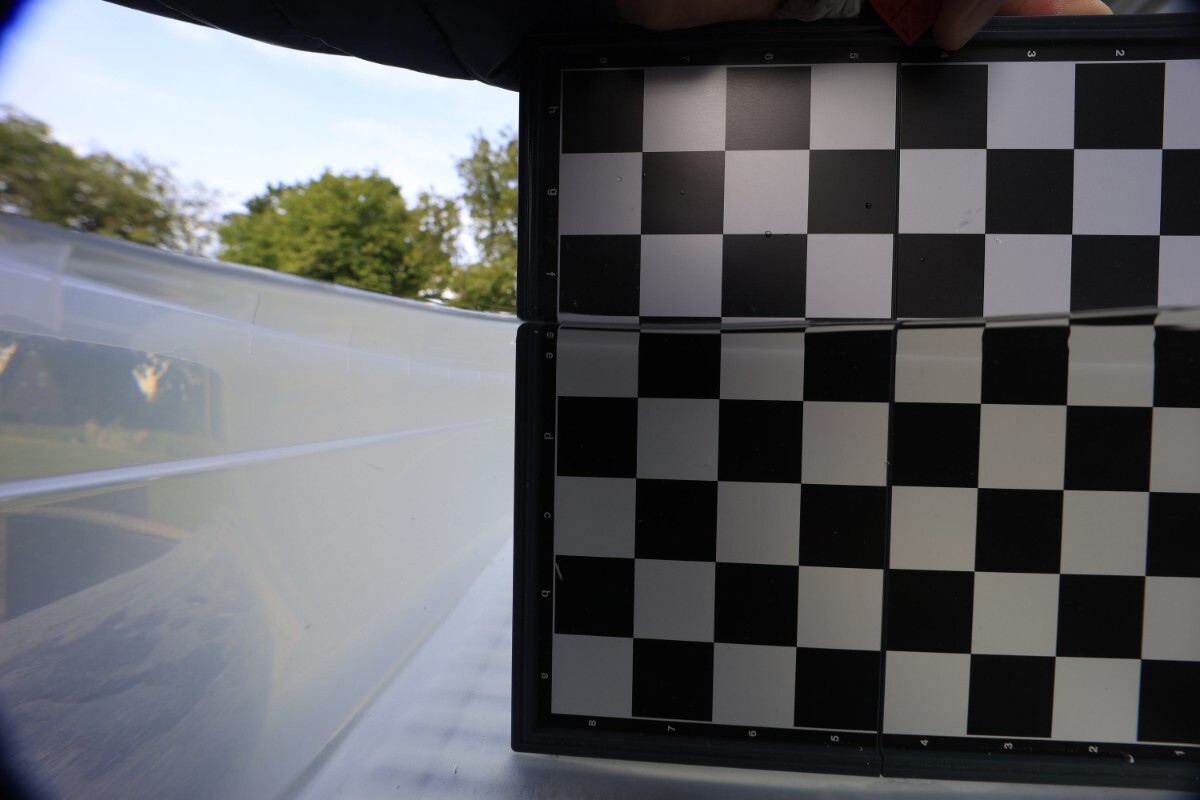
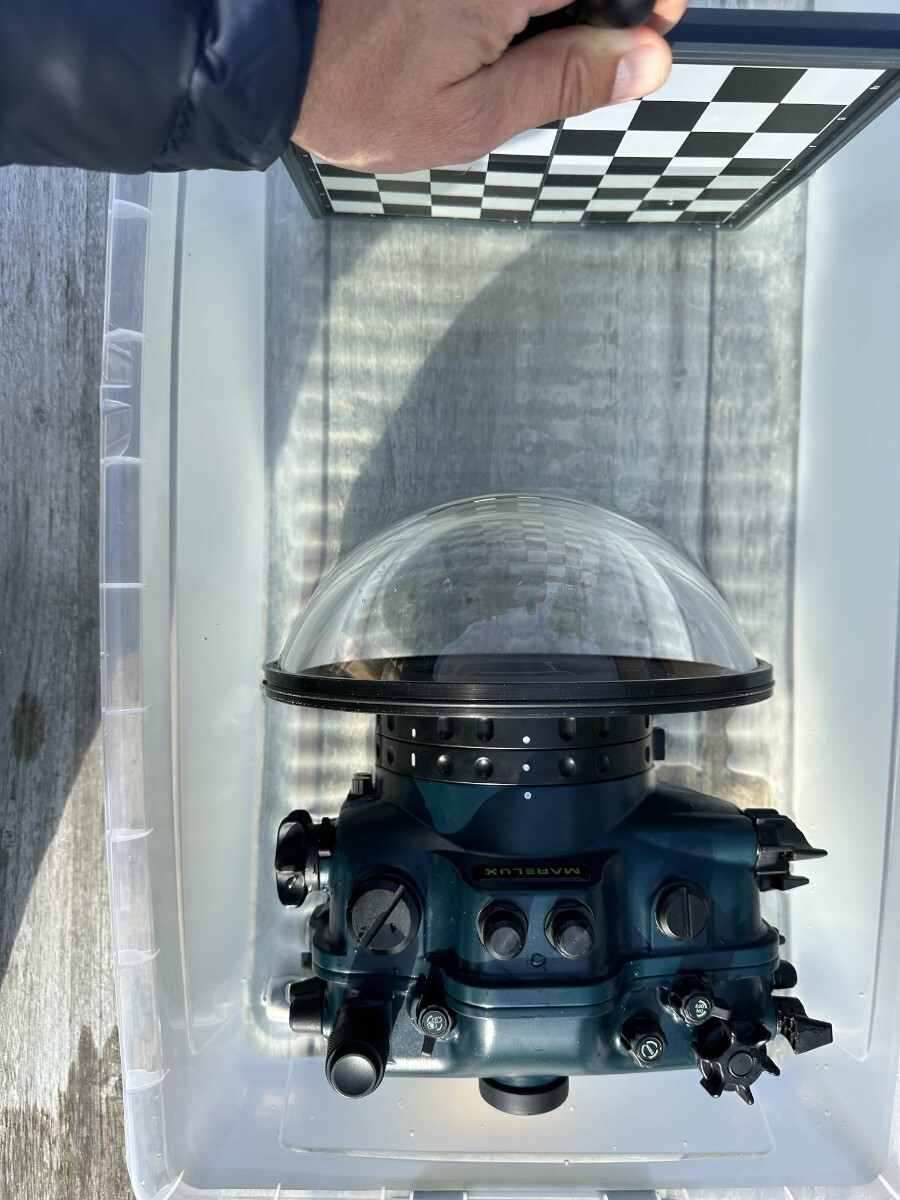
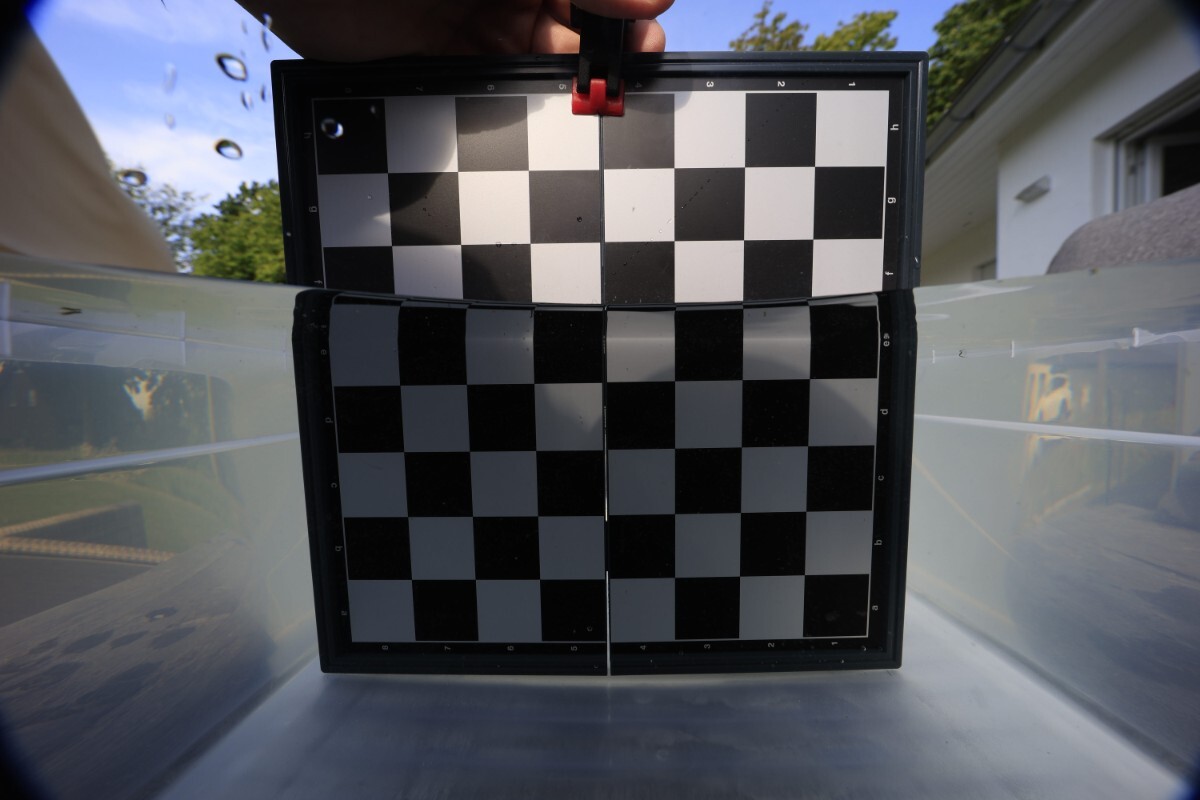
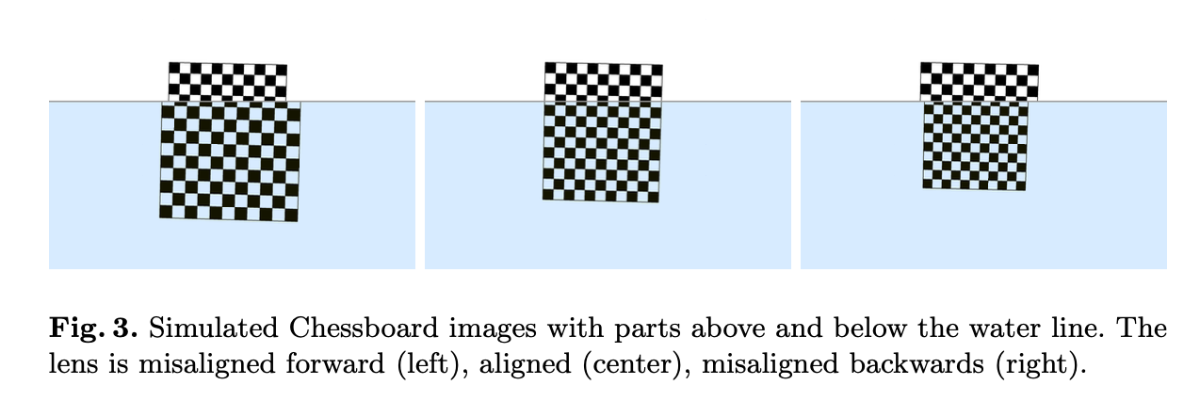
F8 Samyang 14mm positition with my computed 35mm extension looks pretty nice. The chess fields seem same size to me above and below water, what do you think? Unfortunately I have slight vignetting in the corners with that Dome and port-opening. I have to wait until next week, when I get my MARELUX 30mm Extension to see if it performs just as good. The vignette is also there outside of the water and it is purely an extension ring issue. In the second test picture the I feel the letters and chess board underwater look smaller. I am not sure this is my fault not being able to keep the chessboard exactly vertical or not. If it is not my fault, the picture exhibits the lens misalignment backwards which gives me hope for the 30mm ring. This shot is @ F8 How I build a simple garden test ground to verify theoretical lens positions. Another test shot more far away @ F11 exhibiting smaller letters underwater: Illustration on what should be observable.
-
Looks like there is a timeout for editing the initial thread opener, so sadly I cannot move this to the top: Samyang Rokinon AF 14mm F2.8 F ( for Nikon F Mount ) Samyang Rokinon AF 14mm F2.8 FE ( for Sony E Mount ) If you are unable to get your hands on a used Canon RF Mount Version still operates AutoFocus, you can also buy the EF: Samyang Rokinon AF 14mm F2.8 EF ( for Canon EF Mount ) All Versions of this lens seem to be on Optical Bench Hub.
-
You are misleading yourself and others with that idea. I claim myself guilty of having silenced discussions in the past by posting a spectacular image to make my point. Be aware: Some very knowledgeable technically good photographers with good advice are miserable at composition, animal behavior anticipation or simply don’t dive enough all year round. We are talking about IQ (image quality) here and what’s technically possible, not art. To get you dialed into the topic, let’s Alex have a say about his picture: This is very recent but there is more from him on YT were he talks about that particular picture and what technique he applied in other interesting YT videos. During the early 2000s many of the pros where using this strobe color plus calibration technique. Alex got the best shot ever, when he was going ALL-IN on this white-balance plus strobe thing. He simply had the balls to do it with a 105mm focal length while everybody else was using it with classic wide angle and fisheye lenses. Please note Christian, that there is vibrant golden color on the Bohar Snapper which makes this shot what it is.
-
Hi Guys, I’d prefer to run this as a collection thread before we tear this apart with discussion and look at the general pros and cons of this focal length. Please pitch your 14mm lens options ( old and new ) including zoom lenses that include this focal length. As I am not at home (anymore) in the Nikon Z or the SONY E System, I will need your help. Especially older lenses via adapter might be worth mentioning, as this knowledge might be lost and hard to research on the net. We might find exceptions, where an old lens could be a jackpot candidate.
-
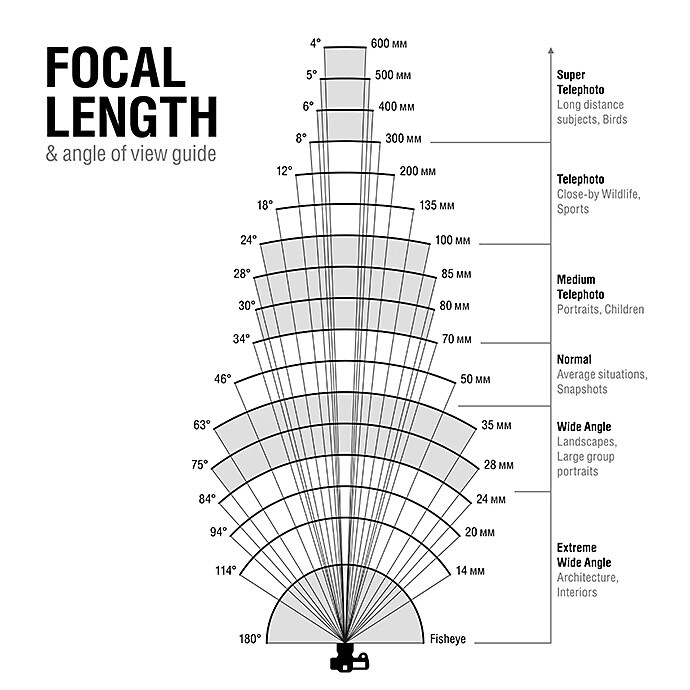
I‘d like to compile with you a list of 14mm rectilinear lenses in this thread. The focal length that is so important for underwater photographers, because it has some one lens fits all arguments. I will edit this list, as the thread evolves. Some shooters claim that 130deg FOV is a magic sweet spot, others say 180deg FOV is a must. However these lenses very often require a full sphere fisheye dome OR an expensive heavy water contact optic to be sharp. If you look at the available dome port sizes of various manufacturers you will find that many are not full sphere. With these acceptable travel sized domes you have a good chance that 114deg FOV (found at 14mm) still can be positioned perfectly behind a dome without getting “tunnel vignetted”. This is all about full frame mirrorless lens choices for the demanding underwater photographer. Canon RF: - Canon EF 14mm II (via EF RF Adapter) the award winning Gaby Baratheu shot 🤩 was done with this lens MFD = 20cm / P-I-MFD= 100.56mm - Canon RF 14-35mm F4 L the goto lens for canon mirrorless MFD = 20cm / P-I-MFD= 91.42mm - Samyang (Rokinon) 14mm F2.8 RF AF I happen to own this AF Version for Canon RF mount and have high expectations, as the entrance pupil does move less that a millimeter when focusing. This makes this lens rare and unique. MFD = 20cm / P-I-MFD= 116.34mm SONY: - Sony SEL14F18GM 14mm F1.8 GM has maximum aperture of F16 which can be a trap in very bright conditions if you do not ND filter it. - Samyang Rokinon AF 14mm F2.8 FE ( for Sony E Mount ) - … NIKON: - (old) Nikon 14mm F2.8 - Nikon 14-30 F4 (Z-Mount) - Nikon 14-24 F2.8 (Z- and F Mount version) SAMYANG Samyang Rokinon AF 14mm F2.8 F ( for Nikon F Mount ) Samyang Rokinon AF 14mm F2.8 FE ( for Sony E Mount ) If you are unable to get your hands on a used Canon RF Mount Version still operates AutoFocus, you can also buy the EF: Samyang Rokinon AF 14mm F2.8 EF ( for Canon EF Mount ) All Versions of this lens seem to be on Optical Bench Hub. PS: This thread was inspired by Massimo, who thoughtfully mentioned… „I see a few misconceptions here a fisheye 15mm lens has less depth of field of a rectilinear 14mm lens the fact fisheye have field of view doesn’t mean they have more depth of field“
-
I am aware of the fact that my good friend Alex Mustard has publicly voiced his subjective impression about warm strobes on many occasions, which I do not agree to. Be aware that Alex processes most of his images, as frequently shown on YT. His BBC Bohar Snapper shot is (almost) straight from camera, as the competition had very strict processing rules in the past. This is why this particular image lends itself so well into my argument. Again. I encourage everyone to get their head around this one more time and work through this by first principles physics. It‘s the scientific approach. Scientific means not taking things for granted because someone with pristine reputation and excellent images has made a remark. Instead try falsifying / verifying them to yourself again. Stay hungry!
-
WRONG I respect your personal opinion about not liking dome shaped strobes and lights. But please don‘t let your anger spread false information. Dome shaped fronts do not benefit structural integrity. The particular products you mentioned have the same depth rating and it was not the engineering intention to compensate anything with that. For the optical equation you know better, Massimo. You have written many great articles about dome port theory. When you reverse that and apply it to chasing the light rays from the inside to the outside water column through the dome, you will find that dome glas on lights will spread the light. Same applies to underwater strobes with domes. Eveybody can simply verify this by shining a domed dive light into water. Once dipped it you will notice a more wide light cone.
-
Exactly! You just confirmed what I recommended earlier in this thread. Leave your CTO gels, diffusers and color conversion filters on the boat. It‘s a waste of energy, light and money. Start massaging your cameras WB instead to archive the effect. Especially INON S220, Z330 Type2 and D200 Type2 have such a great micro peened frontglas that you do not need diffusers.
-
I expected this to arouse everybody and not receive flowers for my statement as just a minority of shooters has understood the physics behind this. Underwater photographers are less open to this idea and the correct physics approach. It‘s more accepted and understood in the underwater video community were some execute this by putting blue cooling filters on their video lights. I can just encourage everyone to burry the old recommendation that you need warm lights or strobes underwater. Once you embraced the idea that you have an absorption related depth of field for underwater color, you will improve your imaging and minimize travel weight. Actually you are the able to colorize subjects more distant then 1.5 meters from the camera. Alex Mustards „Bohar Snapper“ from the BBC Wildlife Photographer of the Year competition is a good example and also proof that you do not have to sacrifice cool blue water background when using this technique.
-
Yes, this might be one of those strongly wrongly shared piece of advice which needs to be de-mythed and broken up. Has anyone a good DOF calculator for fisheye lenses at hand? Preferably one that’s free and online.
-
I‘d like to report positive experience with SEA&SEA YS-D2 and various INON Strobes, such as Z240 and Z330 and D200. A lot of people were praising Z330 in their underwater church but in everyday practice the D200 has done a great job as well. I have long year comparison to big strobes manufactured by SUBTRONIC. With the increased ISO performance of all cameras a few years ago the big guns have become obsolete for many use cases. This is confirmed by my recent S220 experience. This strobe is rated quite conservative by INON when looking at the tech specs. It outperformed the higher Guide numbered D200 and equally spec Backscatter MF2. It is not to be mistaken as a macro strobe, like the similar sized red S-2000 was. If you want to shrink travel size and weight or have to live on a small budget, this is the goto strobe in 2024. About the color temp discussions, I would like to point out the physics aspect involved. If you use gels or filters, or paying attention to the manufacturers golden tube coating you are holding it wrong. If you look at energy traveling in water you want your photons to travel in the colder spectrum. You can fix this with the camera by setting the white balance manually (in the camera, not in LR). If you leave it in auto and buy a warm strobe you are doing it wrong. I‘d like to compare this with Astro photography where the use of Anti-LightPollution filters just costs you some fstops. But many companies make money on the filter myth. In uw photography many companies make money on the warm color temp myth. All that is absorbed by water.
-
Are you not using fixed focus? If your dome is not too small you can achieve depth of field all the way through. The focus position in my set up moves around 15cm Exactly + great advice 👍 Could you add if you mean 1.) 15cm Virtual-Image/EXIFdata distance 2.) 15cm from dome glas 3.) 15cm from lens front 4.) 15cm from sensor plane *2-4 measured with a ruler in space time 😉
-
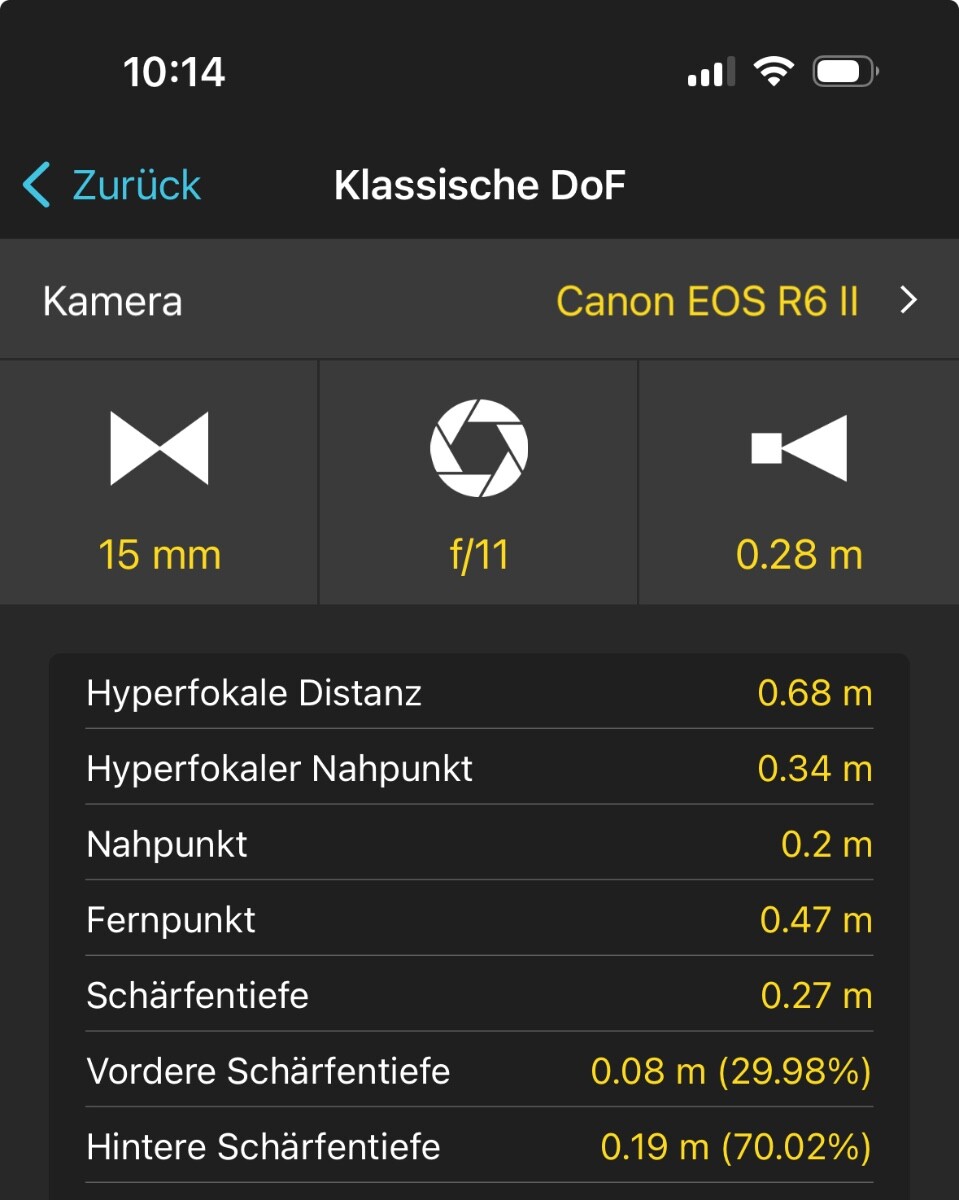
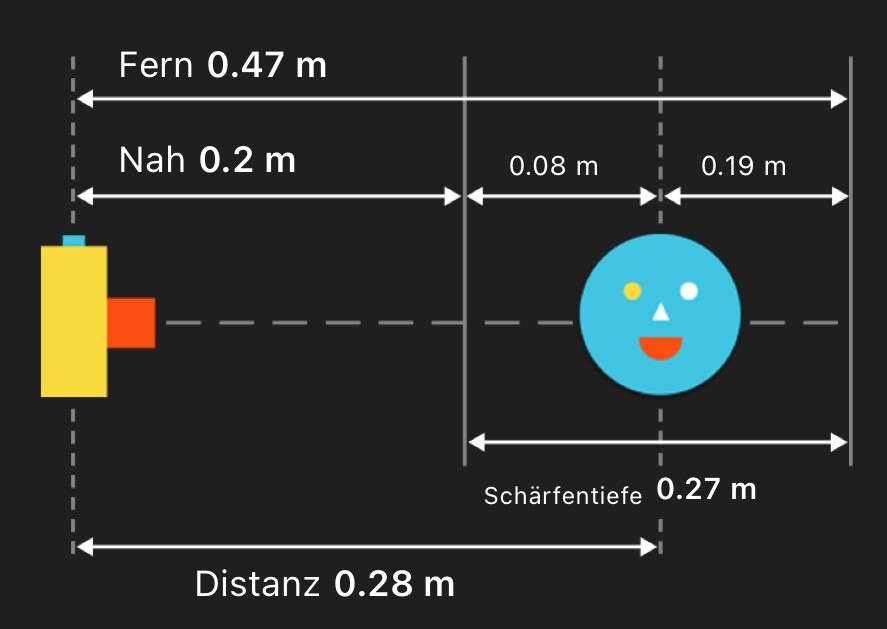
Thanks. Before this derailed it was about to get interesting and I would like to put our joint focus back on the theory values versus my practical measurement part. So for this lens I have 3 different values concerning the MinimumFoccusingDistance (MFD): 1.) 28cm (from data sheet) 2.) 12,8cm (some data sheets with* because only in possible in MF) 3.) 19cm (my hand-on tabletop test) I would like to hear your thoughts on this, as this might reveal a lot of theory versus practical pre-purchase info on various other lenses, too. If I run this through a classical DOF calculator, the values get me almost there at F11 (see attached image). 0.27m minus 0.08m = 0.19m Would go along with what I had on my table. Some rounding issues give us +/- 1cm in the corresponding illustration. But.. 1.) The AF classifies / focuses the resulted front focus as OK. It marks 19cm as the focusing distance. 2.) The AF also does this at F4.5 where the DOF should not be sufficient to get to 19cm effective MFD. Does this mean, we should always practically double check the manufacturers published specs on the lenses MFD ? And will this give us a little more breathing space for lenses in what Massimo described as “the dead zone” in one of his articles about domeport size and positioning ?
-
well, if you want to put it this way then Nauticam Domes are copies of SEACAM, SUBAL, Sealux etc as they did not bring anything new to the table. You were able to buy exactly the same glas materials and dome diameters from other housing manufacturers at much cheaper pricing before we ended up with just one quasi-monopoly housing maker who of course raised its pricing tremendously after driving the competition out of business. The only thing “added” to the product is the dome glas frame and port bayonet. So the dome of one manufacturer versus the other cannot be defined as “better” or “less good” when translucent material and dome radius size, coating are identical. Stuff is not “sharper” behind a ZEN dome or a Nauticam dome, then behind a MARELUX or SEACAM dome if sized and positioned well. Claims such as “brand xyz has the sharpest domes” leads new underwater photographers into the wrong direction. None of these brands can claim that they added some new magic sauce to the domeport game. ( * with exception to that rarely sold White Balance Dome by Edward Lai and maybe the front-lock Sunshade clicker on small Marelux 140mm Fisheye Dome ) None of the manufacturers that make underwater housings really designs and manufactures dome glas! They buy it from specialized glass makers. Making BK7 glas is an energy intense process. Funny sidenote: many of the Asian manufacturers in China and Japan still import German glas.
-
Maybe I should clarify that I have had access to the above products and measured them with a caliper to verify the brand statements. Thanks to my diving friends, eBay and dive expos. Marelux, Nauticam and ZEN seem to buy the exact same BK7 Glas spheres for their large 230mm dome and small (almost full sphere) 140mm diameter domes. Marelux and Nauticam 180mm dome are very similar. The large Marelux Dome is more full sphere (fisheye capable) than the ZEN or Nauticam 230mm and the only one which I was not able to personally touch / buy / measure yet. Marelux has improved coatings and their dome and luxury pelicase like packaging for their biggest dome. ZEN titles their 230mm and 170mm diameter fisheye domes, which is just a very bad marketing gag, as both are not full spheres, which you would expect from a product carrying the word “fisheye” in it. The most affordable fisheye dome with Nauticam and MARELUX is their 140mm diameter product. It’s (almost) full sphere. If you get in dialog with them they will tell you it’s not full sphere, but they are a little over-precise here. The roundness goes up to something like 169deg to 178deg before their glas enters the mounting frame. So it’s fine and usable with 180deg circular and diagonal fisheyes. For both r = 65-70mm depending how precise you measure. officially published is r=69mm for these two. It’s worth noting that the measurement error extrapolates with the aromatic, so I had come up with an approximation of just r = 61mm inner measurement in the past.
-
I disagree. You can have the same rear conic domeport design, you mentioned, with MARELUX medium sized dome. Also Marelux offers similar and even improved dome options versus Nauticam. SEACAM has excellent dome options as well and INON is the most affordable high quality coated glass dome options in the market. The inner extension ring and port hole diameter is widest with MARELUX, offering a better angle of view, often without needing a conic rear shape for mirrorless full frame cameras. INON’s port hole and Ikelite are a little more narrow and INON’s dome ports are small but have a very large radius, compared to their size. For this particular Canon lens INONs Dome Port II might just work well. It has inner sphere r=75mm + 4mm glas.
-
Naughtycam, naughty scam… Why do you act like a brand ambassador further enforcing this unholy monopoly and hi-jack this thread in such a bad manor? It makes absolutely no sense to use a third party manufacturers dome for another housing brand. Also I do not see why that particular dome should be “the best”.
-
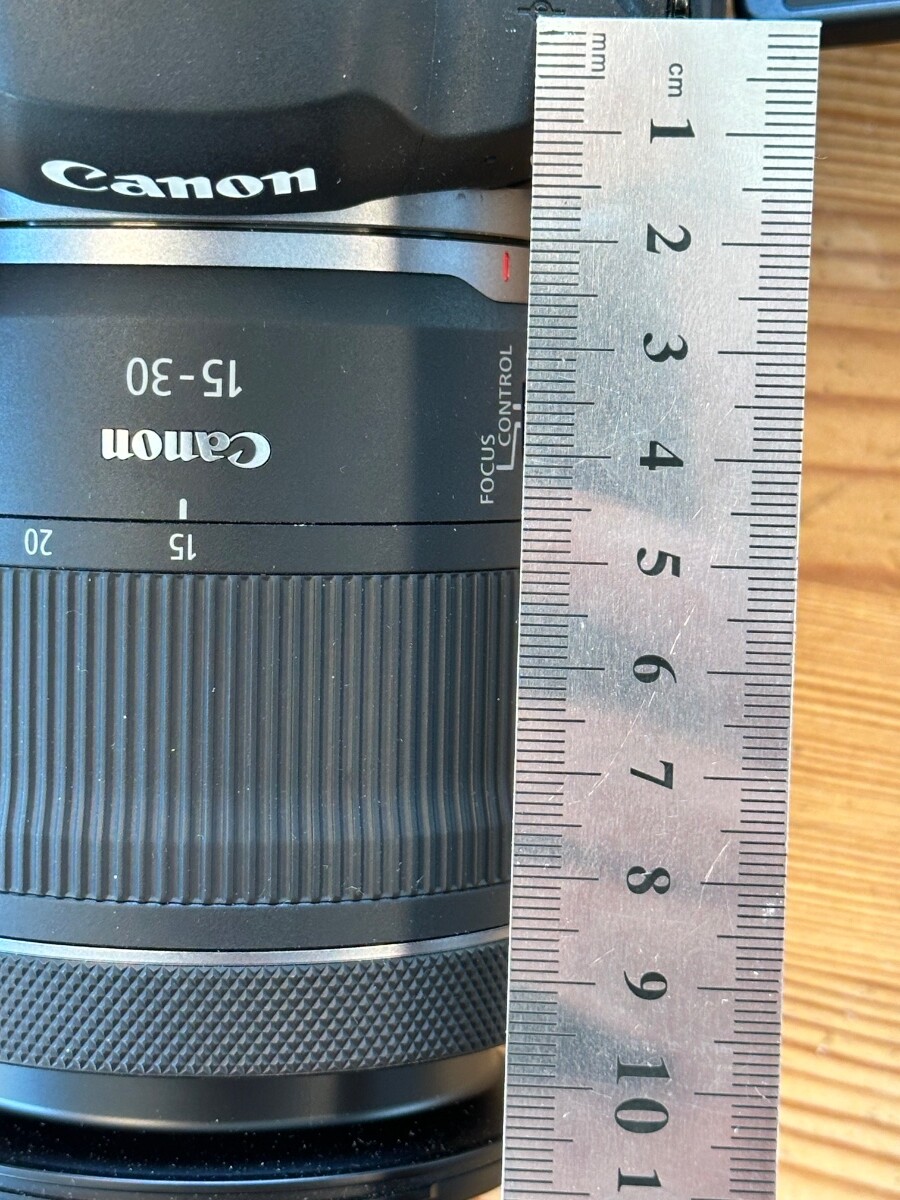
I have just made a land test and can confirm that the AI SERVO autofocus will always work properly on stuff that’s just 20cm from sensor plane at any aperture set. This is surprising and contrary to its published specs, saying 28cm If you crank up the aperture to F11 on R6 Mark II the DOF creeps even one centimeter more towards the lens. So everything more distant than 19cm from sensor plane is sharp. This lens is definitely a keeper! That was practically measured with a ruler that is approx 9cm from entrance pupil. The entrance pupil (npp) is quite easy to locate and easy to remember as it just little offside the focus control ring, meaning right at the end of the non-moving part of the lens during zooming. hello 9cm radius domes and above! here I come.
-
The way I understood this is as follows: The Focus is Drive-by-Wire on that lens. Canon just does not want to waste AutoFocus algorithm on that rare focus portion with the macro magnification, so that is why they force you to use the MF to get there. But all the optical & mechanical parts in that lens technically allow you to go as close as 12,8cm. So I assume they just limited the AF range and you will not re-arrange all optical elements when activating the macro focusing distance. Just a humble assumption. So if you focus at 28cm (on land) with a lens does not have this feature and MFD=28cm everything closer to sensor plane than 28cm will be blurry. Contrary to the above if I auto-focus at 28cm with that particular Canon 15-30mm at F16, things as close as 18cm will also be sharp.
-
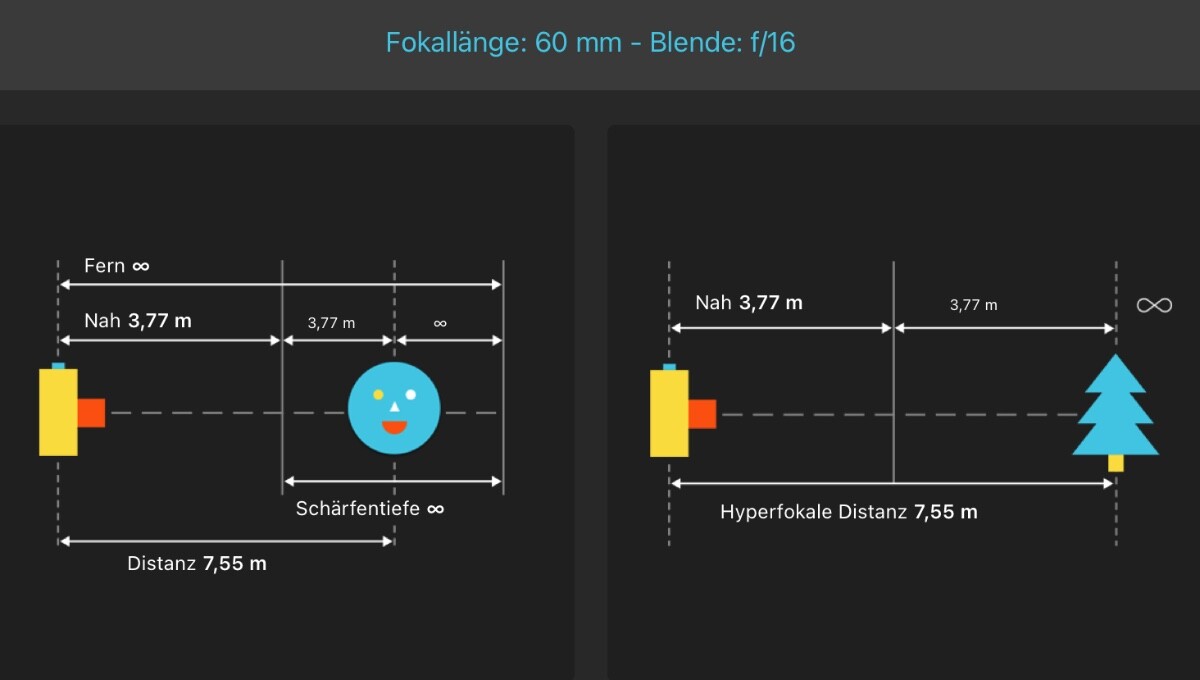
I would like to take Massimo’s instructive article and apply it to two slightly unusual underwater contact optics to better understand what’s going on and maybe derive a practical application. Have a look at the two for 60mm full frame focal length designed: Nauticam MWL-1 and Kraken / Weefine WFL-09s Both lenses claim interesting 150deg FOV @ 60mm focal length when used in optimum. For Nauticam I am unable to find the lens factor but Weefine published 0.32x magnification. So we can assume the factors are similar. Nauticam recommends to shoot their lens at least at F16 aperture for good sharpness. The Nauticam lens has 7 Elements in 5 groups and the Weefine/Kraken 7 Elements in 6 groups. So both factories take on the problem looks very similar. According to Interceptor this means that an on object in one meter distance will appear at 3,13m when viewed through the lens underwater. You can apply classical topside depth of field calculator to a 60mm lens @ F16 and learn that softness of that lens reported might be solely blamed to a DOF issue. There is also one Wetpixel Review by Jack Connick and one on divephotoguide by Mathew Sullivan, where both authors report that you have to significantly stop down to F29 or F32 if you use this lens with a 100mm or 105mm macro. Especially the images by Mathew exhibit shallow DOF in wide angle shots, I think. Some underwater photographers might have mistaken these shallow DOF with missing corner sharpness on dome ports, I think, and did not consider these lenses as an improvement. I however see these two as highly underestimated because they bring flexibility to your dive and highly optimize remote travel size and weight. The downer is however that not many mirrorless Systems have native 60mm Macro lenses. Nikonians being in the supreme position, followed by Micro4thirds Users which have a 30mm Macro turning into 60mm FF equivalent. Sony FF Users need a Nikon adapter and Canon Users would need to twist an EF-S 60mm macro and live with slight vigneting on FF if used on the wrong focusing distance and aperture. So,… what does this give of any use to us? Well.. how about if we utilize classical topside DOF calculators and look at hyperfocal distances and apertures. What we then can learn from these, is that we simply have to use these lenses at higher working distances. Sadly though both lenses were marketed heavily with the claim that you can focus right on the front element. The point where you would suffer most from shallow DOF issues. When shooting these two lenses with more subject distance and your strobes brought forward towards the subject you will buy back lens sharpness. examples: The recommended Nauticam example at F16 on a full frame 60mm lens renders as follows: Hyperfocal distance focussin point on Land = 7.55 m underwater Equivalent 0.32x HF AF distance = 2.42 m On Land everything sharp from 3,77m to Infinty UW (0.32x) sharp from approx 1.2m Changing these to a 100mm lens this significantly drops: The NOT recommended example at F16 on a full frame 100mm lens renders as follows: Hyperfocal distance focusing point on Land = 20.9 m underwater Equivalent 0.32x HF AF distance = 6.7 m On Land everything sharp from 10.45 m to Infinty UW (0.32x) sharp from approx 3.35 m Having worked through the above these lens-rapers go heavily against the average underwater photographers intuition and could make a small exception of the steadily heard “get close”.
-
Still trying to get my brain around what you wrote above. Looking at your previous blog post I thought the driving force behind the required dome size was the MOD (MFD). Assuming MinimumFocussingDistance (MFD) at 15mm I calculated the following two scenarios: Always using (I-P)= 97.69mm MFD = 128mm @ 15 mm focal length: MFD-(I-P)= 128-97.69 = 30.31mm minimum Radius of the Dome, and required Dome Glas Diameter just D=61mm MFD = 280mm @ 15 mm focal length: MFD-(I-P)= 280-97.69 = 182.31mm minimum Radius of the Dome, and required Dome Glas Diameter D=364mm Could somebody please verify my above math? —- If my calculation is correct, how do you derive the 230mm dome from a 15mm lens? I have to point out that there are various domes in 230mm size on the market having different port diameters and some have conic or flat extensions behind their spheres. Was your mind caught in the Nauticam port table when you wrote this? Or was this a quick shot having the 115,53 degree field of view of a general 15mm lens in mind? Not everybody shoots Nauticam 😅 underwater. The lens also seems to work fine behind a 140mm full sphere fisheye dome, with r=69mm. At least it wil autofocus properly. I have not inspected IQ of my friend yet, as the water was very murky, it will need time for results to properly falsify. Looking forward to your comments and also some directions or reading recommendations on how you theorized the required F-Stop.