Skip to content

Lights, Strobes, and Lighting Technique / Archived topic

Inon Z22 Ringflash

Started by pmooney ·

  • 20Posts
  • 20Replies

Read-only discussion

Inon Z22 Ringflash

20 posts
  1. I have the chance to get one of these units ( like new ) complete with a port to suit my housing.


    Wondering if any body has been using this strobe ?


    :lol: I did a search and could only find limited reference in the forums so excuse me if this has been dealt with before :lol:

    Edited by pmooney
  2. Martin Edge talks about using the ring flash in his book Underwater Photography, don't recall that he gets into much detail though on settings etc.

  3. Anthony,


    Haha - Don't worry about me. :lol::lol:


    Got a new toy coming that requires I clear some spare spare's. ( wifes order's)


    Will look into the weight for you.


    New Toy VRSCDX Special


    Any way back to the ring flash.......


    Loftus thanks for the input .... that and a few other articles are what's got me thinking about it. ( that and and a unique deal )


    Really am looking to make my macro rig a smaller unit.

    Edited by pmooney
  4. SFUPS member Linda Ianniello has been using the Inon ringflash for some time now. She has a gallery of images taken with this flash on the http://sfups.org website. Go to member galleries and look for her April 2006 entry. The down side to this flash is that it only has three manual settings, as it was designed for use in TTL with film cameras. If you are TTL ready then all the better. I have been testing the Athena ringflash which is all manual with a power control and have had great results. http://www.athena-opt.com/ringflashe.htm I obtained the Athena rignflash through http://reefphoto.com/ for anyone that is interested, ask Ryan.


    Phil Rudin

  5. Phil,


    Thanks for the links.

    Lindas images look great. In a manual world I can live with the 3 manual settings - no probs.


    Looks like I'm sold - now to do the deal.

  6. Hi Phil,


    Could you post a couple of examples with the Athena Ringflash. Possibly also some information about it eg. What housing/port you are using and what you paid for it.


    I am potentially interested in this so would appreciate some info.


    Thanks,


    Mark

  7. I though that this flash only has one manual power - FULL? I know a few people who struggled with it on the D100 generation cameras with an lowest ISO of 200 - but as base ISOs have got lower - so more people have been enjoying them again.


    Martin Edge invented with Ken Sullivan his own ring flash system (i think it was called "ring of light") before the Inon-quad was available. You can see it on Ken's website here:

    http://www.kensunderwaterphotography.com/equipment.htm


    They sold them commercially for a while (we actually had two on my recent Red Sea trip - one was attached to my old D100!). Anyway I don't think that they make them anymore. Coincidently I have 4 hours in the car with Martin tomorrow - so I will ask him.


    Alex

    Edited by Alex_Mustard
  8. I just read Martin Edge's book over the weekend. Although a regular wetpixel reader will know much of what is in the book, sometimes in quite a bit more detail, it gives a lot of things to think about.


    On the topic of ring-flash use, one important area is back-scatter. With the flash so close to the lens the risk of back-scatter increases and Martin actually mentions that he was surprized it worked so well, as long as your subject is within about one meter (for the athena ring flash they mention under 50 cm http://www.athena-opt.com/ringflashe.htm).


    Basically, if the subject is close it catches a lot of light from the flash. This allows short exposures/small diaphragm settings which minimize the visibility of any back-scatter. As the subject is farther away, exposures have to be increased, which causes noticeable back-scatter from particulates closest to the lens. It would be interesting to see if one could use a short cylindrical shade that prevents lighting particulates within the first few cm before the lens without affecting the light on the subject. An even better solution may be to recess the flash light bulb a bit deeper into the unit to reduce the angle of coverage from 90-110 degrees in the Inon and Athena ring-flashes to something like half that value. This could create a shadow zone just before the lens and for macro you don't really need a wide cone of light anyway. By concentrating the light in a narrower cone you get a higher intensity where you need it.


    Bart

    Edited by Glasseye Snapper
  9. Hi Phil,


    Could you post a couple of examples with the Athena Ringflash. Possibly also some information about it eg. What housing/port you are using and what you paid for it.


    I am potentially interested in this so would appreciate some info.


    Thanks,


    Mark


    Hi Mark,


    Let me start by saying that I love the Inon strobes and have done all of my work for the last ten or twelve ten years with them.


    The Athena ringflash was designed with the smaller Olympus PT (Digicam) housings and small SLR housings in mind. The flash itself is only about 124 mm ( 4 & 3/4 inches) in diameter and 25 mm, about an inch thick. The hole in the center is 67 mm and is threaded for a 67 mm diopter like the Inon UCL-165M67 an outstanding closeup-lens. This ring is attached by a coil cord to a Epoque ES-150 DS strobe head which has had the flash tube removed and replaced by the other end of the cord. Power is then passed from the flash head to the ring which is mounted on the port. This ringflash is designed for macro work and will vignett with lenses with a 35mm angle of view wider than about 60 mm, due to the small center hole. The strobe head runs on two, NOT FOUR AA battries. With off the shelf Kodak rechargeable digital camera battries I got at least 100 flashes per dive. I have never tested the limits of the batteries beyond 100 flashes during use. Recycle times are slower than with strobes that have more power on board. However I didn't find myself frustrated and could get off 70 to 100 close-up/macro shots in a 45 to 55 minute dive with no problem. The ringflash can be ordered with a Nikonos 5 pin sync cord or with an Olympus sync cord for the Olympus housings bulkhead.


    I use the ringflash with an Olympus PT-E02 housing for the E-330 camera and the standard PPO-E01 dome port. The flash can also be used with the PPO-E03 macro port. A plate on the rear of the ringflash has 67 mm threads and Athena sells three diffrent rings that the plate can be attached to. These rings have an inside diameter of 88 mm, 92 mm and 94 mm to fit diffrent macro ports. You slip the ring onto the end of your port to hold the flash in place and it is secured by small screws. I removed the threaded ring (held in place by several screws) from the rear of the flash and replaced it with the rubber dome cap for my port after cutting a 70 mm hole in the center. I now secure the dome cap which holds the ringflash in place on me port with a SS hose clamp. A custom made cap can be had for the Olympus macro port but this works for me.


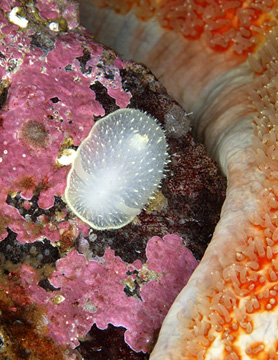
    The attached photos were taken with the E-330 in the PT-E02 housing, an Olympus 50 mm macro lens (100 mm equv. 35 mm) and the Athena ringflash.


    Regarding the issue of back-scatter I found it to be less of a problem with the ringflash than when I use the same rig with twin Inon Z-220 strobes. I would also note that it is a flat, in your face type of light that lacks the shadows which can be created using dual strobes.


    This is a great tool but it is not a magic bullet to replace all other strobes.


    The Athena ringflash sells at http://reefphoto.com/ for $999.00. The cords are an extra as with the Inon strobes.


    Phil Rudin

    Edited by tropical1
  10. Hi Peter,


    The Inon Quad flash is an excellent piece of kit - I have had mine for many years used with film and digital cameras - first a D100 and now a D200. It has three manual power settings - full, 1/2 and 1/4 - at iso 100 I shoot mostly at half power at apertures od f11 to f22 (depends on distance to the subject of course). The backscatter problem is not an issue - you will be surprised at the distance from which you can shoot a subject and not see any.


    I have numerous examples of macro and fish portrait pics on my website if you want to see some pics:

    www.photec.co.uk


    Cheers,


    Mark

  11. I can endorse what Mark says, the Z22 is an excellent piece of kit. I've been using one for several years first with an F90 and now a D2X. Inon also do a magifying lens which screws into the front of the ring flash and is very usefull for tiny things.

    I normally use a -1 diffuser with it to give more flexibility on power settings.


    Colin

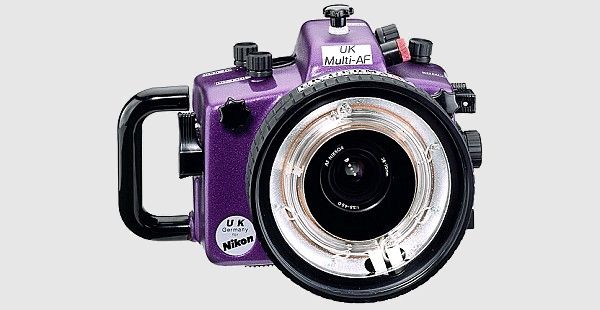
  12. Uk Germany also has a true-ring flash:

    post-4794-1155038847_thumb.jpg

  13. I have been using the Inon for quite a while as well with a Canon 20D in a Subal housing. The flash is indeed a great item. Originally I was using it in manual mode. The strobe has 3 powers, full, 1/2 and 1/4. In addition, it has a diffuser that takes away (at least in my hands) about another 1 1/2 stops. There is also a hard shade that you can use to take away two or one of the four flash tubes. Just recently, I upgraded the housing to TTL using Matthias's board. The photos from the TTL came out OK, the exposures are pretty much on, given that I was using the diffuser to get rid of some backscatter. I think that for macro pics, this is the best possible flash platform. You can also add the +3 diopter to the front of the flash. It is quite nice if you don't know how big the things you are going to shoot are in advance. You can see a pretty neat tiny nudi of mine on photo.net.

    I can send you some pics using the flash if you want.

    BVA

  14. I forgot to mention one drawback of the Inon ring flash is if the port is small enough to fasten the ring flash directly to then its too narrow for a 105VR lens.


    Colin

  15. Mark, Have you had the wiring modified to make the modeling light work? My Z22 modeling light only works with a D2X when a Z220 is also attached and is turned on (Seacam housing). The flash works OK, manually of course, but without modeling regardless of set up. I have a 100 ohm resister in the circuit.

    Thanks

    Tom


    Hi Peter,


    The Inon Quad flash is an excellent piece of kit - I have had mine for many years used with film and digital cameras - first a D100 and now a D200. It has three manual power settings - full, 1/2 and 1/4 - at iso 100 I shoot mostly at half power at apertures od f11 to f22 (depends on distance to the subject of course). The backscatter problem is not an issue - you will be surprised at the distance from which you can shoot a subject and not see any.


    I have numerous examples of macro and fish portrait pics on my website if you want to see some pics:

    www.photec.co.uk


    Cheers,


    Mark

  16. Colin,

    Have you had your Z22 modified to work with the D2X? See also my query directed at Mark.

    Thanks

    Tom


    I can endorse what Mark says, the Z22 is an excellent piece of kit. I've been using one for several years first with an F90 and now a D2X. Inon also do a magifying lens which screws into the front of the ring flash and is very usefull for tiny things.

    I normally use a -1 diffuser with it to give more flexibility on power settings.


    Colin

  17. Tom,


    Sorry for the slow reply, I haven't logged on for a couple of days. No unfortunately the focus light does not work with my set up (Subal ND20). I use mine on the three conductor option for the hot shoe connection - the D200 does not like to talk to 'Nikonos' strobes with five wires connected (in the Subal housing at least).


    I got used to not having the focus light with the D100, although I do remember it was very useful as it came on with a touch on the shutter. It is not a big loss though and I am just happy to be able to use it on manual - although I have a client who has had Mathias Henrich install a iTTL circuit inside a Z22 quad and it works well apparently.


    Cheers,


    Mark Webster

    www.photec.co.uk

  18. Thanks Mark!

    Tom

Fotosub Shop

Account

Navigation

Search

Search

Configure browser push notifications

Chrome (Android)
  1. Tap the lock icon next to the address bar.
  2. Tap Permissions → Notifications.
  3. Adjust your preference.
Chrome (Desktop)
  1. Click the padlock icon in the address bar.
  2. Select Site settings.
  3. Find Notifications and adjust your preference.