Skip to content

Photography Gear and Technique / Archived topic

Tonal Range in Digital Cameras

Started by loftus ·

  • 46Posts
  • 46Replies

Read-only discussion

Tonal Range in Digital Cameras

46 posts
  1. There has been a lot of discussion on sharpness, diffraction and other pros and cons of DX vs FX.

    However for the type of photography I do (and it seems most on Wetpixel) either format will work well with regards to sharpness if I make the right choices with lenses, domeports and f-stops.

    For me, using digital, the limitations of digital until now have been the 'digital look' of images particularly in the specular highlight areas transitioning to highlights with detail, and of course noise in the underexposed shadows.

    For me personally this issue takes precedence over sharpness, distraction issues etc.

    Newer cameras appear to be much better in this regard (at the high end) and from the limited number of prints I have seen, the best prints I have seen are from a 39MP Hasselblad, followed by the new Canon 1DSMKIII (very close to Hasselblad), then the Nikon D3. (The Nikon wins in the low end noise end).

    My question to the gurus who understand sensor technology is whether there are inherent benefits of larger sensors in these areas, particularly highlight areas?

    In my quest to obtain higher and higher dynamic range images, in camera, is FX or DX likely to make a difference, or is it other design aspects of the sensor, camera firmware (EXSPEED, D-Lighting) etc that are more important?

    Here I add an image I took this weekend at sunrise. I did manage to get an image that I like, but still with deficiencies and only with quite a lot of work in Photoshop. Of course underwater, sunballs are the main issue.

    post-5478-1215517488_thumb.jpg

    Edited by loftus
  2. Great subject.

    To me the dynamic range is the main drawback of my camera, the current one (D200) and the one before especially (D70), for long time I didn't upgrade the D70 since I didn't sow so much different in that area.

  3. I think it's easier to say what doesn't contribute to improved dynamic range. Anything that happens after the capture can only degrade dynamic range (ignoring image combining of course) so things like EXPEED and D-Lighting aren't going to help. You have to have high resolution converters and low noise circuitry. Those are areas of active development.


    Dynamic range is a per-pixel issue so it isn't sensor size that matters, it's the size of each pixel. A 12MP FX camera like the D3 or 5D has a clear advantage over a D300 while higher resolution full frame cameras may not. Not all sensors are created equal, though. If experts are to be believed, we should not expect dramatic advances in the performance of the pixels themselves as they are already quite advanced. Each generation has shown improvement though.


    Dynamic range and ISO capability are frequently considered interchangeable but they aren't exactly the same. Nikon has made advances in their ISO capability through improved microlens arrays. That doesn't help with dynamic range but it does result in a base ISO of 200 (which can potential hurt us with sunballs!).


    Having larger photosites is an enabler of greater dynamic range but it does not guarantee it. Other factors must also be in place. Medium format digital has had a reputation for better dynamic range for a long time. Those products have included higher resolution A-D converters but also it is claimed that the design of the bodies and lenses contribute. The pixel sizes themselves used to be larger but that is no longer the case with the highest resolution MF products today. I wouldn't be certain that a Hassy 39 or 50 has better dynamic range than a 1Ds3 but I don't know.


    All digital works linearly which is distinctly different from how film works. It isn't so much that digital lacks dynamic range, it's that things that film handles gracefully can be very problematic for digital. I also think RAW converters aren't always as good as they should be. Anytime someone gains benefit from doing multiple RAW conversions of a single image and then combining them what they are really doing is working around shortcomings of the converter. I would not be surprised to see converters continue to advance.

    Edited by craig
  4. All digital works linearly which is distinctly different from how film works. It isn't so much that digital lacks dynamic range, it's that things that film handles gracefully can be very problematic for digital. I also think RAW converters aren't always as good as they should be. Anytime some gains benefit from doing multiple RAW conversions of a single image and then combining them what they are really doing is working around shortcomings of the converter. I would not be surprised to see converters continue to advance.


    Yes, this is the problem. We all got used to hilm which suffers from high intensity reciprocity law failure. Which in effect means that it produces a spurious result in sunbursts and other extreme highlights. We all got used to the effect and decided we liked it. Now we have digital systems which actually record more accurately and we don't like the result so much!


    I use HDR (High Dynamic Range) techniques a fair bit on land - increasing dynamic range by using software such as Photomatix to produce 32bit and higher files from different exposures - but this can only really be used on static subjects with a tripod mounted camera for best results, and even so any movement results in ghosting and there are other strange effects. Sometimes it can be a very effective tool but for obvious reasons its problematic underwater!


    Although its probably a contraversial comment, I'd say that cameras like the original Canon 1DS, and Nikon's D3 and D700 probably represent a good compromise between Mpixels and sensor size. I personally would have preferred to see Canon upgrade the sensor in the 1DS without boosting MPixels but unfortunately the world is fixated on MPixels! Now if Nikon will only build an ultrafast 20 or 24.......

  5. I have been wading through some of the tedious testing methods for digital sensor testing like MFT and LW/PH etc, but have not found anything that pertains to dynamic range. If, a major component of dynamic range capabilities of a sensor is pixel size, is it likely that a camera like the 5D, D3, D700 may have better dynamic range than say a DS1MkIII or a future 24MP D3x. (Given similar A/D conversion technology).

    If I were choosing a camera and lets say I was clear that my resolution needs were taken care of with a 12MP camera, should I consider that a higher MP camera may actually be detrimental to me if dynamic range was my priority?

    Are there any objective measures of dynamic range to compare cameras?

    Edited by loftus
  6. Are there any objective measures of dynamic range to compare cameras?

    Aren't Dynamic Range and Tonal Range two different things?

  7. Craig pretty much nailed it. Pixel size matters, but only if all other things are equal, which they never are.


    We keep talking about dynamic range and how different digital is from film. Again Craig stated why there is a difference, but we seem to forget that the dynamic range of the film depends on which film we are talking about. Sometimes people gripe about the lack of dynamic range of their digital camera compared to say, hmmm.....Velvia. Gee, I don't exactly remember a 12 stop range with Velvia.


    The key is that the same range appears to be different. It's similar to the difference between noise and grain. I would tolerate more grain than noise. Noise just looks worse to me than grain. Luminance noise makes me gag.


    Are there any objective measures of dynamic range to compare cameras?


    I don't believe there a standard protocol for measuring dynamic range. I don't think it would necessarily help. I think there is more to it than that.


    If I were choosing a camera and lets say I was clear that my resolution needs were taken care of with a 12MP camera, should I consider that a higher MP camera may actually be detrimental to me if dynamic range was my priority?


    Great question. I would guess the answer would be - possibly or depends. I may have to defer to the Magic Eight Ball for this one though.

  8. I use HDR (High Dynamic Range) techniques a fair bit on land - increasing dynamic range by using software such as Photomatix to produce 32bit and higher files from different exposures - but this can only really be used on static subjects with a tripod mounted camera for best results, and even so any movement results in ghosting and there are other strange effects. Sometimes it can be a very effective tool but for obvious reasons its problematic underwater!


    I too use HDR quite often on land, with some good results. I've only attempted underwater HDR once. The problem with using it underwater is that it is hand held (I suppose you could use a tripod, but I just can't be bothered) and shooting in quick sequence means that strobes can't be used (recycle time too slow as frame rate is about 9 frames a second). Here is the result.

    post-4292-1216819190_thumb.jpg

  9. I think Clark has a lot of interesting and very technical information on the subject: http://www.clarkvision.com/imagedetail/index.html


    There is an objective engineering standard for dynamic range but it doesn't correspond to how photographers work. Photographers are familiar with zones where each zone is differentiated by a stop but the darkest zone must have a range of tones in it. How much range is subject to interpretation and that's why there is disagreement on how much "dynamic range" a digital camera offers. Is 12 stops of dynamic range equivalent to 6 zones, 8 zones, 10 zones? It depends. There's a big "language barrier" here.


    If I were choosing a camera and lets say I was clear that my resolution needs were taken care of with a 12MP camera, should I consider that a higher MP camera may actually be detrimental to me if dynamic range was my priority?

    As George said, it depends. A large pixel site like a 5D or D3/D700 has may be capable of more dynamic range than the rest of the processing chain can handle. In that case, the only real advantage they deliver is full dynamic range from base ISO to higher ISOs up to a point. The dynamic range of the system depends on pixel sites plus all analog stages up to the digital conversion. It also depends on how much contrast the optical section is capable of delivering to the sensor.


    I would say, though, that it's conceivable that if/when Nikon delivers a 24MP body that the D3/D700 may be a better camera for sunballs. We will have to see. :D


    I read recently on dpreview where Thom Hogan felt that a 20% increase in linear resolution is the minimum meaningful step that can be seen in the result. Given that arbitrary but reasonable definition, a 24MP camera will be two increments improved over a D3 (and the 1Ds, 1Ds2, and 1Ds3 are each separated by an increment). Paul argues that the 1Ds offers satisfactory resolution for him and that is where Nikon is with their three top DSLRs today. Would two increments of resolution improvement be worth degraded high contrast performance underwater? I think that may depend on what we shoot.

  10. I too use HDR quite often on land, with some good results. I've only attempted underwater HDR once. The problem with using it underwater is that it is hand held (I suppose you could use a tripod, but I just can't be bothered) and shooting in quick sequence means that strobes can't be used (recycle time too slow as frame rate is about 9 frames a second). Here is the result.

    I think this is an interesting image Warren; how 'real' is this image? Is the speckled highlight in the foreground real or artifact of the HDR process? There does appear to be some noise in the shadows and background which is a common problem in HDR images.

    Interestingly, I think HDR images could probably still work underwater even with strobe - if the strobe fired once providing the foreground exposure and then the bracketed shots provided the HDR for the background without the strobe.

  11. I think this is an interesting image Warren; how 'real' is this image? Is the speckled highlight in the foreground real or artifact of the HDR process? There does appear to be some noise in the shadows and background which is a common problem in HDR images.

    Interestingly, I think HDR images could probably still work underwater even with strobe - if the strobe fired once providing the foreground exposure and then the bracketed shots provided the HDR for the background without the strobe.


    What you are seeing in the foreground is not artifacting. The speckling is as a result of the zebra mussel infestation in the great lakes. The floor of the lakes are littered with zebra mussels and in some areas, there are white speckles from the reminants of zebra mussel shells when they are eaten by the gobies (another invasive species). There is a bit of noise in the shadows as I had to bump up the ISO (I can't remember how far, but probably in the 3200 range I suspect).


    I may give the strobe suggestion a try at some point, next time I am out.

  12. Great subject.

    To me the dynamic range is the main drawback of my camera, the current one (D200) and the one before especially (D70), for long time I didn't upgrade the D70 since I didn't sow so much different in that area.


    All you need to do is get a Fuji S5 (I got a new one last week for 475€ as a bargain backup for the D200) and get 11 EV steps. To give you a painful comparation, Canon 5D has 8.5, Canon 40D, Sony A700 and Nikon D3 have 9 (maybe 9.5 at the most for nikon D3 but stretching it a lot) :D ....

  13. All you need to do is get a Fuji S5 (I got a new one last week for 475€ as a bargain backup for the D200) and get 11 EV steps. To give you a painful comparation, Canon 5D has 8.5, Canon 40D, Sony A700 and Nikon D3 have 9 (maybe 9.5 at the most for nikon D3 but stretching it a lot) :D ....

    Unfortunately the tests shown here on WP a while back, do not seem to show any benefit of the S5 over D200 at least underwater with sunballs, so whether these specs really translated to any practical advantage is unclear.

    http://wetpixel.com/i.php/full/from-the-fo...sunburst-tests/

  14. Unfortunately the tests shown here on WP a while back, do not seem to show any benefit of the S5 over D200 at least underwater with sunballs, so whether these specs really translated to any practical advantage is unclear.

    http://wetpixel.com/i.php/full/from-the-fo...sunburst-tests/


    I remember those tests and I just went again through them again and there is a factor that should be taken into account and is the lack of use of Fuji´s software (it did not exist at that time) that now allows to treat the 6 "bright" mpx and the 6 "shadow" mpx (PS did not make any distinction) which is like taking a HDR image with one shot.


    From (in spanish):


    http://www.guillermoluijk.com/article/superccd/index.htm


    This the image taken by the type S (bright) mpx:

    sobre.jpg


    This is the one taken by the type R (shadow):

    sub.jpg


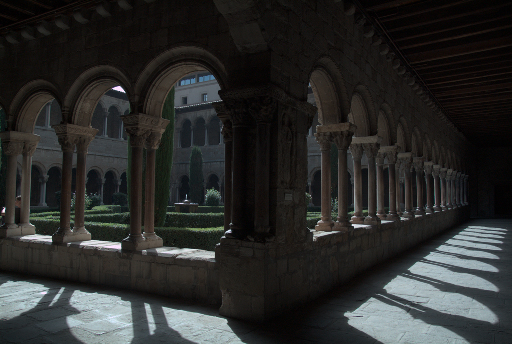
    And this is the picture obtained when processing the image:

    claustro.jpg


    In the end, I do not know if it will be useful underwater but, I will give it a try as soon as I am able to get my camera (it was delivered to my parents house in Santander, in the north coast of Spain and I don´t know when I´ll go there). Anyway, for 475€, brand new, is a good camera (the shop sold 20 in one morning).

    Edited by segal3
  15. Is this of any help in your comparisons?


    http://www.diwa-labs.com/wip4/test_result.epl

    Thanks, this and Craig's references were very helpful. These tests would seem to confirm that when comparing cameras like the D3, 5D and 1DSMkIII, there would appear to be no advantage of the 1DSMK111 unless high resolution was a priority and that for equivalent low end ISO settings the D3 and 5D performance is at least as good as the 1DSMkIII in dynamic range and noise, color fidelity etc and then actually outperform the MkIII once one gets to 1600 ISO and beyond.

    So for my maximum usual print size of 17x24 I probably would see little advantage to a FF camera beyond 12 MP or so with present sensor technologies.

    I think a great point Clark makes in Craig's reference, is that unless we can change the laws of physics, bigger pixels will mean less noise and better dynamic range (everything else being equal), irrespective of changes in sensor technology.

    Edited by loftus
  16. I remember those tests and I just went again through them again and there is a factor that should be taken into account and is the lack of use of Fuji´s software (it did not exist at that time) that now allows to treat the 6 "bright" mpx and the 6 "shadow" mpx (PS did not make any distinction) which is like taking a HDR image with one shot.


    In the end, I do not know if it will be useful underwater but, I will give it a try as soon as I am able to get my camera (it was delivered to my parents house in Santander, in the north coast of Spain and I don´t know when I´ll go there). Anyway, for 475€, brand new, is a good camera (the shop sold 20 in one morning).


    Yesterday I used the fuji underwater for the first time and I have to say that sunbursts are very good, better than with the D300 if you ask me (and it was my first day with the camera). Straight from the raw (converted to tiff with HU-3 without touching anything):


    2952714112_83be2fe804_o.jpg


    I am just starting to use it but I really like the colours it delivers (reds and blues).

    Edited by segal3
  17. Bigger pixels are always going to win in the DR and noise comparisons. But it's a trade-off. Sometimes you need the extra pixels (safari, whales, etc) and sometimes you need the image quality. That's why I have a 5D and a 1DsIII


    Cheers

    James

  18. Yesterday I used the fuji underwater for the first time and I have to say that sunbursts are very good, better than with the D300 if you ask me (and it was my first day with the camera). Straight from the raw (converted to tiff with HU-3 without touching anything):


    2952714112_83be2fe804_o.jpg


    I am just starting to use it but I really like the colours it delivers (reds and blues).

    Thanks for that; so this is the Fuji S5 correct? I have a new training regimen for you; now not only do you have to swim laps with the cameras, but you have to dive take a picture with the S5, surface, replace the s5 with d300, dive, take identical picture with d300, then repeat until you have completed macro, WA and sunballs etc.

    This is a guaranteed world champion program, and we get to see the comparisons. :)

    Edited by loftus
  19. Thanks for that; so this is the Fuji S5 correct? I have a new training regimen for you; now not only do you have to swim laps with the cameras, but you have to dive take a picture with the S5, surface, replace the s5 with d300, dive, take identical picture with d300, then repeat until you have completed macro, WA and sunballs etc.

    This is a guaranteed world champion program, and we get to see the comparisons. :)


    icono_smash.gif:) I can dive both at the same time so I don´t have to surface but, would that be cheating? :P


    A couple more shots of the fuji:


    2956400772_814e6d217b_o.jpg


    2955555247_84339bee7a_o.jpg

Retra

Account

Navigation

Search

Search

Configure browser push notifications

Chrome (Android)
  1. Tap the lock icon next to the address bar.
  2. Tap Permissions → Notifications.
  3. Adjust your preference.
Chrome (Desktop)
  1. Click the padlock icon in the address bar.
  2. Select Site settings.
  3. Find Notifications and adjust your preference.