



Skip to content

Photography Gear and Technique / Archived topic

Rob Galbraith's final findings on the Canon 1D MarkIII series AF

Started by Drew ·

  • 52Posts
  • 52Replies

Read-only discussion

Rob Galbraith's final findings on the Canon 1D MarkIII series AF

52 posts
  1. Can anyone tell me what advantages a hardware low pass filter (AA filter) has over performing frequency filtering in software. I would have thought that it would be advantageous to perform the filtering in software using wavelets, Fourier transforms or even simple Gaussian filtering on the raw image rather than permanently attenuating spatial frequencies before they are sensed. Then you could have a setting in the camera that would alter the default AA filter strength in the camera just like we do for contrast and saturation. Maybe I'm miss understanding the purpose of the AA filter?


    Cheers,


    Mike
  2. You cannot perform anti-aliasing in software. It must be done prior to the sensor. Once high frequency information has aliased to a lower frequency it cannot be differentiated from data that might already be there.

  3. Once high frequency information has aliased to a lower frequency it cannot be differentiated from data that might already be there.


    Doh! Yes, of course. I guess I never really thought that one through.

  4. Rob Galbraith just updated his 1DMk3 AF issue findings. Seems there isn't much change despite all the work. Still only action shots apply and fast moving ones like billfish and tuna would really stress the AF.


    http://robgalbraith.com/bins/multi_page.as...8740-9068-10086


    Rob notes, in his very thorough analysis, some photographers have enjoyed significant AF performance since the 1DMKIII fix. Gratefully, it did make a big difference on my camera body. Not that I shoot much of the long-lens sport he does, but I do shoot equestrian action because my daughter rides hunter/jump and the camera was never critically sharp before. After the fix I did a round of kiteboarding, see http://stephenfrink.blogspot.com/2009/05/k...ttempts-at.html. I shot both 5DII and 1DMKIII, and the combination of 10-frames per second and stellar AF acquisition made the 1DMKIII clearly the go-to camera body. Longest lens I used was 70-200 F-4, but it was really a terrific combination for this kind of action.

  5. Stephen

    I think it's also a lot to do with expectations. When I had my 1D3, I expected it to outperform my 1D2 in terms of AF tracking at 10fps, like Rob and other sport shooters did too. I dumped mine a few months after I couldn't get a good keeper rate (Blue dot) and kept my 1D2 series.

    I'm surprised you kept the 1D3 since it wasn't critically sharp on the ratio of captures.

    I wonder if the 1Ds is also affected.

  6. Stephen

    I think it's also a lot to do with expectations. When I had my 1D3, I expected it to outperform my 1D2 in terms of AF tracking at 10fps, like Rob and other sport shooters did too. I dumped mine a few months after I couldn't get a good keeper rate (Blue dot) and kept my 1D2 series.

    I'm surprised you kept the 1D3 since it wasn't critically sharp on the ratio of captures.

    I wonder if the 1Ds is also affected.


    Drew - I never had an issue with my 1DsMKIII, and from the very beginning have been pleased with its AF performance. Much better than my 1DsMKII in fact, especially with my 100mm macro UW.


    As for the 1DMKIII, I did have a nagging regret that I sold my 1DMKIIN with so few actuations, as that remains a very nice camera. But I love the combination of the crop + frame rate of the MKIII and high res of 1DsMKIII BOTH fitting in same housing. That was a stronger determinant than a few soft sports shots, for what I do for a living.


    Now that the focus is dialed in better on the MKIII, and I still have the synergy of two very different cameras able to fit into the same housing, I'm very pleased.

  7. Maybe the limit of the AF processors right now is about 9 fps with a mirror system. I mean even the D3 can't AF track past 9 fps in DX mode. If the AF processor on the Ds3 series isn't the problem, then it has to be the 10fps. Can 1 or 2 fps extra make that much of a difference in accuracy?

  8. If it is a processor limit, it should be an easy thing to test - run the same subjects at maximum frame rate limited to 7/8/9/10 fps, and look for a significant crossover point where percentage in focus drops off sharply.

  9. I've written to Rob about it. Let's see what he says. From my own cursory research online, some people are having problems with the 1Ds3 as well. Now this being the internet, where there's always a fool who can't use his camera, we can't quantify if there is a problem.

    Then there's also expectations of sport shooters, which may or may not be realistic.

    Edited by Drew
  10. I've written to Rob about it. Let's see what he says. From my own cursory research online, some people are having problems with the 1Ds3 as well. Now this being the internet, where there's always a fool who can't use his camera, we can't quantify if there is a problem.

    Then there's also expectations of sport shooters, which may or may not be realistic.


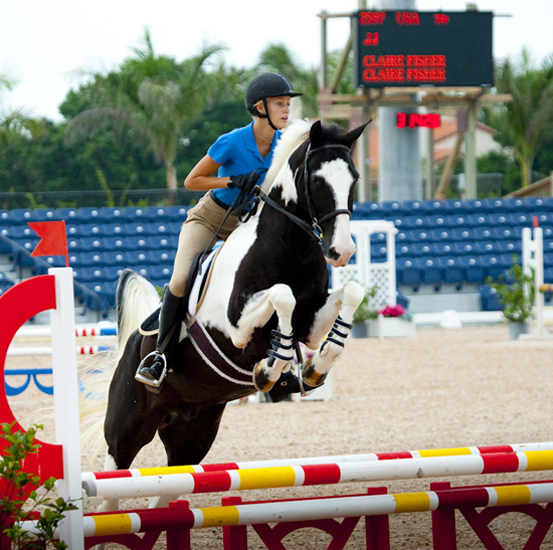
    Drew - I shot my daughter's horse show over the weekend and noticed this paint horse was much easier for continuous AF to recognize and track than our horses; which are pretty monochromatic, bays. From this I deduce (no surprise) that the contrast of the subject remains pretty important.

    post-630-1243971927.jpg

Sea & Sea

Account

Navigation

Search

Search

Configure browser push notifications

Chrome (Android)
  1. Tap the lock icon next to the address bar.
  2. Tap Permissions → Notifications.
  3. Adjust your preference.
Chrome (Desktop)
  1. Click the padlock icon in the address bar.
  2. Select Site settings.
  3. Find Notifications and adjust your preference.

