Maybe I can add my two-cents here....
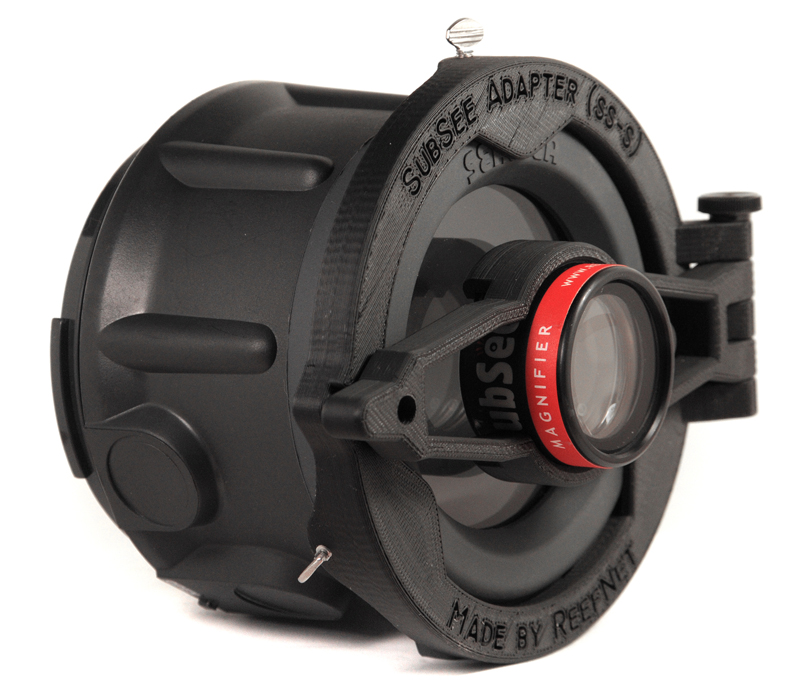
The Macromate is (from my tests) approximately a 135mm lens. This means you won't be able to focus on anything beyond 135mm of the center of the MacroMate itself. So your working range is changed from, lets say, 30mm-infinity without it, to 10mm-135mm with it (minimum focus distances were arbitrarily chosen, but show that closest focus is indeed decreased with the diopter in place). From an optical theory point of view, the 60mm lens coupled with a 135mm lens (like the macromate) will give a maximum magnification of 1.89X at closest focus, but this is assuming both lenses are infinitely thin. In reality, when using the 60mm/macromate pair, the closest focus point occurs inside or behind the macromate itself....hence they advertise to use it with a 100mm lens (or greater).
Another point to note, is that the magnification doesn't actually increase as you go farther away from the diopter....this is just an optical illusion. Subject magnification is a determined only by the diopter-to-subject distance. For maximum magnification to be seen in resulting photographs, you need to have your primary lens as close to the diopter as possible.
Another interesting point to note... take a group of lenses capable of achieving 1:1... the 60mm, 100mm, and 200mm for example. Now put a macromate in front of each. Intuitively, you'd think that magnification effects would be uniform for all of them...but it is actually quite the contrary. The longer the primary lens focal length, the more magnification can be "milked" out of the diopter put in front. For the lenses and diopter mentioned above, these are the resulting *theoretical* magnifications achievable:
60mm......1.89X
100mm....2.48X
200mm....3.96X
The real world values of these are around %30-40 less though.
Keri (logged into wrong account....)