Yea I had a great trip.
I don’t think a reef hook would help, much better idea trying to hide behind a rock or in a sheltered location. I think a RH would actually be more difficult to use.
The conditions were only tough in the 1st two dives at wolf. On these dives at the landslide site, basically it was straight down to 15-20 m then grab onto the rocks.
The current was strong but generally manageable. It was the surge that was difficult to cope with a camera in hand. One moment you were being pulled one way then a few seconds later you were heading in the other direction. I have 250 dives and after the 1st two dives at wolf I thought that I was in over my exp level. These dives were also pretty short and a few divers myself included were surfacing with less air than we should have had. Luckily these were the most difficult dives.
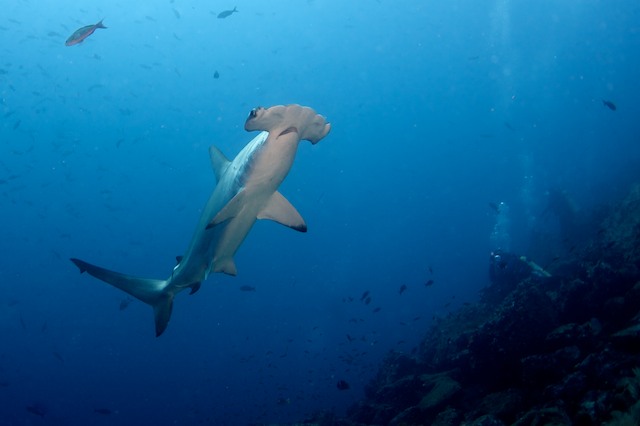
At Wolf you stay on the rocks. If you swim out into the blue you will prob scare away the hammerheads and it is likely you will not be able to make it back to the wall and hence it will be the end of the dive. The dives at Wolf were not drift dives. It was a grab onto a rock type dive. I guess if you have a DSLR you would need to use your thighs to grip the rocks!. I have a Inon dome for my P&S wet lens. I did not take it on these dives as I was scared I would damage the dome. At one point it was difficult to even aim a camera ever mind adjust the settings.
Twice at wolf I looked in the direction of the guide who was banging his tank to point out the hammers and my Mares Abyss reg went into free-flow. Had no worries about my mask. We did move after 20 mins into the dive, but it was not swimming, it was moving using the rocks. I had a few bruises at the end of the day as I was carrying to much weight.
At Darwin it was similar type of dive but there was no surge and the current was no where near as strong.
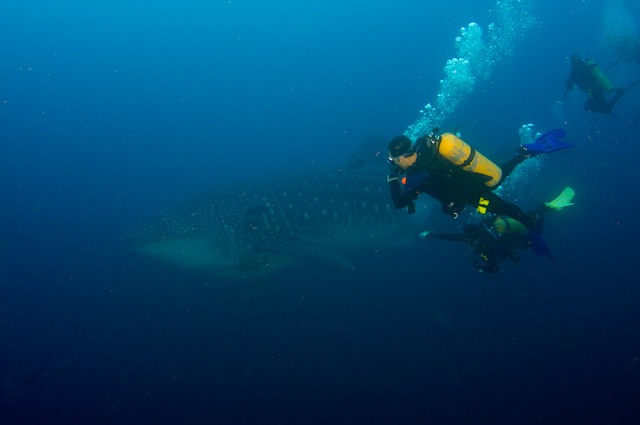
At Darwin again you go down to 20-25 m and sit on the ledge watching the action. If a Whale shark shows up everyone leaves the wall & swims out into the blue.
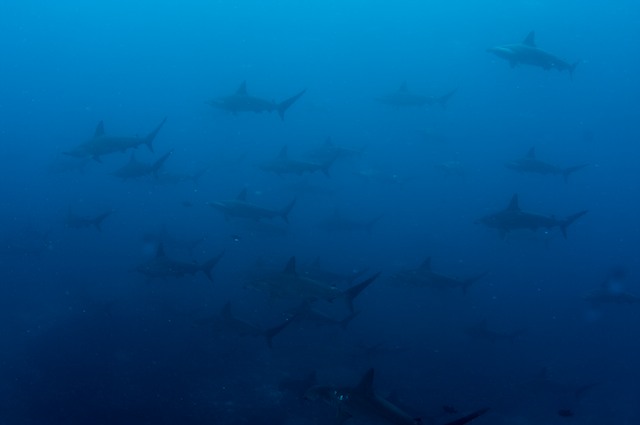
Generally there is enough action to ensure you stay on the wall for 20-30 mins. Then the guides would lead everyone out into blue water to look for more stuff. This happened early if there was not much action or the WS did not appear in the 1st 30 mins. Generally everyone should stay near the wall to ensure close shark action.
If you swim out into the blue the shark tend to keep there distance.
Saying that there is so much action at Darwin, not just out in the Blue but all around, above & below. I could not believe that large Moray eels were free swimming through diver’s legs while they were on the ledge and they did not notice due to looking out at all the sharks. It was so funny.
Generally you can get close to the WSs for 1-2 mins if you are lucky & have good fins and are fit!!.
Getting close to the dolphins & seals was down to luck.
AT the other sites you swim about looking for stuff. There is current, but again it is manageable.
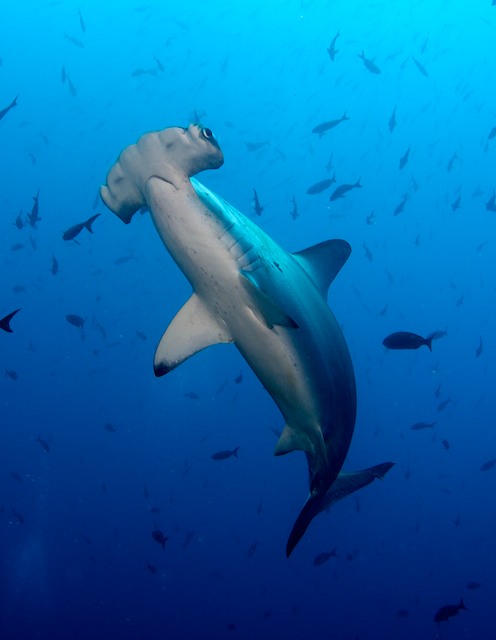
This was the 1st time where i have really felt the disadvantages of shutter lag with a P&S, especially with the seals. I also suggest long strobe arms as there is a lot of potential for back scatter. Viss was best at Darwin (20+m). Closest Hammerhead action also at Darwin.





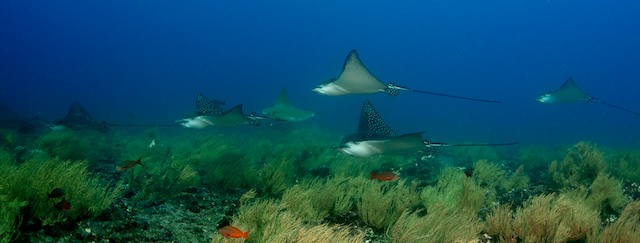
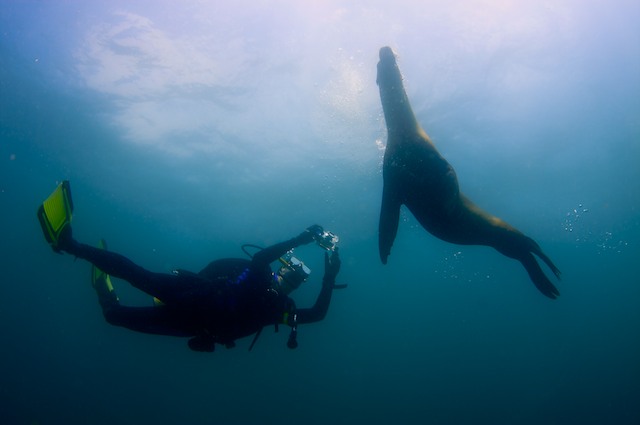
 I'm concerned about hanging onto the rocks and trying to shoot with a large DLSR rig! Should prove to be interesting. I'm thinking of bringing my point and shoot Olympus 5050 as a contingency plan, which is a lot smaller setup as you may know. I have buoyancy control floats on my STIX arms for the larger DLSR, which could add to the drag problem, but they can be removed. Something for you to think about when trying to lower your overall drag. Also, bring good fins!


