Skip to content

Conservation and the Environment / Archived topic

TIGER SHARK KILLINGS at ALIWAL SHOAL

Started by aboshoff ·

  • 29Posts
  • 29Replies

Read-only discussion

TIGER SHARK KILLINGS at ALIWAL SHOAL

29 posts
  1. Visit My Website


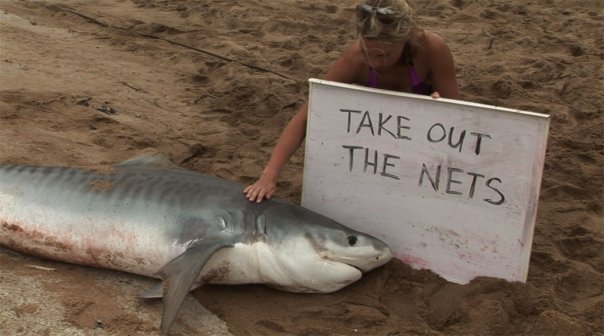
    During October The Natal Sharks Board has once again killed Tiger Sharks within the Marine Protected Area of the Aliwal Shoal. A friend of mine , Mark Addison, was present and supplied the pictures on my website.


    Please have a look at the above link, read the letters of response ,go to the page " support " and follow the instructions .


    I would be glad if fellow "Wetpixilians" could ad their voice to this concern , there are a few amongst you who have had encounters with these magnificent animals in the past. You have certainly spend some money in South Africa in pursuit of shark encounters.

    The nets are there to protect the tourism industry , most of us are tourist to the Aliwal Shoal.

    Our concerns must be heard


    It would be a shame to lose more sharks due to the shark nets and fishing in this " Marine Protected Area " .


    Any suggestions are also welcomed.


    Please act .... :bottled:

    Edited by aboshoff
  2. Aboshoff

    I'm a little confused with your headline. Are you saying that Mark said that the NSB killed the sharks directly? As far as the press release by NSB, 4 tiger sharks were tangled in the Scottsburgh nets and 1 was released.

    You can read the NSB press release:

    http://www.shark.co.za/news/news.htm

    While I totally concur that shark nets/drumlines are not known to be fully effective in preventing human/shark proximity, the psychological effect has benefitted the entire beach industry on the KZN Coast, leading to jobs etc for hundreds of thousands, if not millions. Counter that with maybe 1000 divers who use 3-4 providers of tiger shark dives at Aliwal, which benefit maybe 100 people in the small industry. Even if you count the tens of thousands of recreational divers hitting Aliwal at Umkomaas, it still is much smaller than the throngs of tourists visiting the beaches along KZN.

    The NSB isn't close to perfect by any means. It does however help in striking the balance between the coastal tourism industry needs and the relatively small shark dive industry and conservation in general. According to the NSB, the avg Tiger catch is 5 sharks a year with a mortality of 60% since 1978 til 2007. The shark diving industry really only took off in the last 10-15 years. The nets have been there since the 60s and 70s and the industry still managed to grow into a burgeoning business. The NSB still pull the nets annually when the sardines arrive to prevent mass slaughter of the sharks and dolphins ( yes they did learn that the hard way but at least they responded positively).

    The harsh reality is that pulling the nets from Scottsburgh permanently will affect tourism in the area. Scottsburgh can possibly bear the loss of the shark diving business, they definitely cannot bear the loss of beach goers annually who move to some other part of KZN where there are nets for "protection". A side-effect of the reality of human expansion, we take care of our own first.

    The good news is that South Africa is still doing ok on shark population but that's changing rapidly with the growing fins business in ZA. One would think getting protection from commercial fishermen would be the best way to protect all sharks in ZA waters and beyond.

  3. Aboshoff

    I'm a little confused with your headline. Are you saying that Mark said that the NSB killed the sharks directly? As far as the press release by NSB, 4 tiger sharks were tangled in the Scottsburgh nets and 1 was released.

    You can read the NSB press release:

    http://www.shark.co.za/news/news.htm


    They were killed by entanglement and suffocation in the shark nets


    While I totally concur that shark nets/drumlines are not known to be fully effective in preventing human/shark proximity, the psychological effect has benefitted the entire beach industry on the KZN Coast, leading to jobs etc for hundreds of thousands, if not millions. Counter that with maybe 1000 divers who use 3-4 providers of tiger shark dives at Aliwal, which benefit maybe 100 people in the small industry. Even if you count the tens of thousands of recreational divers hitting Aliwal at Umkomaas, it still is much smaller than the throngs of tourists visiting the beaches along KZN.


    Indeed , the shark nets do provide a psychological effect for the mass of uninformed people visiting Natal, but I am not suggesting that all the shark nets be removed. Sharks should however enjoy protection within the Marine Protected Areas, which is only a small area along the Natal Coast . Tiger sharks are more abundant in the Aliwal shoal Area than anywhere else , and that is where they need to be protected.


    The NSB isn't close to perfect by any means. It does however help in striking the balance between the coastal tourism industry needs and the relatively small shark dive industry and conservation in general. According to the NSB, the avg Tiger catch is 5 sharks a year with a mortality of 60% since 1978 til 2007.


    The shark diving industry really only took off in the last 10-15 years. The nets have been there since the 60s and 70s and the industry still managed to grow into a burgeoning business. The NSB still pull the nets annually when the sardines arrive to prevent mass slaughter of the sharks and dolphins ( yes they did learn that the hard way but at least they responded positively).


    The harsh reality is that pulling the nets from Scottsburgh permanently will affect tourism in the area. Scottsburgh can possibly bear the loss of the shark diving business, they definitely cannot bear the loss of beach goers annually who move to some other part of KZN where there are nets for "protection". A side-effect of the reality of human expansion, we take care of our own first.

    October is not a school holiday and students are busy(should be) studying for November exams . The beach goers are mostly locals over the weekends, weather permitting( no very good weather).I feel that the beaches do not need the same level of protection in that period . The NSB also do not service the nets that often during these periods.


    We should also bear in mind that the rest of the vast South African coast line is not protected by nets , and has not suffered the loss of beach goers ,income etc example Jeffreys bay , Knysna , Plett (frequent sightings) ,pretty much the whole garden route, Overburg and East Cape . Gansbay, Kleinbaai is "on the map" because of the shark diving industry .( look how Hermanus benefitted as a whole from the visiting whales)


    Perhaps the few beaches within the MARINE PROTECTED AREAS could be managed without nets, public can be warned not to swim at dusk or dawn , murky water and educated to use the sea responsible in those unprotected areas in designated areas with lifeguard cover.


    The good news is that South Africa is still doing ok on shark population but that's changing rapidly with the growing fins business in ZA. One would think getting protection from commercial fishermen would be the best way to protect all sharks in ZA waters and beyond.


    YES , we are the first country to protect the Great White Shark ( people probably realized they were worth more dead than alive ). Are we doing "ok" because of a increase in the shark population or a demographic shift ?

    We have a huge problem North of the border, most of the Mozambique coast line is unprotected and frequented by illigal fishing vessels . The ones that get caught often have as much as 30 tonnes of shark fins in possession. How many sharks is that? I don't even want to think about it !

    Edited by aboshoff
  4. October is not a school holiday and students are busy(should be) studying for November exams . The beach goers are mostly locals over the weekends, weather permitting( no very good weather).I feel that the beaches do not need the same level of protection in that period . The NSB also do not service the nets that often during these periods.


    We should also bear in mind that the rest of the vast South African coast line is not protected by nets , and has not suffered the loss of beach goers ,income etc example Jeffreys bay , Knysna , Plett (frequent sightings) ,pretty much the whole garden route, Overburg and East Cape . Gansbay, Kleinbaai is "on the map" because of the shark diving industry .( look how Hermanus benefitted as a whole from the visiting whales)


    Perhaps the few beaches within the MARINE PROTECTED AREAS could be managed without nets, public can be warned not to swim at dusk or dawn , murky water and educated to use the sea responsible in those unprotected areas in designated areas with lifeguard cover.


    A few differences in the other areas you mentioned, the biggest being water temperature. Water temps in KZN are in the 20°C and above, making it swim-friendly. The areas you mention are in the 13-18°C range, which isn't very swim friendly for longer periods of time and the other attractions like the picturesque backdrops, surfing etc etc are a much smaller market than the beaches of Durbs and suburbs. The subtropical climate of KZN makes it more desirable than the southern destinations for sun and beach seekers especially in the colder months.


    Then there's the costs of net removal which isn't small. I've seen them do it for the sardines. It's not an easy task either. I can see Park Rynnie being unprotected as it is not nearly as crowded as Scottsburgh. Scottsburgh is so popular a spot and so many businesses rely on it that I doubt the removal of nets/drumlines will be tolerated. Shark divers may accept the risk of diving with big sharks but the general population don't want it. Seems like this group of tigers drifted in the nets because of a whale so it is an unfortunate incident. We'd all like to have zero casualties esp to preserve something as trivial as beach swimming, but reality sucks. With the nets, both people and sharks seem to have an unsteady truce. Of course in FL where the Keys are crawling with Bulls and Tigers, there are no nets, but they don't have the shark history of KZN of the 60s. Amazingly the problems of the 60s still haunt KZN today. A pity but a reality. Even to consider pulling the nets in scottsburgh will probably raise protests from businesses that are not shark diving related, just as the shark deaths have raised protests from the shark industry. If the incidents that happened during the shark dives were to be exposed, I would suspect it would become an even hotter issue.

    As an aside, it does seem the populations of inshore shark species (raggies, limbatus, dusky, tigers) in the KZN area is holding steady while the offshore species like the bronze/coppers seemed to have dwindled due to the longlining. The Zambies off Protea have numbers that bob up and down. So ZA is doing something better than many other developed countries. It has more MPAs than any other country country in the world. I agree that Moz seems to be the battle ground for shark conservation in Southern Africa. I'm sure you've heard of the deadly battles that go on there every now and then over the illegal fishing. Then you have the Chinese triads doing their monthly collection from villages along the coast for fins.

    USAID actually managed to get an old patrol boat to the Moz navy via the WWF and they are training up to man it. It'll be interesting to see the developments of this war. With the fin industry already holding back supply to keep prices up, knowing the supply is limited (like De Beers does with diamonds), the only real way to stop it is to make it illegal and ban it. Hopefully, the black market trade will be limited in scope (maybe making the fines big enough that it's profitable for law enforcement to go after them).

  5. The eastern Cape has a has a high number of shark attacks , the main culprits believed to be Great White Sharks and Raggedtooth Sharks.( refer to Global Shark Attack file )

    These "gentle" "Raggies " do seem to be more " aggro" in Cape Waters , I have seen loads and "big" ones around Port Alfred area and have had a uncomfortable experience with a Raggedtooth shark near Hangklip (western Cape). I have seen loads of sharks just snorkeling around Tsitsikamma .

    No sharks nets here. Do I care ? Not in the least..


    I don't believe that there are more sharks in Natal ,and there is not a great difference in sea temperatures between Natal and say Jeffreys .

    In Natal you just have a abundance of Zambezi sharks , they are very adapt for that environment and a most successful predator. Lets say Natal suits the Zambezi.


    The public panic in the 50's was i.m.o hysterical ,but no doubt KZN suffered a financial loss and something had to be done.


    KZN tourism is driven by domestic tourist ( from Gauteng) , the sad fact is that " Guatengers" now have other safety concerns and a increase in shark attacks as seen in the 50-60's would not have the same hysterical affect today. There are bigger threats in Gauteng than sharks and a number of people are more educated and informed about sharks.


    I also think that the problem lies further North , but bodies like NSB should increase their efforts to protect some species when they visit our waters , as they are under a heavy threat in other places.


    Would be nice if the SAAF or SA navy could patrol our seas more and stop the carnage as they are not very busy these days.

  6. post-17443-1226571193.jpg


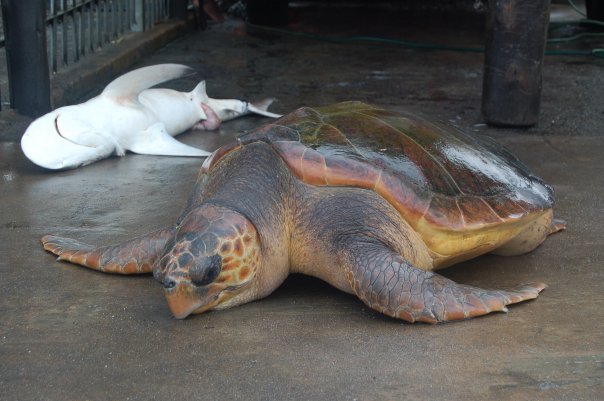
    Yesterday ! Same area. 1 Less Tigershark and 1 less turtle on the reef . Both caught in the shark nets

    This is getting irritating .

    Edited by emaltorio
  7. post-5062-1226743613.jpg

    post-5062-1226742645.jpg


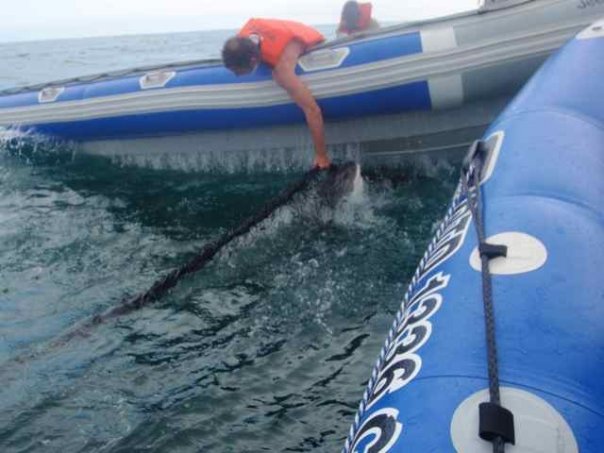
    November 14 -Another two. One is seen here in attempt to be released from the nets.

    More Tiger sharks have been seen dead in the nets these couple of weeks , than alive underwater.


    Thanks for the e-mails .

    post-5062-1226742993.jpg

    Edited by aboshoff
  8. This is really sad. They are removing incredibly vital stocks of these sharks. How many does it take?

    Edited by shawnh
  9. Merged the threads together for easier reading.

    That response is pretty much what I'd expect from them. "The nets are there for public safety" is the party line (however mistaken they are). Even though the science is there to argue against nets and drums, which politician wants to be hung with the plaque of removing the nets and coincidentally there's a bite due to some fool swimming in murky water somewhere nearby. It doesn't even have to be in the MPA. News doesn't censor itself.

    While Gautengers may be more savvy about sharks (according to Emaltorio, and I tend to disagree with that having quite a few non-diving Gauteng buddies), the larger general population may not be (especially the local businesses who depend on the influx of tourism). Everyone likes to err on the side of caution. I do think this is the lessen of 2 evils. It's a pity about the sharks though but the reality with humans is that EVERYTHING else is expendable.

    Edited by Drew
  10. Having spent six months documenting the Tiger Sharks of Aliwal on video for National Geographic I am saddened by this news. There were incidents of illegal fishing which was dealt with during the time I was there. This however is far more disturbing. This in fact is the systematic slaughter of sharks, any sharks, by a fishery, a fishery funded by the government of south Africa. I wrote asking a friend who works in the shark diving industry of Aliwal for any feedback and this is what I got: NSB being Natal Sharks Board -

    _______________


    "THE THING WITH THE NSB AND THE RECENT SLAUGHTER OF THE TIGER SHARKS IS THAT THEY ARE TRYING TO HIDE THE FACTS FROM THE PUBLIC IN VARIOUS WAYS -


    1) THEY HIDE THE ANIMALS UNDER THE NETS WHEN THEY COME IN .

    2) THEY DELIBERATELY UNDER MEASURE EACH ANIMAL BY ABOUT HALF A METER .

    3) THEY UNDER REPORT CATCHES - ON THE FIRST DAY THEY CAUGHT 3 BUT RECORDED ONLY 2 - WHAT'S GOING ON ?

    4) THEY ARE DUMPING ANIMALS AT SEA - WE FOUND ONE THAT ***** HAD SEEN A WHILE AGO FLOATING FINS AND TEETH CUT OUT ??

    5) THEY ARE FORCIBLY NOT ALLOWING ANYONE TO TAKE PICTURES OF THE SHARKS AT THE BASE ONCE THEY OFF LOAD THEM .


    WITH THE ABOVE IN MIND AND CERTAIN OTHER FACTS THAT HAVE COME TO LIGHT WITH THEIR DOLPHIN PINGER DETERRENTS - BASICALLY THEY DON'T WORK AND ALL THE ANIMALS THAT HAVE BEEN CAUGHT IN THE NETS IN THE RICHARDS BAY AREA HAVE BEEN CUT UP AND DUMPED UNDER INSTRUCTION OF MANAGEMENT AND A NIL RETURN SUBMITTED - WHILST THE RELEVANT SCIENTIST HAS BEEN INTERPRETING THE DATA AS VALID AND A HUGER SUCCESS AND GOING AROUND THE WORLD GIVING SEMINARS ON THIS WONDERFUL INVENTION THAT IS SAVING THE DOLPHIN - WHAT A JOKE - HOW CAN ANY OF THEIR DATA BE VALID . I THINK THAT IT IS ALL CORRUPT AND HAS JUST BEEN MANIPULATED TO SUIT THEMSELVES AND KEEP THERE DIRTY PAWS ON THE R25 MIL. BUDGET THAT THEY GET ANNUALLY .

    ________________


    Take a look at www.shark.co.za and see if you can find an email contact advertised? If you can you should aim your mail to Jeremy Cliff who is the head 'Scientist'.


    Cheers,

    Mark.

  11. Mark

    Your 3rd hand information from a highly vested interest must be taken as such. Those accusations of the NSB could bring him legal trouble if proven false, which is probably why he hasn't publicized it. If this person has proof of NSB misactions of this scale, he can easily submit it to the review board at MCM. But then again, the operators would also have come clean with the number of "incidents" during their shark dives, and risk getting shut down.

    I'm not saying this isn't an issue that needs to be addressed quickly but what good does the vilification of the NSB, whose job is to protect the beaches and manage the issues at hands? If facts about nets/drumlines cannot even convert the masses that are the businesses of KZN, an organization like the NSB has its hands tied. Having spent a bit of time with the NSB guys in '02-04, they are doing their best to placate the general public while protecting the sharks and other mammals. Sure they sell the fins of sharks they catch. Any person who thinks the sharks fin business is going to go away is highly naive.

    We already see the results of having the apex predators removed from reef areas. Red-Tooth Triggerfish now rule over reefs devoid of sharks.

    Edited by Drew
  12. As a conservationist, I philosophically disagree with the existence of the NSB. Their main goal is to kill sharks. They stay in business but subtly selling the continued fear of sharks. I have recently written several articles on the decline of sharks in South Africa for Divestyle magazine. I personally think all the nets should be removed and would like to see the NSB evolve into a marine patrol for the KZN coast. This is highly unlikely to happen but one can dream. My biggest problem is that realistically the nets do little to protect the beaches and therefore these sharks are being killed for naught. The NSB works off of a false negative - when an event with very little probability of happening continues to not happen that does not mean it is attributable to the shark nets. All this being said - the NSB is a far lesser evil than the continued commercial fishing - both legal and illegal, occurring in SA waters. While I would like to see the NSB defer to my conservationist ideals, I know it is fruitless unless I focus my efforts and make headway against the real cause of shark decline in SA - the continued overfishing of shark stocks.


    cheers!


    - MDP

  13. For all this criticism of the NSB and shark deterrents, I'd like to see the critics guarantee once the nets/drumlines are removed, there will be no shark incident. It may be a false premise, but in the minds of the general public, it's working so why fix it? Sure, in a conservationist's perfect world, people who want to go swimming in brackish water beaches enter at their own risk, but we all know humans will choose human life over a fish anytime.

    How do we solve the issue? I haven't heard one viable solution from anyone involved. How do you placate the masses demand for safe beaches while protecting the sharks? Reading the stats, the chances are much lower than crossing the street or even getting mugged in ZA. It'll take a very brave politician to remove the nets and risk the repercussions should anything happen. A large part of the public wouldn't mind exterminating every shark so they can surf, swim and get sand up their cracks safely. Look at how the reactive killings of the protected species of great whites after every shark incident in WA beaches. The police look the other way as a bunch of drunk fishermen go out playing Quint.

  14. Quick question: How many nets does the east and west coasts of the United States have? California with it's great whites? Florida with its bulls, tigers, great hammers? North Carolina? What about the Bahamas with incredible numbers of large "predatory" sharks? I wonder if the situation is different in these places why it can't be replicated in ZA? Doesn't seem to me to be an intractable problem. Seems like education and continued effort are required...not justification for its existence and continued complacency.

  15. Not be be completely misanthropic - but the whole idea of "protecting" beaches in disgusting to me. This is a pentultimate example of how arrogant humans are. Sharks have played the role of apex predator for approximately 400 million years. Humans think little of moving into their environment - for recreation no less - and simply kill them for getting in our way. So yes, I would like to see every net and drumline removed. Shark attack would be low with or without the nets. I think a more important factor is that there is no longer a whaling industry in Durban. The lack of whale oil and blood flowing down across tourist beaches probably has a lot more effect on reducing shark attack than the placement of nets (which sharks can swim over, under, or around). Furthermore, based upon data from the shark attack file, the only density dependent factor that affects shark is not shark numbers but number of people utilizing the water. Economics aside, if we really wanted to reduce the number of shark attacks we should simply limit the amount of people who can swim/surf etc. Obviously, this will never happen, although it would appear to be the most effective solution. What we have to ask ourselves is why do sharks get singled out as special? In KZN, there are literally hundreds of deaths per year on the roads with cattle - why is there no natal Cattle Board to catch or shoot cows that wander onto highways? Put into perspective the existence of the NSB really is a farce. The organization was created over a half century ago in another time, and its an anachronism whose conception would not be tolerated in the more environmentally sensitive and PC world of today. South Africans have now grown up with the NSB and take a laissez-faire attitude. The NSB will continue to exist until attitudes there change. Fighting over the existence of the NSB still proves fruitless with the amount of commercial fishing still happening in the world...


    cheers!


    - MDP

  16. Quick question: How many nets does the east and west coasts of the United States have? California with it's great whites? Florida with its bulls, tigers, great hammers? North Carolina? What about the Bahamas with incredible numbers of large "predatory" sharks? I wonder if the situation is different in these places why it can't be replicated in ZA? Doesn't seem to me to be an intractable problem. Seems like education and continued effort are required...not justification for its existence and continued complacency.

    Err none of them have the same shark attack history of KZN either, even if it is 40 years old. I can also name Australia as another country with nets/drumlines. What does that achieve? Finding the solution means moving away from criticising only and coming up with solutions that will work.


    Not be be completely misanthropic - but the whole idea of "protecting" beaches in disgusting to me. This is a pentultimate example of how arrogant humans are. Sharks have played the role of apex predator for approximately 400 million years. Humans think little of moving into their environment - for recreation no less - and simply kill them for getting in our way. So yes, I would like to see every net and drumline removed. Shark attack would be low with or without the nets. I think a more important factor is that there is no longer a whaling industry in Durban. The lack of whale oil and blood flowing down across tourist beaches probably has a lot more effect on reducing shark attack than the placement of nets (which sharks can swim over, under, or around). Furthermore, based upon data from the shark attack file, the only density dependent factor that affects shark is not shark numbers but number of people utilizing the water. Economics aside, if we really wanted to reduce the number of shark attacks we should simply limit the amount of people who can swim/surf etc. Obviously, this will never happen, although it would appear to be the most effective solution. What we have to ask ourselves is why do sharks get singled out as special? In KZN, there are literally hundreds of deaths per year on the roads with cattle - why is there no natal Cattle Board to catch or shoot cows that wander onto highways? Put into perspective the existence of the NSB really is a farce. The organization was created over a half century ago in another time, and its an anachronism whose conception would not be tolerated in the more environmentally sensitive and PC world of today. South Africans have now grown up with the NSB and take a laissez-faire attitude. The NSB will continue to exist until attitudes there change. Fighting over the existence of the NSB still proves fruitless with the amount of commercial fishing still happening in the world...


    cheers!


    - MDP

    Matt, we all know the whaling was the probable cause of the attacks way back when. The counter to your cow argument (and I happen to know that one of the shark operator's father suffered serious injury when he collided with a cow on the N3) is that cows are food and serve a purpose that is entirely human. We all know about sharks serving a greater purpose but seriously, you expect the regular KZNer to care? Don't blame the South Africans... it's entirely human to not care anything that doesn't affect them directly. Wait till fish prices go up 500% like oil did then they'll care.

    Edited by Drew
  17. FYI


    NATIONAL SEA RESCUE INSTITUTE - Media Release:


    (For Immediate Release)


    Plettenberg Bay, 10 December, 2008. Man airlifted to hospital and teenager bitten by shark:


    At 14h17 NSRI Plettenberg Bay and Baycare ambulance services were activated to the Tsitsikama Nature Reserve at the Storms River Mouth near to the suspension bridge following reports of a 74 year old Sedgefield man fallen on rocks while hiking.

    SA National Park Rangers and members of the Mountain Club of South Africa also responded.

    On arrival on scene the man was found in a serious condition and unconscious and while medics stabilized the patient an SA Air Force Charlie Flight 15 Squadron BK-117 helicopter from Port Elizabeth, with a Netcare 911 paramedic on-board, was scrambled and on arrival on-scene the man was secured into a Stokes basket stretcher and hoisted aboard the helicopter and airlifted to a local Southern Cape hospital where he remains in a serious but stable condition.


    At 21h30 while NSRI volunteers were at the NSRI Plettenberg Bay rescue base at Central Beach, Ray Farnham, NSRI Plettenberg Bay Station Commander, said, they were watching as a 15 year old male angler, fishing from the beach front, was fighting a 2 metre long Ragged Tooth shark that had taken the bait on his surf rod, reel and line.

    Ray said the youngster, a keen angler, had fought for an hour and a half to land the shark and while attempting to release the shark back to the sea he had grabbed hold of the sharks tail fin but at that point the shark had swung around and bitten him on his legs and torso.

    Ray said the shark had then swum back out to sea leaving the teenager injured on the shore with bite marks to both his legs and to his torso.

    Immediately NSRI medics administered medical assistance and an ambulance was summoned while the teenager was stabilized at the NSRI rescue base's medical room.

    He was taken to a local hospital in a stable condition for suturing.

    Ray said the lesson learned and an appeal to anyone facing a similar situation of landing a shark while angling is not to touch the shark which would in most cases instinctively defend itself from capture which is what appeared to be the case in this instance.


    Released by:


    Craig Lambinon

    NSRI Communications

    0823803800


    NSRI is manned by 880 volunteers at 29 coastal rescue stations and 3 inland dams. NSRI's R17m Annual operational expenses are achieved by donations and sponsorships. The volunteers save the organization a salary bill in excess of R185m per annum. NSRI began in 1967 as a humanitarian sea rescue service at no charge to the public.

    Our Mission: SAVING LIVES AT SEA AND ON INLAND WATERS.

  18. Err none of them have the same shark attack history of KZN either, even if it is 40 years old. I can also name Australia as another country with nets/drumlines. What does that achieve? Finding the solution means moving away from criticising only and coming up with solutions that will work.


    which is what then drew? you seem to be countering everyone elses arguement, but not acutally presenting any solutions, apart from saying we need to "come up with solutions that work"


    FYI


    NATIONAL SEA RESCUE INSTITUTE - Media Release:


    (For Immediate Release)


    Plettenberg Bay, 10 December, 2008. Man airlifted to hospital and teenager bitten by shark:


    At 14h17 NSRI Plettenberg Bay and Baycare ambulance services were activated to the Tsitsikama Nature Reserve at the Storms River Mouth near to the suspension bridge following reports of a 74 year old Sedgefield man fallen on rocks while hiking.

    SA National Park Rangers and members of the Mountain Club of South Africa also responded.

    On arrival on scene the man was found in a serious condition and unconscious and while medics stabilized the patient an SA Air Force Charlie Flight 15 Squadron BK-117 helicopter from Port Elizabeth, with a Netcare 911 paramedic on-board, was scrambled and on arrival on-scene the man was secured into a Stokes basket stretcher and hoisted aboard the helicopter and airlifted to a local Southern Cape hospital where he remains in a serious but stable condition.


    At 21h30 while NSRI volunteers were at the NSRI Plettenberg Bay rescue base at Central Beach, Ray Farnham, NSRI Plettenberg Bay Station Commander, said, they were watching as a 15 year old male angler, fishing from the beach front, was fighting a 2 metre long Ragged Tooth shark that had taken the bait on his surf rod, reel and line.

    Ray said the youngster, a keen angler, had fought for an hour and a half to land the shark and while attempting to release the shark back to the sea he had grabbed hold of the sharks tail fin but at that point the shark had swung around and bitten him on his legs and torso.

    Ray said the shark had then swum back out to sea leaving the teenager injured on the shore with bite marks to both his legs and to his torso.

    Immediately NSRI medics administered medical assistance and an ambulance was summoned while the teenager was stabilized at the NSRI rescue base's medical room.

    He was taken to a local hospital in a stable condition for suturing.

    Ray said the lesson learned and an appeal to anyone facing a similar situation of landing a shark while angling is not to touch the shark which would in most cases instinctively defend itself from capture which is what appeared to be the case in this instance.


    Released by:


    Craig Lambinon

    NSRI Communications

    0823803800


    NSRI is manned by 880 volunteers at 29 coastal rescue stations and 3 inland dams. NSRI's R17m Annual operational expenses are achieved by donations and sponsorships. The volunteers save the organization a salary bill in excess of R185m per annum. NSRI began in 1967 as a humanitarian sea rescue service at no charge to the public.

    Our Mission: SAVING LIVES AT SEA AND ON INLAND WATERS.



    ?? :unsure:

  19. which is what then drew? you seem to be countering everyone elses arguement, but not acutally presenting any solutions, apart from saying we need to "come up with solutions that work"

    Which is exactly what I've been asking of those writing to condemn the NSB, suggest a real alternative. As I've repeated at least twice, the NSB, while wholly imperfect and working on a false premise, strikes the balance between psychologically 'protecting' the general population and also preventing a mass removal of sharks. In essence, it is doing the job it was created to do so. Until better education in ZA lowers the inane fear of sharks, they are the unfortunate balance right now. I wish I could infuse a state of calm about sharks among the world's general population and a need to protect them.

    Criticising the NSB and throwing out allegations of misdeeds by vested interests is neither fair nor constructive. Until a better alternative is found, going to drumlines and removing the nets is the best answer to maintaining that balance for now. It lowers accidental deaths (I've seen humpbacks caught in the nets even) of marine animals. This is a discussion about how the nets are affecting the population of tiger sharks and how the shark diving operators are worried their star attraction may be affected. Furthermore the allegations of misdeeds by the NSB need addressing as there is simply no concrete proof as of yet. I've not heard of their urge to protect the many other shark species that are being caught in the net. In fact, when the shark feeding first started, the population of C. Limbatus that compliments the dives were not as prolific until '02 or '03, right about the time when the C. Brachyurus were being hit by the longliners.There's not enough data to say anything but it's an observed trait that the C. Brachyurus are much fewer in number. The other issue is that for many, distinguishing between the 2 sharks is still problematic. So did the C. Brachyurus being hunted offshore bring about the proliferation of the inshore C.Limbatus? What is the connection?


    Travy

    Did you post that NSRI newsclip to say something? What is the connection?

    Edited by Drew

Account

Navigation

Search

Search

Configure browser push notifications

Chrome (Android)
  1. Tap the lock icon next to the address bar.
  2. Tap Permissions → Notifications.
  3. Adjust your preference.
Chrome (Desktop)
  1. Click the padlock icon in the address bar.
  2. Select Site settings.
  3. Find Notifications and adjust your preference.