



Skip to content

Lights, Strobes, and Lighting Technique / Archived topic

Reducing Strobe Power

Started by betti154 ·

  • 24Posts
  • 24Replies

Read-only discussion

Reducing Strobe Power

24 posts
  1. Hi,


    I've been doing some deep wreck shooting where available light is very limited. To compensate I've been shooting at higher ISO with aperture wide open to prevent the black background. I'm using 2 x DS-125s to light the foreground.


    My issue is that the DS-125s even at minimal setting are blowing out subjects in the foreground.


    I realise that the obvious solution is to stop down the aperture and run with a longer shutter but I'm already at 1/20th or there abouts so cannot go longer. I don't want to go down the tripod path for all dives either as it's too much overhead in some situations.


    My theory is to reduce the strobe output using some type of ND filter. I was thinking of cutting out some gels and drop these behind the DS-125 diffusers. Any thoughts?

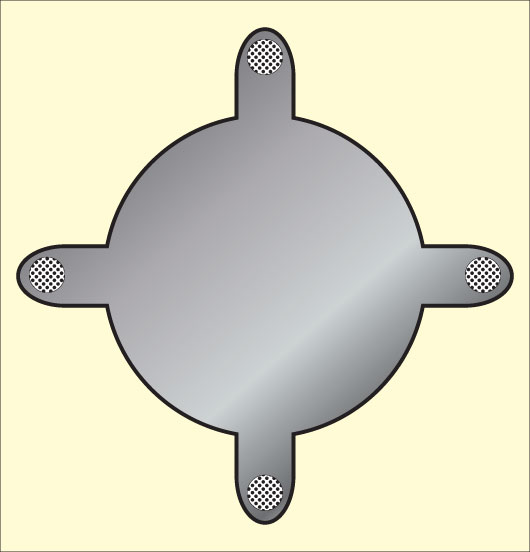
  2. Inon Z240 strobes come with two diffusers. A -0.5 stop one which everyone uses at some stage and a -3 stop one that no-one EVER uses. You should be able to pick up a couple of the -3 version for next to nothing and trim them to fit behind the diffusers on your strobes.

  3. This sounds obvious but it works - just use your hand as a shade to 'block' some of the light output.


    Cranky but it works is easy to vary and cheap.


    (sounds just like my missus)


    Paul C

  4. Another (though not simple or inexpensive)) thing to try would be to use off camera lighting.


    There are a few slave strobe adaptors that would allow you to place your strobes further away from the area you want to highlight, hence reducing the light falling on to it.


    It would also give you the option of lighting areas that are not within the reach of the strobes as mounted on your strobe arms. i.e. wreck interiors etc.


    Adam


    Just read your adendum Paul-you are sooo brave!!!!!

  5. how about adding some home made diffusers out of thicker plastic and taping them onto the strobes

  6. I think that this highlights an issue strobe manufacturers need to address. With an increased desire to shoot at higher ISOs (driven by improving camera capabilities) in deep or dark places - we need flash guns with even lower manual power settings. I had my INON on its lowest setting yesterday, and still ended up with my hand in front of it (the other one was switched off!) to get the effect I wanted. And the INONs are better than many in having a wide range of manual powers.


    Yes you can add diffusors and ND filters etc (although my only ND gels are Kodak gelatin ones and would dissolve in water), but you don't always know you are going to need them before a dive.


    Alex

  7. Thanks all for your replies. The "hand diffuser" options sounds too simple/easy though I think I'll struggle to put my hand in front of the strobes with 12+9" arms on each side.


    I quite like the off camera lighting and have applied this technique quite successfully in caves before (using DS-125s with manual controller as trigger). I'm not sure how practical this will be in the conditions that we dive in, which are often deep (sub 50m and low vis). Positioning the strobe and sensor to fire would be difficult at time too, though the logistics of this would be my biggest concern. I suspect that lugging a tripod down would be faster/easier.


    It sounds like there is some kind logic to my idea so I'll jimmy something up. If it works in concept I might look into the Inon diffusers that Gudge mentioned.


    Alex, thanks for the heads up on the disolving properties of a gel filter. It would have been quite embarassing to have it disolve away mid dive!


    kind regards, damien

  8. Hi Damien,


    Just a note for the record to add to Paul's comment. In the good old days before strobes had 11 different power settings (remember full, half & qtr?) the rule of thumb was one finger held over the strobe equaled 1 f/stop. It still works.

    I assuming you've thought about just moving the strobes back.


    Have fun!


    Steve

  9. Have used Ikelite manual controllers and diffusers and they are very useful for cuting output. Stacking diffusers might be another thing you could do and of course you can also just move the flash a bit further away on longer arms - output drops by about 1 f-stop / 0.5 m for average wideangle flash.


    But it would be nice if the manufacturers had flash units with lower output.


    Cheers

  10. Try using Rosco Cinegel filters. They are very tough and made for theatrical lighting. Hundreds of shades and densities to choose from and they offer a small mini sample swatch book. Try finding them at any theatrical production supplies store. They have several intensities of neutral density gels. A quick look shows me that they have transmittance values anywhere from 70% (Rosco N.15 #3415, half a stop) down to as low as 12% (Rosco N.9 #3404 reduces intensity by 3 stops). They also include mired shift values in the description of the gels along with technical color data sheets on their website.


    I have used these filters underwater mainly in freshwater but have also experimented with them in saltwater applications and found that either fresh or salt water has minimal impact on the gels. You should be able to get quite a few dives in with them before having to discard them for a new set.


    Finally the good news about them, they come in 26 inch x 26 inch x about 1mm thick extremely flexible sheets so you can custom cut filters to mount behind your diffusers on your strobes. I have used these filters behind diffusers on my Ikelite DS200 strobes without any problems. You should be able to get at least a dozen filters out of one sheet alone.


    I almost forgot, they retail for about $7.95 CAD a sheet, or a little bit more for some of the more exotic colorations, up here in Canada. YMMV


    For more information check their website Here.

  11. I think I might give the Rosco gels or similar a go.


    I love the figner stop rule though just don't think it's practical/possible for WA shooting across both strobes.


    I've thougnt about manual controllers but even at 1/10th I think it's too much output. 1/8th with diffusers on is too much so I'm thinking 1/16th is where I need to be. Triggering them from an Aquatica housing would also be difficult.


    I've pushed my strobes back as far as I can on 12+9" arms, though it introduces coverage issues as I'm shooting with a fisheye.


    thanks again, damien

  12. A cheap way of reducing the power output would be to put baking /greaseproof paper folded over several times between the strobe and the diffuser, this would further difuse the light, the paper is relatively waterproof, cheap and would withstand the heap of the strobes firing on land for testing etc. The more you want to reduce the light, the more times you fold the paper.


    Hope this helps.


    Tristan

  13. Could the strobes be not just turned further away the other direction?

  14. Could the strobes be not just turned further away the other direction?


    I'm shooting fisheye so the strobes are already pushing it to cover the whole frame. They currently blow out rogue fish or foreground spongEs on the wrecks.


    Baking paper is so simple I love it.

  15. Betti, did you try the baking paper, I would like to see some results if so :)

    Tristan

  16. We're hitting a deep wreck this weekend and I'm trying the low tec approach then. The weather hasn't been friendly to me so it'll be the first opportunity I've had to try it out.


    I've actually gone with with two layers of transluent foam, probably 0.5mm think each. Visually you can see that the light has been notable stopped down. I'm going to run some above water tests tonight and will report back. Given that I'm starting at 1/8th power I should have heaps of play upwards and cycle time is not a concern.

  17. Here is alink to lee filter, http://www.leefilters.com/lighting/product...C46DD306FEFF67/ Rosco does the same kind of stuff so get whatever is easier for you.


    I uses them in my studio as well as underwater (green and/or blue on the flash, Optical version magenta or red on the camera lens) and they holh super, here is a quick and dirty way to get them to hold


    Put some wooly velcro tabs on the strobe collar and cut the filter sheet and put some hook velcro tab on the filter as per drawing

    post-1676-1259705550.jpg

  18. thanks Jean.


    I've got gels on my land strobe with similar velcro attachment, so it's just a matter of sourcing the right filter gel/plastic.


    I was going to test out the low tec baking paper style diffusers last weekend, but my deep wreck efforts were thwarted by a wild current and nasty green/black water.


    Damien

  19. With the better high ISO quality in recent cameras, I think it is worthwihile considering housed 'land flash' for u/w photos. The Nikon SB-800 for example, offers manual control down to 1/128 power.


    And the advantage being, if they are controlled by the camera pop-up flash as commander via optical fibres, that the manual output of either of the 2 flashes can be set individually from full power to 1/2, 1/4........1/128 by the camera (Nikon models between D90 and D700). Both battery life and recycle time are superior in lowered power output (<1/4). Of course the other advantage being that true iTTL (aka CLS) is always with you when you are shooting marco.


    As quoted in the Nkon official site, the GN of SB-800 on land at 35mm coverage is 38, and at 105mm coverage is 58 (at iso 100).


    Edward

Marelux

Account

Navigation

Search

Search

Configure browser push notifications

Chrome (Android)
  1. Tap the lock icon next to the address bar.
  2. Tap Permissions → Notifications.
  3. Adjust your preference.
Chrome (Desktop)
  1. Click the padlock icon in the address bar.
  2. Select Site settings.
  3. Find Notifications and adjust your preference.

