



Skip to content

The Galley: General Chat / Archived topic

Story telling with Images, What makes a photograph great?

Started by Steve Williams ·

  • 21Posts
  • 21Replies

Read-only discussion

Story telling with Images, What makes a photograph great?

21 posts
  1. I recently picked up a book called “Within the Frame” by David DuChemin. Many of his messages really resonate with me and I’ve been thinking about how the themes and lessons can be used to improve the images I make. David is first and foremost a travel photographer who strives to make images that engages the viewer emotionally. That of course is nothing new but it’s the first time I’ve seen someone explain the process of making these images that tell stories and connect with people so well. Maybe it’s something that all of you pros deeply understand and I’m just beginning to open my eyes to the possibilities. I have the sense though that there is a lot in this book that can help the passionate amateur and even some pros make better pictures.


    Many of the images we celebrate in the underwater community are special (to us) because of the technical achievement they represent. Maybe, it shouldn’t surprise us that the general public doesn’t seem to be as excited by them. They don’t know the work it took to make the image or care what f/stop you used. They can only see what’s “In the Frame” and are either emotionally engaged or not. The days when people were awed and inspired by an image just because it’s underwater are long gone I’m afraid.


    Don’t buy this book for info on gear or what lens to use, (although all the great images are labeled) but if you’re feeling a little stuck and haven’t been visited by your muse lately this book may be just the ticket. The path to the treasure is a little clearer now.


    If you get a chance pick up a copy. Highly recommended. If you’ve read it I’d love to hear what you think.

    David's website is here; http://www.pixelatedimage.com/fluid2/


    Cheers,

    Steve

  2. I picked up the book over christmas. It is a great book and lets you think outside the box. He did a podcast where he critiqued images it was also called "Within the Frame"


    Good to see other people appreciate and look to other areas for inspiration.


    Jose

  3. I enjoyed reading his other book, VisionMongers: Making a Life and a Living in Photography. It was a pretty good read.


    However, I was truly inspired by another book I read over the holidays: Joe McNally's The Hotshoe Diaries. I've been playing with light lately through studio photography, and this book opened my eyes to the possibilities of what you can do with light. I find that my underwater photography improves the more I learn about other types of photography. It's forever a learning process, and of course, you have to practice to get better. I don't dive in the winter, except for my one week tropical vacation, so I do other types of photography to stay inspired, experiment, and learn new techniques.

  4. I'm not sure...


    ... in my experience, much augmented by conversation with other photographers and Alex Mustard in particular, the very best underwater images come from familiarity with the subject, its environment and from visualising the image, along with the technical requirements needed to achieve it, before even entering the water.


    This process is related to DuChemin's ideas, but I feel that the limitations imposed by having only a dive or two at best to set up the shot make it difficult to immerse yourself (sic!) in the environment and let the image evolve, which is how I interpret his ideas.


    Maybe this is my personal problem: I have come to feel that I take sophisticated snapshots rather than considered images, that I try to do too much on any given dive, that I'm making reportage and not art.


    Tim


    :(

  5. I'm not sure...


    ... in my experience, much augmented by conversation with other photographers and Alex Mustard in particular, the very best underwater images come from familiarity with the subject, its environment and from visualising the image, along with the technical requirements needed to achieve it, before even entering the water.


    You've got a point. I know many underwater photographers who don't know anything about the subjects they are shooting, and that puts them in a distinct disadvantage to those who have researched the subject and have also experience diving with the subject. Until I started learning more about the creatures I see, it was difficult to figure out how to best approach them and get the best shot. Most of my diving is done on local wrecks. I plan those dives very carefully, knowing what shots I want to achieve before I even arrive at the dock. However, it's often more difficult with creatures because you don't know what you're going to get on any particular day. My point was that unless you practice photography on a regular basis, you're not going to progress quickly. Creativity and skill go a long way.

  6. You've got a point. I know many underwater photographers who don't know anything about the subjects they are shooting, and that puts them in a distinct disadvantage to those who have researched the subject and have also experience diving with the subject. Until I started learning more about the creatures I see, it was difficult to figure out how to best approach them and get the best shot. Most of my diving is done on local wrecks. I plan those dives very carefully, knowing what shots I want to achieve before I even arrive at the dock. However, it's often more difficult with creatures because you don't know what you're going to get on any particular day. My point was that unless you practice photography on a regular basis, you're not going to progress quickly. Creativity and skill go a long way.

    I think in a similar way, and certainly a long way ahead - I have detailed written plans and sketches of shots that I want to take for several destinations that I haven't even booked yet. One set of shots that I have planned I need equipment that doesn't appear to be developed yet - I will be talking to some people about get custom equipment made shortly, if it all comes off then it will be worthwhile because the images should be stunning.

  7. .................. I plan those dives very carefully, knowing what shots I want to achieve before I even arrive at the dock. ......


    Indeed, and the source for familiarity material can come from unlikely places. Before I drove to Scapa Flow, I watched the underwater video footage of HMS Royal Oak shot by Peter Rowlands several times. There were few things certain, but I knew that a) time on the wreck would be limited and b) I would never get another chance to photograph this wreck again in my lifetime. Thanks to the video, I knew the style and subject of what I wanted to cover before leaving home. All I had to do was hope time had treated the subjects well (it had) and I could find them (I did). The only variables to contend with was the visibility - at best 5m - and finding the "unknowns" and capturing them too. Carrying a tripod for a long exposure mitigated the limited light levels on the seabed.


    Those going to BSOUP on the 14th of April will hear the full story.

  8. Thanks for the thoughts folks. I thought I was the only one who sketched little drawings of the images I want to capture. :( Just to reinforce your thoughts on planning ahead. David's book includes access to a downloadable chapter on travel on his publishers website. Some really good ideas there. In this chapter he includes a before a trip checklist and timetable. One of the items surprised me. He has a complete shot list ready to go based on his research of the places he's headed 30 days before. I'm like you Tim. My style of shooting underwater has been a mixture of street and wildlife style photography. Just sort of jump off the boat and see what shows up.


    In this book David speaks to all the ethereal concepts of photography; emotions, vision, conflict, etc. Yet when you see how he prepares for a shoot you see a guy who's so anal about the packing that he uses color coded stuff sacks to separate clothes from gear etc. There is a lesson here for us even more technically dependent underwater types. Get all the technical stuff behind you far ahead of trip so that that you can focus on what really counts to make good photographs.


    Cheers,

    Steve

    Edited by Steve Williams
  9. Thanks for the thoughts folks. I thought I was the only one who sketched little drawings of the images I want to capture. :(

    But do you laminate the sketches and take them underwater with you?


    Just to reinforce your thoughts on planning ahead. David's book includes access to a downloadable chapter on travel on his publishers website. Some really good ideas there. In this chapter he includes a before a trip checklist and timetable. One of the items surprised me. He has a complete shot list ready to go based on his research of the places he's headed 30 days before. I'm like you Tim. My style of shooting underwater has been a mixture of street and wildlife style photography. Just sort of jump off the boat and see what shows up.

    I plan on getting the shots I want first, and then use whatever time is left for the whatever turns up stuff - I can always alter the plan if need be. I find that it is much more productive to have a plan and then change it if circumstances dictate, than to have no plan and just swim around doing drive by shooting.


    In this book David speaks to all the ethereal concepts of photography; emotions, vision, conflict, etc. Yet when you see how he prepares for a shoot you see a guy who's so anal about the packing that he uses color coded stuff sacks to separate clothes from gear etc. There is a lesson here for us even more technically dependent underwater types. Get all the technical stuff behind you far ahead of trip so that that you can focus on what really counts to make good photographs.

    Maybe those people that called me anal were right after all :lol:

  10. But do you laminate the sketches and take them underwater with you?


    Water proof paper! :(

  11. Research combined with pre-visualization and time in the field are key to making great images IMO. When I was an intern at a newspaper in college my then director of photography, Joel Sartore, who is now a 20-year contract photographer for Nat Geo, always would preach to me that there is no magic bullet to making great pictures. It's simply doing your research and spending time in the field. The most successful photographers are the ones willing to work harder and smarter than the next, he'd say. I had the pleasure to go with him on assignment a few times for NG and I've never seen anyone work as hard as him. Not only behind the camera, but also in his research.


    IMO, he's right. I shoot topside 40 hours a week and I don't often have the luxury of knowing what's going to happen at my assignments. I just have to get as much info as I can and hope for the best. But my best work always comes from those assignments where I can do my homework and spend the time necessary to make good images.


    Since I mostly shoot shipwrecks I'm able to do a fair amount of homework before diving in and when my dive buddy and I are on the same page that's when the best shots happen. But I try to be ready for the unexpected.

  12. Steve,

    Thanks for starting this thread and same to those writing back. I am also trying to move past sophisticated snapshots. Tim, your comments sound as if you were reading my mind...but its a small job. :clapping: My best u/w photo's have been where I have a plan based on the location and am able to work the plan or some variation based on conditions.
    And it becomes clear why boat trips dedicated to photography have better chances for success. When in North Carolina last yr, I would have preferred to dive U-352 and the Spar several days in a row until I got the shots as I wanted them. But of course, the others diving wanted variation for their diving since they were sightseeing and wanting variation in their sites.

    Staying at a site that holds promise allows research and planning to be added for those new to the site...which I learned from reading other thread here, then observed the truth in it when I started trying research and planning myself and wishing I could repeat some dive sites.

  13. Research combined with pre-visualization and time in the field are key to making great images IMO. When I was an intern at a newspaper in college my then director of photography, Joel Sartore, who is now a 20-year contract photographer for Nat Geo, always would preach to me that there is no magic bullet to making great pictures. It's simply doing your research and spending time in the field. The most successful photographers are the ones willing to work harder and smarter than the next, he'd say. I had the pleasure to go with him on assignment a few times for NG and I've never seen anyone work as hard as him. Not only behind the camera, but also in his research.


    IMO, he's right. I shoot topside 40 hours a week and I don't often have the luxury of knowing what's going to happen at my assignments. I just have to get as much info as I can and hope for the best. But my best work always comes from those assignments where I can do my homework and spend the time necessary to make good images.


    Since I mostly shoot shipwrecks I'm able to do a fair amount of homework before diving in and when my dive buddy and I are on the same page that's when the best shots happen. But I try to be ready for the unexpected.


    I too agree.


    On top of this maybe some operators need to consider trips that allow for the immersion on a site. I think it is getting requested more and more by photographers. I remember when I started diving it was about getting as many different dive sites in my log book as it could. This I guess was supposed to represent experience. Now I realize that the way to see the most subjects and experience what a reef has to offer is familiarity with a dive site. Going back to it over and over and at different times of the day.


    IMO not only photographers would benefit from trips where you lock up onto a site for the day, conditions permitting, but also divers in general. I think we all see much more with this method. I know my top images have resulted from sites I dove more than once. That and non-fixed mooring sites would benefit from reduced damage possibly from repeated anchoring.


    Andy, I saw a show with Joel Sartore on NG network and loved it. He was shooting a rodeo and then heading off to South America. A behinds the scenes kind of look. I think you have learned from one of the best. I still like his polar bear shot that made the NG cover about 2 years ago. Great photographer!


    Cheers


    Todd

  14. the very best underwater images come from familiarity with the subject, its environment and from visualising the image, along with the technical requirements needed to achieve it, before even entering the water.

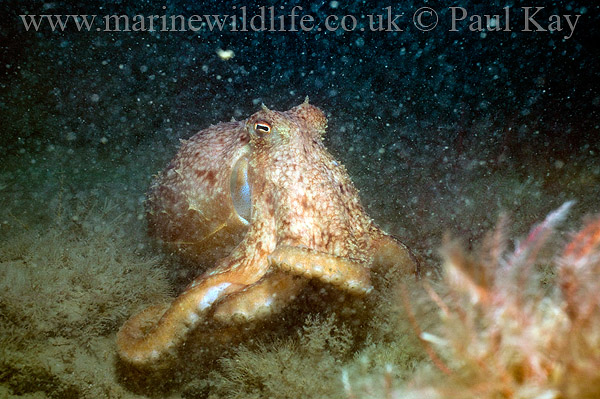
    If only it was that simple! In my experience, whilst some subject matter can be shot like this, in the (temperate at any rate) underwater world a lot of photography (of marine creatures) simply has to be reactive. This of course depends on what sort of subject matter you are looking for but for say fish as an example, the possibility of seeing some species is always low, even if diving in the right habitat. Chances of getting a preconceived shot are extremely low to non-existent. Familiarity, yes. Knowing what you see when you see it, yes. Being able to deal with the subject technically when seen, yes. But pre-visualising the image is an ideal scenario and such potential control (in the places I dive) is mostly wishful thinking, alas!

  15. But pre-visualising the image is an ideal scenario and such potential control (in the places I dive) is mostly wishful thinking, alas!

    As an illustration - an image of a hand sized, lesser octopus taken in visibility of around 1m off east Anglesey (generally murky), UK. Finding these creatures is difficult at the best of times, taking a 'different' shot which shows them in the conditions in which they usually live is simply down to spotting one and grabbing a shot!

    post-1587-1268213606.jpg

  16. Interesting thoughts from all of you here and a great thread, well done Mr Williams :drink: I think that both Tim & Paul both make valid points.


    If you are in a position where you know a certain critter will be there when you dive then the old army saying (Planning and Preparation Prevents Piss Poor Performance) (the 5 P's) holds true. I was especailly struck by this when doing a couple of dives with Alex at Swanage pier looking for Tompot Blennys Last summer. We had a first dive of about an hour, during which we used the standard 100mm Macro (105mm in his case) and strobes. We knew the critters were down there and roughly where they were. Alex then dismantled his kit, removing a handle so that he could get closer to the sea bed and achieve a better angle for the shot. So he planned the dive to just absolutely nail one shot that he had pictured for an article he was writing. Where as I was less discerning, jumped in the water with the same gear hoping to find a good shot. Needless to say I learned a lot :dance:

    Paul's take on the grabbing the shot when you see it and before the critter dissapears also holds true and the best photographers are ready to take these shots as well.

    Just my 2 pence worth... :D


    I also think that Steve's initial comment on non photographers looking at photos we create hits the nail on the head. I showed my first Nudibranch shot (of which i was very proud at the time LOL) to a friend who said "eugh a horrible slug" THere have also been other occasoin where I have taken an absolute howler of a shot (technically speaking) only to have people rave about it . I Have to chuckle to myself.

    Edited by Tjsnapper
  17. I received these gems from my first Graphics Editor, Larry Nylund, before he went to USA Today:


    "The most important thing is Being There".

    Here Larry was referring to being where the news was happening, but it's the same for other subjects, like underwater, eh?


    "If the image has content and tells a powerful story, I'll run it, I don't care how bad the quality is".

    More applicable to journalism, but it gives you a good grip on the priorities.


    "If you can't be good, be weird".

    When all else fails - you can't get that quality composition you want - try something really oddball. You might get lucky.


    "The eyes have it".

    Any image with emotion centers around the eyes.


    And lastly:


    "I don't care how hard it was to get this. It's still crap".


    Here's the sequence behind this quote:

    Me: "Here you go" (hands in assignment)

    Larry: "...What the? This is crap!"

    Me: "But you don't understand! It was the middle of a winter storm, and 20 degrees below, and my motor drive kept freezing - the wind was about 80 miles per hour, and I had to hang off the side of a ski lift tower 40 feet above the ground - I could only hold on with one hand, because I had to shoot with the other - I almost slipped and fell - the subject almost never looked in my direction - the lighting was way flat - did I tell you I almost fell off the tower and died? I went through hell to get this!"

    Larry: "Good for you. I don't care how hard it was to get this. It's still crap."


    All the best, James

    Edited by fdog
  18. Thanks for all the great thoughts folks. I resonate with what Larry told you James. I'll have to think about the "be weird" thought.


    "I don't care how hard it was to get this. It's still crap" Boy does that ring a bell. Reminded me of a quote from David Du Chemin's blog.


    "Craft matters, with apologies to Ansel Adams, who said there’s nothing worse than a sharp image of a fuzzy concept, there is: a fuzzy image of a fuzzy concept. Then it’s just total crap."


    Cheers,

    Steve

WaterPixels Store

Account

Navigation

Search

Search

Configure browser push notifications

Chrome (Android)
  1. Tap the lock icon next to the address bar.
  2. Tap Permissions → Notifications.
  3. Adjust your preference.
Chrome (Desktop)
  1. Click the padlock icon in the address bar.
  2. Select Site settings.
  3. Find Notifications and adjust your preference.

