



I change the lens quite often on the boat. Most of my diving is on the California Channel Islands off rather large boats (~60 ft). Unfortunately one never knows what the visibility is going to be, so I always take my macro and a mid-wide angle with the ports in a Pelican case with me. Opening the lens port very carefully and drying off the area around the O-ring immediately after opening, I've never had a problem so far (knock on wood). Just in case, I also have flood insurance. At least fogging is not an issue in SoCal.
- 35Posts
- 35Replies
Read-only discussion
Lens change on the boat?
35 posts
-
-
Done it once on a 2 tank dive outing in a large rib.
Had to do it out of dire necessity because I had misaligned the focus gear mechanism- and my first dive was spent howling infrustration.
It was a nervous few moments for sure!
Key factors- sun was shining-conditions were calm- and I had the room to do it.
Like the other guys say- risk assess- definately.
I risk assessed the boat and the number people in it- doing the surgery.
Think the less obvious thing to watch for is to mind the dripping water from your body!!!
Having read this thread it has given me the bravery to do it again if I had to- but for now anyway- I wouldn't make a habit of it.
Thanks guys- good thread!!!

-
On a 2 tank boat dive with my DSLR - not yet. As tempting as that may sound...I would not on a small boat. Liveaboard yes, but that is a different scenario.
I think you are setting yourself up for disaster. Increases your chances of flooding your setup by doing this.
Ask yourself a few questions.
Do I really have the time between dives to do this right (and not rush the change out)?
What are my objectives (shooting wise) when I go in the water?
Do the advantages outway the risks to my gear?
Do I have the space to accomplish a change out on a small boat?
Do you like people looking over you as you change out your gear?
Can I use the 2nd dive to work on my skills with the current camera setup? And maybe try another setup later in the day or tomorrow?
And..do I have enough insurance coverage on my gear to cover me when that flood happens? If not, then you may be doing this
Just my 2 cents worth (there may be others on here who do this all of the time though). Good luck with your new DSLR setup. - DiverPam
Hey Pam - did the camera survive yesterday? ;-)
Alex
-
I change lenses, batteries and cards quite often on the RIB because I spend an entire day out and have to change stuff, especially if there is super action and I run through the batteries on the camera and strobes. That's where choosing the right housing for the type of diving you do is important. If you are shooting strobeless near surface stuff at high fps, a housing which allows one to change CF cards without disassembling the housing is very important. Housing like Aquatica, which require lens removal due to the zoom gears, is really unwieldy for that sort of work.
The technique to change lens and other stuff is pretty simple. Make sure you have a dry lint free chamois to dry your arms and hands, as well as hair on head and the housing. Don't work with your head directly over the housing, instead tilt the housing so you can look inside at angle. Be methodical and not rush, checking the o-rings for a proper fit. Take a few test shots to test your gear is fitted properly and strobes are firing.
-
Housing like Aquatica, which require lens removal due to the zoom gears, is really unwieldy for that sort of work.
I haven't removed a lens in my Aquatica housings in many years. Maybe you mean Ikelite and their unique gear sleeves.
-
On a 2 tank boat dive with my DSLR - not yet. As tempting as that may sound...I would not on a small boat. Liveaboard yes, but that is a different scenario.
I think you are setting yourself up for disaster. Increases your chances of flooding your setup by doing this.
Just my 2 cents worth (there may be others on here who do this all of the time though). Good luck with your new DSLR setup. - DiverPam
As you all know I recently posted that I do not change lens on the boat. Well... I made a liar out of myself and our own Alex Mustard was there to see me do it. Just finished Alex's Digital Madness week in Grand Cayman - so I had plenty of opportunities to change out my lens setup on the boat. Actually, Alex helped me the first time because I could not get the dome port back on the right way.. It helps having a whole boat load of UW photographers around and a large camera table on the boat.
Happy diving - Diverpam
Hey Pam - did the camera survive yesterday? ;-)Alex
Yes...it did. And made it through several other lens changes. Thanks for the help.
Pam
-
Housing like Aquatica, which require lens removal due to the zoom gears, is really unwieldy for that sort of work.
Drew - I dived with an Aquatica for many years and changed lenses often, regardless of gears, on small boat trips sometimes in rough weather. The dripping problem I always found the biggest. I would change lens at the end of the surface interval but there would still be water in my wetsuit (too bloody cold to take it off). Still all my gear survived and I never had a flood in 20 years. In warm weather and calm water it is no problem.
Having a macro lens on and being surrounded by grey nurse sharks is very frustrating and would change the minds of a few "I will not change lens" posters here.
-
One more thing. Isn't this the big problem with dslr's. Ideally the camera manufacturers would make a lens that goes from 18mm to 200mm including greater than 1:1 macro. Now how much would we pay for a lens like that?
assuming it was fast and sharp enough of course.
-
Great questions and answers from everyone. I prepare before I go on the dive. Muscle memory is the key for me. Running through that check list for the camera is just as important and the pre-dive check list with your buddy. Its not even a bad idea to write the check list on a post it note and rubber band it to the 2nd lens or port that you are planning on using.
Before you get on the boat do the swap like you would on the boat and make sure that you have all of the parts and pieces that you want.
I shoot a lot of my shots freediving and one of the problems that I have run into is forgetting to switch my camera back to auto focus from manual. I had swam a mile out before I realized it. We had found a turtle cleaning station and I wasnt going to pass up the opportunity. I treaded water shook off my hand as best as possible, removed the port, switched the focus and put the port back on. Super risky as the camera was 4'' out of the water, but it was quick and painless because I had done it so many times on land.
Prepare for the worst, it can only get better from there.
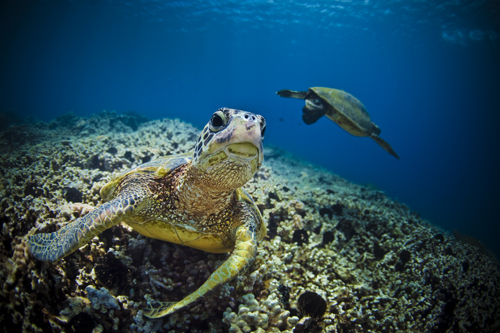
-
wow matt-- i dont think i would ever have the balls to do that. Great image!
-
Only silly people do things like this. Obviously I am one of the silly people.
Slightly off-topic, but a few years ago, we were diving from the tender to a liveaboard in BC. One of my buddies had been shooting some topside shots with his Nikon hanging around his neck. And of course, he didn't realize that he had forgotten to switch to his Nikonos before he back-rolled into the water. In fact he didn't realize it until we were at 50'! Being the cool dude he is though, he carried on shooting with his Nikon... I almost drowned I was laughing so hard...

-
I haven't removed a lens in my Aquatica housings in many years. Maybe you mean Ikelite and their unique gear sleeves.
George, it's written in their manuals and my own experience of trying to slide the camera out on the tray and the difficulty in sliding it back in (teeth aligned and all) was a bit problematic. I compare this with the mounting system on a Seacam which allows a camera be inserted without a tray guide, then allow a slight off angle entry which expedites things so much more, plus the fact that with some housings, the housing body is designed so that a card change does not require moving the camera at all.
-
George, it's written in their manuals and my own experience of trying to slide the camera out on the tray and the difficulty in sliding it back in (teeth aligned and all) was a bit problematic. I compare this with the mounting system on a Seacam which allows a camera be inserted without a tray guide, then allow a slight off angle entry which expedites things so much more, plus the fact that with some housings, the housing body is designed so that a card change does not require moving the camera at all.
Stew a lot depend on the generation of the housing, the more recent offering we have are designed with a retractable zoom gear rack, a pull out of the way lens release and sliding tray, so everything is designed to pull out the camera and lens with its gear smoothly and without restriction.
One of the many considerations that has to be taken into consideration when designing a housing is where the split in the housing will be located, this split between front and back has a lot to do with control location, and at one point the design team has to weight in whether locating some control in the right ergonomic places did take precedent over access to the card, given today's memory card capacity I am more concerned with battery capacity, which is why we made a lot of effort in this area, aside from not having to remove the tray, all you have to do what I described above. Slide the camera out to change battery (or card), or remove the port and exchange lens without having to pull the care out, whatever suit the situation.
Your experience might have been with one of the earlier Aquatica generation, (you do not mention the model) among other factor with casting we did have limitations to what could go weren due to the imposed shape of the casting, not so anymore.
-
Jean
It was the 5D2 housing which I reviewed. I think that is a cut mold, no? Actually, battery and card both need to be accessed nowadays because of video! The 5D2/7D can record up to 50 mins on a 16GB card. The battery can last up to 90 mins shooting video. Anyone using a 16GB will need to switch out. Of course 32GB cards are fast becoming the norm now but 16GB are still widely in use, plus many people like to keep each dive on different cards so they don't lose their shots should the card give out for whatever reason.
-
fogging would probably be my biggest concern. i opened my compact setup once to change battery in between dives and had a lot of bad fogging--the air was very humid. how would one avoid this--disicant packs?
I have just returned from my first trip with my new D90/Aquatica system. I changed lens' and ports at noon after the system sat in a towel for a couple of hours with no issues.
I used a silica pack in the housing all week and had no issues with fogging...

